

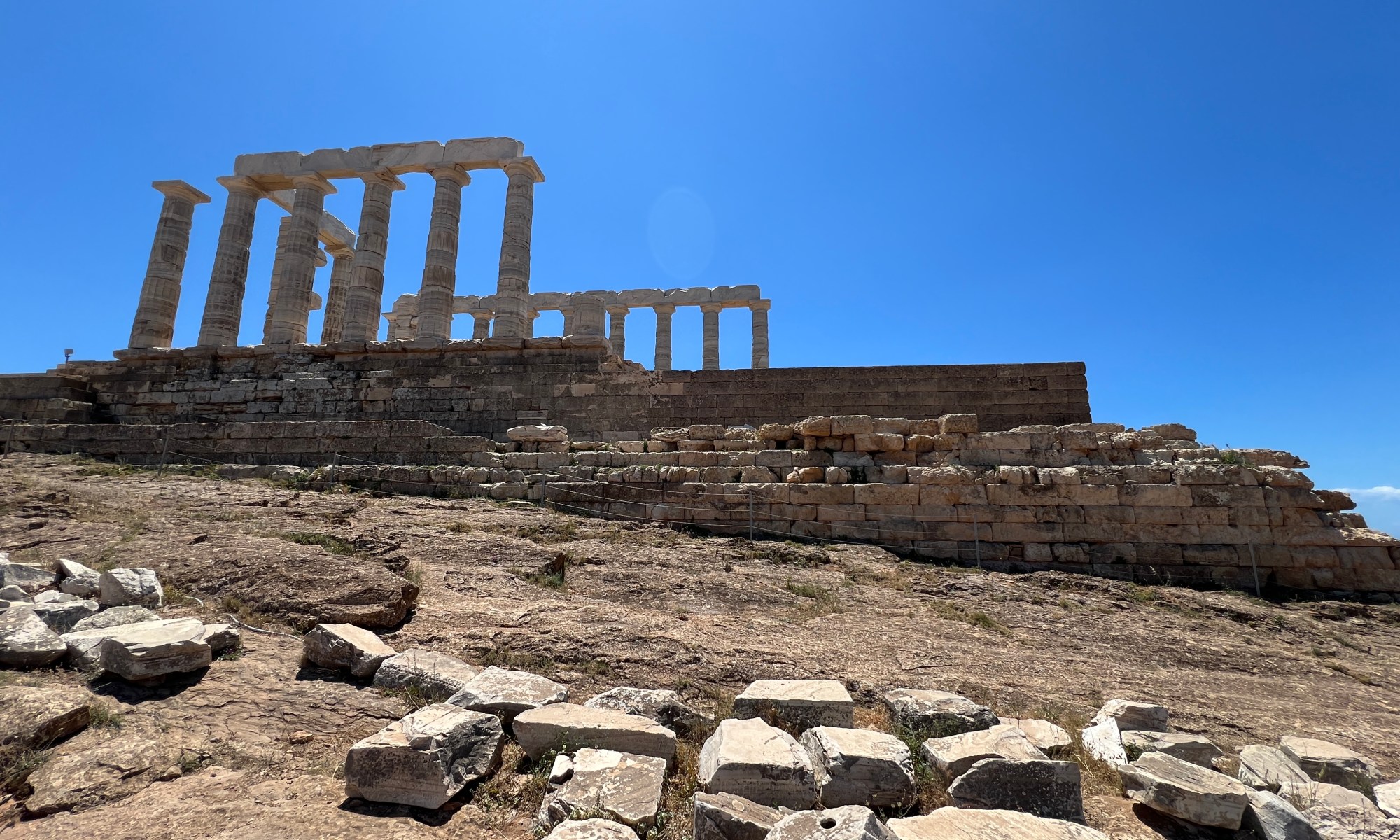
In Before Atlantis we first proposed that a series of crustal displacements changed the location, and hence the direction of the geographic North Pole four times over the past 130,000 years. In this, the third of three parts, we show that alignments relative to a former pole offers an alternative explanation for the alignment of the Parthenon, and two Temples in Sounio, which otherwise have no known explanation.
A Temple Aligned to the Cardinal Directions
East of the Acropolis, the Temple of Olympian Zeus is oriented north-south-east-west. Construction began in the 6th century BCE but was not completed until the reign of Roman Emperor Hadrian in the 2nd century CE. During the Roman period, the temple, which included 104 colossal columns, was renowned as the largest temple in Greece and housed one of the largest cult statues in the ancient world.
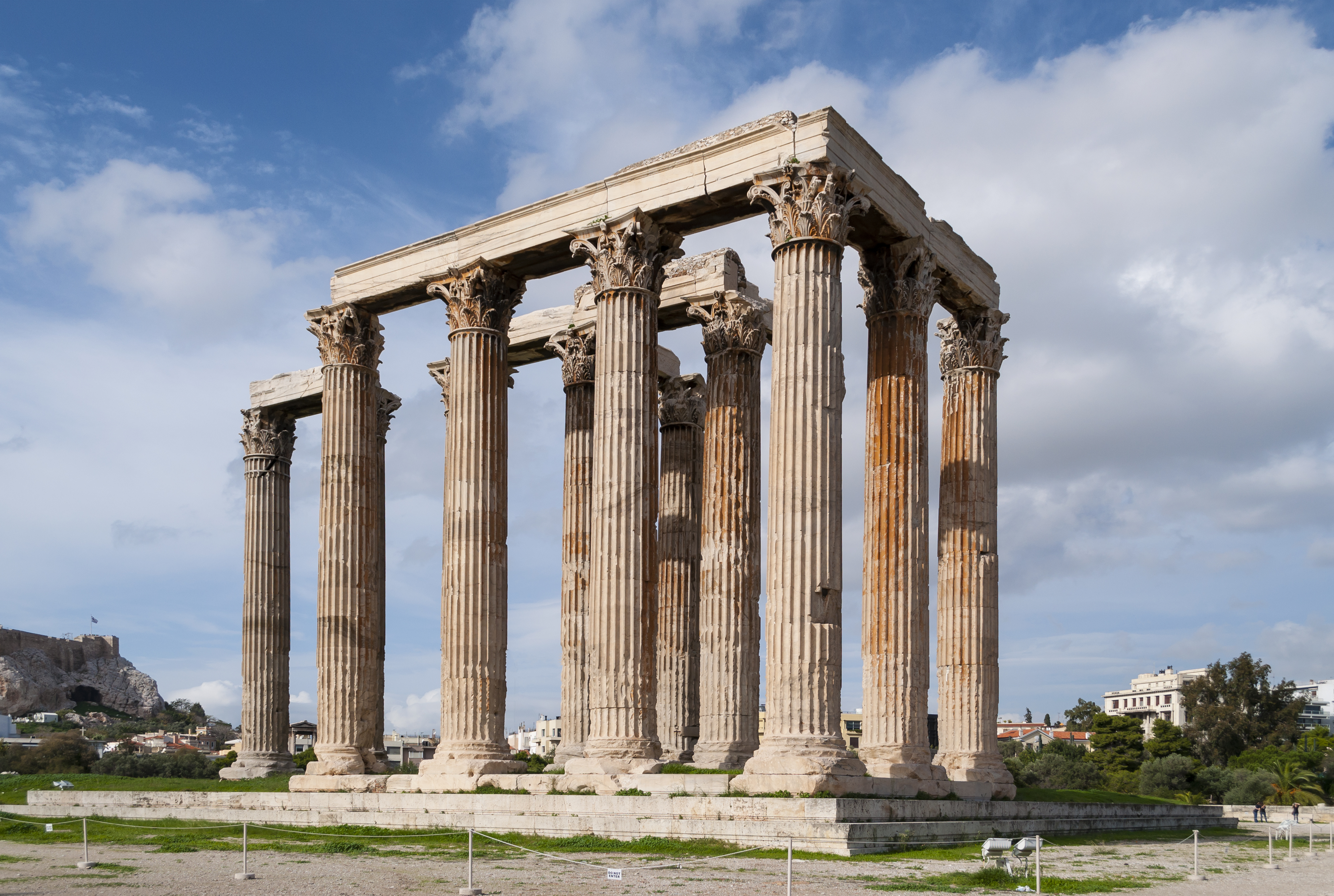
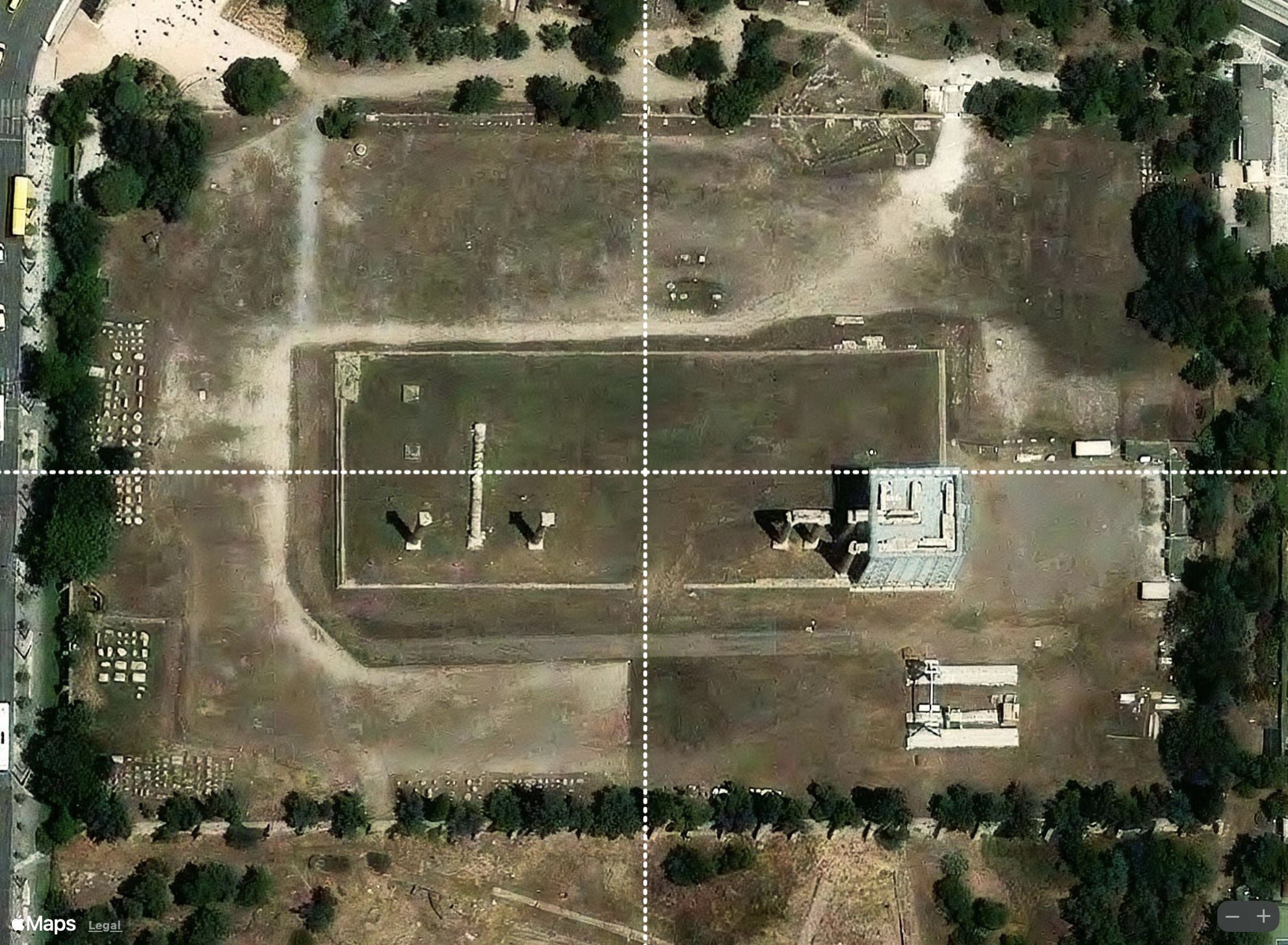
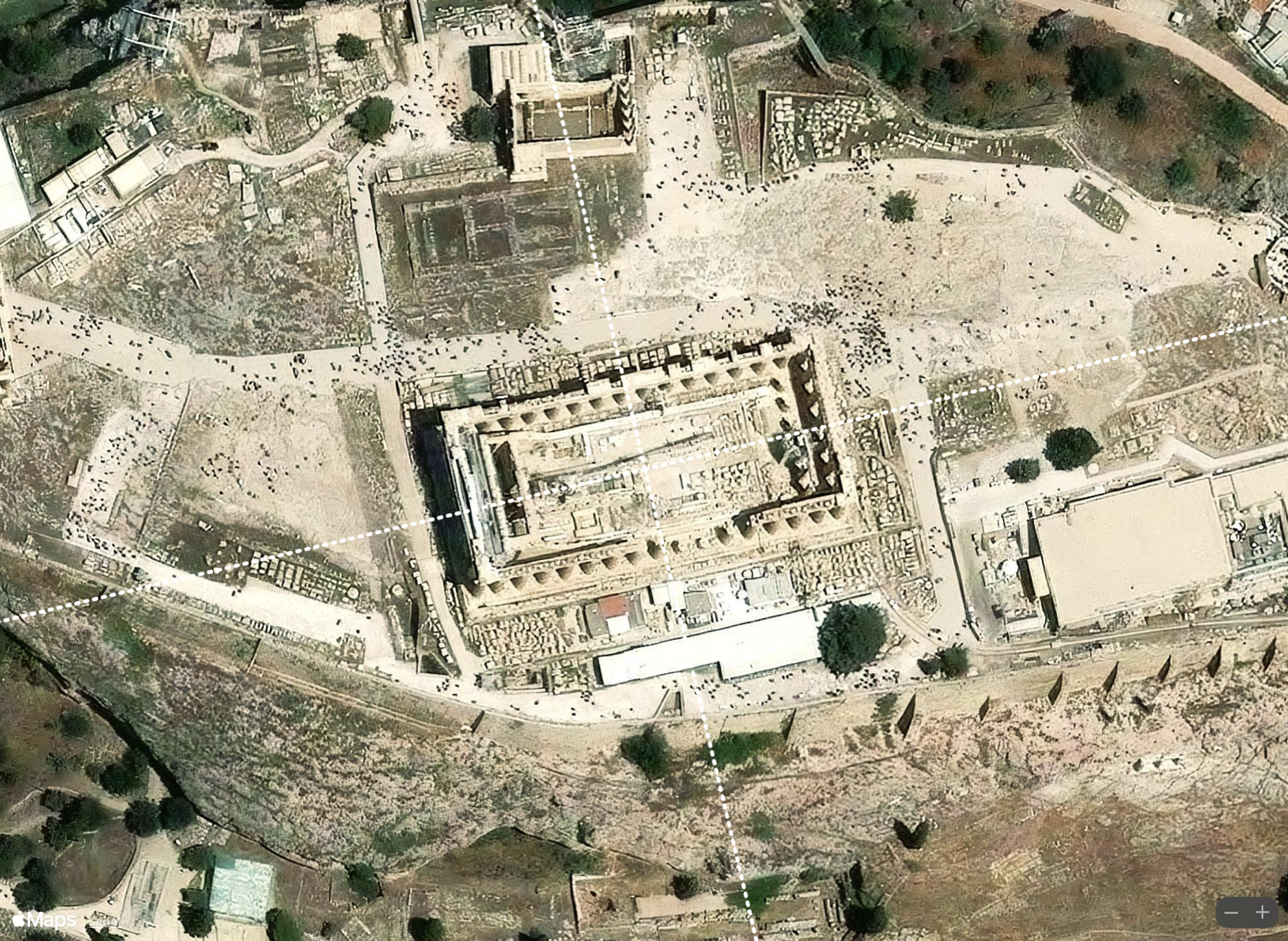
The Parthenon, constructed over this period and less than half a kilometer away, was aligned differently. As noted in Part 2, the Acropolis and the Southern Citadel at Tiryns are oriented in the same direction.
A global analysis of archaeological sites in Beyond Atlantis suggests the practice of building new structures over and around older structures/foundations is commonplace throughout the world. It is probable and even likely that the Athenians took advantage of pre-existing foundations on the Acropolis and built over earlier Mycenaean ruins preserving their original alignment direction.
This, then, takes us to the central question of what was the significance of this direction?
A Theory of Human Behavior
In Part 2, we showed how the tradition of aligning important sites in luni-solar directions endured a series of significant climate change events over the past 10,000 years. In contrast to the prevailing view that modern human culture developed as a response to climate and ecological changes at the end of the ice age, Edmond Furter offers a different perspective:
“We did not invent, develop, or change culture. Culture is part of the human package, at least since Göbekli at BC 8000, cave art about BC 20 000, Blombos shelter about BC 70 000, and perhaps even Border Cave about BC 100 000, with the usual ensemble of tools, clothing, cosmetics, and trade. Human behaviour is static, and thus predictable, down to the structure of artworks and building sites.”
If Furter is correct – that human behavior is static down to the structure of ancient sites, then perhaps human societies have always aligned buildings to the Sun and the Moon. In other words, there is nothing special about Göbekli Tepe – it is simply an example of how the people at that time were expressing a pattern of behavior that has existed throughout human history.
If this behavior extended even further back in time, to our prehistory, it could explain the alignment of sites that otherwise have no explanation.
Previous Locations of the North Pole
If, like the Athenians, the Mycenaean Greeks built over the ruins of structures built over ruins of even earlier structures that survived climate change and crustal displacement events, preserved site footprints can tell us when the site was first constructed and how it was astronomically aligned.
By testing predicted archaeo-astronomical alignments relative to previous poles, the original foundations under the South Citadel at Tiryns and the Parthenon on the Acropolis can be shown to have have been oriented to the cardinal directions if the North Pole were in Greenland.
Temples at Sounio
Consider two Classical Greek temples, the Temple of Poseidon and the Temple of Athena, both in Sounio. Unlike the Parthenon, there is no alternative explanation for their alignment. However, if we shift our geographic reference back to the time of the Greenland pole, the Temple of Poseidon would have been aligned to solstices and the nearby Temple of Athena to minor lunar standstills.
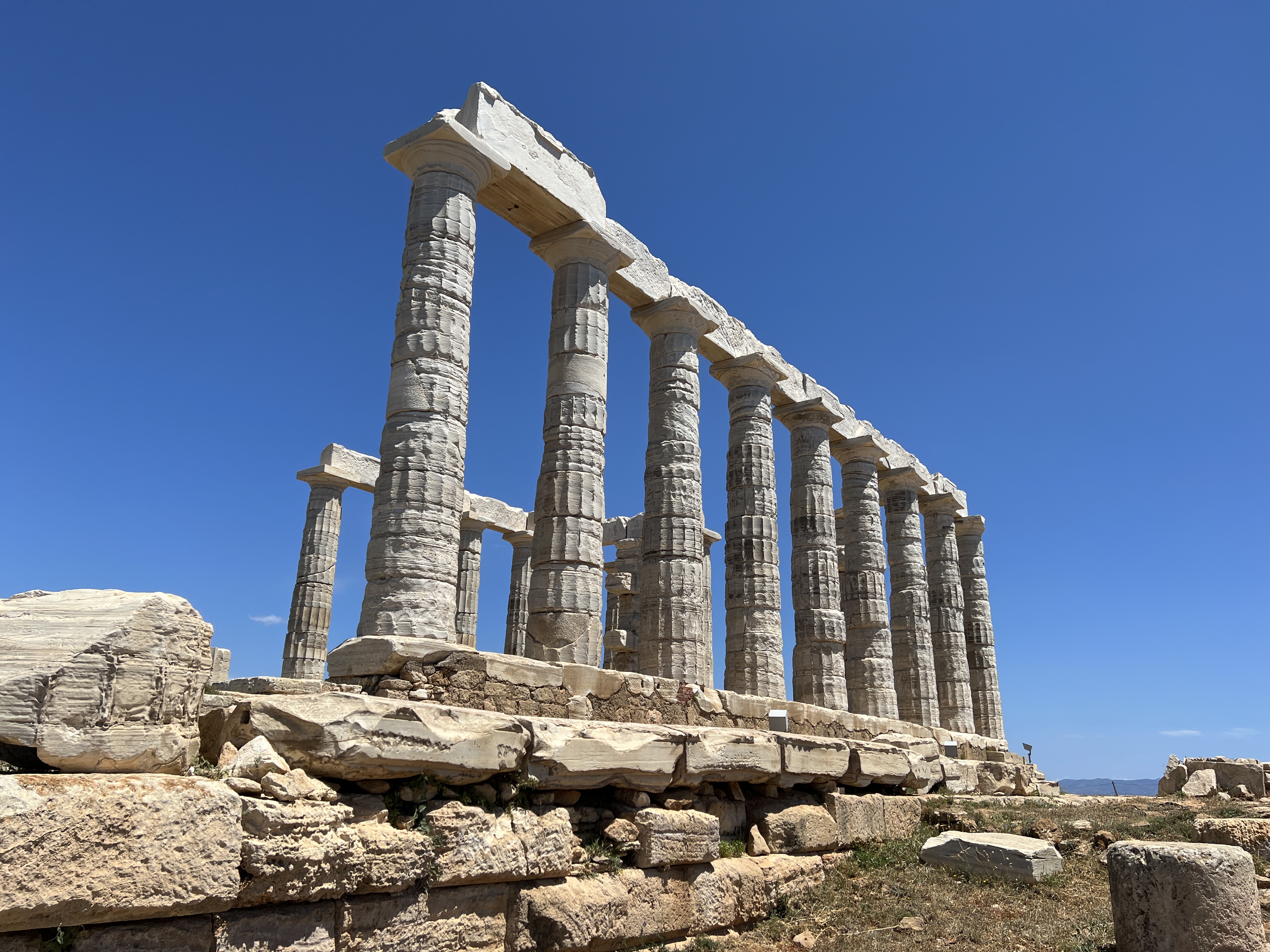
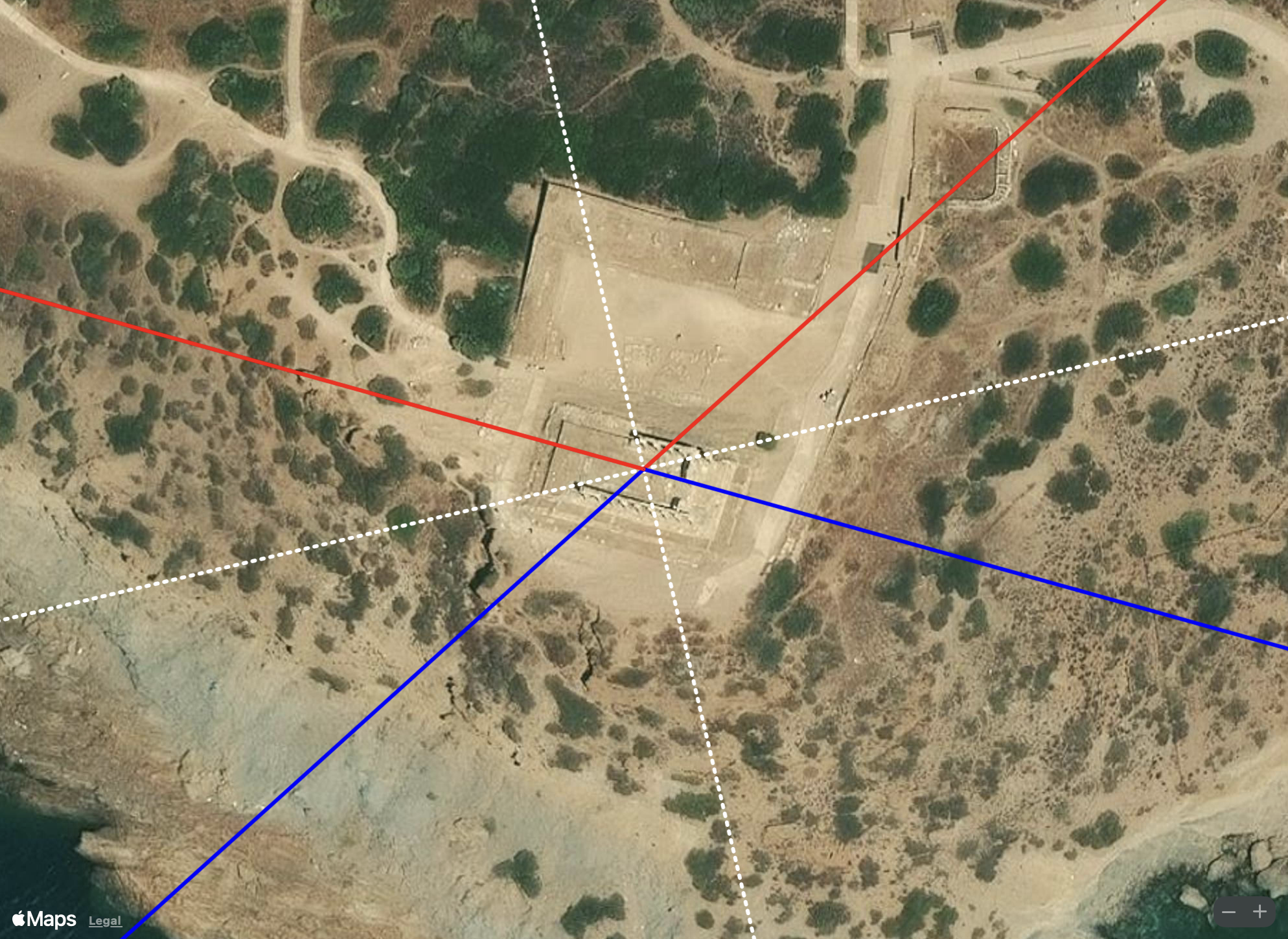
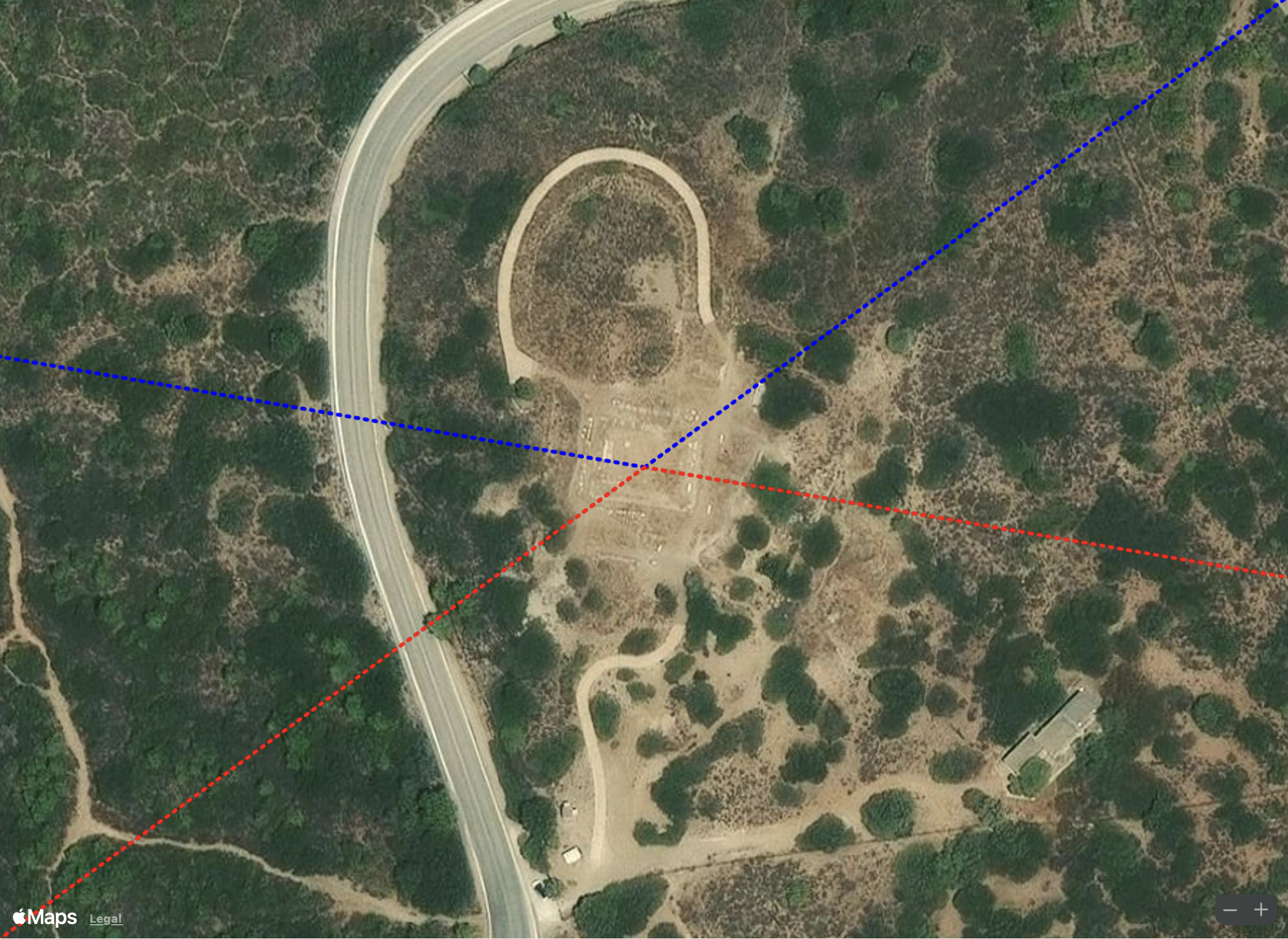
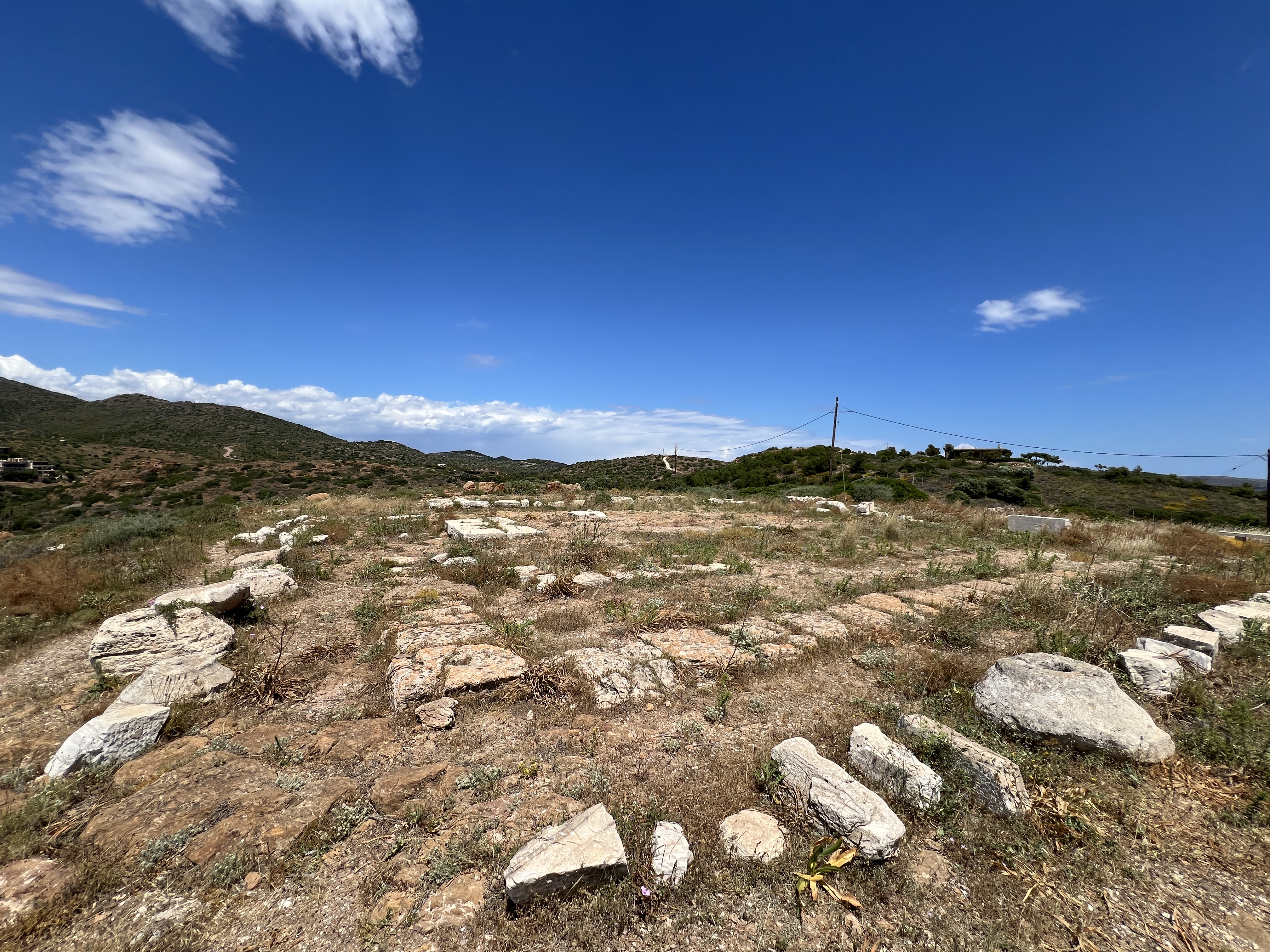
It is interesting that a temple dedicated to the male deity Poseidon is aligned to the Sun and a nearby temple dedicated to the female deity Athena is aligned to the Moon. This practice, which is not without precedent in Greece and elsewhere in the ancient world is the topic of a future article.
Discover more from Before Atlantis
Subscribe to get the latest posts sent to your email.
