

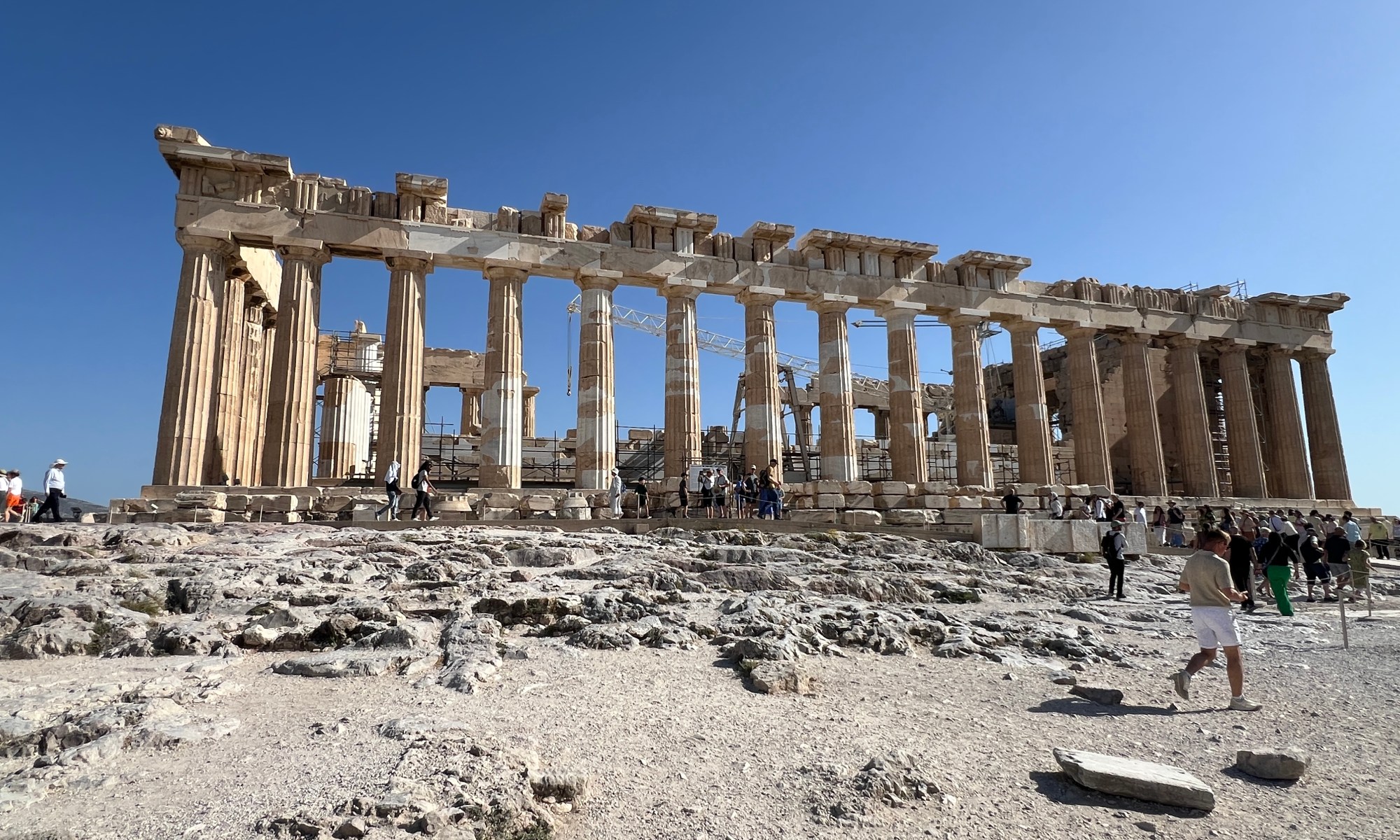
This article examines the foundations of Greek architecture, literally. In this, the first of three parts, we begin in Athens at Pnyx Hill and the Acropolis.
Pnyx Hill
Walking south on Apostolou Pavlou north of Pnyx, we pass the bedrock foundations of a ancient site dedicated to Zeus. The Sanctuary of Zeus is an open-air site containing five sacred niches and carved rock altars at the base of the Hill of the Nymphs. Dating back to the 6th century BCE, it is one of the earliest known open-air cult worship sites dedicated to Zeus in ancient Athens.
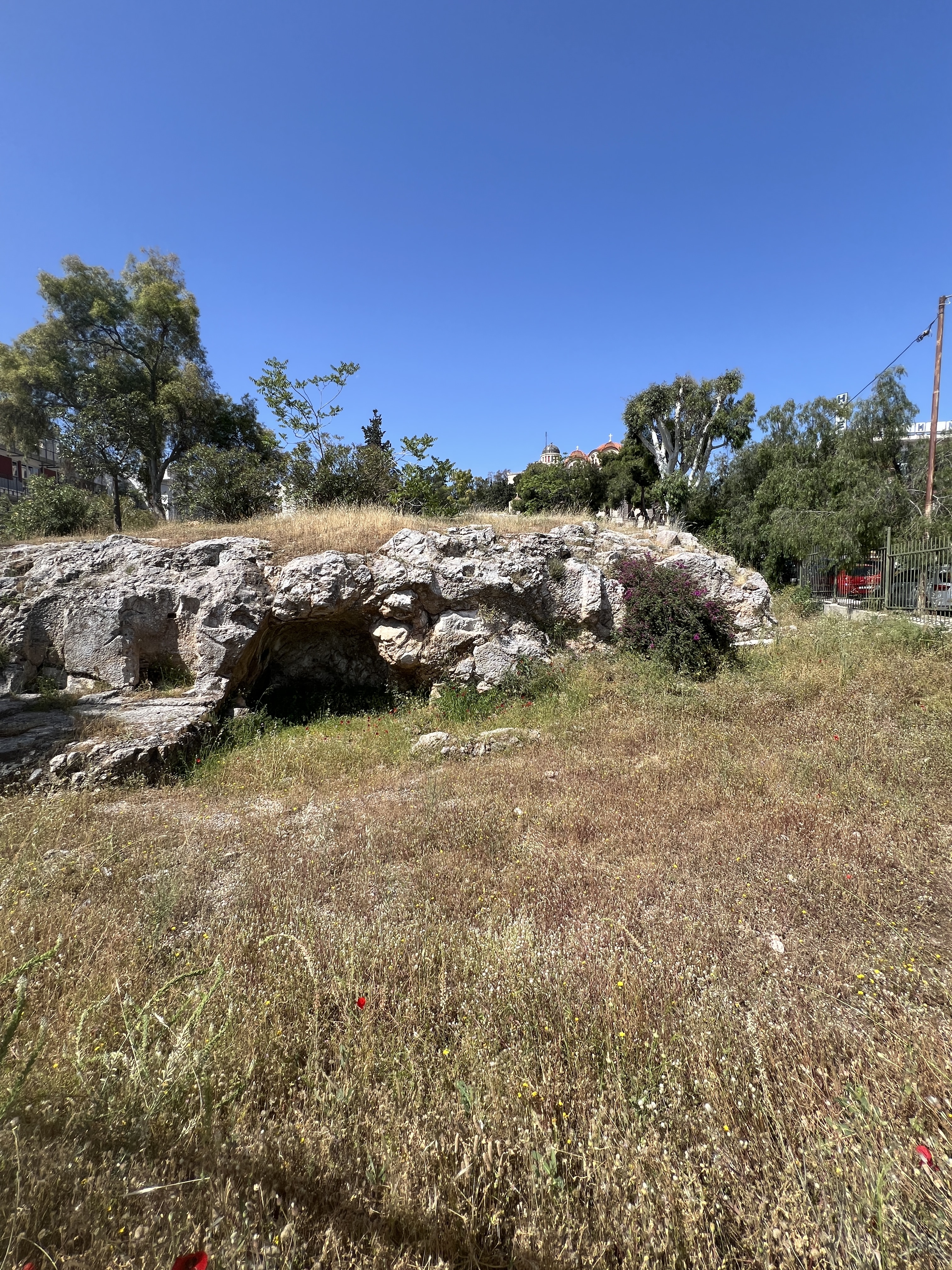
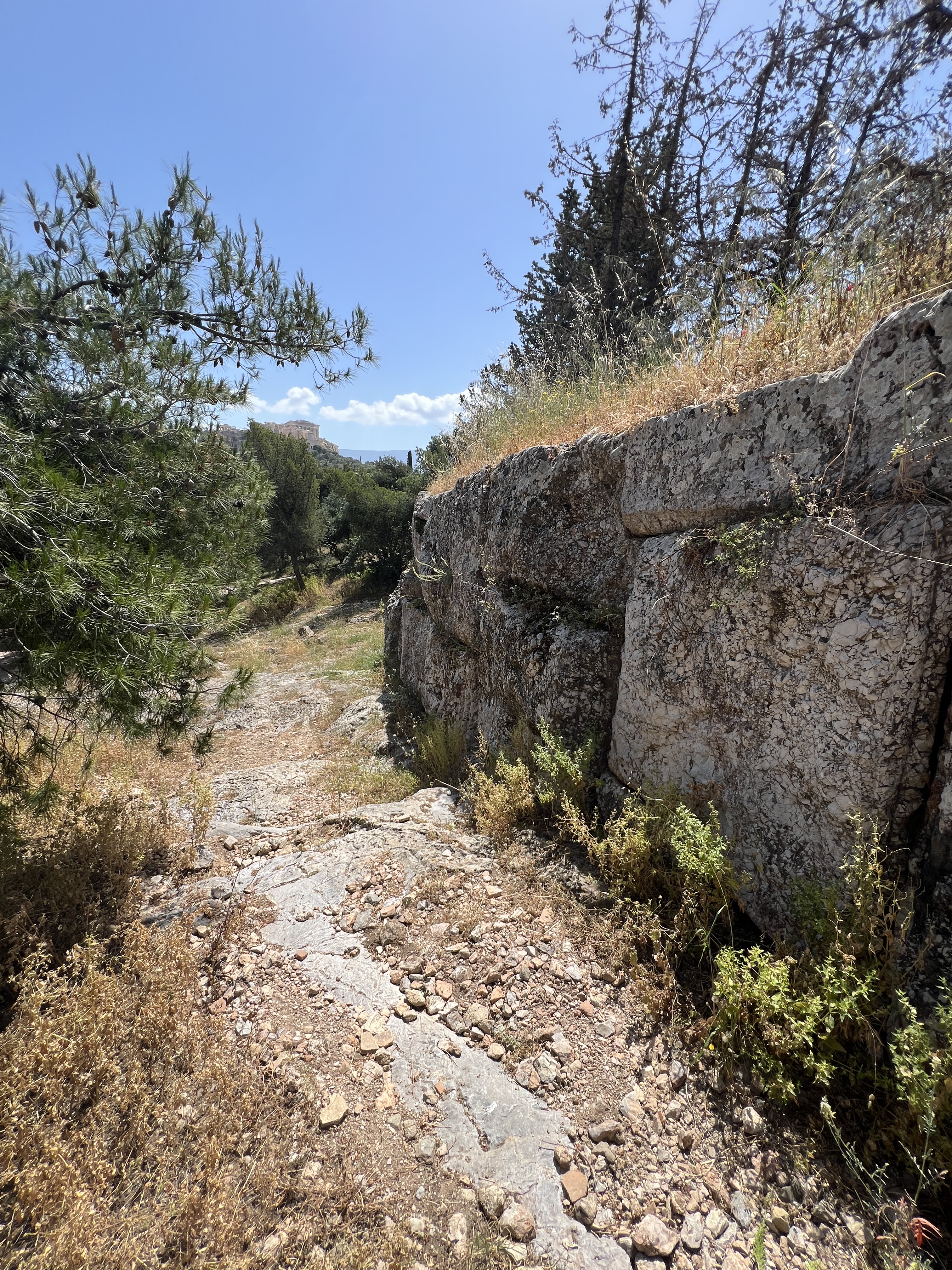
Continuing on Apostolou Pavlou, we pass the ancient Roman Agora on the left and the Sanctuary of Pan on the right. Just before reaching the bottom of the hill, we turn right and follow a road back up the hill. Nearing the top, we head off on a stone footpath to the right that passes through a section of the Themistoclean Wall. We are now at the top of Pnyx Hill, the birthplace of Athenian democracy, where thousands of Athenians came to listen, debate, and vote.
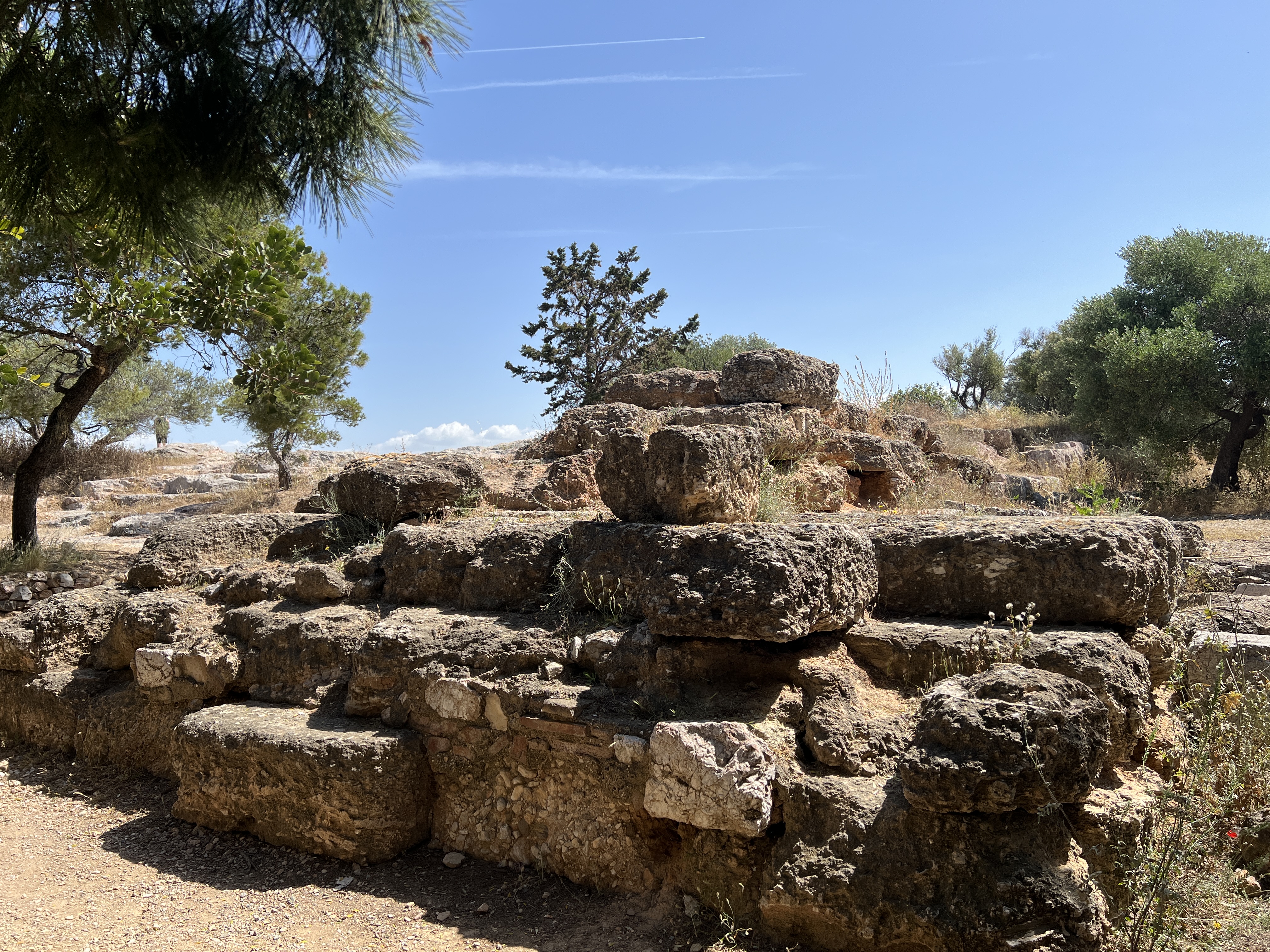
In front of us is the foundation of an observatory constructed around 433 BC, where the Greek astronomer Meton calculated solstices and equinoxes. By observing sunrise alignments relative to distant landmarks like Mount Lycabettus and Mount Hymettos, he discovered (or rather rediscovered) the Metonic Cycle where a particular phase of the Moon such as a full (or new) Moon occurs on the same calendar day every 19 years.
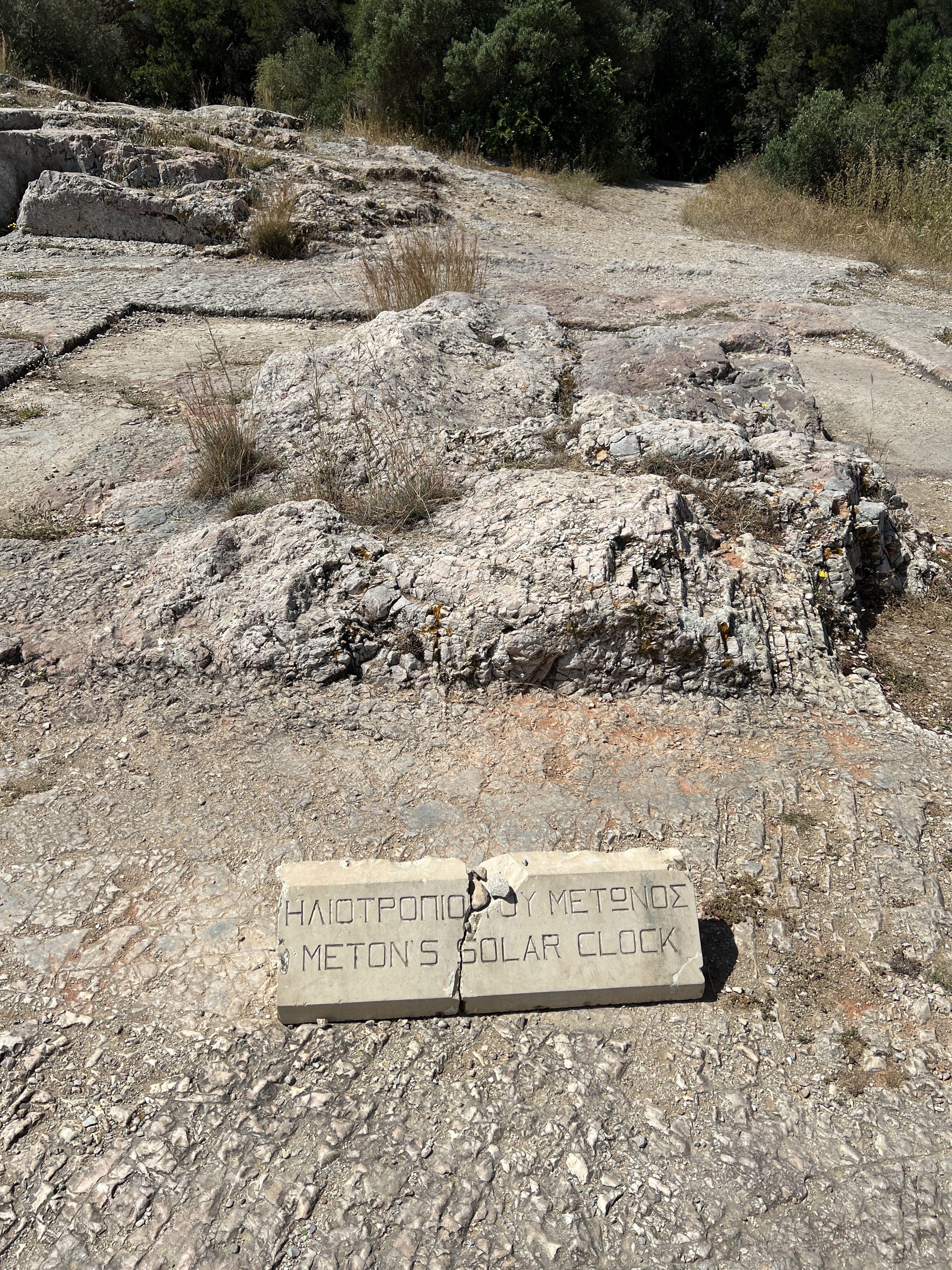
Pnyx underwent three major construction phases. Phase I (~500 BCE) utilized the natural hillside facing the Agora, while Phase II (~400 BCE) reversed the seating orientation, supported by a northern retaining wall. The retaining wall contains numerous niches as part of the Sanctuary of Zeus Hypsistos that was later added by the Romans in the first century CE.
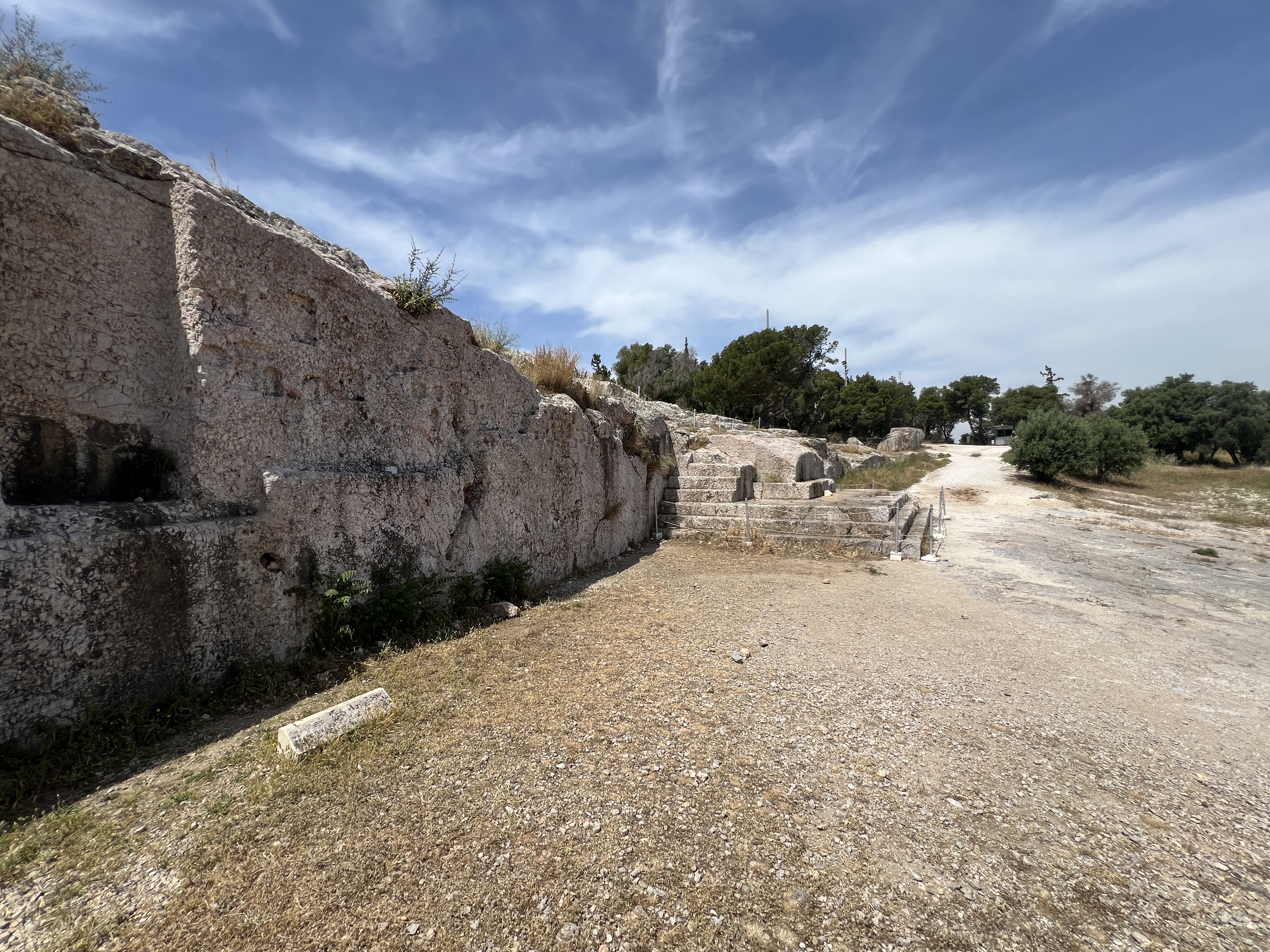
Phase III (~330 BCE) expanded the site using massive limestone blocks, featuring a striking, terraced cyclopean retaining wall to the south.
The Acropolis
The Acropolis originated as a Bronze Age Mycenaean fortress and royal residence around 1300 BCE. Derived from the Greek words akron (highest point) and polis (city), the rocky citadel transitioned into a sacred religious center after the Mycenaean period.
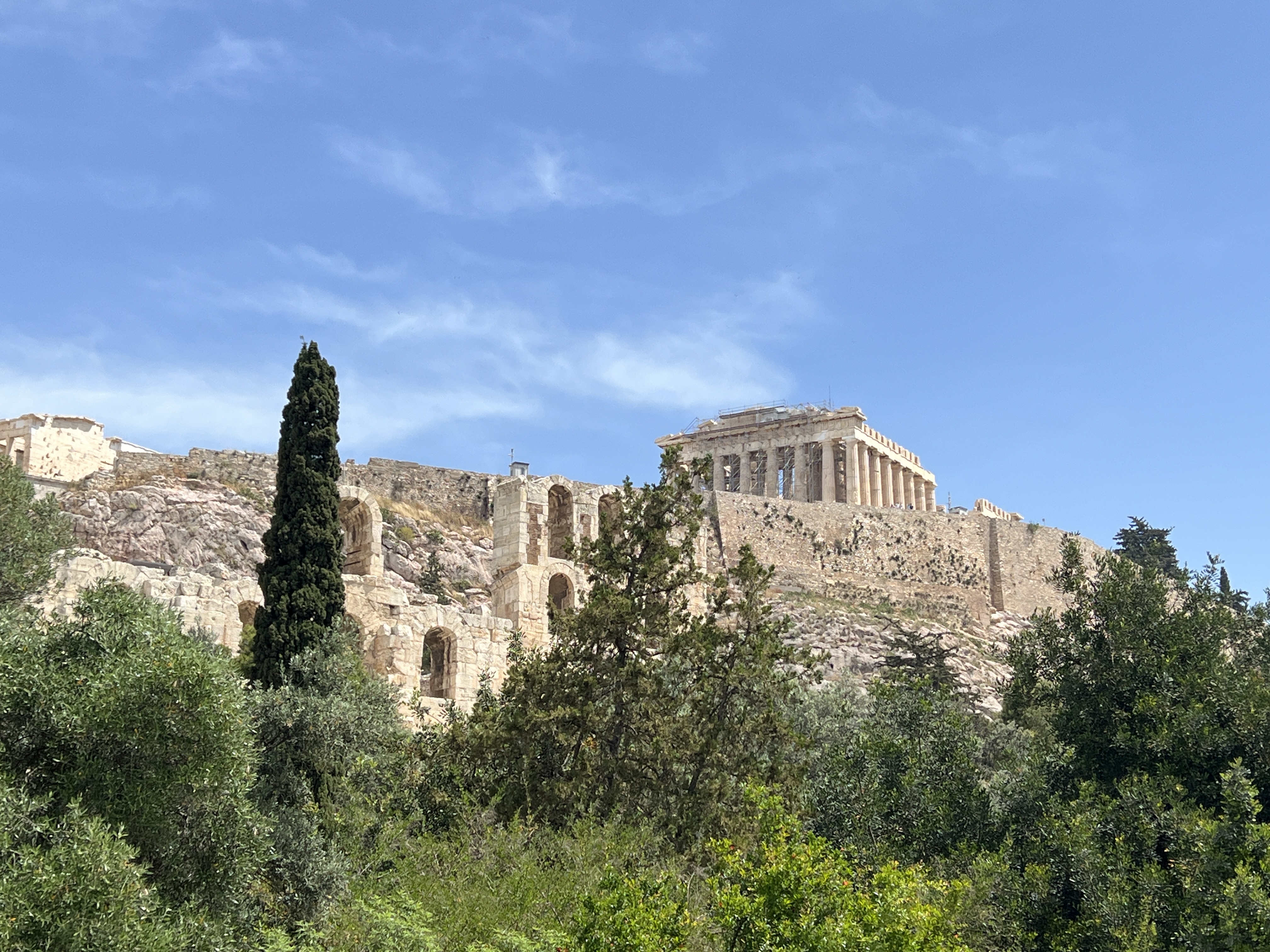
The Parthenon was a marble temple on the Acropolis dedicated to the goddess Athena. Constructed between 447 and 432 BCE, it is thought to have been aligned to sunrise on the Panathenaea – a festival in honor of the city’s patron goddess, Athena, which was celebrated in late July early August.
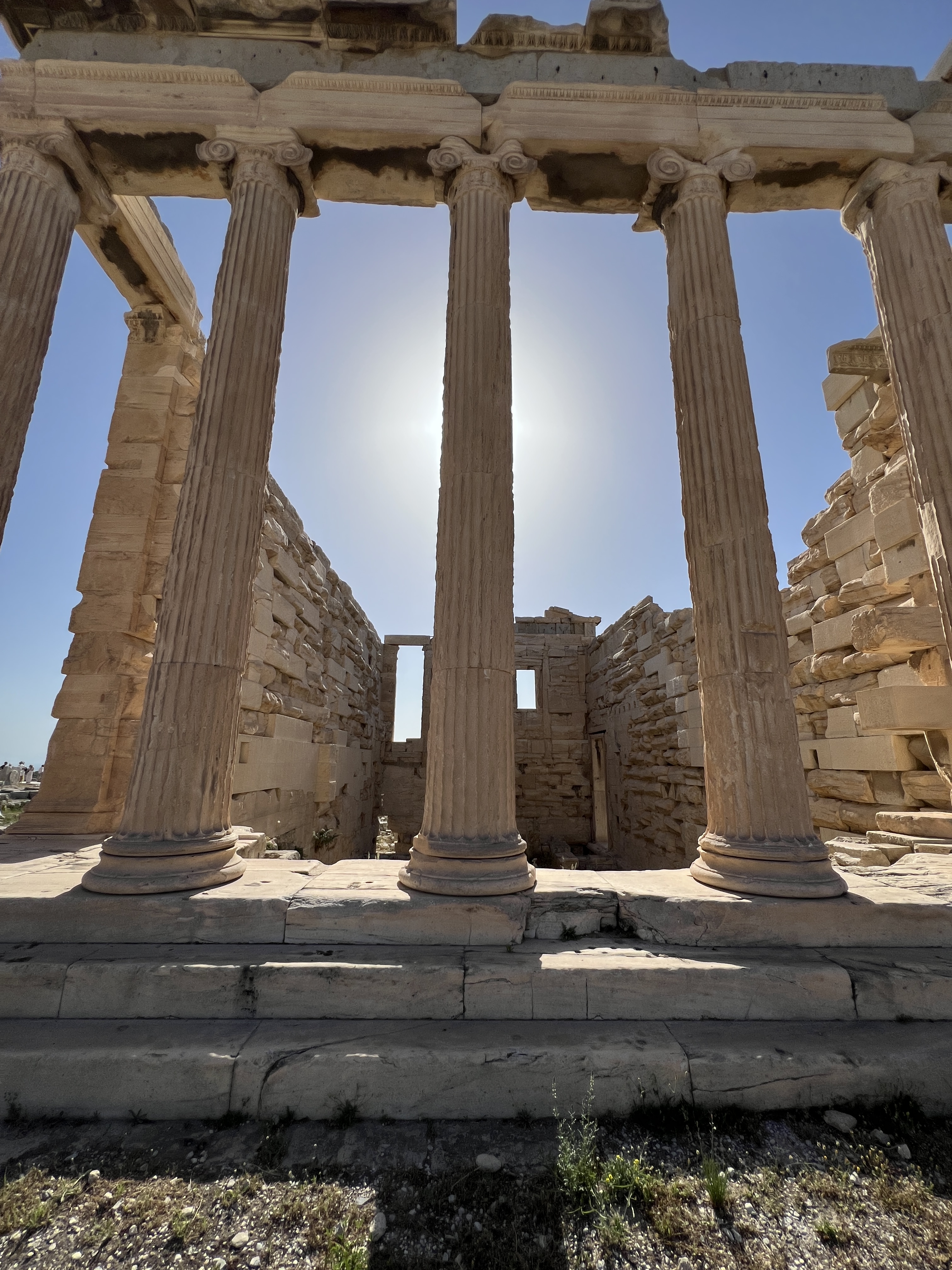
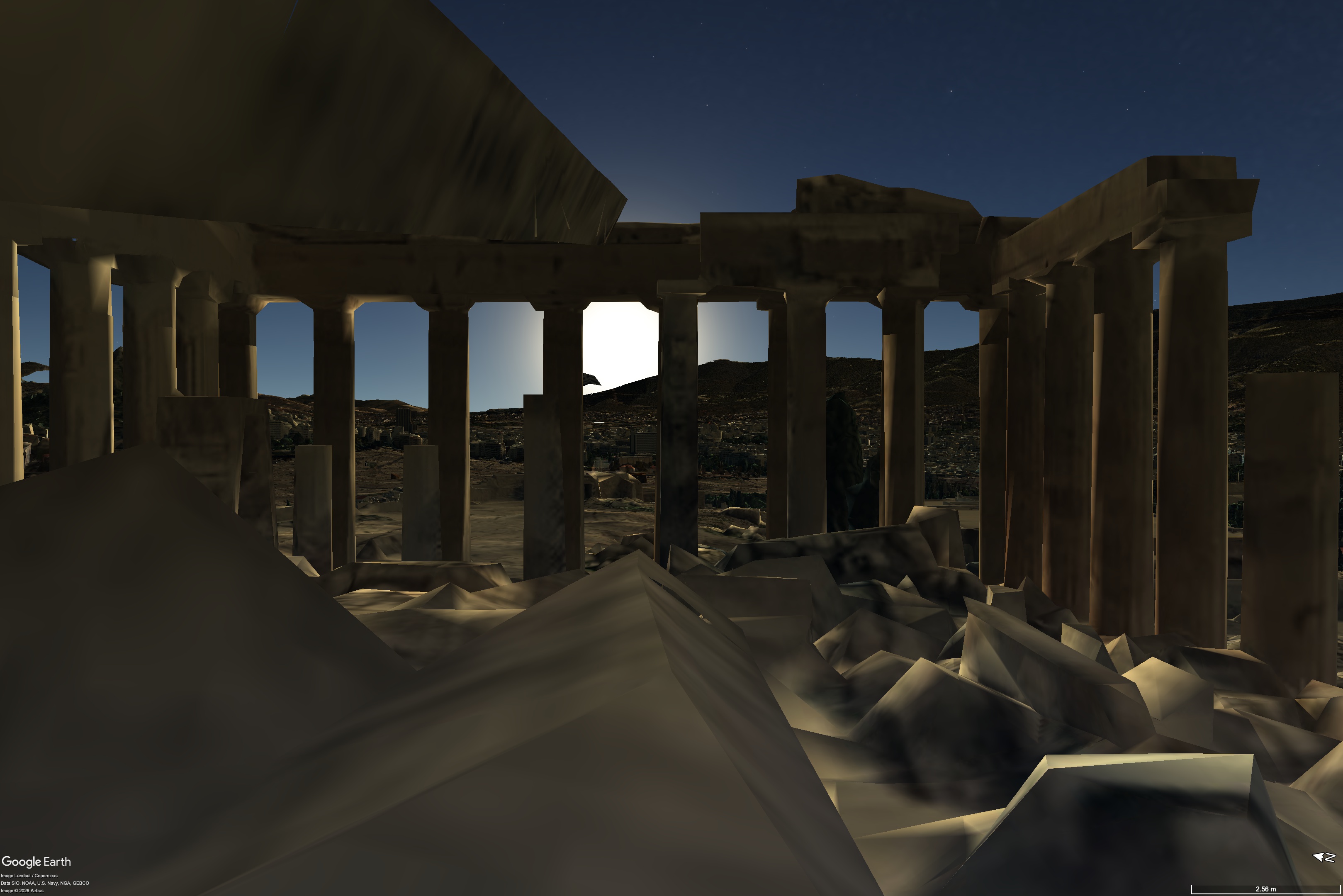
The Attic (Athenian) calendar begins in midsummer with the lunar month of Hekatombaion. The Panathenaea was held at the end of the Hekatombaia, which began with the first new Moon after the summer solstice in late July, early August. The first Panathenaea occurred in 566 BC almost a century before the Parthenon was built. It is plausible that the Parthenon was oriented in such a way for this to happen at the end of the Hekatombaia.
Lunar Cycles and Architecture
Is is interesting that Meton was in the process of working out the Moon’s 19-year cycle where a particular phase of the Moon such as a full (or new) Moon occurs on the same calendar day every 19 years at around the same time Parthenon was supposed aligned in just this way. The Metonic cycle is fundamentally about repeatability: same Moon phase, same season, same civic ritual time. Monumental architecture can serve exactly the same purpose by fixing celestial recurrence in stone. So even if Meton never touched the Parthenon plans, both may represent parallel expressions of a larger Athenian attempt to regularize cosmic time.
The construction of Parthenon and the work of Meton suggests they may reflect a broader Athenian effort to unify architecture, religion, and celestial timekeeping. Meton’s 19-year lunisolar cycle regularized the recurrence of lunar phases within the solar year and governed the timing of festivals such as the Panathenea. If the Parthenon was intentionally aligned to a festival sunrise or significant lunar event, its orientation may embody the same calendrical principles Meton was formalizing mathematically. Although there is no direct evidence that Meton participated in the temple’s design, both developments appear to arise from a common intellectual movement in fifth-century Athens seeking to synchronize civic ritual, sacred architecture, and the cycles of the heavens.
This is a nice theory except for the fact that the Parthenon was built over an earlier structure. The Pre-Parthenon (or Older Parthenon) was begun shortly after the Battle of Marathon, between 490 and 488 BCE. It was still under construction when the invading Persian army sacked Athens and heavily destroyed the Acropolis in 480 BCE. This is roughly three decades before Meton.
The question then is what determined the alignment of the original Parthenon. This and other related questions are considered in Part 2.
Discover more from Before Atlantis
Subscribe to get the latest posts sent to your email.
