

Meton did not discover the so-called Metonic cycle, but rediscovered an astronomical phenomenon that was known to the Babylonians at an observatory on Pnyx Hill that was aligned to the Moon. The nearby Sanctuary of Zeus on Apostolou Pavlou built a couple of hundred years earlier was similarly aligned. In this, the second of three parts, we present evidence that a practical knowledge of the motion of both the Sun and Moon were known and used by previous civilizations to aligned sacred/ceremonial sites in the directions of solstices and lunar standstills long before the Greeks.
Lunar Standstills
Similar to the way solstices are the most northern and southern sunrise/sunset directions over the course of a year, lunar standstills are the most northern and southern moonrises/moonsets over a lunar cycle. Major lunar standstills occur every 18.6 years. Minor lunar standstills occur 9.3 years later.


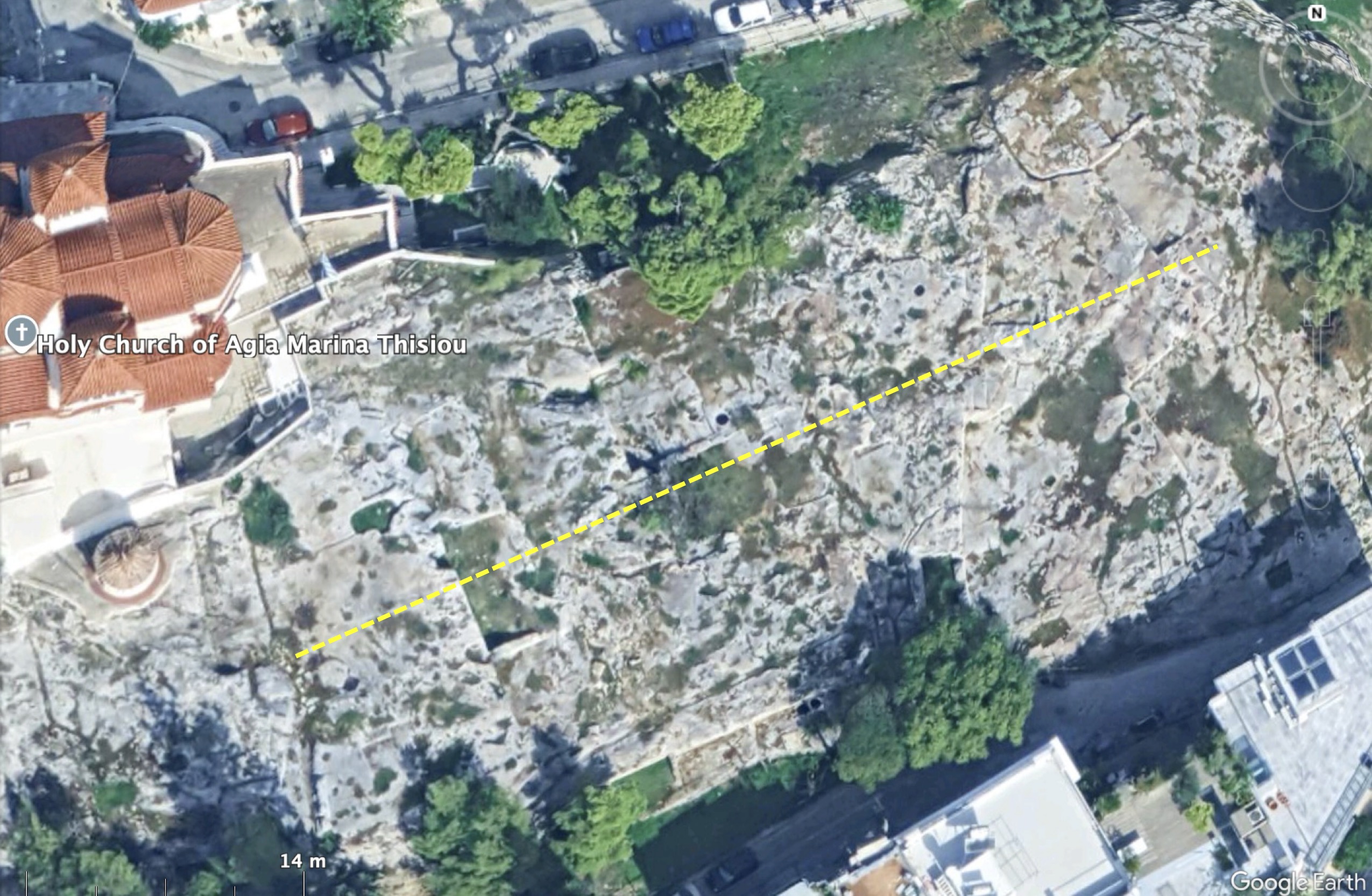
In an overhead view, the bedrock foundation of the Sanctuary of Zeus appears be oriented in the direction of northern minor standstill moonrises/southern minor standstill moonsets. In other words every 18.6 years the Moon would rise and set along the major axis of the site.
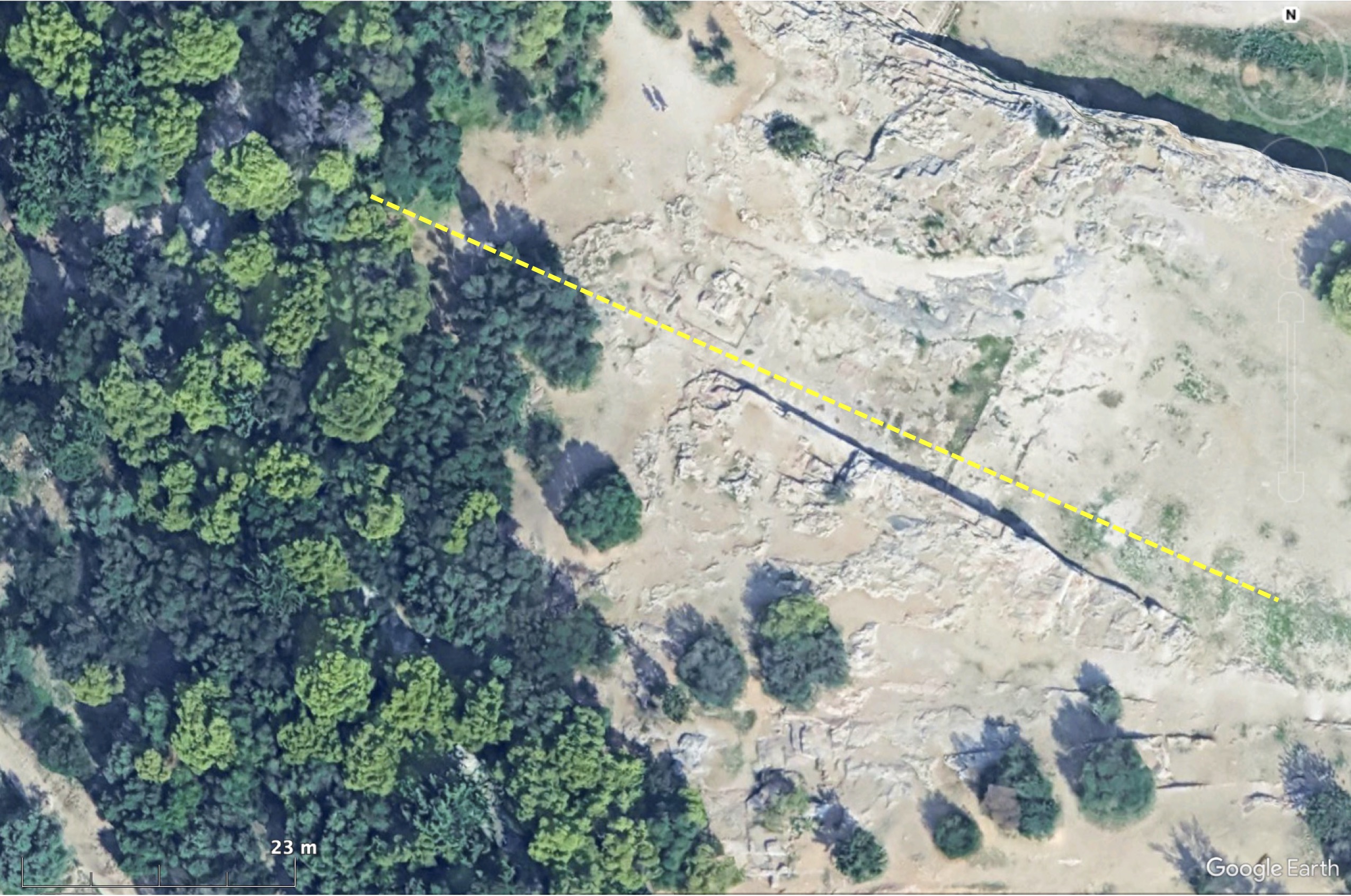
Interestingly, the area surrounding Meton’s observatory appears to be aligned in complementary minor lunar standstill directions, namely toward southern minor standstill moonrises/northern minor standstill moonsets.
Göbekli Tepe
Believed to be among the world’s oldest known temples, Göbekli Tepe has been dated to a period in human prehistory known as the Neolithic Transition, when our nomadic hunter-gatherer ancestors began to lead a more settled lifestyle, growing crops, and building permanent settlements.
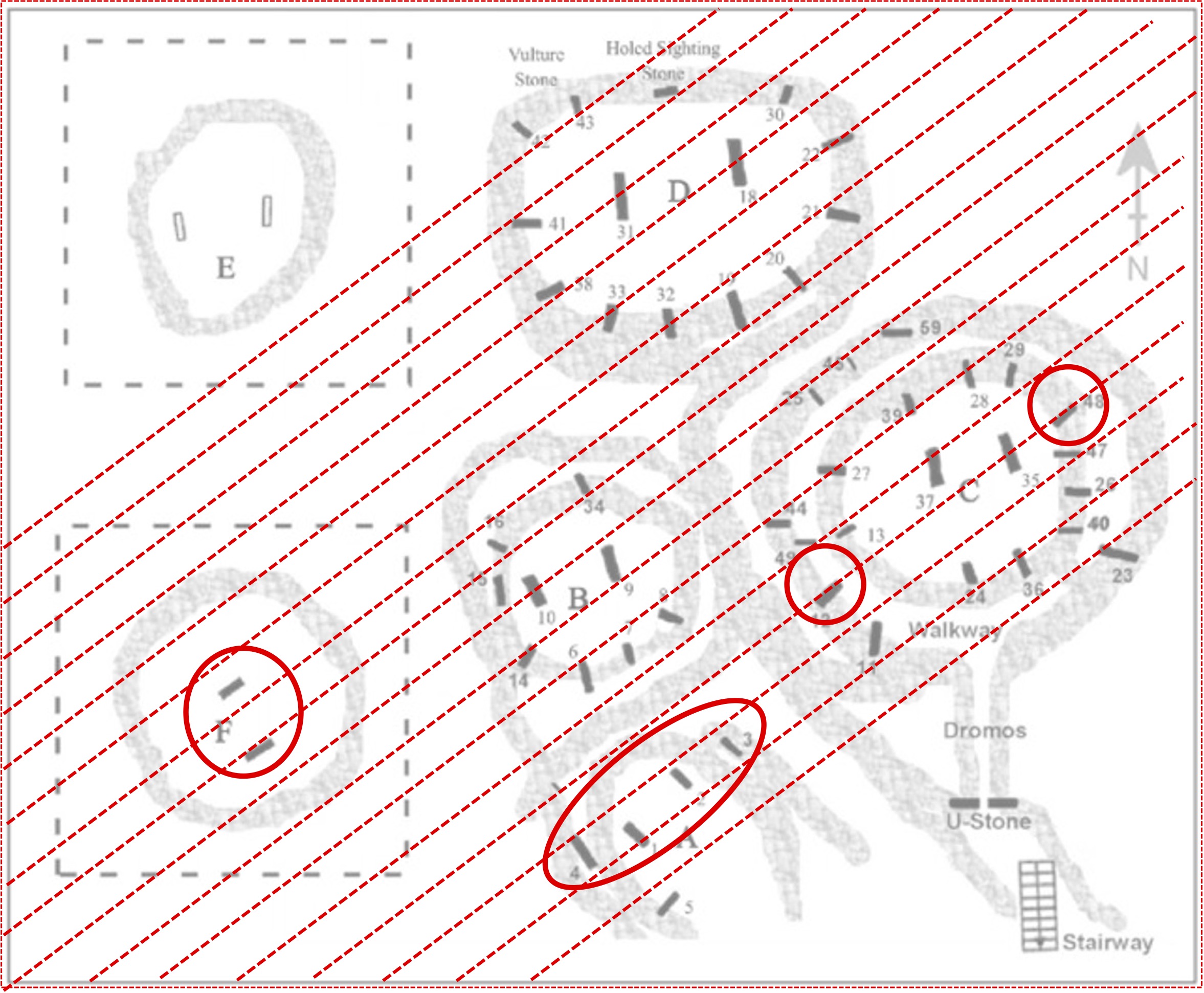
Excavations at Göbekli Tepe revealed the existence of monumental, circular enclosures built from massive T-shaped stone pillars. Numerous pillars appear to be aligned to certain stars and in lunisolar directions, specifically east-west in the direction of sunrise on the Equinox, and to major and minor lunar standstills ~8500 BCE.
The 8.2 ka Event
Göbekli Tepe was constructed in the millenium following the end of the Younger Dryas, a well-known global climate event that occured between 10900 and 9700 BCE.
Several other less-known but significant global climate events followed the Younger Dryas. The 8.2 ka event was the largest and most abrupt climate cooling event of the Holocene epoch, occurring ~6200 BCE. Triggered in large part by the collapse of the Laurentide Ice Sheet over Hudson Bay, a massive influx amount of fresh cold water weakened the Atlantic Meridional Overturning Circulation (AMOC) causing widespread cooling across Europe, accompanied by regional shifts in precipitation, vegetation, and human activity. Early farming communities in Mesopotamia, Anatolia, and the Levant faced crop failures and livestock stress. Human populations adapted by migrating to more habitable zones and diversifying food sources.
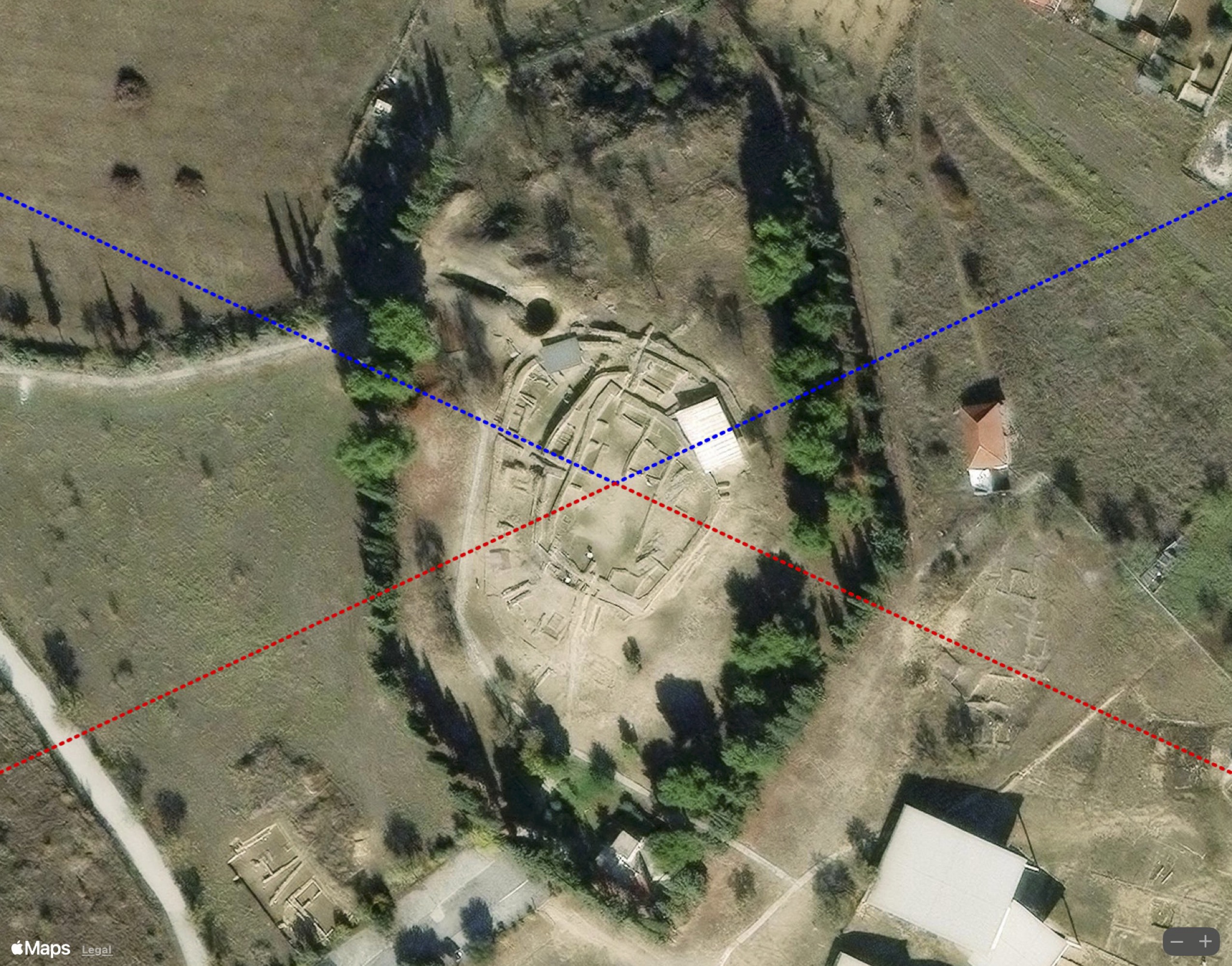
A late Neolithic settlement at Dimini was established ~5000 BCE. The original village featured a highly unique layout consisting of six or seven concentric circular stone walls enclosing a central courtyard and a large rectangular building called a megaron. It housed an estimated 200–300 people who farmed, raised livestock, and traded. After being abandoned for a period during the Bronze Age, Dimini re-emerged as a Mycenaean palatial and urban center. This later settlement (tentatively identified as the legendary city of Iolkos, home of the Argonauts) featured large workshops, a palace, and impressive vaulted tombs before being permanently abandoned around the 12th century BCE. Dimini, like Göbekli Tepe, appears to be aligned to the Moon, specifically in the direction of southern minor standstill moonrises/northern minor standstill moonsets.
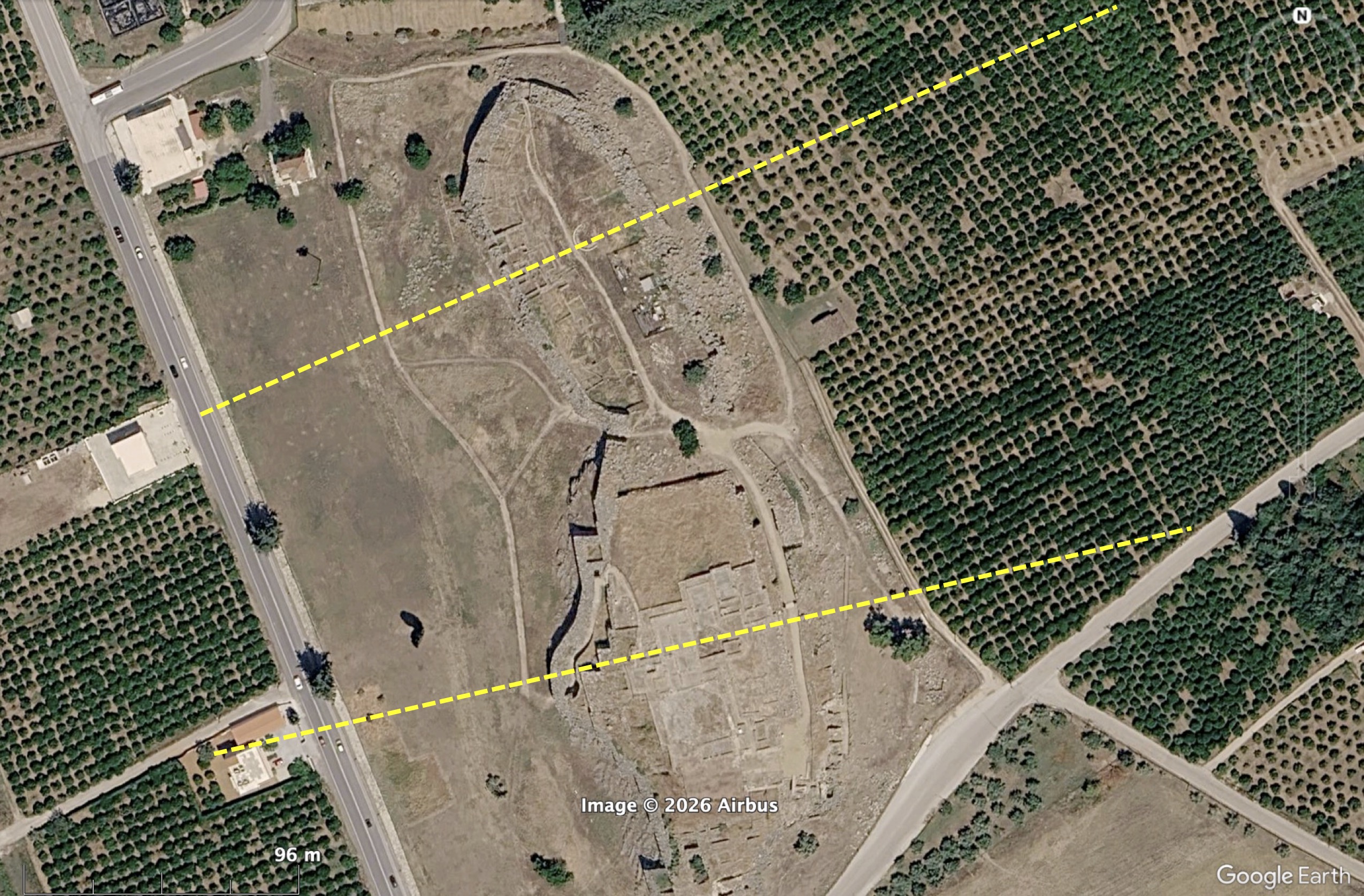
A settlement at Tiryns was first established ~3000 BCE. The South Citadel is the highest point and the oldest part of the site. It features early Bronze Age architectural remains and the later cyclopean fortification. During a massive remodeling process, the Mycenaeans expanded earlier walls to legendary proportions using mortarless limestone blocks up to 8 meters thick and 13 meters high. Where the South Citadel does not appear to be oriented in any obvious direction, the North Citadel, which was built later, like Gobekli Tepe and Dimini, appears to be aligned to the Moon.
The 4.2 ka Event
Structures built at Tiryns bracketed another major climate event that occured approximately 2200 BCE. The 4.2 ka event is considered one of the most severe climate-induced periods of collapse in ancient history. A sudden, global megadrought caused the decline/fragmentation of several major civilizations including the Akkadian Empire (Mesopotamia), the Old Kingdom (Egypt), and the Liangzhu Culture (China). Like the Younger Dryas and 8.2 ka events, the 4.2 ka event is attributed to a weakened AMOC.
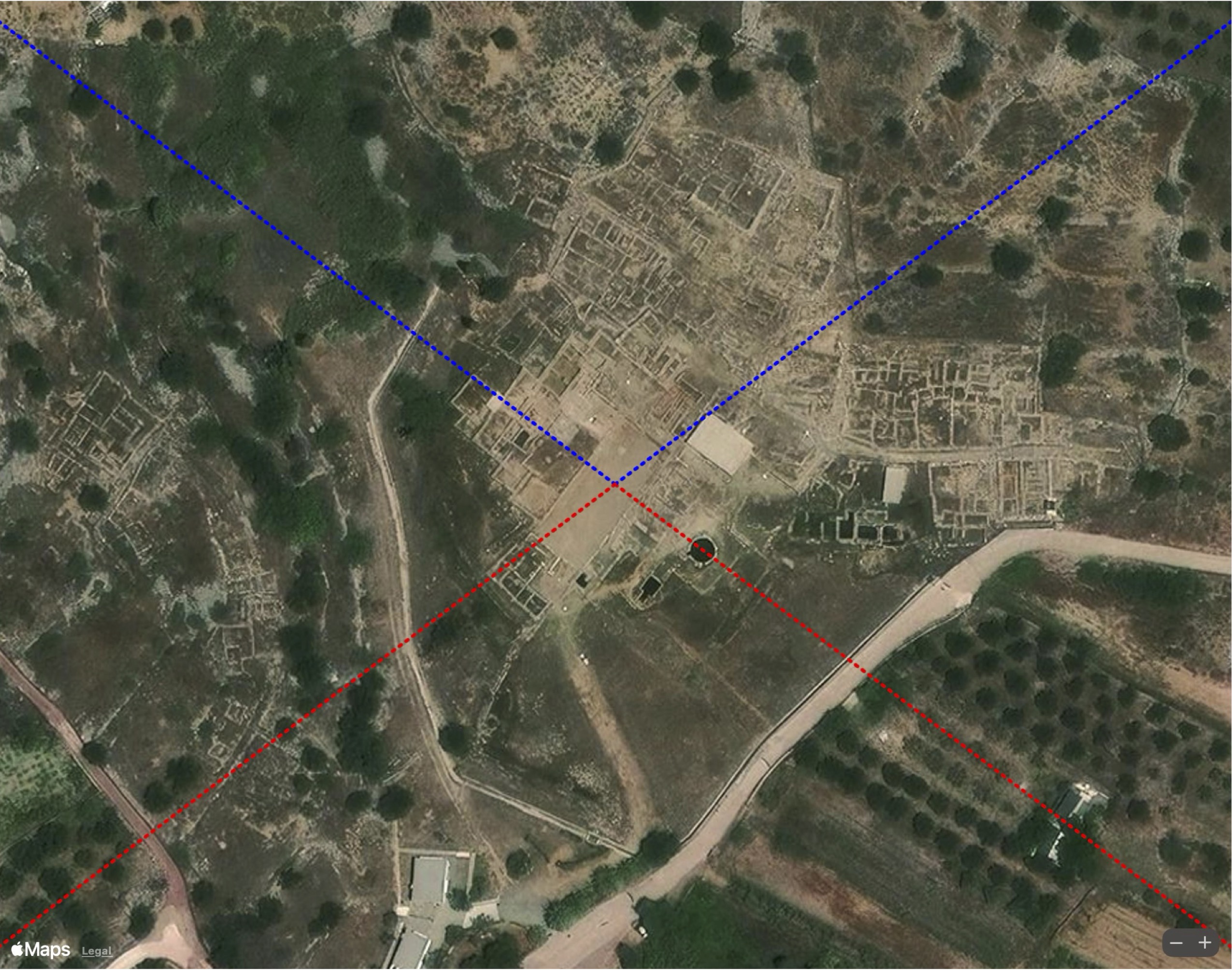
The Minoan civilization flourished on the island of Crete during the Bronze Age from approximately 3000–1100 BCE. During the Early Bronze Age, the Minoans transitioned from small Neolithic farming communities to towns and maritime trade. Construction of monumental palaces such as Knossos, Phaistos, Malia, and Zakros occurred in the Middle Bronze Age. Although places like Malia and Phaistos are not aligned in any obvious astronomical direction, Zakros appears to contain structures aligned to the Sun and the Moon.
The Bronze Age Collapse
The period around 1200 BCE is called the Bronze Age collapse. A subject of some controversy, some say it was another global climate event, while others argue that is was triggered by the invasion of Sea Peoples from the west. During this time, the interconnected civilizations of the Aegean, Mediterranean, and Near East fragmented and collapsed including the Minoans following the massive volcanic eruption on the island of Thera (Santorini), and eventually the Mycenaeans, whose demise ushered in the Greek Dark Ages.
Archaic and Classical Periods
The Archaic Period in Greece lasted from roughly 800 BCE to 480 BCE, bridging the gap between the Greek Dark Ages and the Classical period.
Linear B, the oldest surviving syllabic script used to write Mycenaean Greek evolved from an earlier, still-undeciphered (Linear A) script used by the Minoans. During the Greek Dark Ages, Linear B was lost. Writing did not reappear until after the creation of the Greek alphabet early in the Archaic Period. Expansion of trade, colonization across the Mediterranean, and the rise of the polis (city-state) occurred later.
The Classical Period began around 480 BC with the Greek victory in the Greco-Persian Wars. Under the direction of the Greek statesman Pericles, the Parthenon and other sacred temples were built to replace older, Archaic-period temples that were destroyed by the Persian army decades earlier. The Acropolis had been a sacred space and fortified citadel for centuries, dating back to Mycenaean Bronze Age settlements (c. 1300 BCE). The first major stone temples to Athena were erected during the Archaic period in the 7th and 6th centuries BCE. Pericles built directly on top of their sacred footprints. In particular, the Parthenon was built over the foundations of an unfinished predecessor (often called the Older Parthenon).
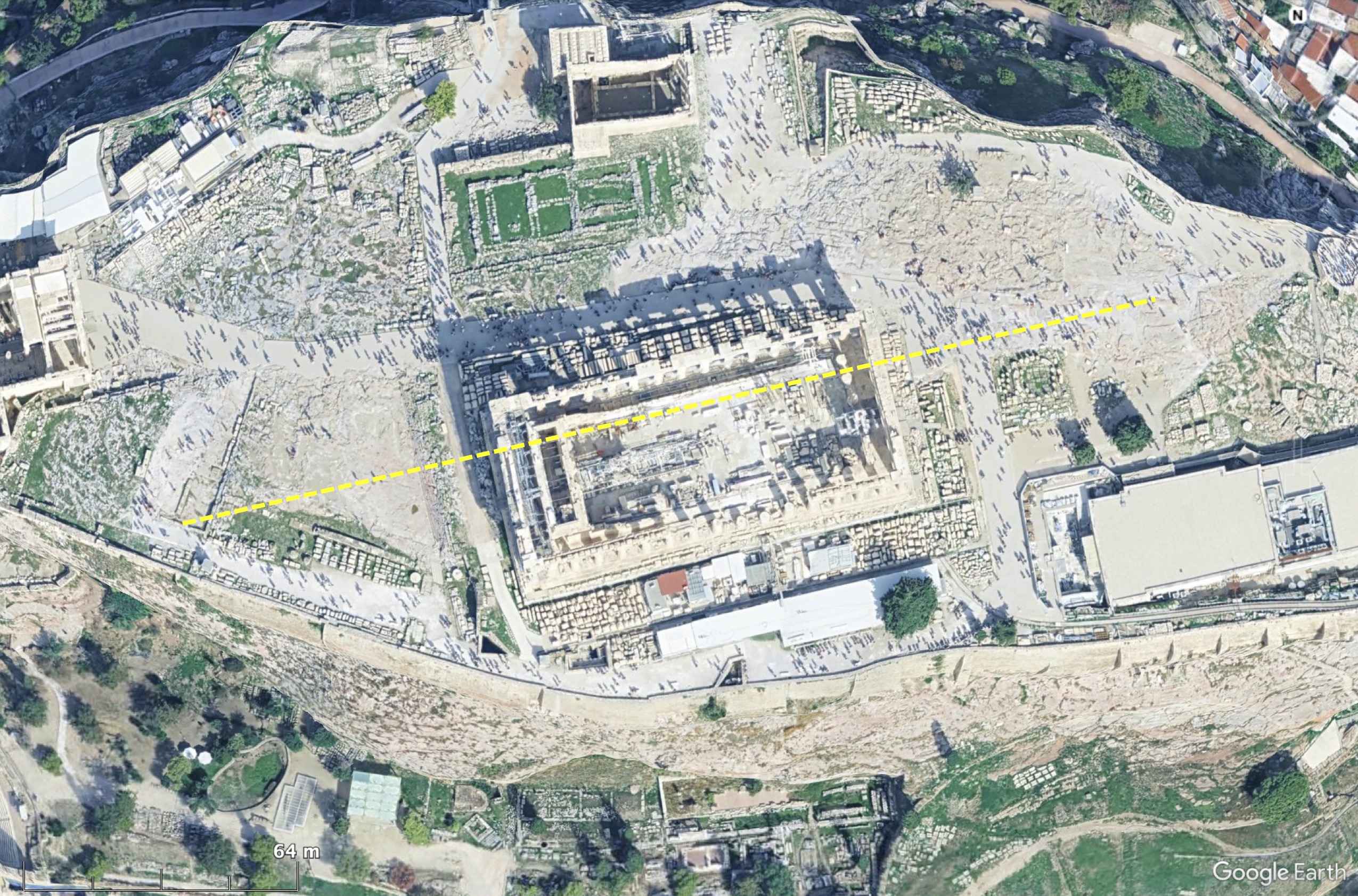
Unlike Meton’s Observatory on Pnyx and the Sanctuary of Zeus along Apostolou Pavlou, none of the structures atop the Acropolis appear to be astronomically aligned. However there is an interesting similarity between the orientation of the older structures at South Citadel at Tiryns and the Parthenon. Both appear to be aligned in the same direction with no obvious significance. The third and final part of this article proposes another explanation that points to a new direction in archaeological research.
Discover more from Before Atlantis
Subscribe to get the latest posts sent to your email.
