Japan’s Mysterious Megaliths

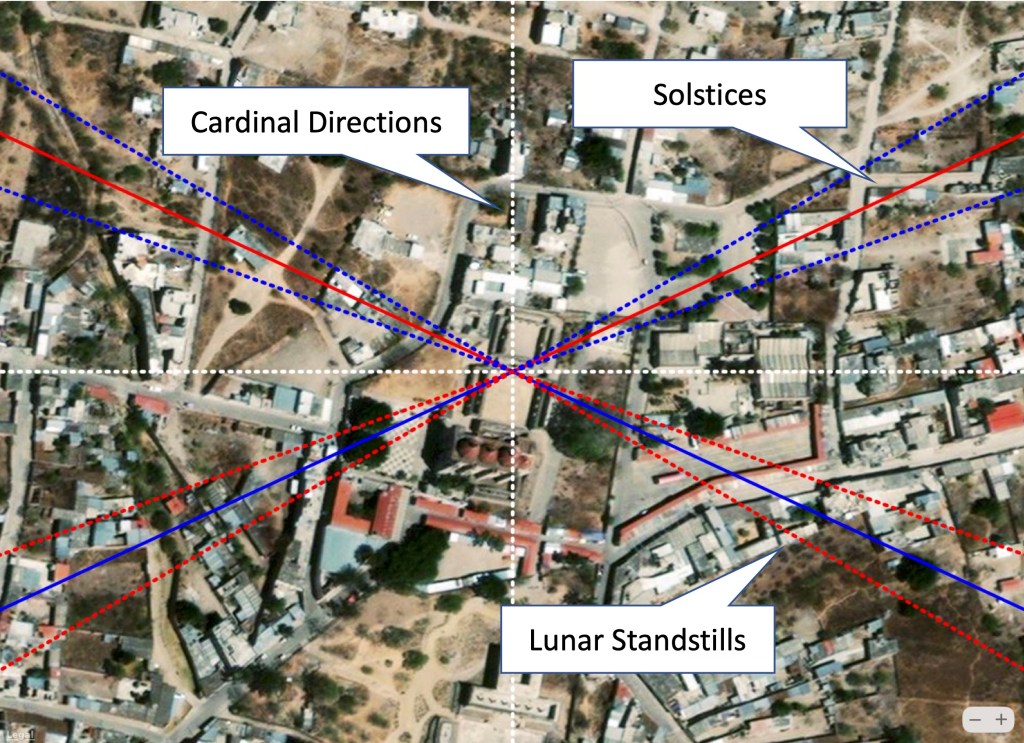
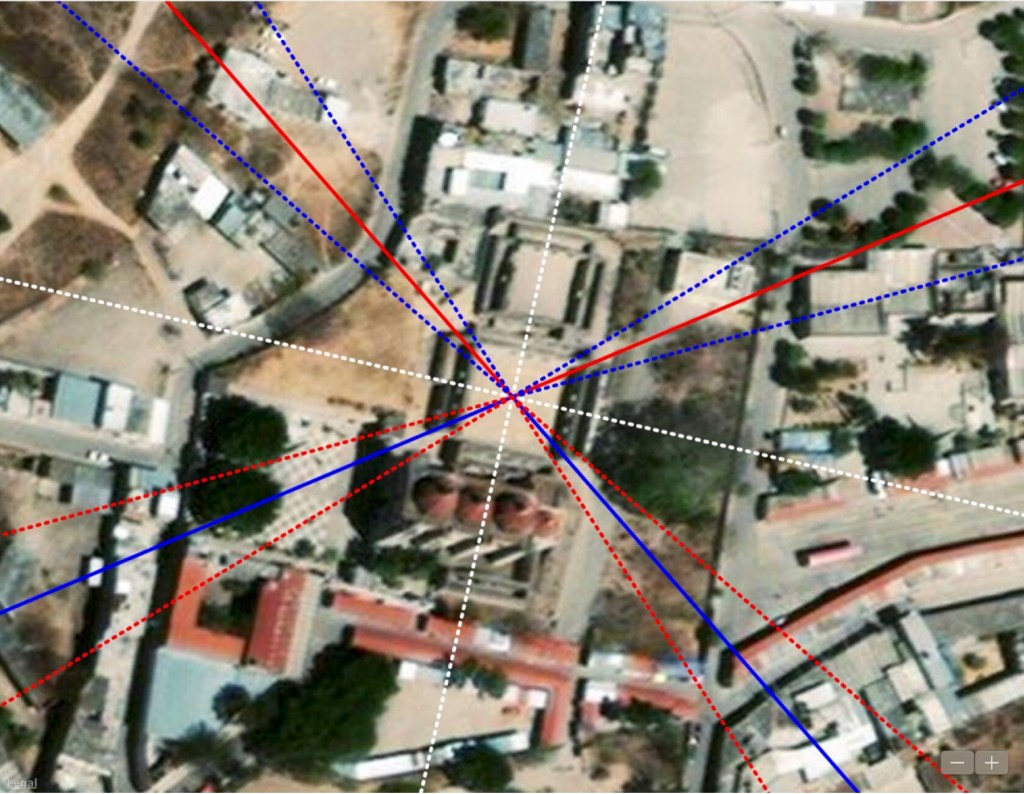
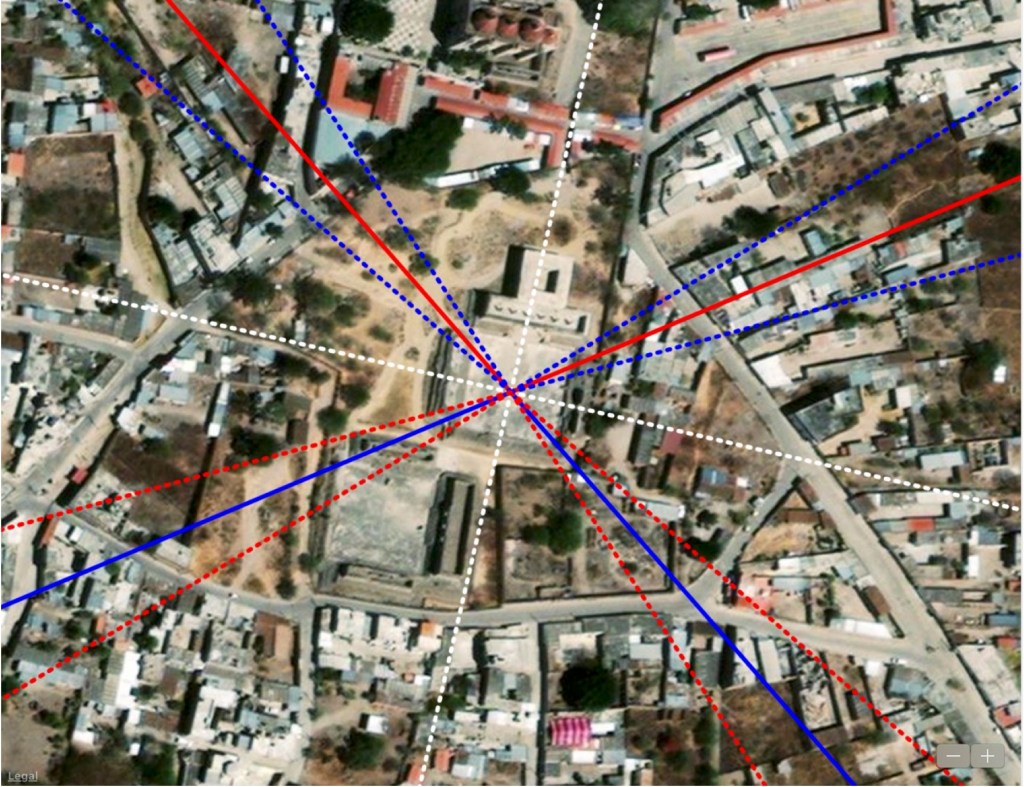
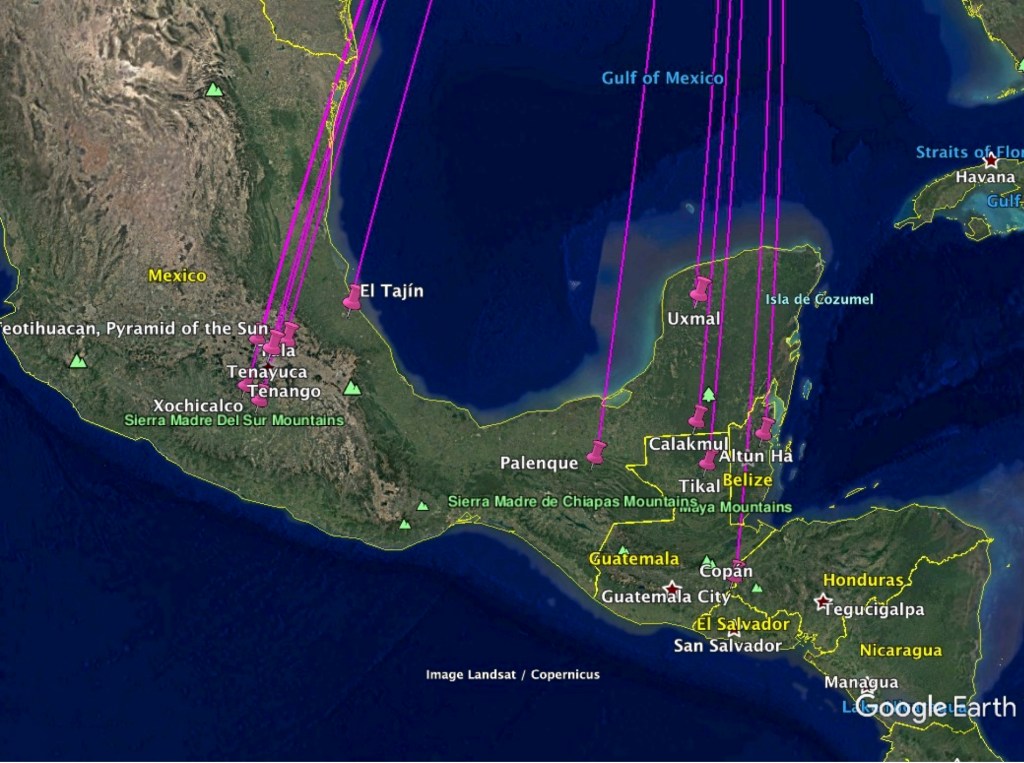
A recent paper examines a variety of ancient sites including stone circles, tumuli and kofuns associated with Japanese rulers, castles, temples, and other structures. Analysis of site alignments provides insight into the evolution of astronomical knowledge in Japan, and the role of Shinto, geomancy, and other influences in the design and layout of these sites. This article discusses two of Japanโ€™s most enigmatic megalithic structures.

Introduction

Japanese history begins with the long prehistory of the Jomon Period (c. 14,000โ€“300 BCE), when hunter-gatherer communities created some of the worldโ€™s earliest pottery and developed complex ritual and village life long before agriculture became widespread. The succeeding Yayoi period (c. 300 BCEโ€“300 CE) saw the introduction of wet-rice farming, metal tools, and social stratificationโ€”changes largely driven by interactions with the Korean Peninsula and China. By the Kofun period (c. 250โ€“538 CE), powerful clans built massive keyhole-shaped tombs for their leaders and laid the foundations of a unified Yamato state. The Asuka and Nara periods (6thโ€“8th centuries) brought Buddhism, Chinese-style law codes, and Japanโ€™s first centralized imperial institutions. Over time, political power shifted to the warrior class, leading to centuries of samurai rule under various shogunates. Although later eras โ€“ medieval, early modern, and modern โ€“ transformed Japan in dramatic ways, the deep cultural roots of the Jomon, Yayoi, Kofun, and early imperial periods remain fundamental to understanding Japanโ€™s historical identity.

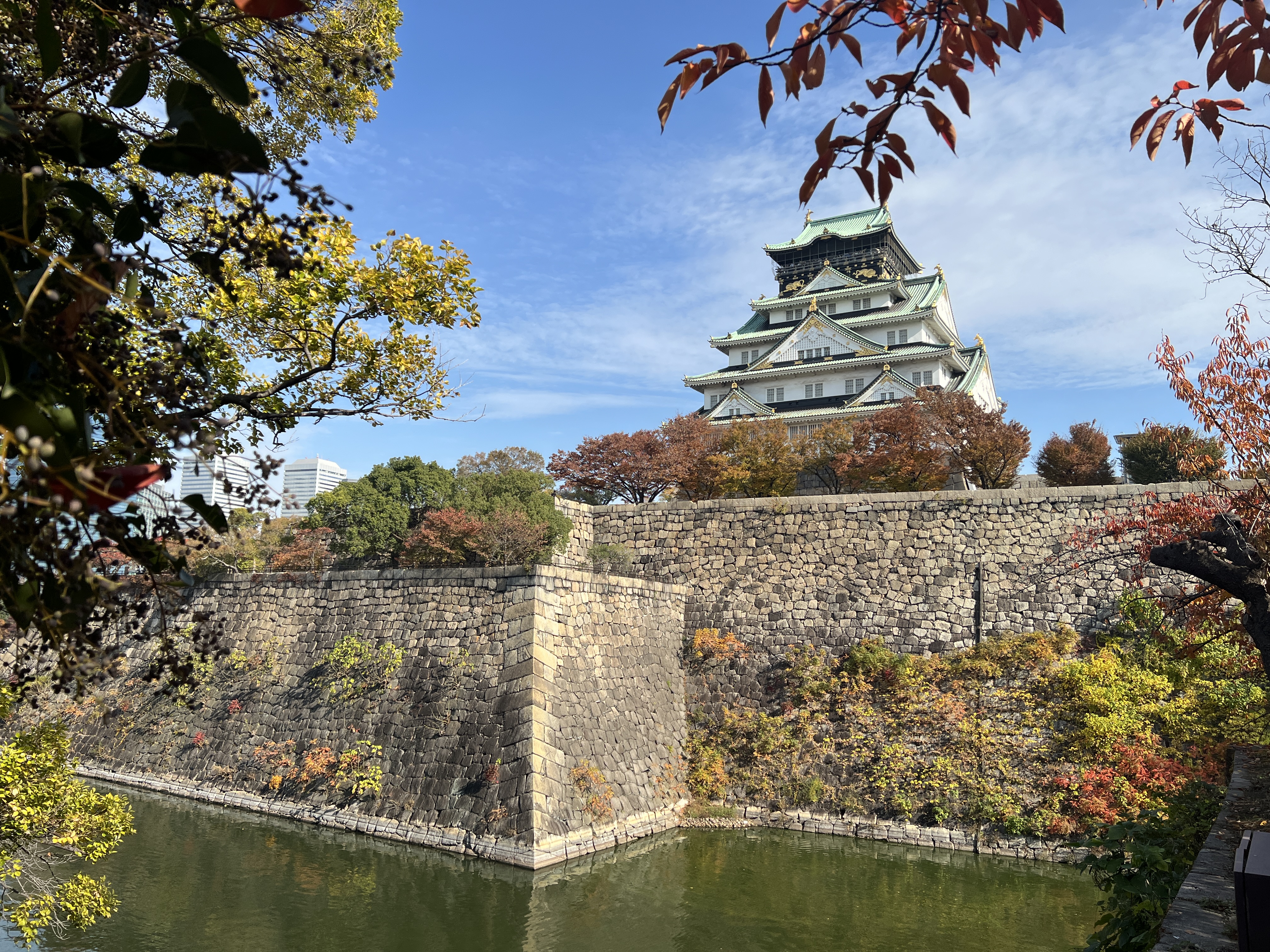
View of Osaka Castle from the southwest. (Photo by author)

Osaka Castle

We begin at Osaka Castle where Japan’s third-largest megalith is a part of one of the castle’s inner walls. Osaka Castle was built during the Shogunate Period when Japan was ruled by a hereditary military commander called a shogun. Numerous castles were established during this period. A practice known as feng shui, which was introduced to Japan from China around the 7th century, played a role in how shoguns and regional lords selected, oriented, and structured castles, castle towns, and even entire capitals. While not every decision was based on geomancy, feng shui principles were widely understood and frequently invoked from the medieval era onward.
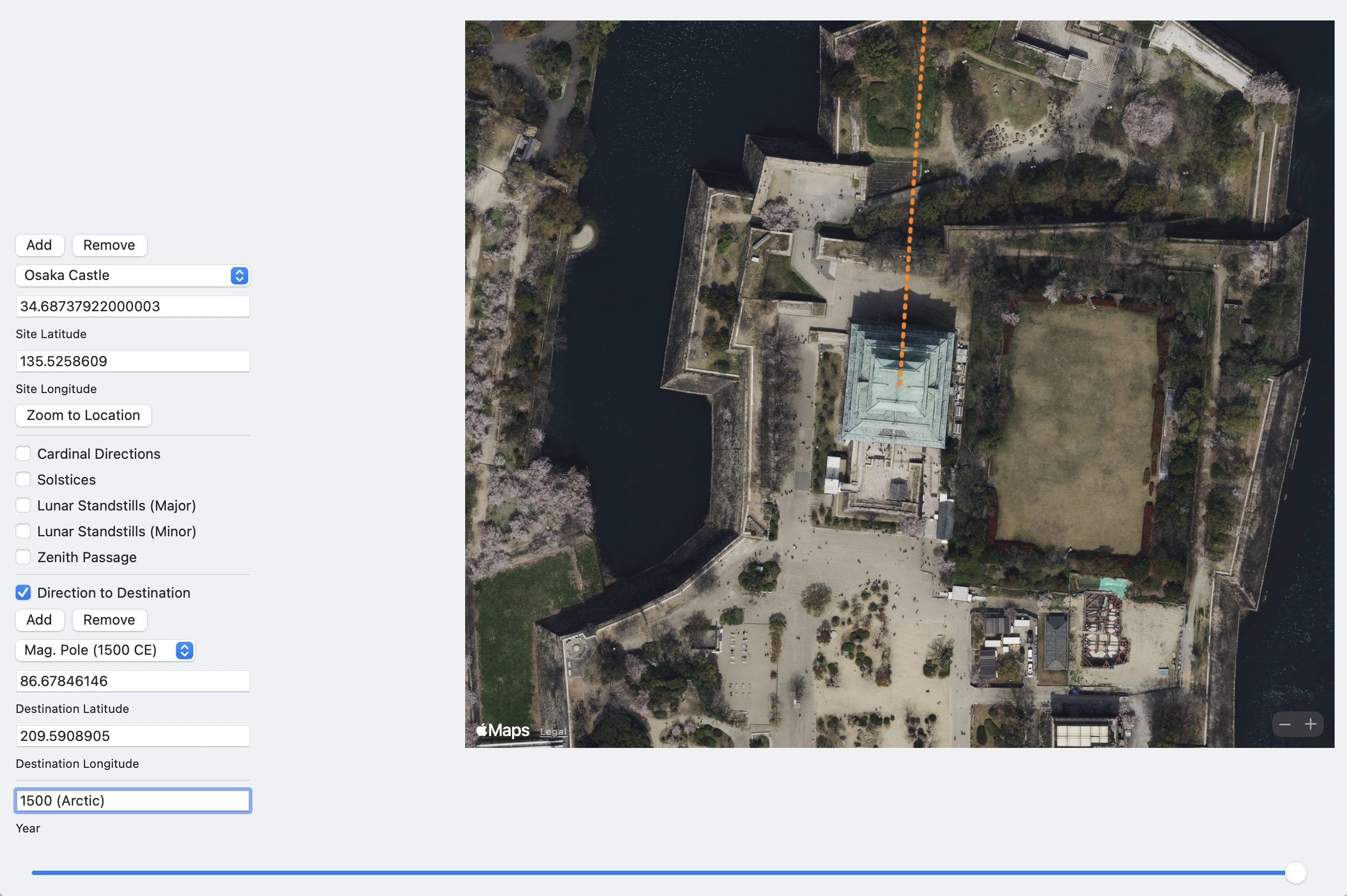
Orange dotted line the approximate direction of geomagnetic north c. 1500 CE.

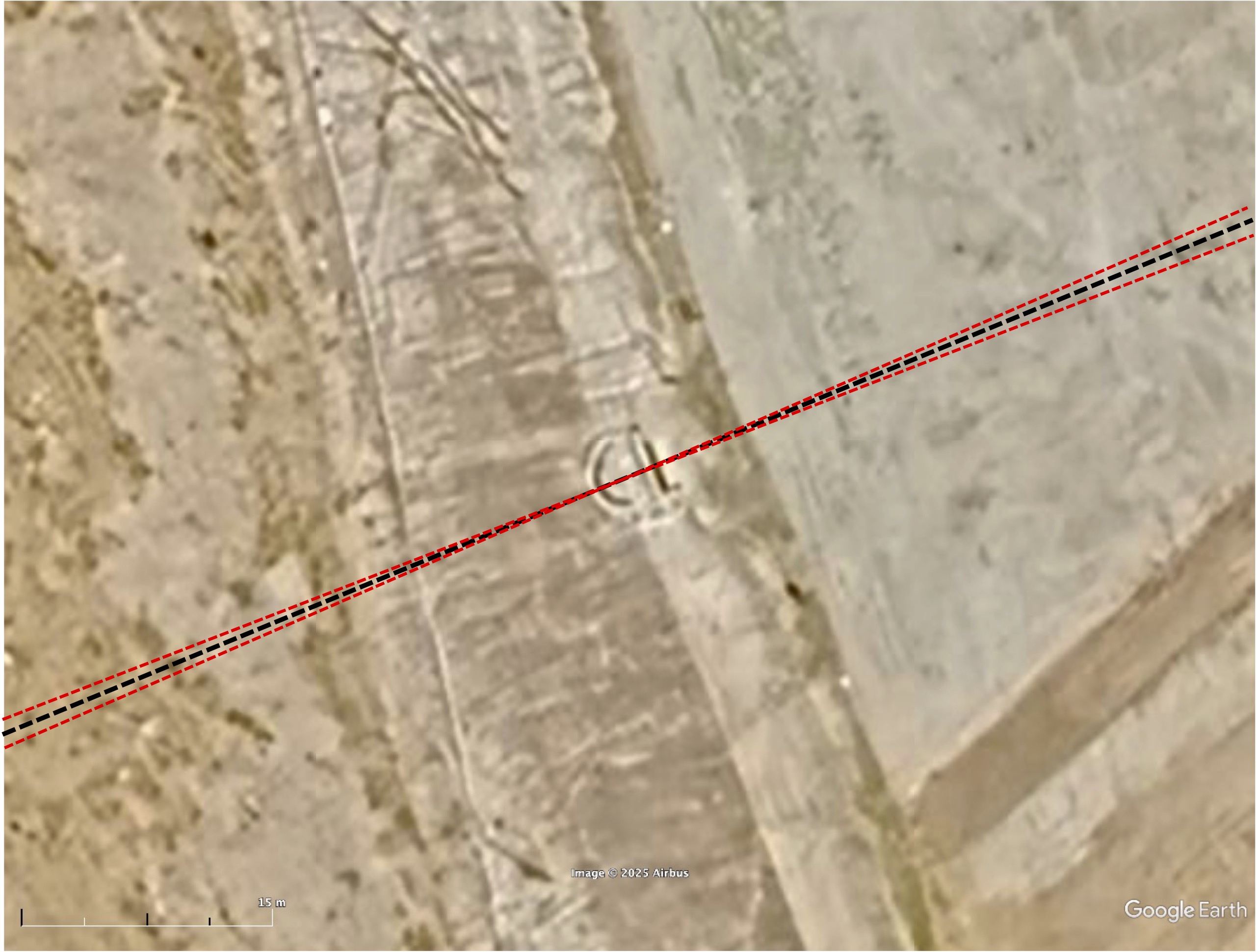
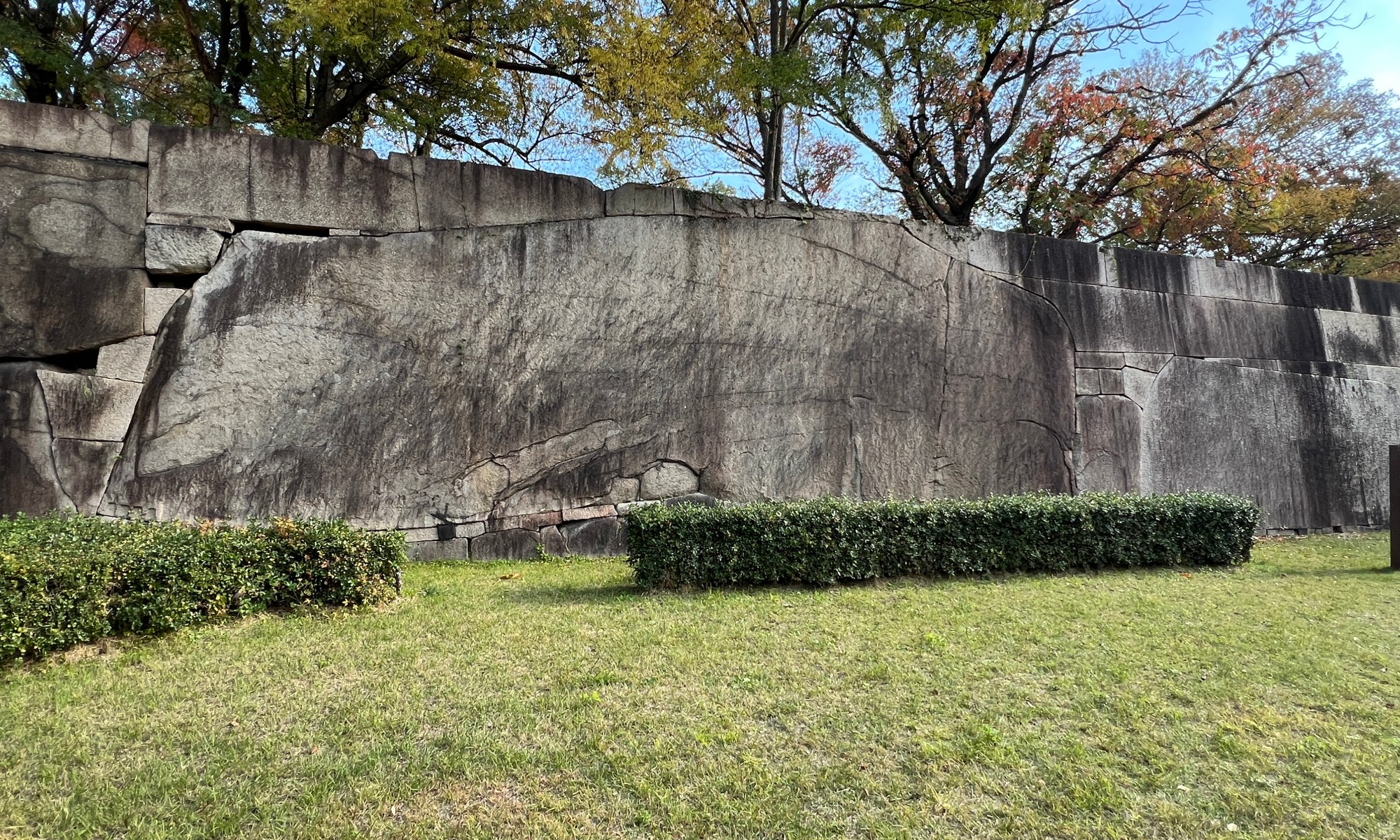
Osaka Castle is aligned in the direction of geomagnetic north circa 1500 CE, which is close to its actual date of construction of 1597. (A similar practice appears to have been used in China to align enormous earthern mounds that served as tombs and mausoleums for its rulers.) During the Tokugawa shogunate in the 1620s, several large megaliths were incorporated into internal walls. The Tako-ishi (โ€œOctopus Stoneโ€), which is the largest stone in terms of surface area (59.43 mยฒ), is at the south end of the castle along the wall just inside the Sakuramon Gate. The Higo-Ishi, is the second largest stone in terms of surface area (54.17 mยฒ) but is estimated to be heavier (about 120 tons compared to 108 tons for the Octopus Stone). It is a part of the wall just inside the northwest entrance to the castle past the Kyobashi Gate. Where the Tako-ishi is aligned east-west, the Higo-Ishi is aligned to minor lunar standstills. Two paths through the Nishinomaru Garden west of the castle are aligned to major (M) and minor (m) lunar standstills.
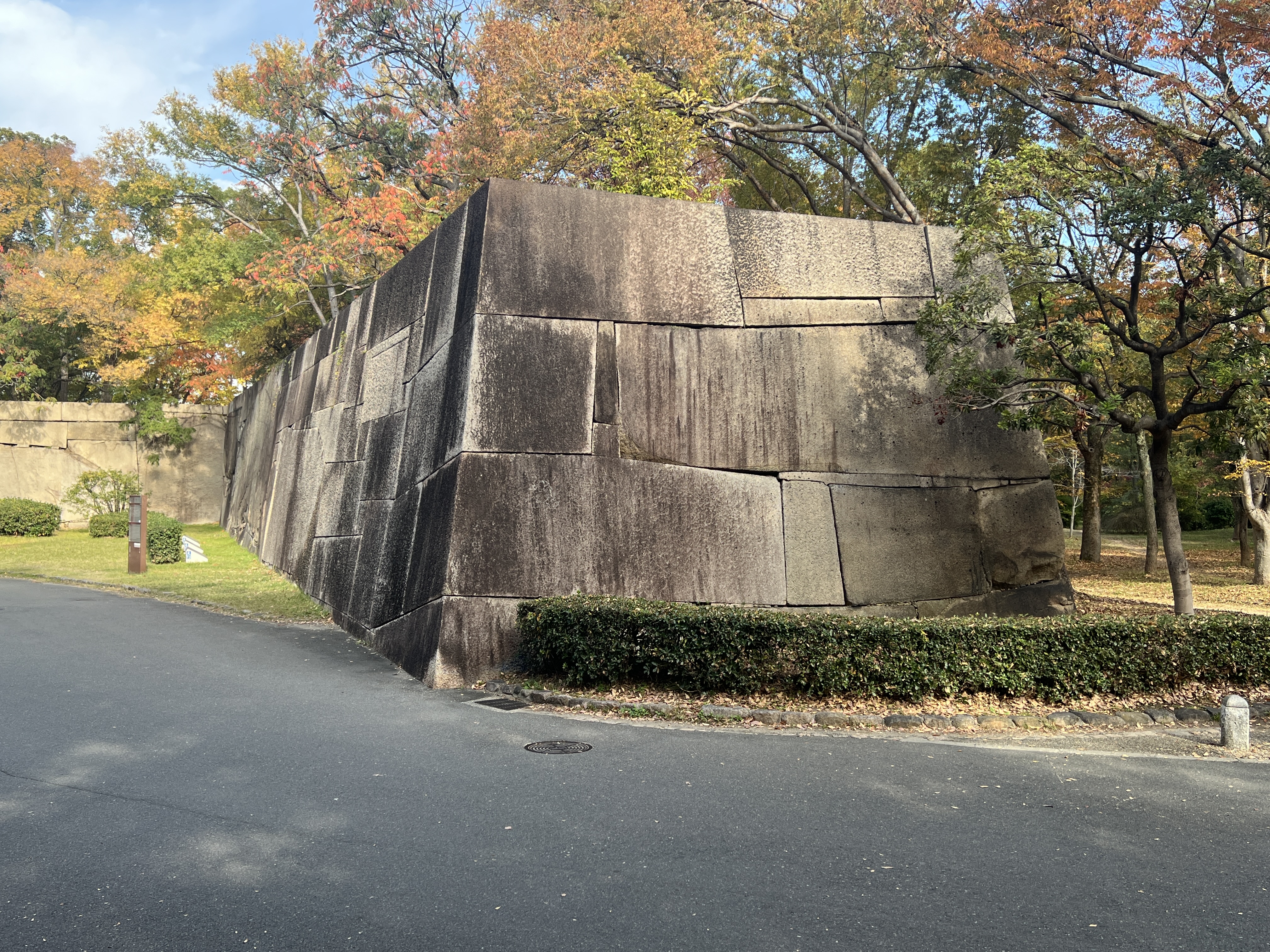
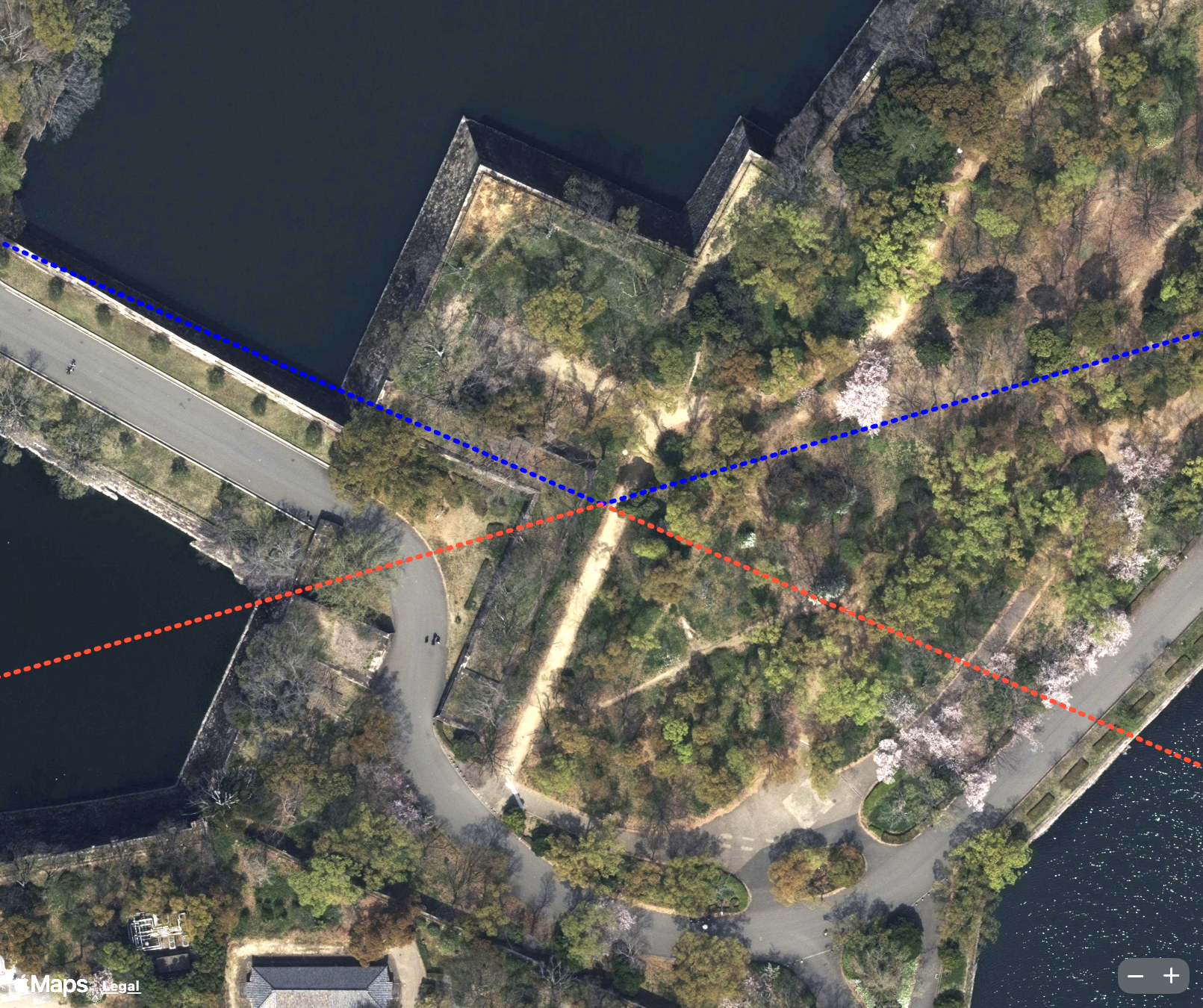
Inner castle wall that contains Higo-Ishi (left) and alignment of wall to minor lunar standstills (right). (Photo by author/Google Earth)

Ishi no Hoden

The Higo-Ishi is the largest megalith (by weight) at Osaka Castle and the third largest in Japan. Where the Higo-Ishi was quarried from islands in the Seto Inland Sea in the 17th century, the dating of the second-largest megalith is unknown. Ishi no Hoden (“Stone Treasure Hall”) is a 500-ton megalith cut from volcanic tuff in such a way as to appear to float above a pond. Philipp Franz von Siebold was the first Westerner to visit the site in 1826. The megalith is mentioned in an ancient historical record compiled from the year 713 CE onward known as the Harima Fudoki. The document says that it was built by Mononobe no Moriya, one of the strongmen of the 6th century, during the reign of Prince Shotoku, who has been considered one of the greatest figures in Japanโ€™s ancient political history. But there is no mention of what it was for. However, the entries in the records are in conflict because Moriya died in 587 before Prince Shotoku came to power in 593.
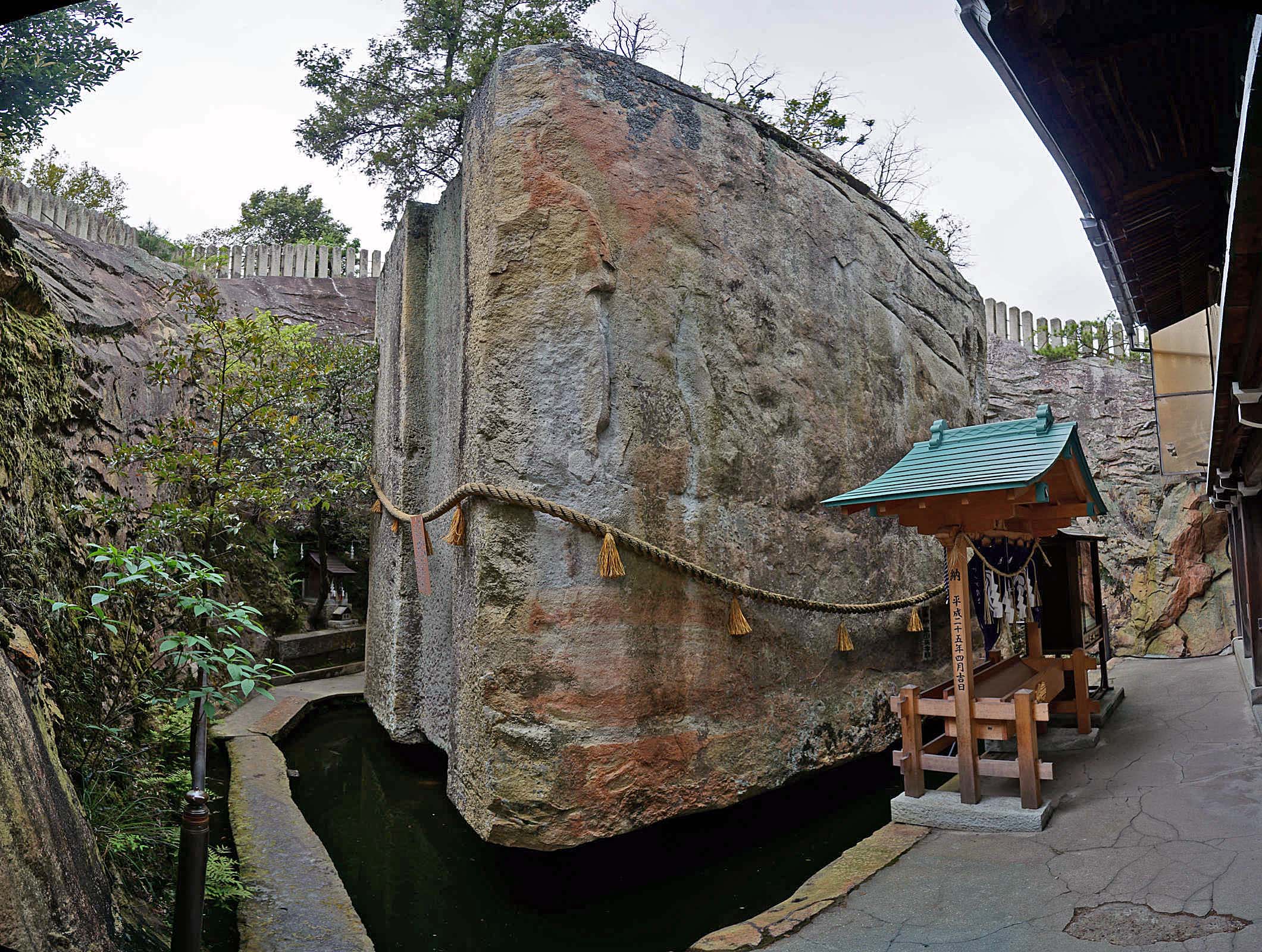
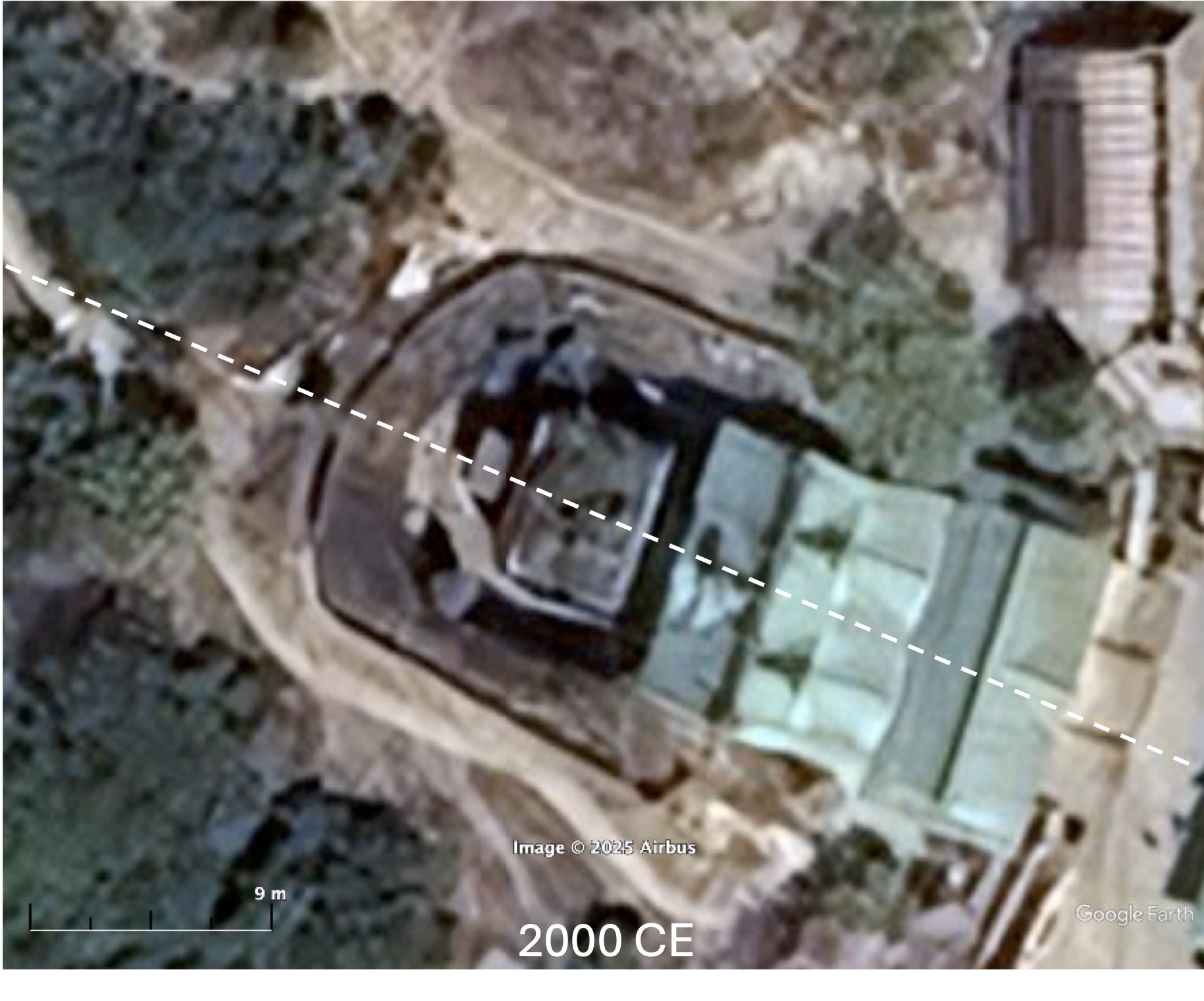
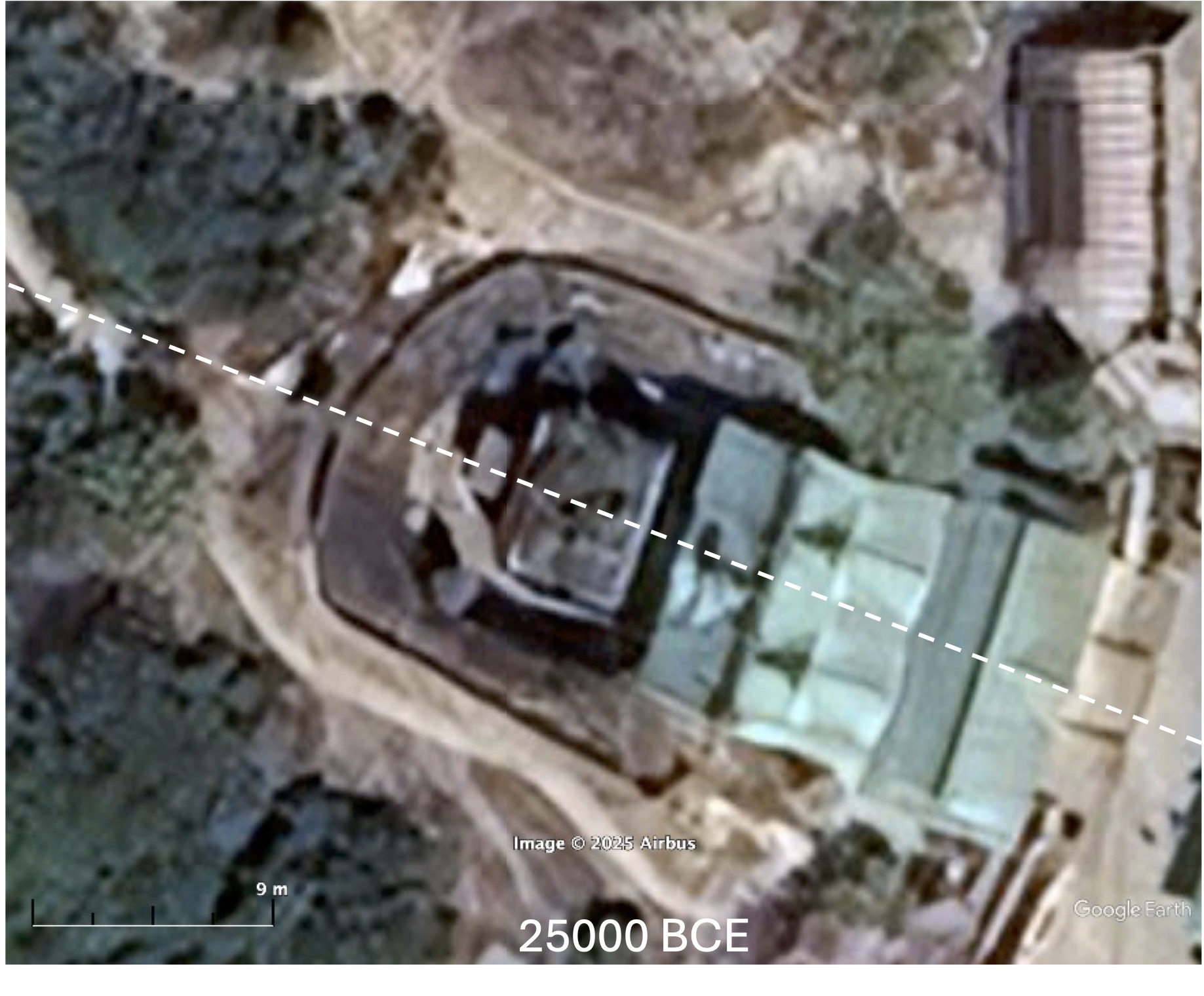
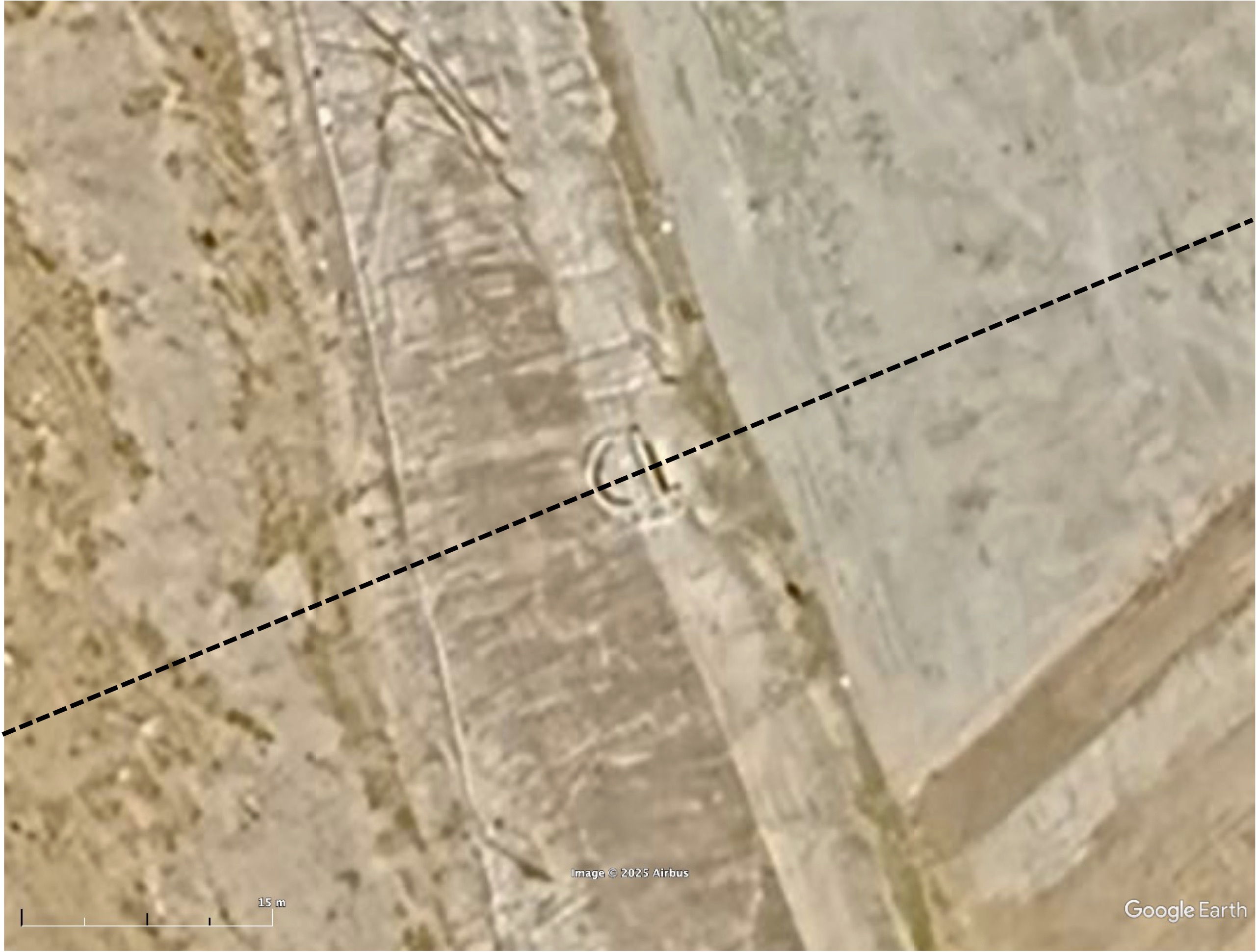
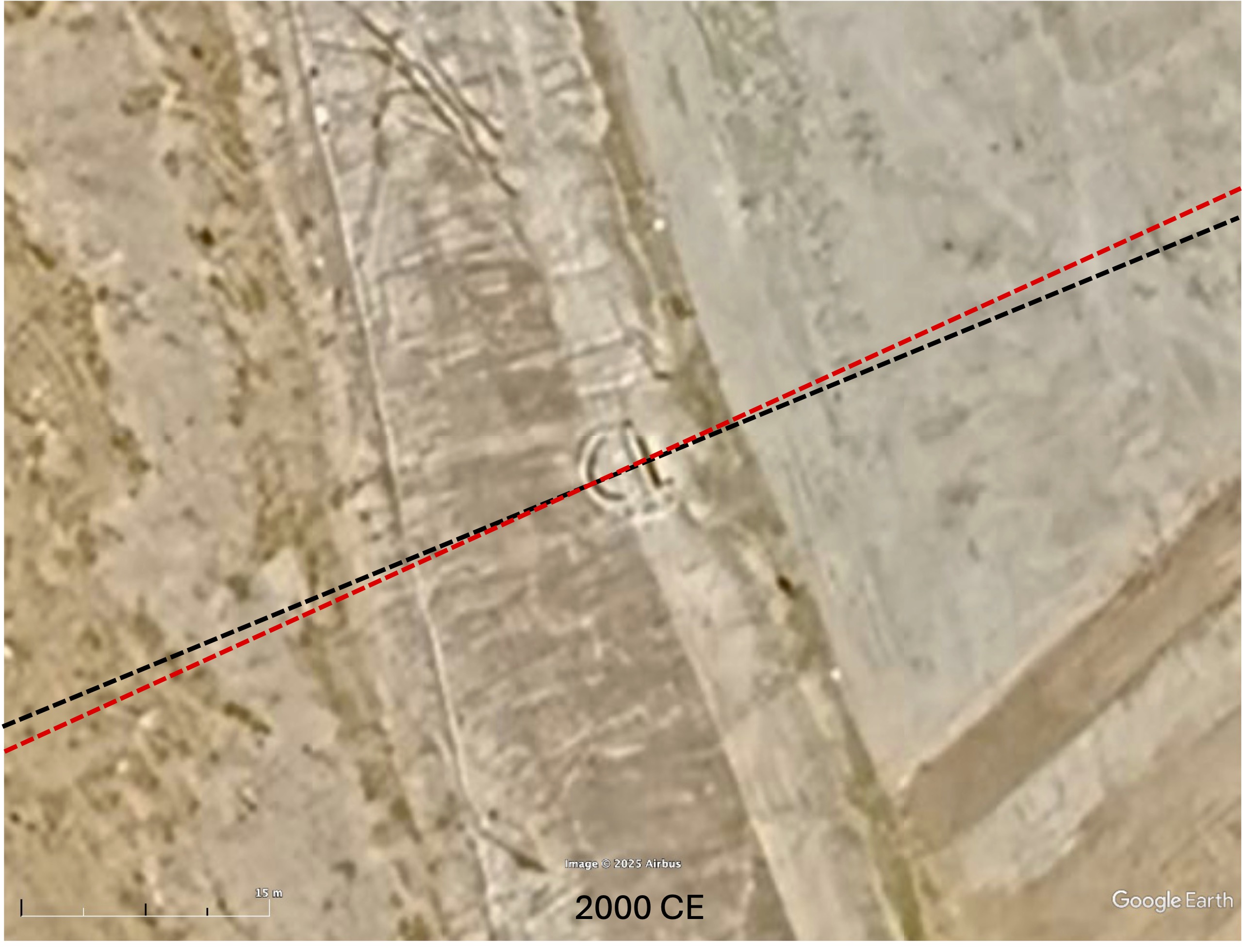
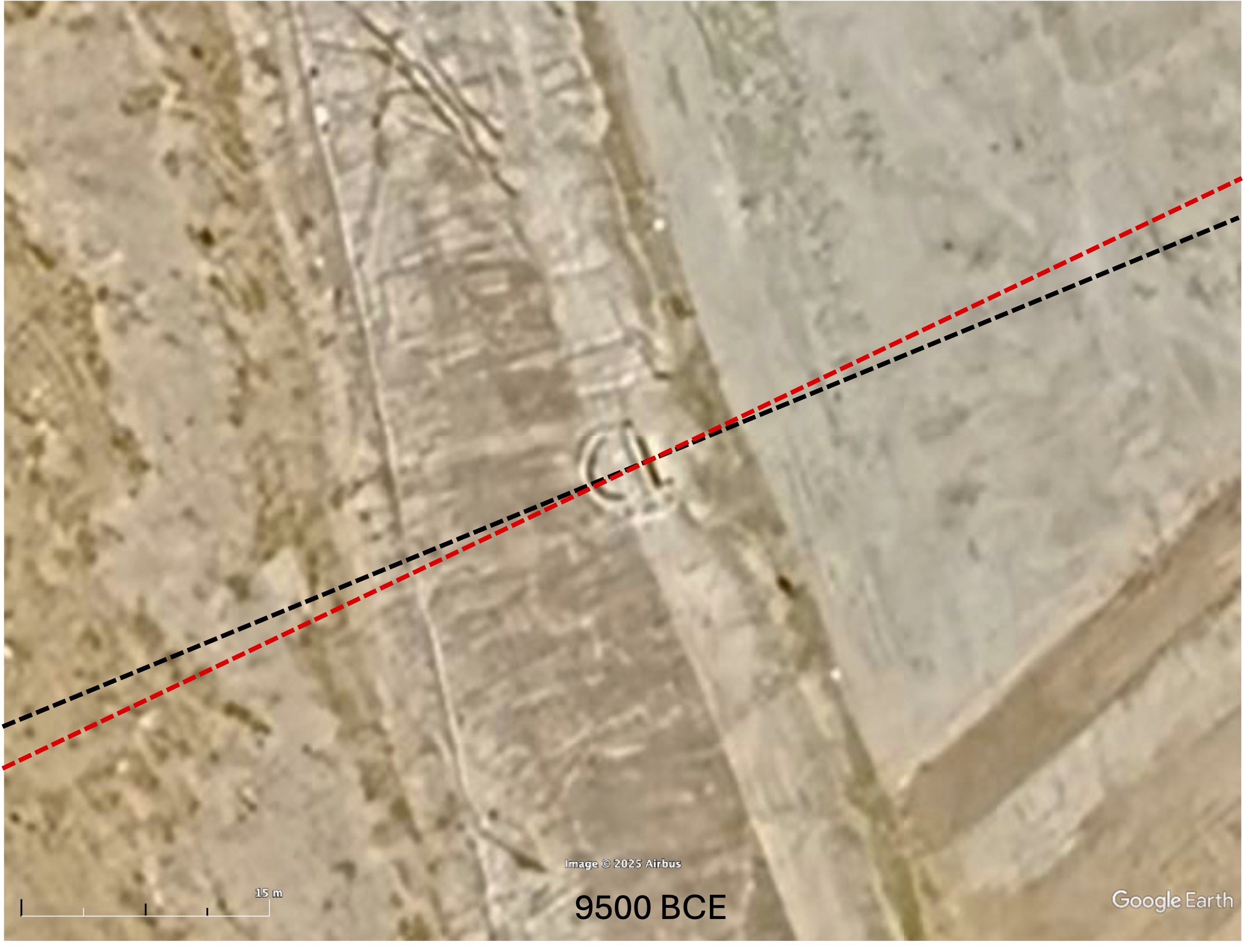
Ishi no Hoden (left) and alignments to minor lunar standstills 2000 CE (top right) and 25,000 BCE (bottom right). (Z Tanuki/Creative Commons and Google Earth)

Ishi no Hoden, which is a sacred object of the adjoining Oshiko Jinja Shinto shrine, is rotated about 20ยฐ south of east. Unlike the Shimogamo Shrine and Kenninji Temple that are rotated to view sunrise over an elevated horizon on the equinox, there are no hills or mountains immediately east of Ishi no Hoden. Its north-south axis is also well outside the range of magnetic declinations over the past 10,000 years. There is, however, another possible astronomical explanation for its orientation. As shown above, the megalith separated from the surrounding bedrock appears to be roughly aligned in the direction of minor lunar standstills.

Lacking specific evidence, Ishi no Hoden is traditionally dated to the Kofun Period. Kofun alignments in the direction of minor lunar standstills suggest the Moonโ€™s 18.6-year Metonic Cycle was known in Japan at that time. Although volcanic tuff is relatively easy to cut and shape compared to granite, there are no other known sites in Japan where a structure of this size was cut out of the native rock and shaped in such a manner.

Many mysteries surround Ishi no Hoden. According to one story, two gods were sent here to build a stone palace. They were given only one day to do it. The local gods rebelled, and by the time the rebellion was suppressed, dawn had broken and the structure was unfinished. The two gods left, saying their spirits would reside within the massive rock and protect the land for eternity.
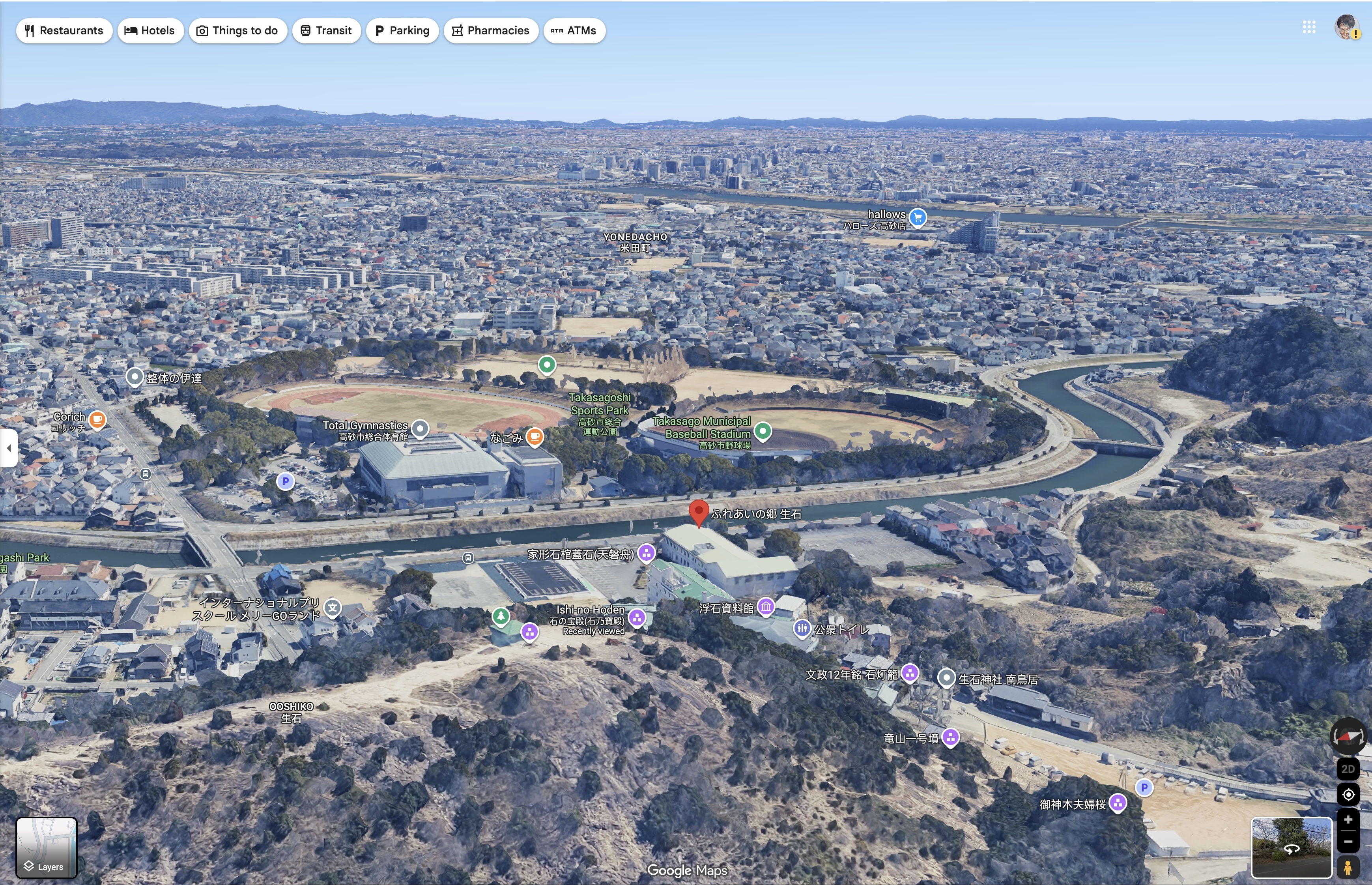
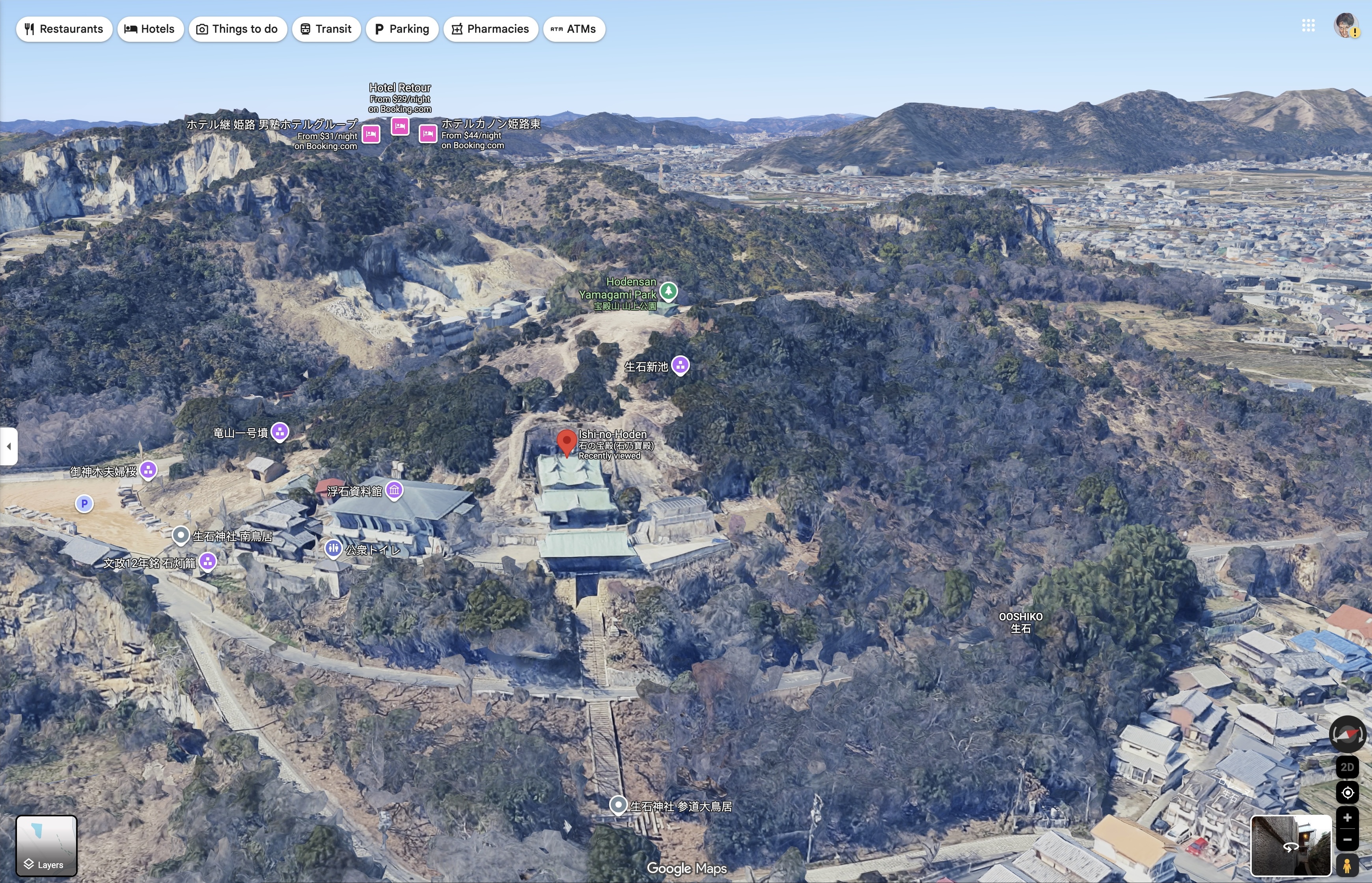
Google Map views of Ishi no Hoden from the northeast (left) and southwest (right).

According to legend, the Oshiko Jinja Shinto shrine was founded in 97 CE during Emperor Keiko’s reign with โ€œdivine instructionโ€ to worship the giant floating rock. If this is true, then Ishi no Hoden existed before the Kofun period. This is consistent with its alignment as the structure becomes more closely lined up with minor lunar standstills as you go back in time. Changes in Earthโ€™s obliquity or axial tilt cause the direction of solstices and lunar standstills to change by several degrees over a 41,000-year cycle. The best alignment with minor lunar standstills would have occurred approximately 25,000 BCE. As shown above, its placement near the top of a hill would have provided an excellent view of the Moon rising in the southeast sky at a minor lunar standstill.
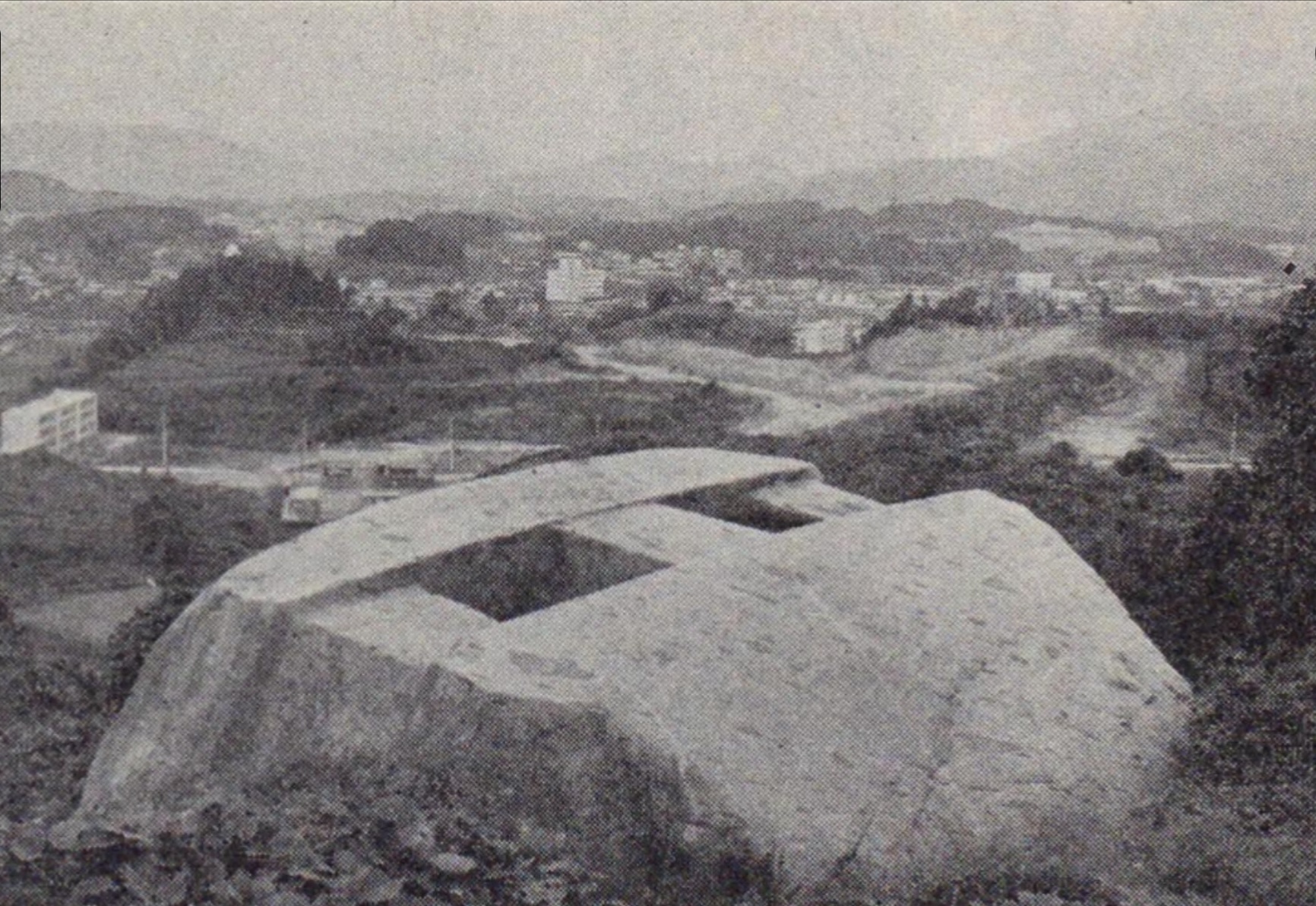
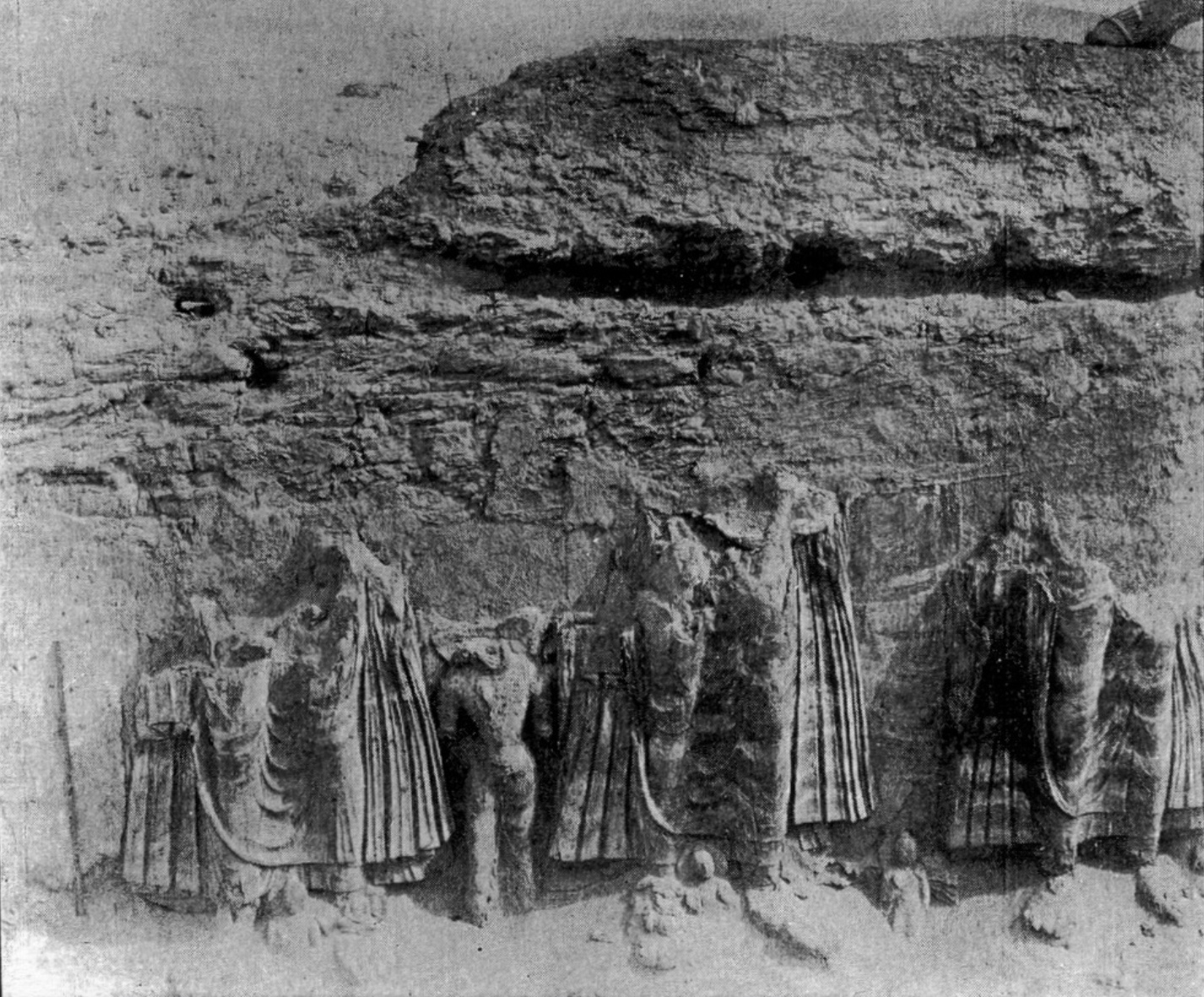
Historical photo of Masuda no Iwafume

Masuda no Iwafume

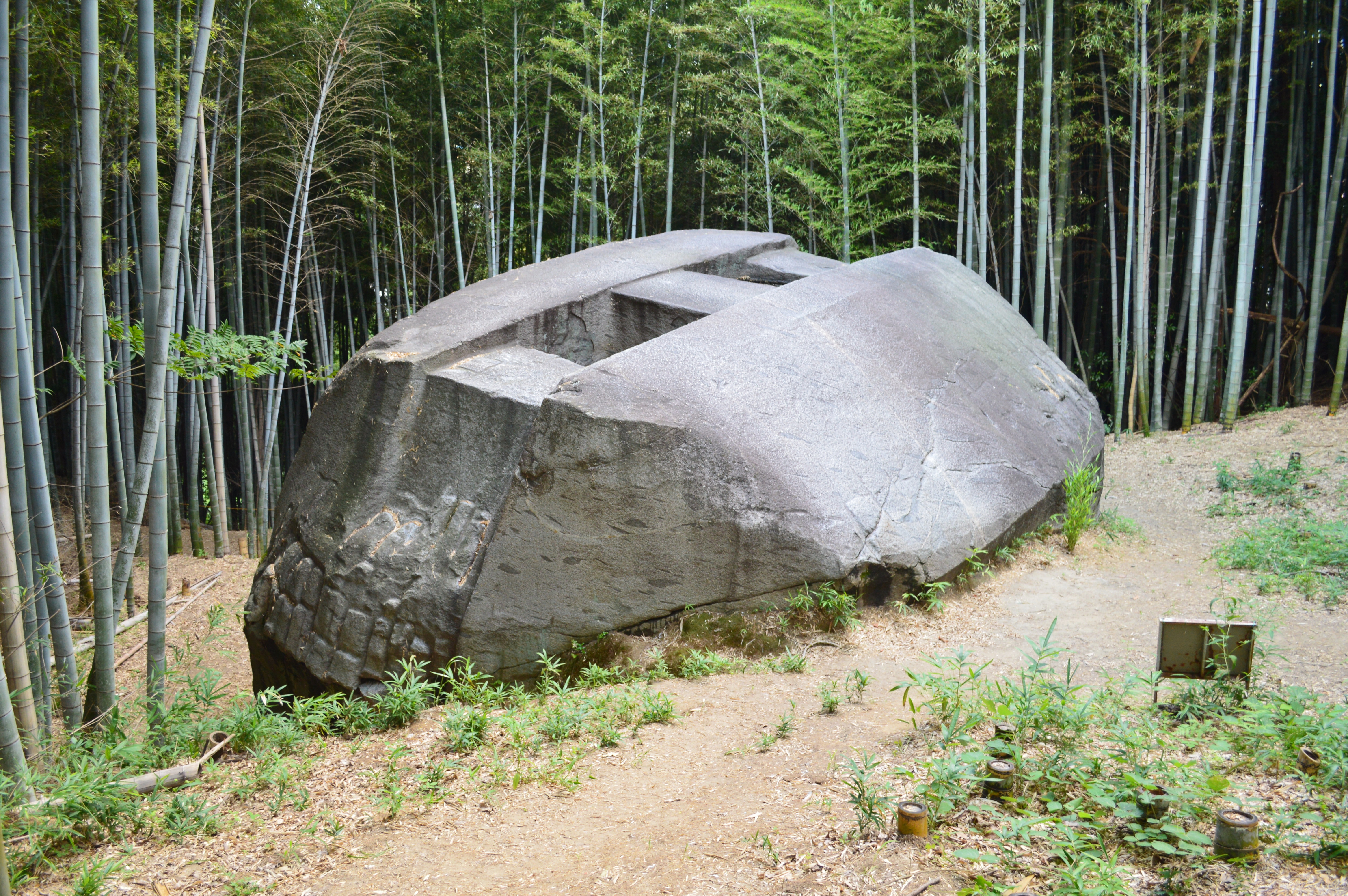
Masuda no Iwafune (โ€œRock Ship of Masudaโ€) is the largest megalith in Japan, weighing an estimated 800 to 1,000 tons. Like Ishi no Hoden, it was cut from the native bedrock, not cut and transported like the large megalith found in Osaka Castle. Masuda no Iwafune first appears in the Yamato Meisho Zue โ€“ a famous Edo-period Japanese woodblock-printed guidebook from 1791, focusing on the historic Yamato Province (modern-day Nara area), featuring detailed text and illustrations of famous places, temples, and shrines.
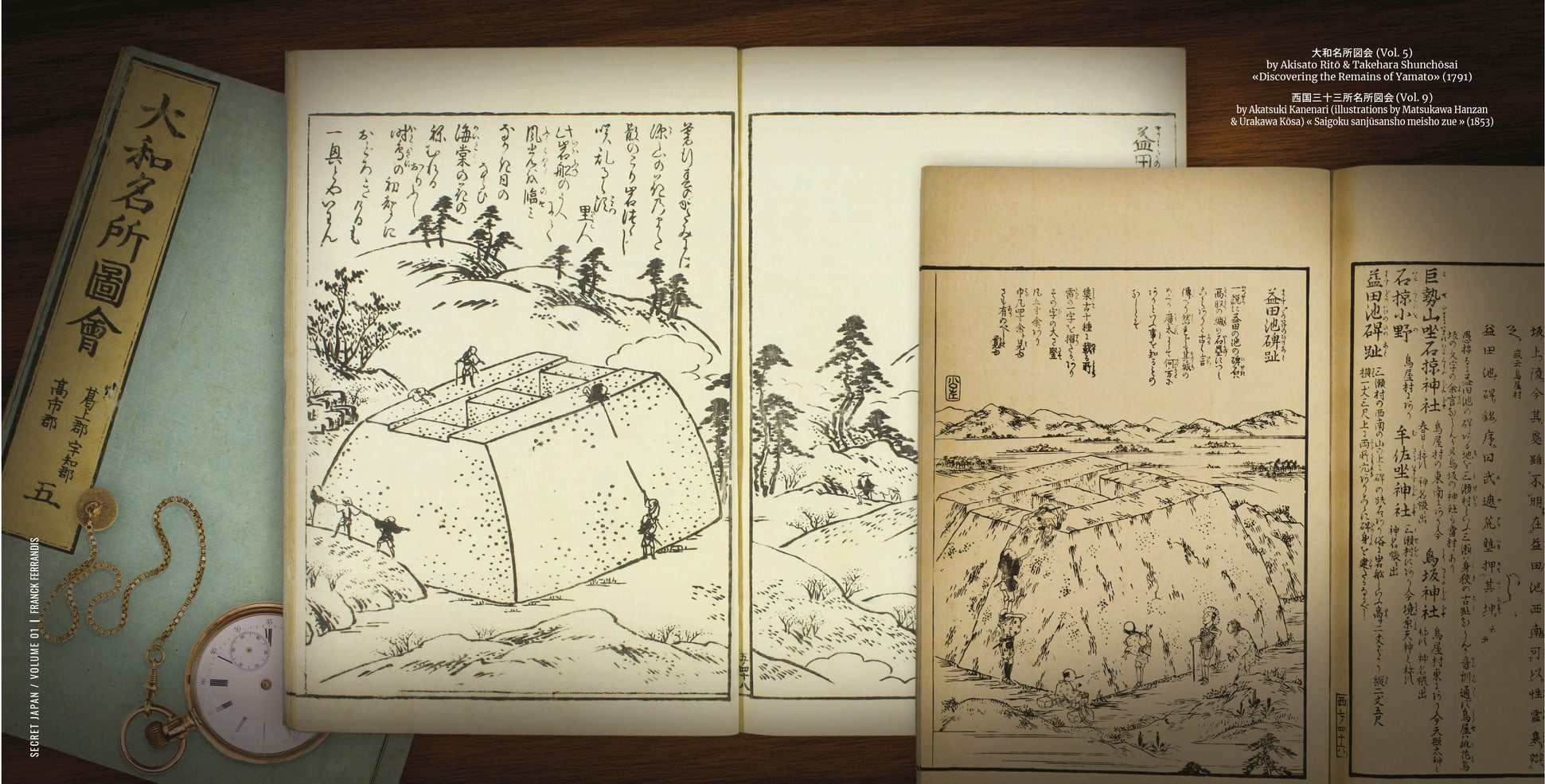
Artist depiction of Masuda no Iwafune in Yamato Meisho Zue.

The megalith is approximately 11 meters (36 feet) long, 8 meters (26 feet) wide, and 4.7 meters (15 feet) high. It lies in a trench with its long axis running roughly eastโ€“west and sloping down from north to south. Partially obscured by trees, it is difficult to precisely measure its orientation from Google Earth imagery as we have done for the other sites. Using a historical photo of the site and a 3D model, we can confirm that its long axis is aligned roughly east-west.
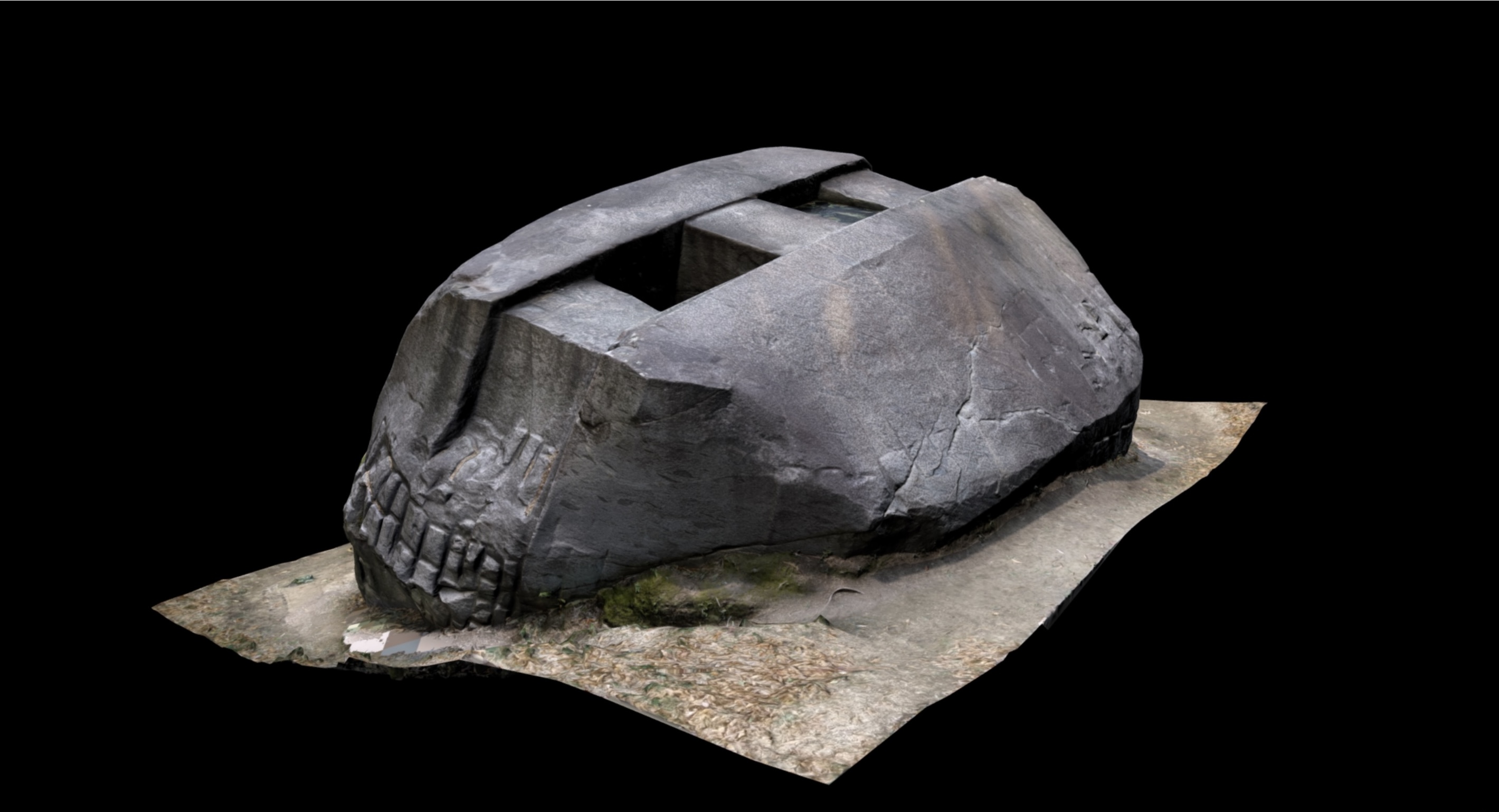
Click to display interactive 3D model by Atsushi Nakabayashi.

Using the most recent 2025 Google Earth image, a section of its long dimension side is visible and appears to be rotated about 4ยฐ south of east. As shown below, this is in the direction the Sun would rise just over the hills to the east on the equinox. Unlike Shinto and Zen sites that are rotated slightly to be perpendicular to the equinox sunrise direction over an elevated horizon, Masuda no Iwafune lies parallel to it.
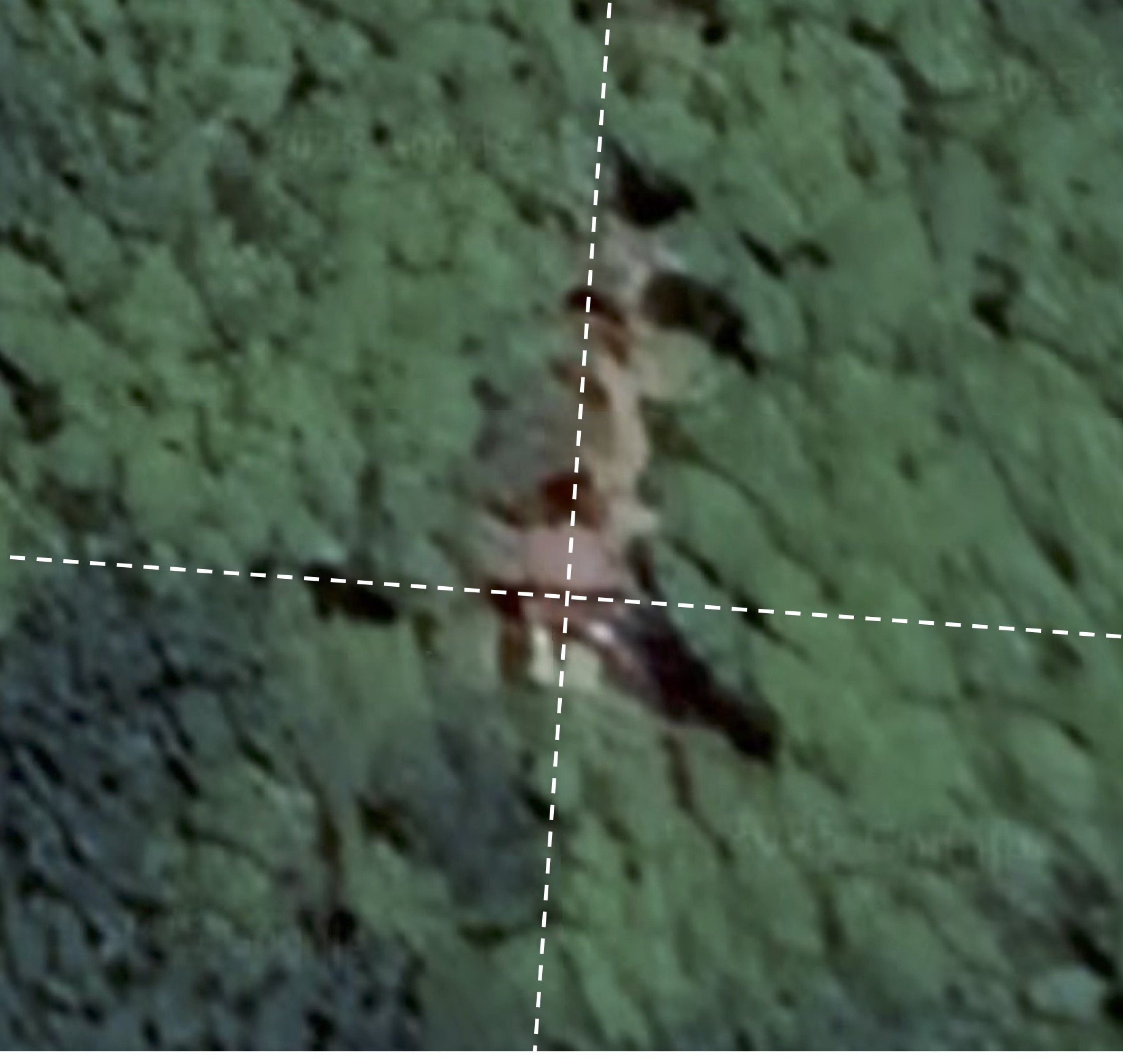
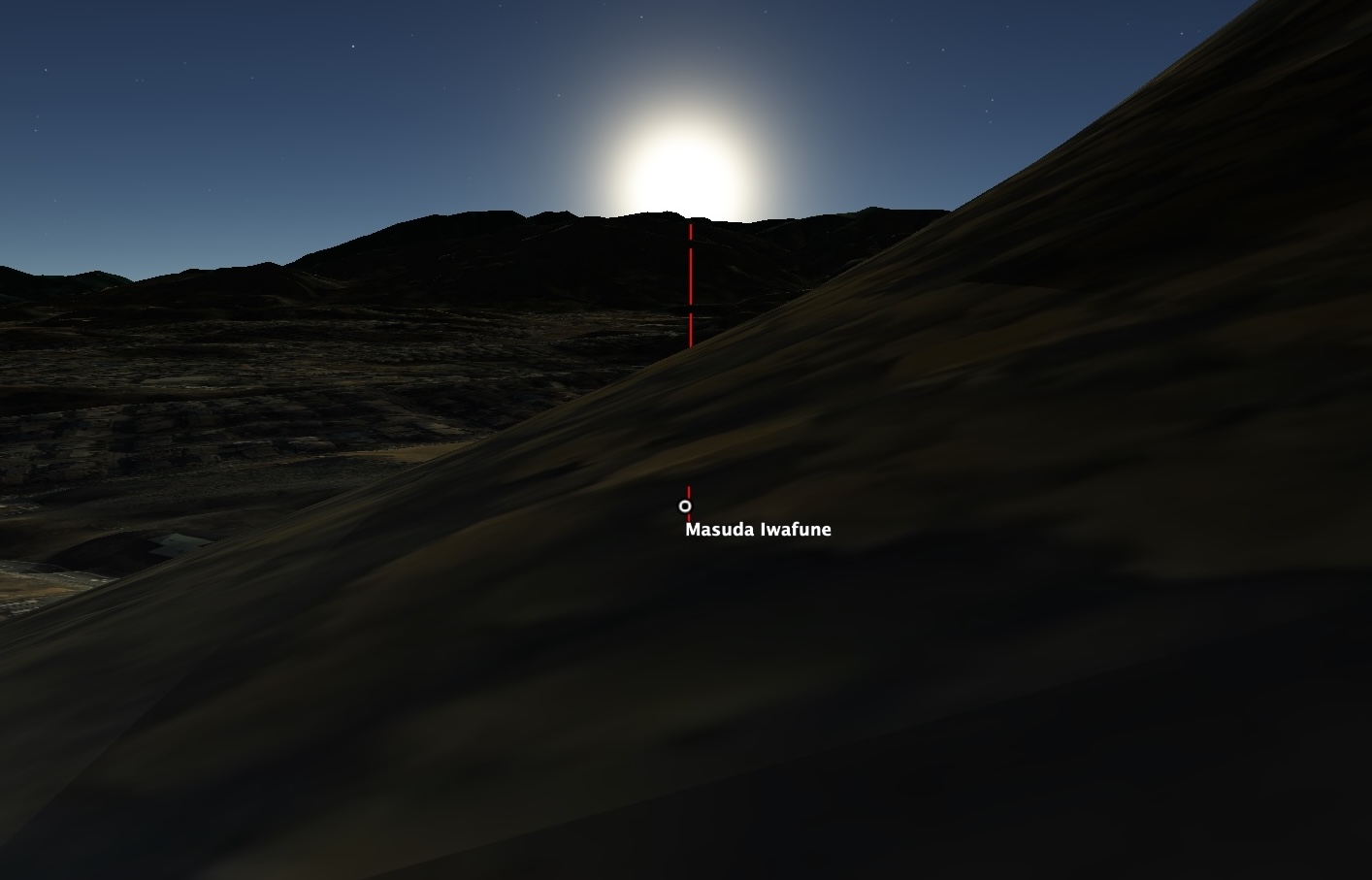
Visible part of Masuda no Iwafune with reference lines rotated 4ยฐ east of north (left) and horizon view at 4ยฐ south of east at sunrise on the equinox. (Google Earth)

Although it is generally dated to the Asuka and Nara periods, Masuda no Iwafune is not mentioned in Japanese historical chronicles and ancient records from that time. This seems strange as Japan’s centralized government was in the Asuka region (Nara Prefecture) in the early 6th century, moving to the first permanent capital, modern Nara, around 710, and finally settling in Kyoto in 794, which remained the seat of the imperial court for centuries.

Lacking other historical references, we turn to folklore and legend for clues concerning its origin and purpose. The name Iwafune literally means “stone boatโ€. Local folklore claims that it is a celestial ship in which the gods descended to Asuka. Some versions say the gods abandoned the stone ship after it became too heavy. Others say it marks a site where a deity landed during the creation of Japan. A long-standing folktale says the stone was meant to be a tomb for a ghost or giant, but the builders were frightened by supernatural events and abandoned the work. Sometimes the โ€œgiantโ€ is identified with monsters who supposedly lived in the hills of Asuka. This story may reflect the stoneโ€™s incomplete appearance and mysterious trench. According to another legend, Masuda no Iwafune, which lies between ancient shrines on the mountain, is a boundary marker placed by the gods themselves to delineate the sacred mountain. Some villagers historically believed it was a kamiโ€™s dwelling stone and is one of the reasons it has never been removed or cut for building stone despite being granite.

Current opinion is that Masuda no Iwafune was a tomb that was started but never finished sometime during the Asuka and Nara periods.

Discussion

Structures built during the Kofun Period appear are aligned astronomically to the arc of the Sun and Moon, and in some cases to the southernmost rising and northernmost setting of the Sun and Moon. Lacking other explanations, several kofun might have been aligned geomagnetically like the Chinese pyramids. Heavily influenced by Chinese Buddhist architectural traditions and indigenous beliefs, temples built during the Shinto and Zen periods tended to be aligned to the cardinal directions. Later influenced by Chinese geomancy, castles and the surrounding towns built during the Shogunate Period were often aligned in geomagnetic directions.
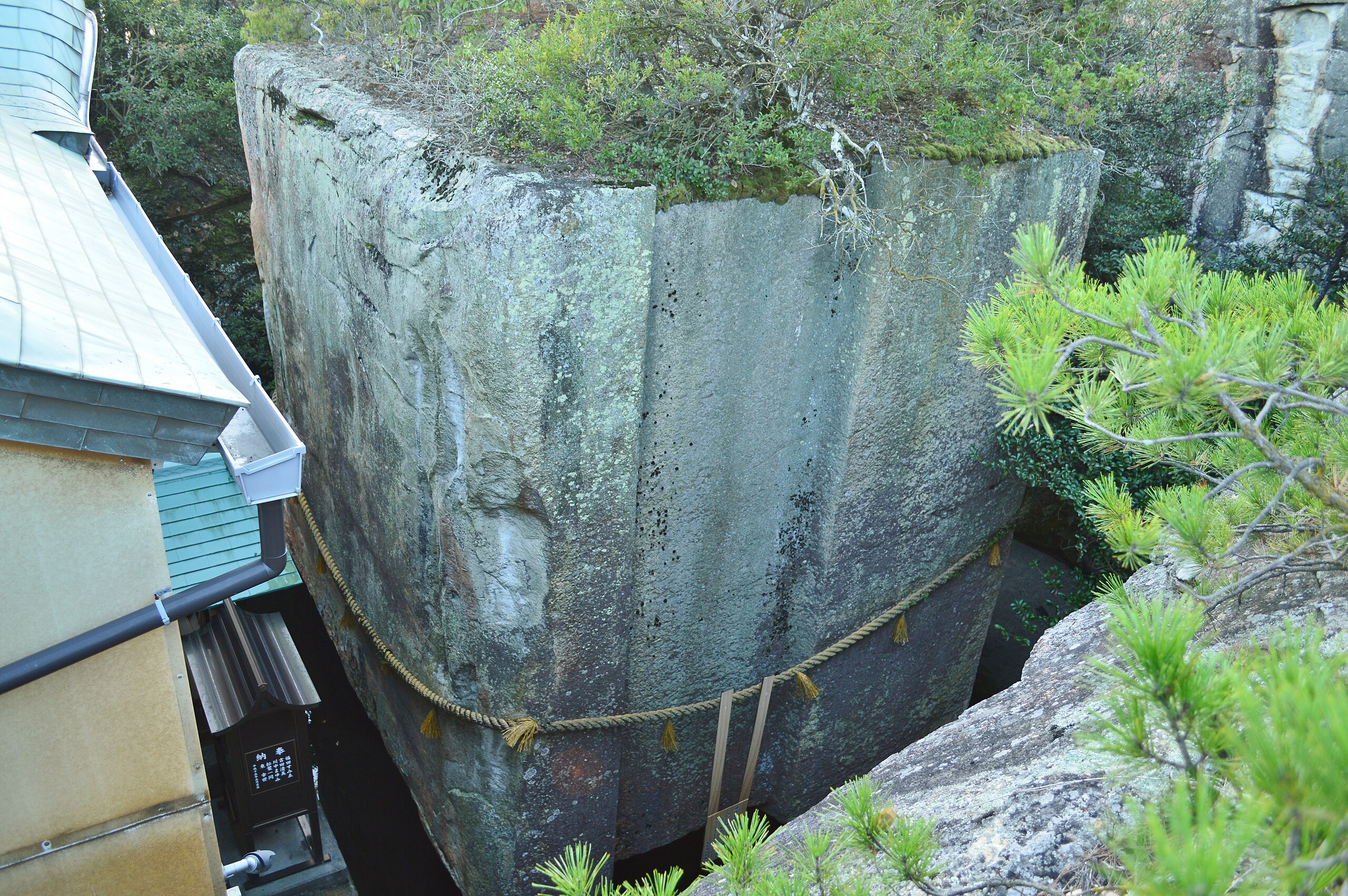
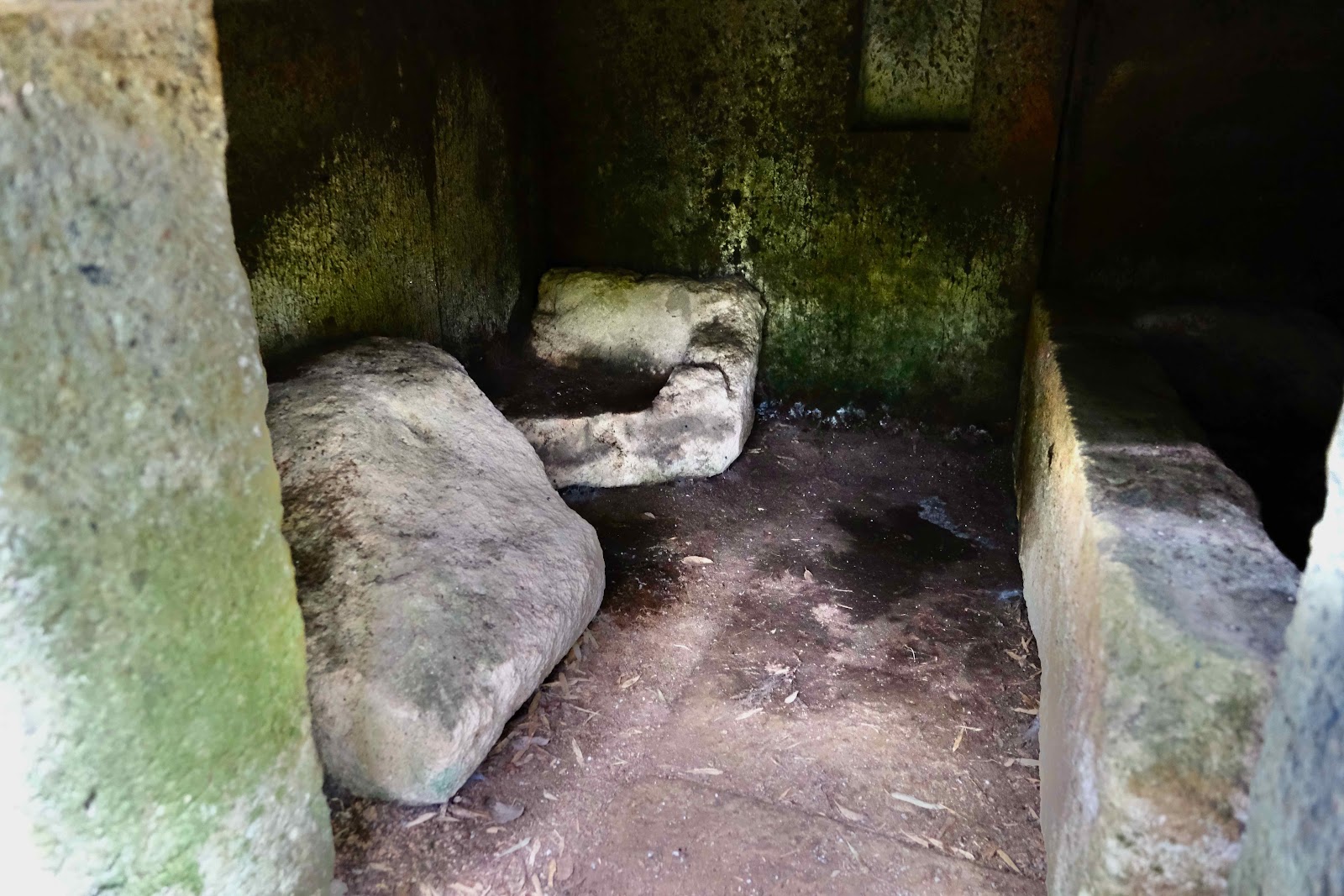
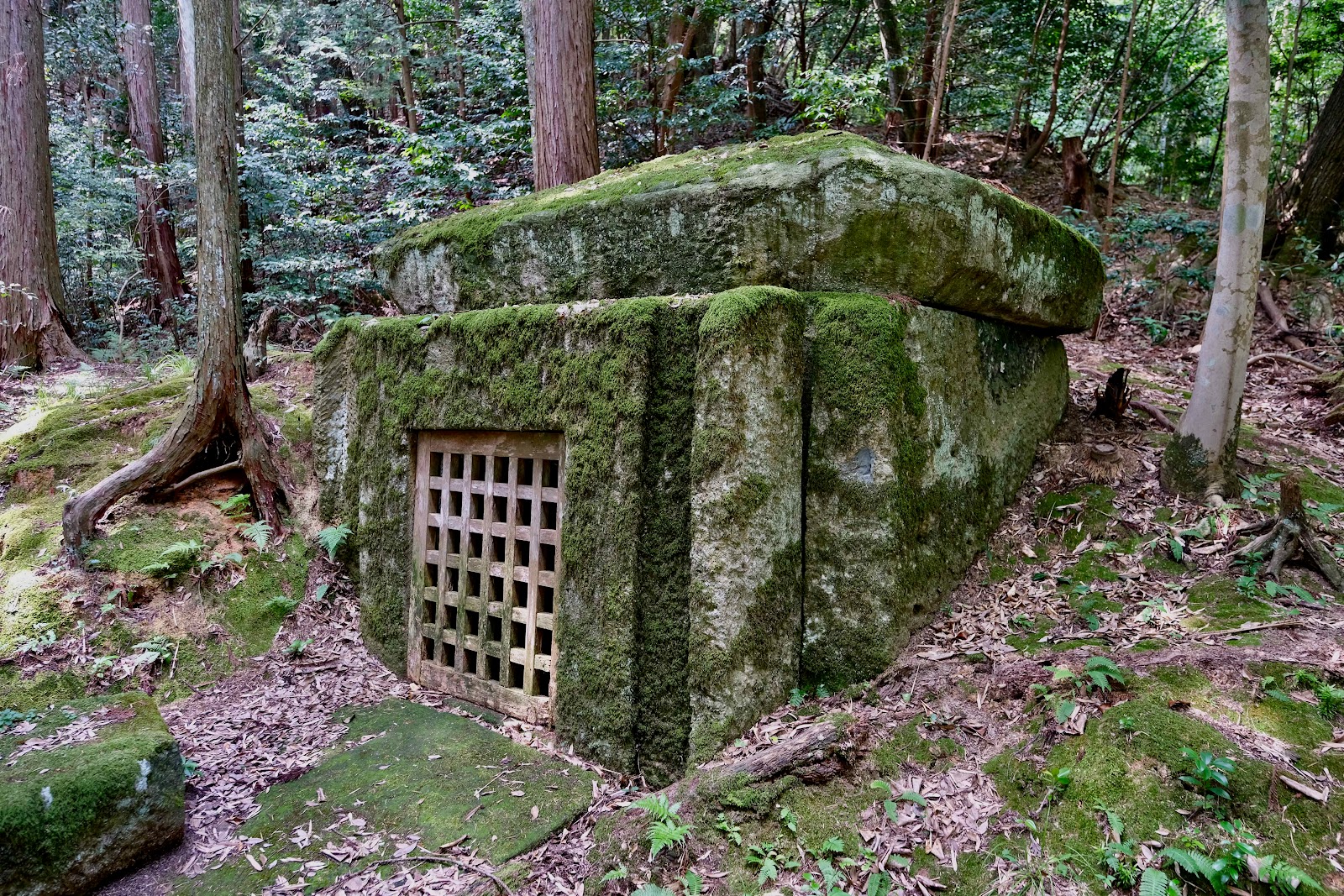
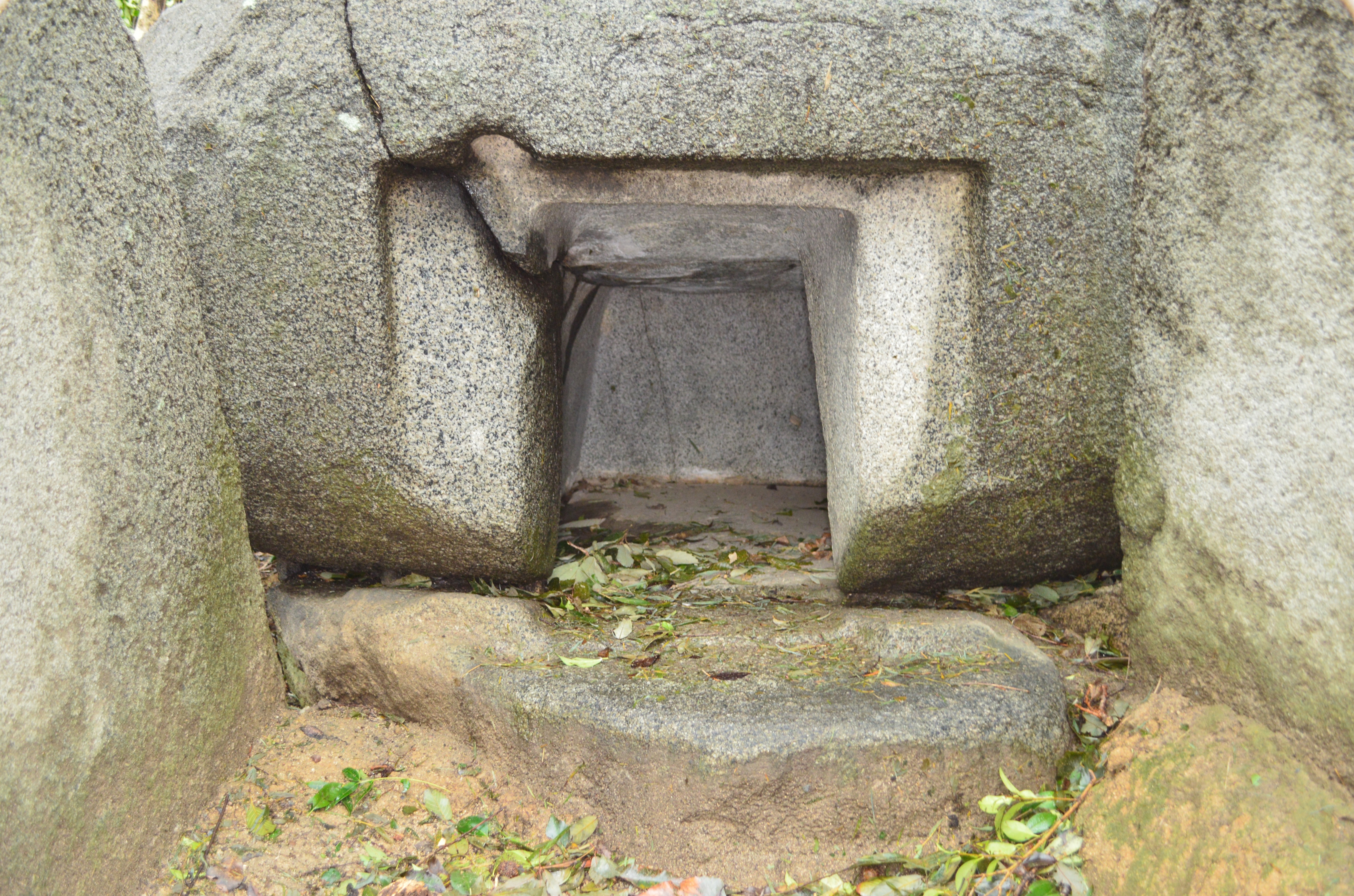
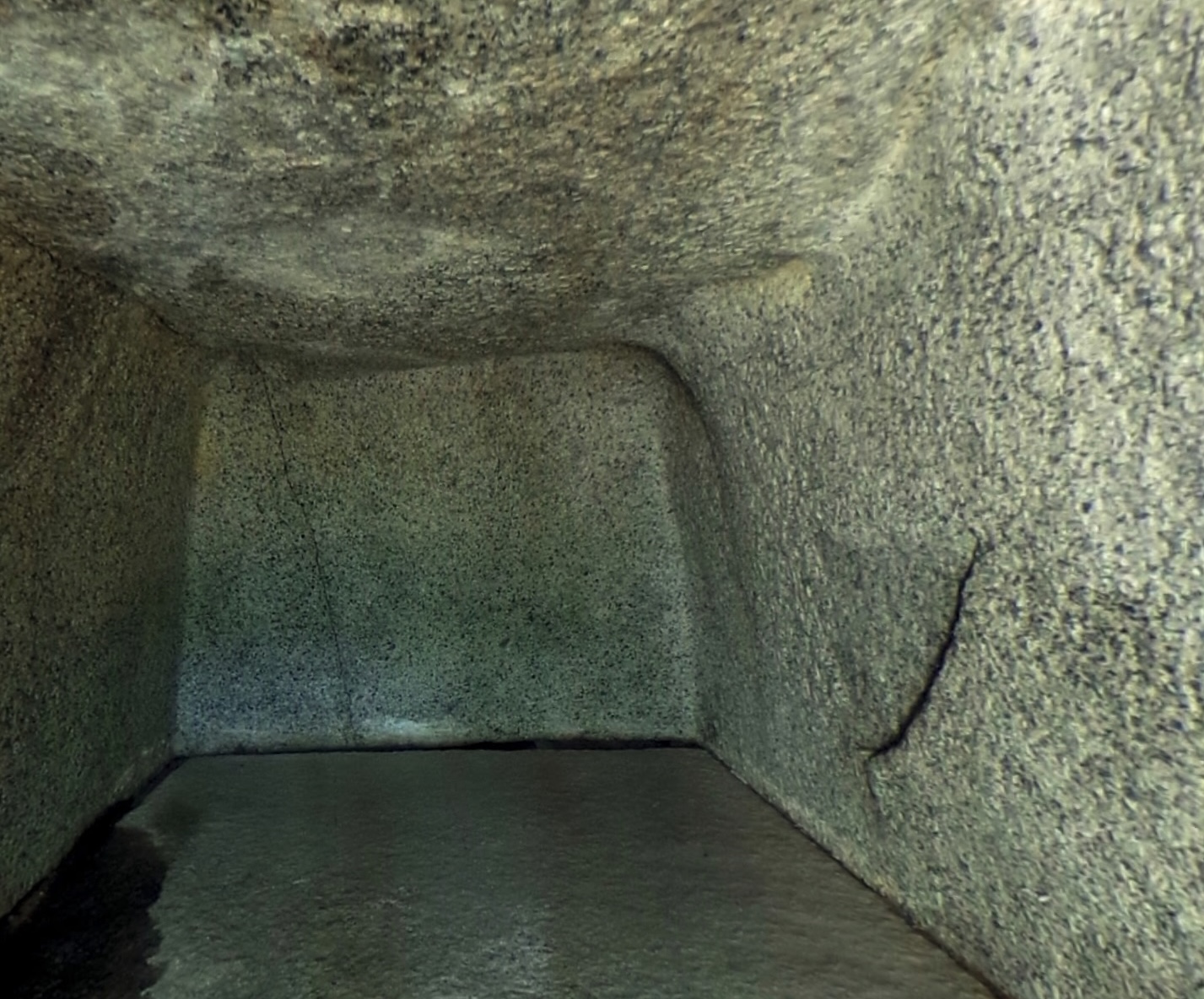
Ishi no Hoden (top left), Iinashi Iwafune Tumulus (middle left) and interior (bottom left). Masuda no Iwafume (bottom right), Ishinohoden Tumulus (middle right) and interior (top right). (Saigen Jiro and others)

Comparing Masuda no Iwafune, Iinashi Iwafune Tumulus, Ishi no Hoden, and Ishinohoden Kofun, counter to expectation, Masuda no Iwafune is similar in material (granite) and stonework to Ishinohoden Kofun, and Ishi no Hoden is similar in material (volcanic tuff) and stonework to Iinashi Iwafune Tumulus. All four structures are conventionally dated to the late Kofun Period. Based on the alignment trends of the Kofun, Shinto/Zen, and Shogunate periods, the cardinal alignments east-west of Masuda no Iwafune and north-south of Ishinohoden Kofun would place them in the Kofun to early Shinto/Zen periods. The same is probably true for the Iinashi Iwafune Tumulus.

Based on its approximate alignment to the Moon, Ishi no Hoden could be dated to the Kofun Period. However, as noted earlier, its alignment to minor lunar standstills is off by a few degrees (Figure 3). That its best alignment would have occurred c. 25,000 BCE suggests the possibility that it could be much older. We present this as a mathematical observation and not a dating proposal as no archaeological evidence currently supports such antiquity in Japan. That said, given the Jomon did not have the know how to cut, shape, and align a stone of such size, if such a claim could be substantiated it would open the possibility that Ishi no Hoden was created by some unknown civilization thousands of years before the Jomon.

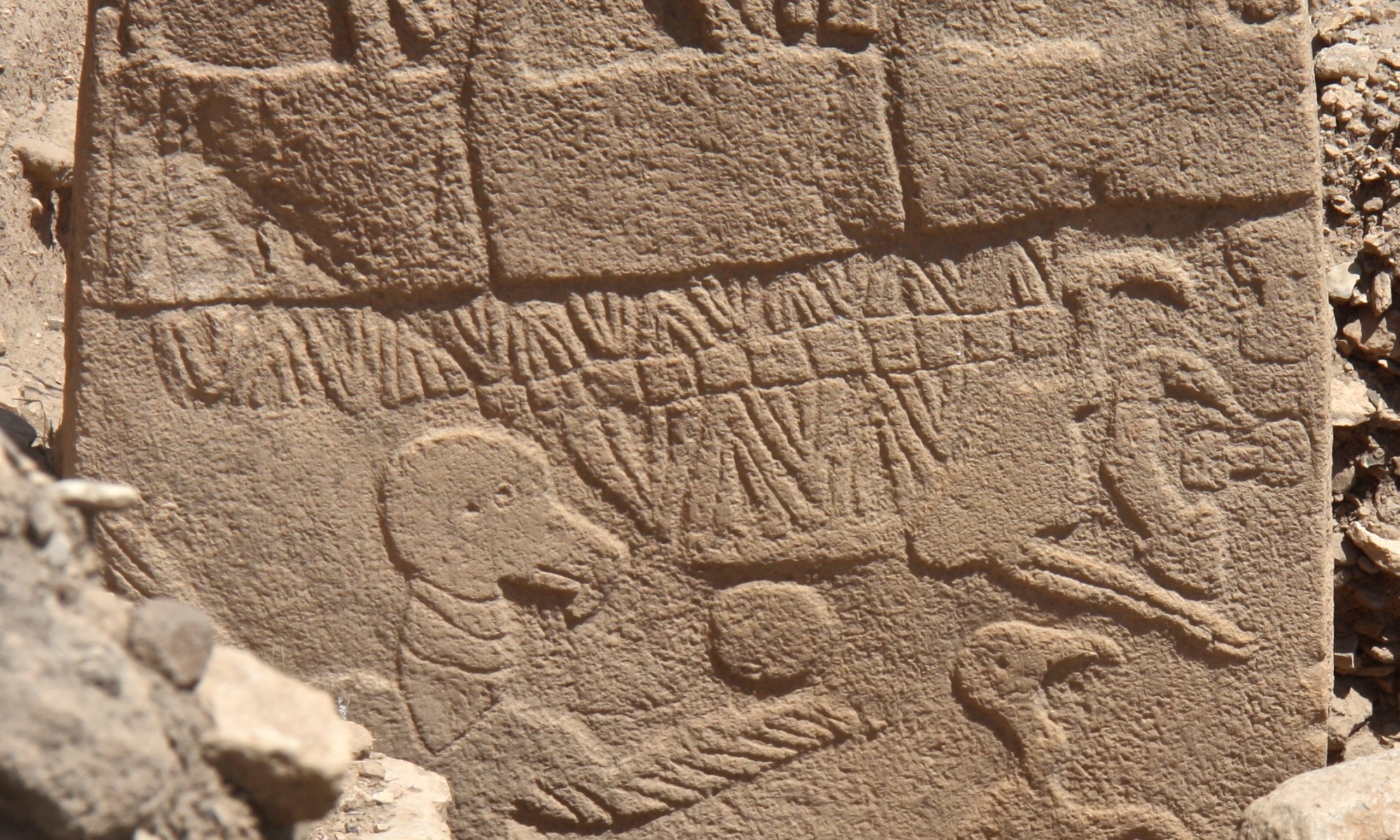
Before Gรถbekli Tepe โ€“ Evidence of Even Older Civilizations in Anatolia

An investigation of astronomical orientations at Gรถbekli Tepe and other ancient Anatolian sites explores the hypothesis that a significant number of early structures were intentionally aligned to lunar standstills. We find that of 54 pillars at Gรถbekli Tepe, 9 are oriented approximately eastโ€“west (equinox), 4 toward minor lunar standstills, and 10 toward major lunar standstills. The probabilities that these alignments occurred by chance are extremely small, implying intentional design. Extending the analysis to more than 300 sites across Anatolia, we identify 34 additional examples of astronomical alignment toward the equinoxes, solstices, and both major and minor lunar standstills, distributed across multiple civilizations from the late Neolithic to the Roman period. A comparative study of luni-solar orientations worldwide shows that lunar alignments occur more frequently than solar ones, suggesting that knowledge of the Moonโ€™s 18.6-year Metonic cycle was more widespread and ancient than previously recognized. Approximately 90% of the sites examined are unexplained within a fixed geographic pole reference frame. Applying Hapgoodโ€™s theory of Earth crustal displacement, we show that alignments at Adada, Selge, Hattusa, Termessos, and other sites are consistent with lunar standstills and solstices relative to former pole locations. Our findings suggest a continuity of astronomical orientation practices extending from the late Pleistocene into historical times and support the possibility that cultural knowledge of celestial cycles predates the Neolithic Revolution. Interpreted within Furterโ€™s model of static human behavioral archetypes, these results imply that the alignment of sacred and monumental architecture to the Sun and Moon may reflect a universal and enduring aspect of human cognition rather than a localized or time-dependent innovation. By incorporating crustal displacement as a working hypothesis, the study provides a quantitative and potentially unifying framework for understanding global patterns of ancient site orientation within a broader geophysical and anthropological context.
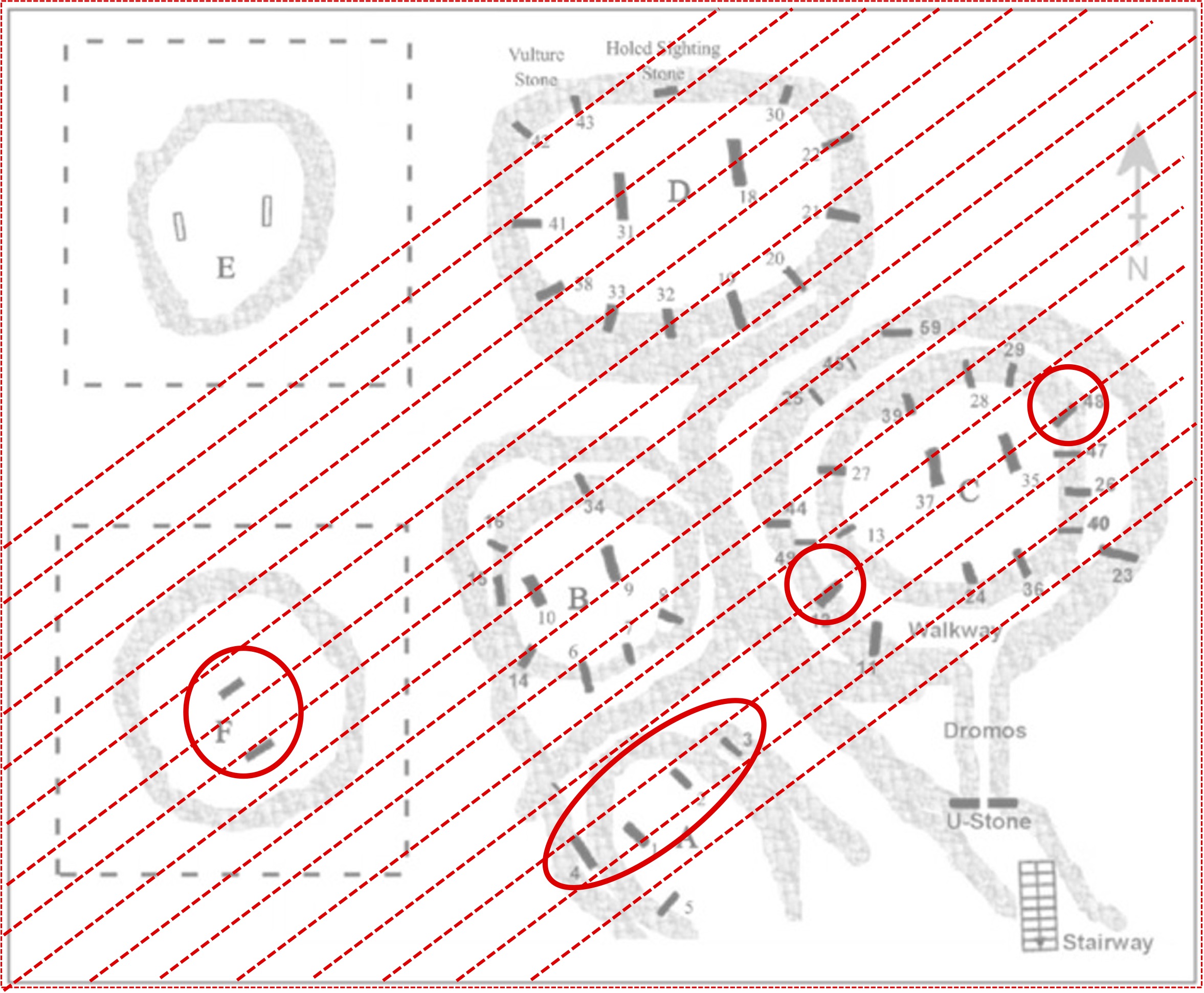
Alignments of individual pillars at Gobeckli Tepe to major lunar standstill moonrise/moonset directions. Base graphic courtesy De Lorenzis and Orofino.

Gรถbekli Tepe and the Moon

Excavations at Gรถbekli Tepe revealed the existence of monumental, circular enclosures built from massive T-shaped stone pillars. Believed to be the world’s oldest known temple, the site is dated to a period in human prehistory known as the Neolithic Transition, when our nomadic hunter-gatherer ancestors began to lead a more settled lifestyle, growing crops, building permanent settlements, and developing new technologies like pottery.

Analysis of the six enclosures at Gรถbekli Tepe reveals several possible astronomical alignments De Lorenzis and Orofino show that four of the enclosures (B, C, D, and E) are oriented towards the setting of the star Deneb, enclosure F is aligned to the rising of the Sun on a day roughly halfway between the summer solstice and the autumn equinox, and enclosure A is aligned to lunar standstills.

Moonrises in one month during the most recent major lunar standstill that occurred in 2024-2025. (Stellarium)
Moonrises in one month during the most recent minor lunar standstill that occurred in 2016. (Stellarium)

Lunar Standstills

Most people have a basic understanding of the motion of the Sun โ€“ that it rises in the east and sets in the west. In the Northern Hemisphere, the most northernly sunrise and sunset occur on the summer solstice and the most southernly sunrise and sunset occur on the winter solstice. The situation is reversed in the Southern Hemisphere. Generally speaking, the Moon does in a month what the Sun does in a year. The Moonโ€™s orbital plane tilts up to about 5.1 degrees above and below the ecliptic plane over an 18.6-year cycle. This together with changes in obliquity affect the angle at which the Moon rises and sets. The northernmost moonrise/moonset is called a major lunar standstill. The southernmost moonrise/moonset is called a minor lunar standstill. The most recent major lunar standstill occurred in 2024-2025 and the most recent minor lunar standstill occurred in 2016.

An analysis of the orientation of over 300 other sites in Anatolia found 34 aligned in astronomical (specifically luni-solar) directions that include 10 equinox/cardinal (N-S-E-W) alignments, 3 to solstices, 6 to major lunar standstills, and 19 to minor lunar standstills. (Google Earth)

Lunar Alignments in Anatolia

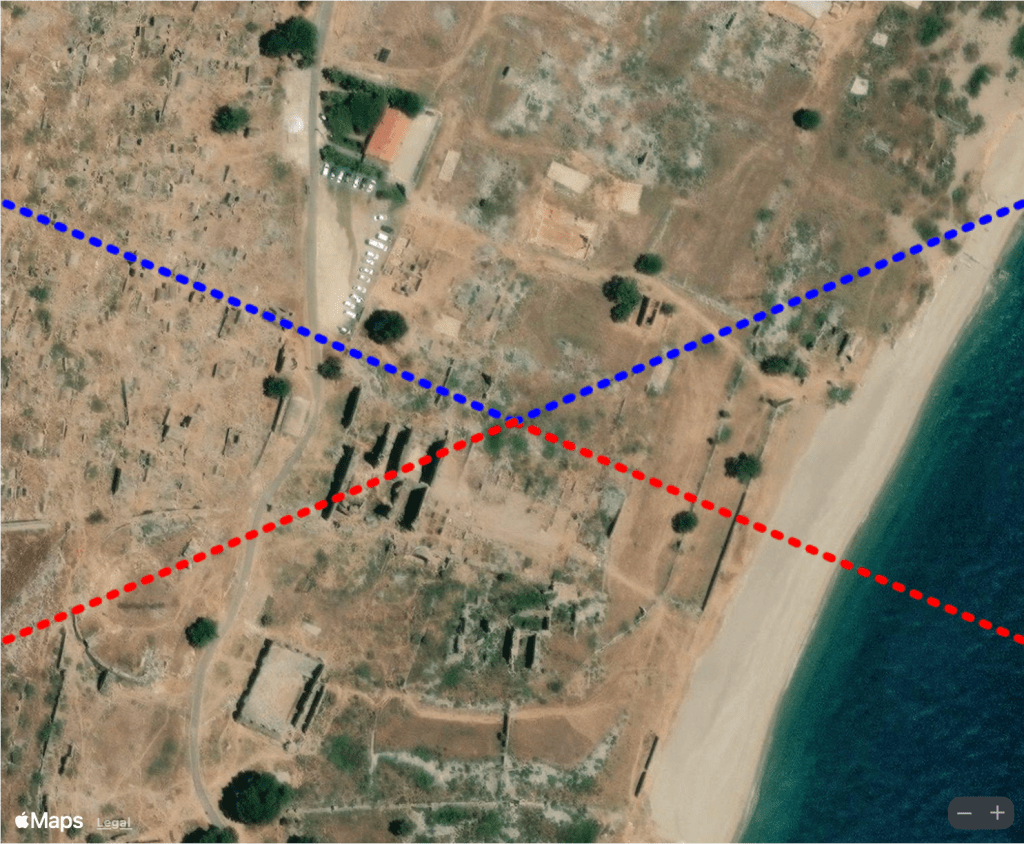
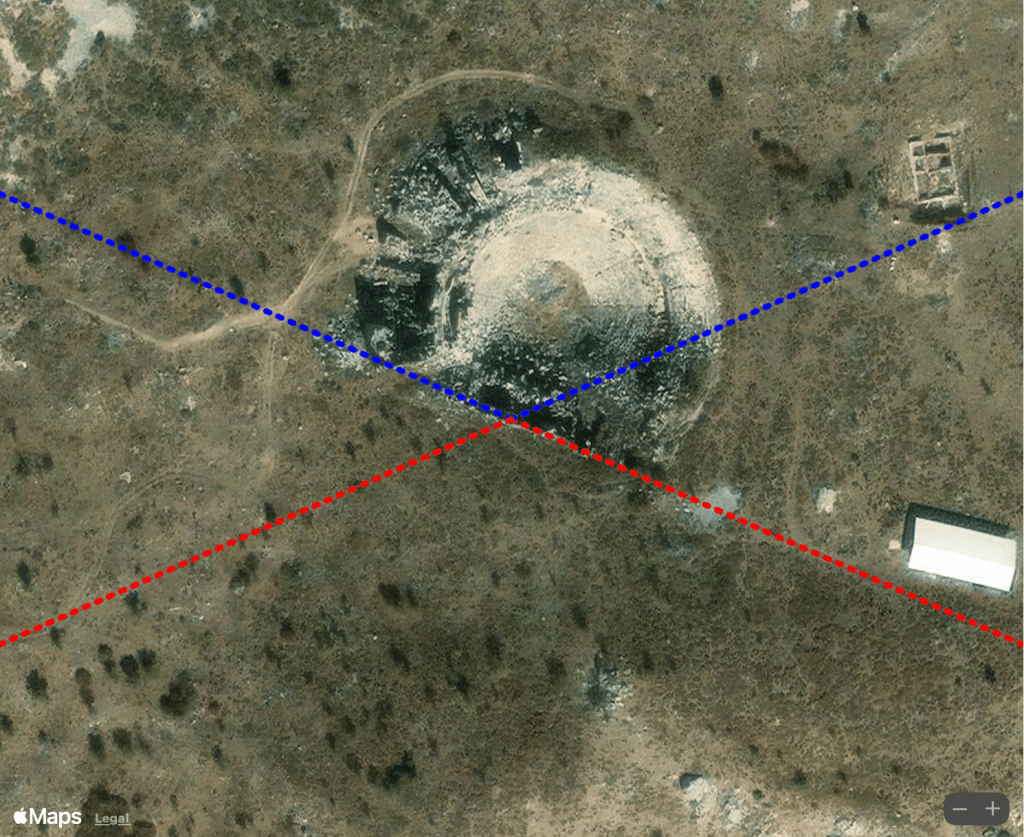
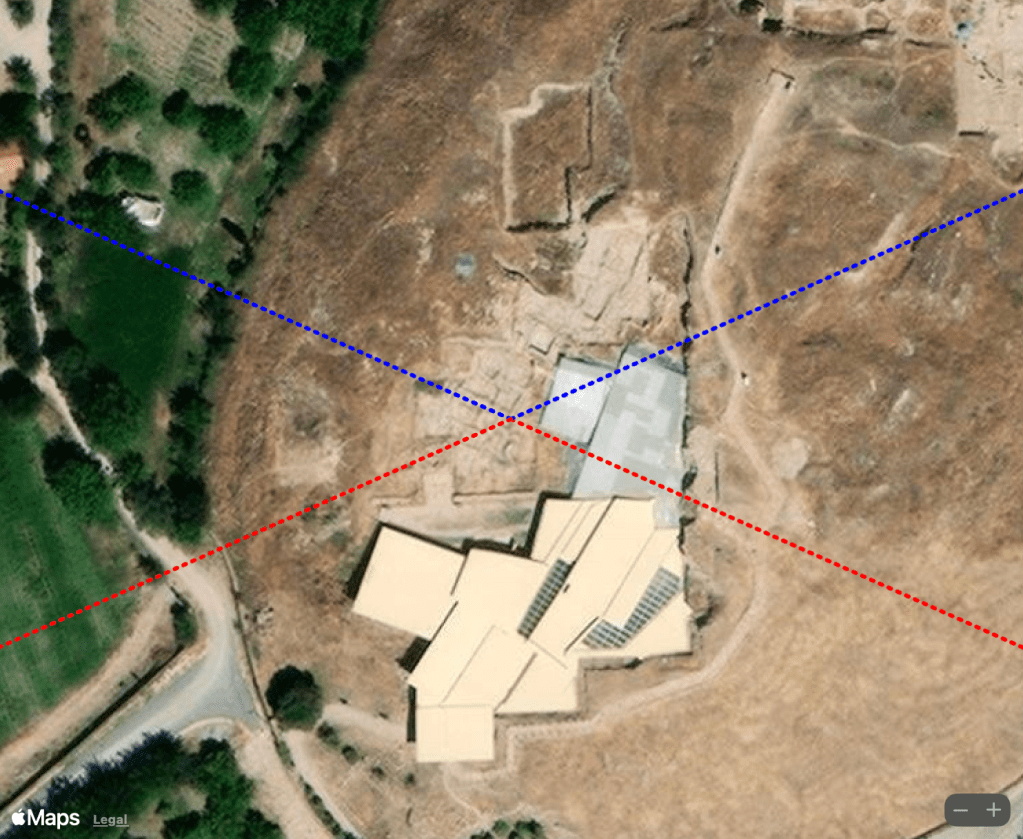
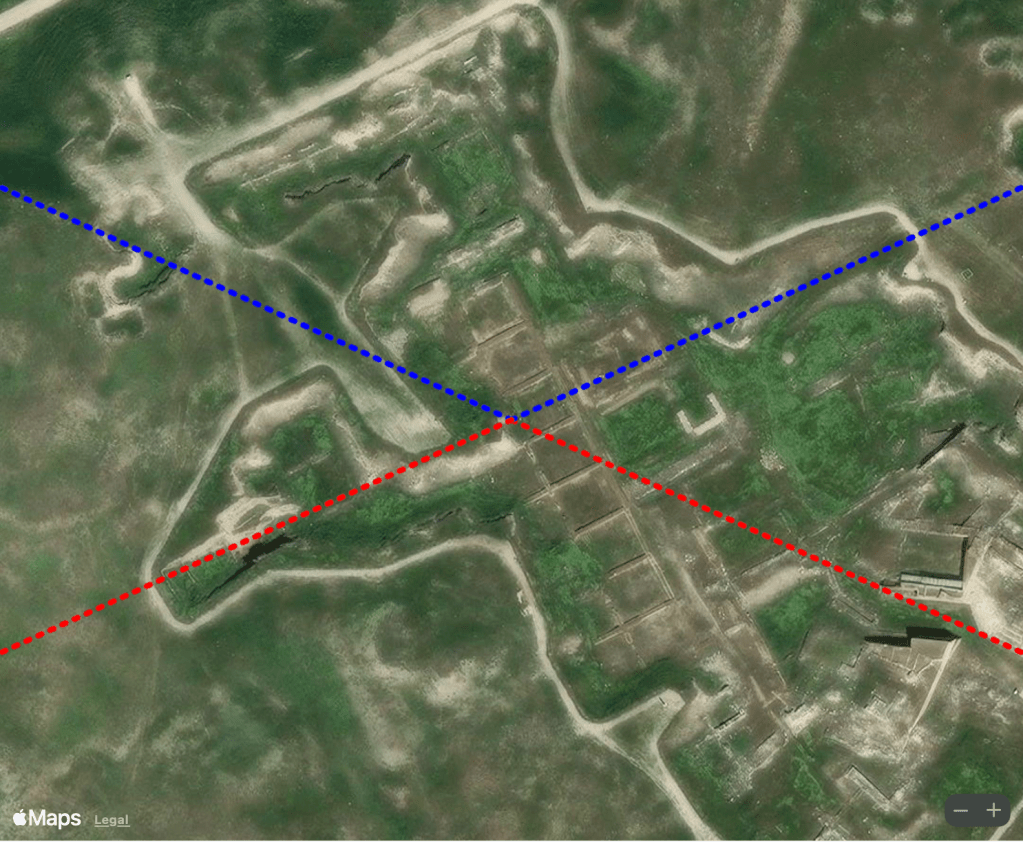
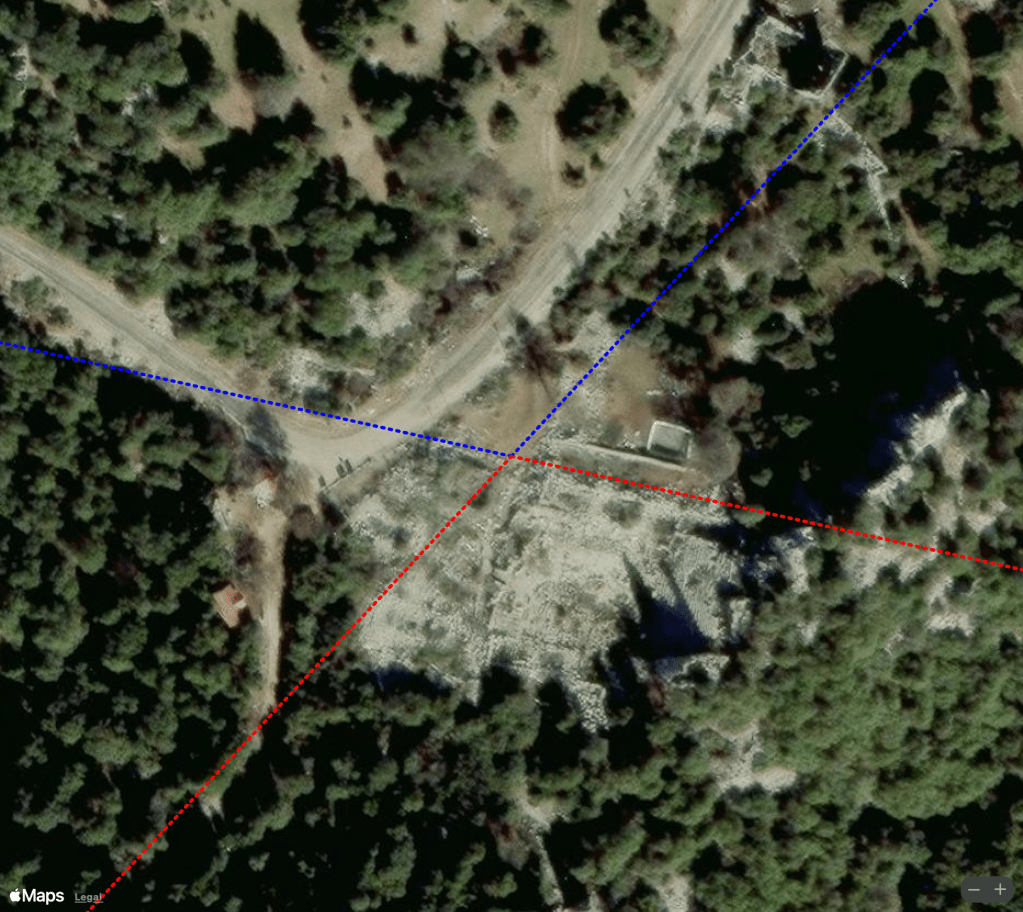
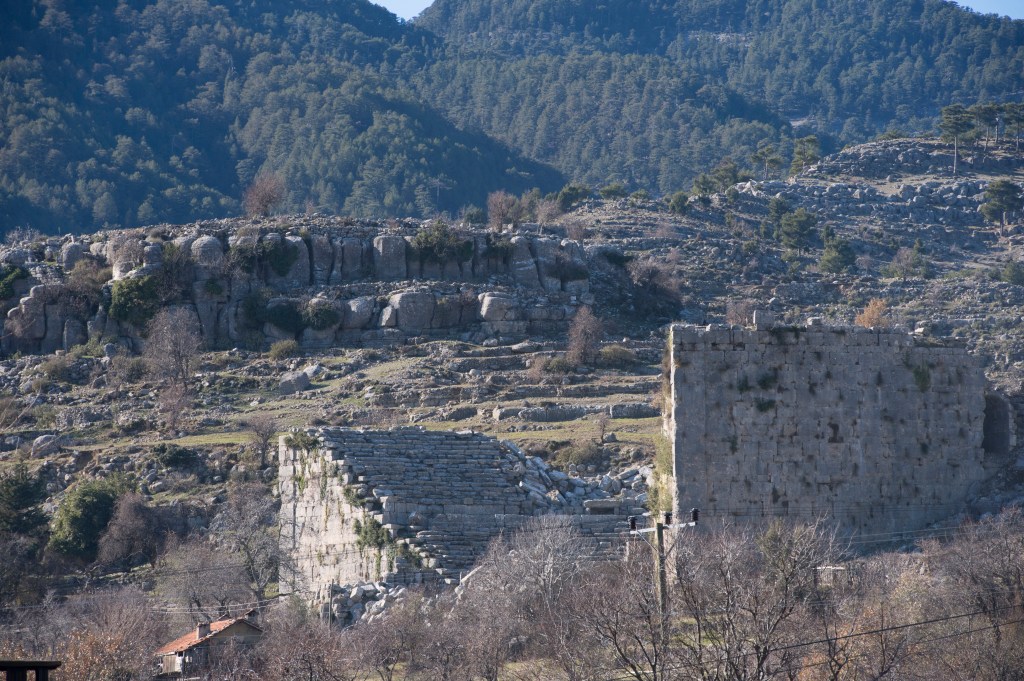
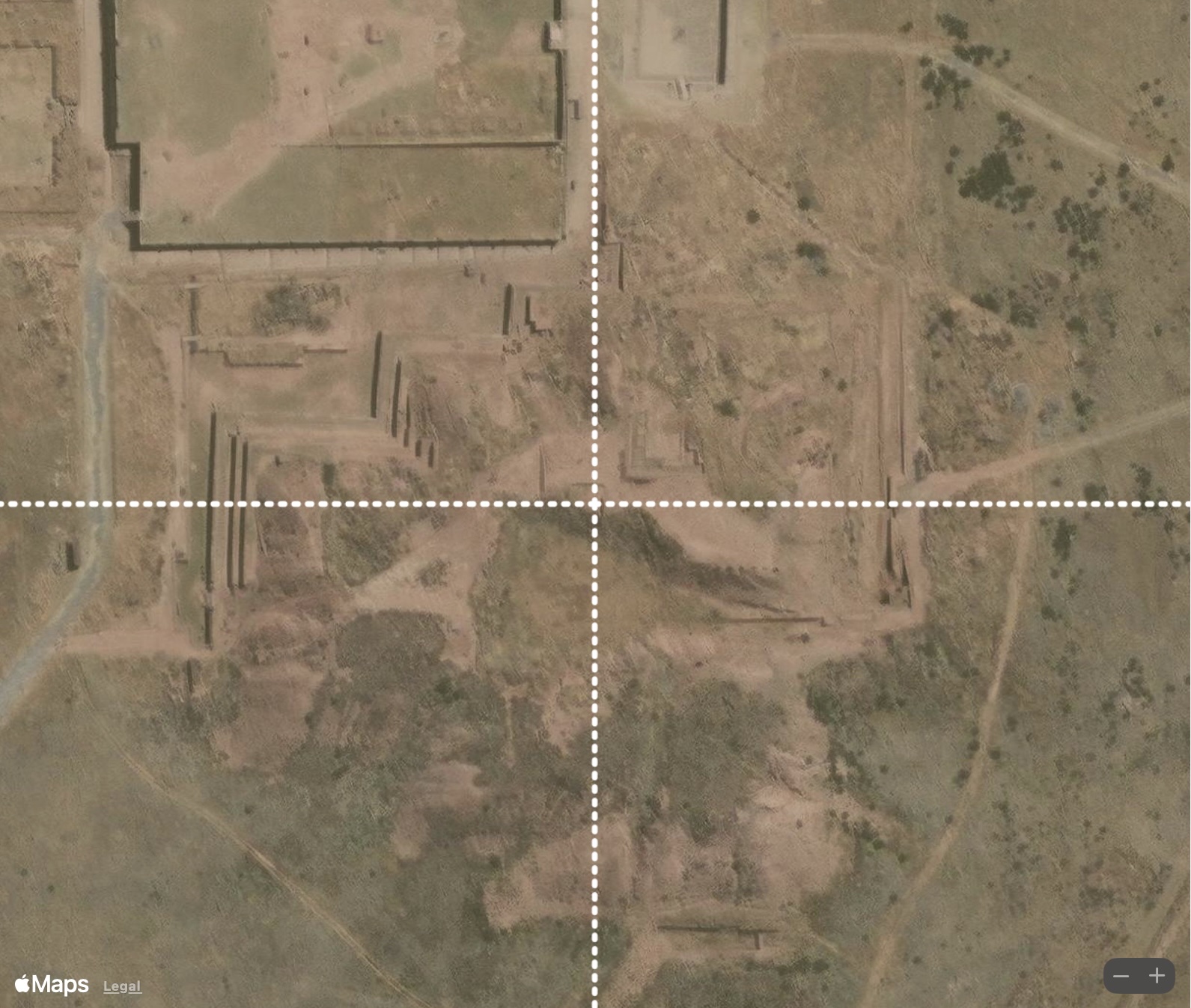
There is a long history of settlement in Anatolia from the late Neolithic to the Roman and Byzantine period. Four of the site established by these civilizations that are aligned to minor lunar standstills are shown below.

Alignments to minor lunar standstills at Anemourion (top left), Sagalassos (top right), Arslantepe (bottom left) and Gordion (bottom right). (Apple Maps)

Evidence of Lost Civilizations in Anatolia

Hundreds of sites worldwide have been found that reference four previous locations of the geographic poles over the past 120,000 years (Carlotto 2022a). We have argued that Charles Hapgoodโ€™s theory of Earth crustal displacement provides an alternative explanation for unexplained archaeological site alignments, late Pleistocene climate changes, and certain mass extinction events and have used crustal displacement as a tentative/hypothetical theory to explore the possibility of previous civilizations during the last ice age. Using this method, we examined the other 90% unexplained sites and found 14 sites containing structures oriented in luni-solar directions relative to previous locations of the North Pole. Four of these sites are examined below.

Adada

Like Sagalassos, Adada was one of the ancient cities of Pisidia mentioned by the Greek historian Strabo (Book XII, Chapter 7):

Artemidorus says that the cities of the Pisidians are Selgรช, Sagalassus, Petnelissus, Adada, Tymbriada, Cremna, Pityassus, Amblada, Anabura, Sinda, Aarassus, Tarbassus, and Termessus. Of these, some are entirely in the mountains, while others extend even as far as the foot-hills on either sideโ€ฆ

However, unlike Sagalassos, Adada does not appear to have been aligned to the Moon or in any other known astronomical direction. However, shifting the frame of reference to the Norwegian Sea pole, the main complex at Adada lines up in the direction of minor lunar standstills relative to the earlier pole as shown above. A smaller structure to the north is oriented in the direction of solstices relative to the Norwegian Sea pole.
Adada was a prosperous Roman city from the 1st century BCE through the 3rd century CE, flourishing particularly during the reigns of Emperors Trajan, Hadrian, and Antoninus Pius, as evidenced by the well-preserved temple complexes dedicated to the emperors and the city’s imperial coinage (right). The orientation of Adada in the direction of minor lunar standstills relative to the Norwegian Sea pole (left) suggests the possibility that it was built on top of pre-existing foundations that could be more than 42,000 years old. (Hasan Karabay/Google Earth and Apple Maps)

Selge

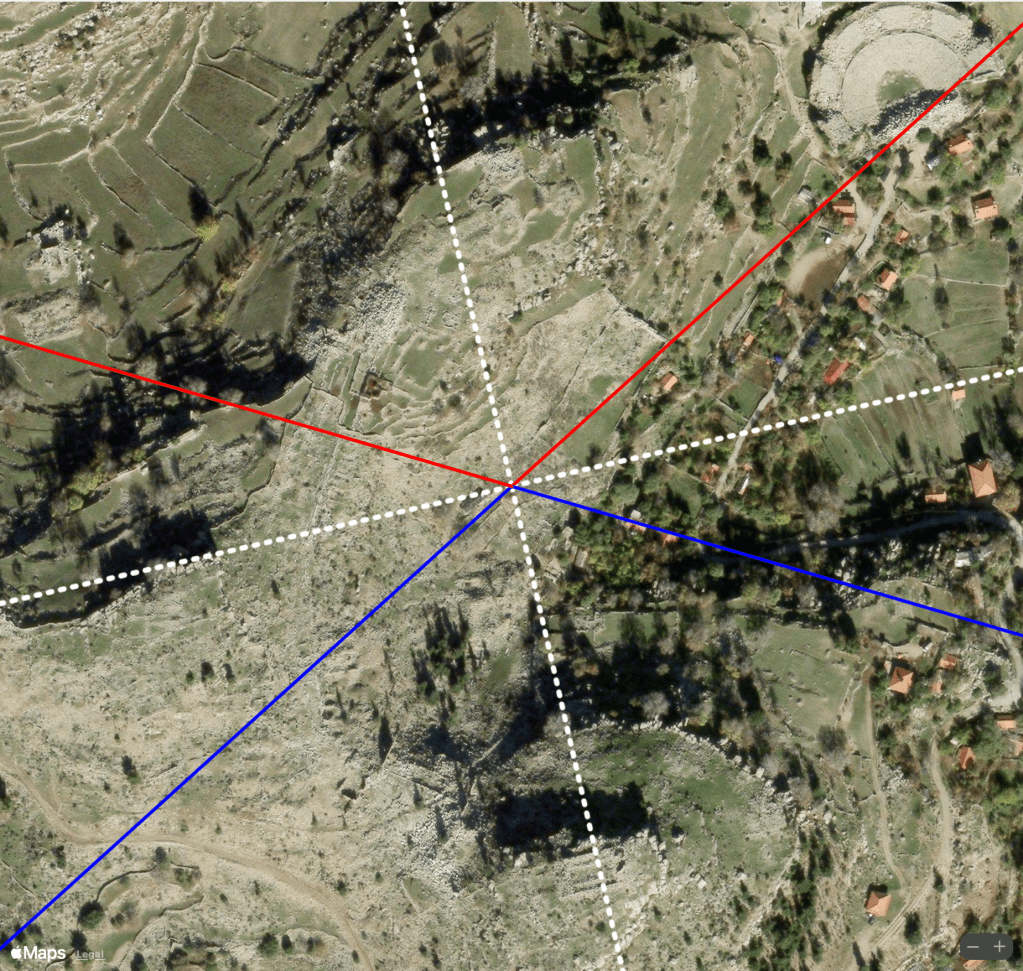
According to Strabo, Selge was founded by the Greek city-state Sparta, but alludes an even earlier founding by the mythical figure Calchas. The amphitheater, which was rebuilt by the Romans in the 3rd century CE is aligned to minor lunar standstills. The acropolis of Selge to the west of the theater known as Cesbedium is mentioned by Polybius in a battle with the Seleucid general, Achaeus. What is particularly interesting is that much of the site, which is ruins, appears to be organized differently. Those atop the acropolis appear to be aligned in the direction of solstices relative to the Greenland pole, as are several other ruined structures to the south (see above). There is also evidence of alignments to major lunar standstills relative to the Greenland pole, and to the Greenland pole itself, all of which support the possibility of an even earlier city founded in myth.

View of the acropolis at Selge from east of the amphitheater (left). Although the amphitheater, which is closely aligned to minor standstills relative to the current pole was built by the Roman, ruins to the south and west (right) appear to be aligned to the Greenland pole (white dotted line) and to solstices relative to the Greenland pole (red/blue). (Dosseman/Creative Commons and Apple Maps)

Hattusa

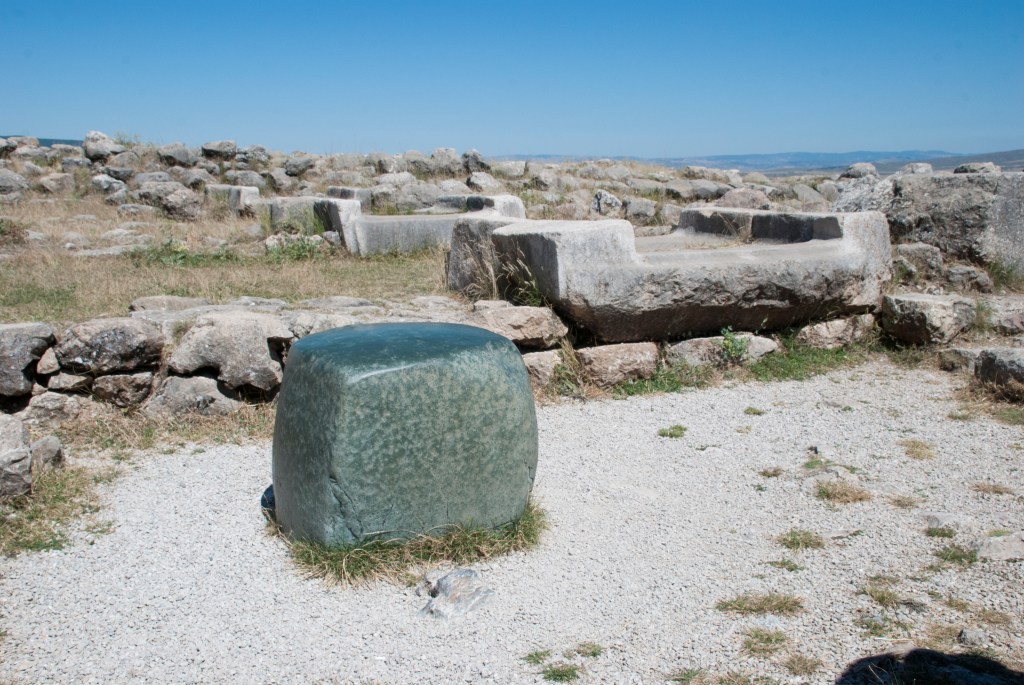
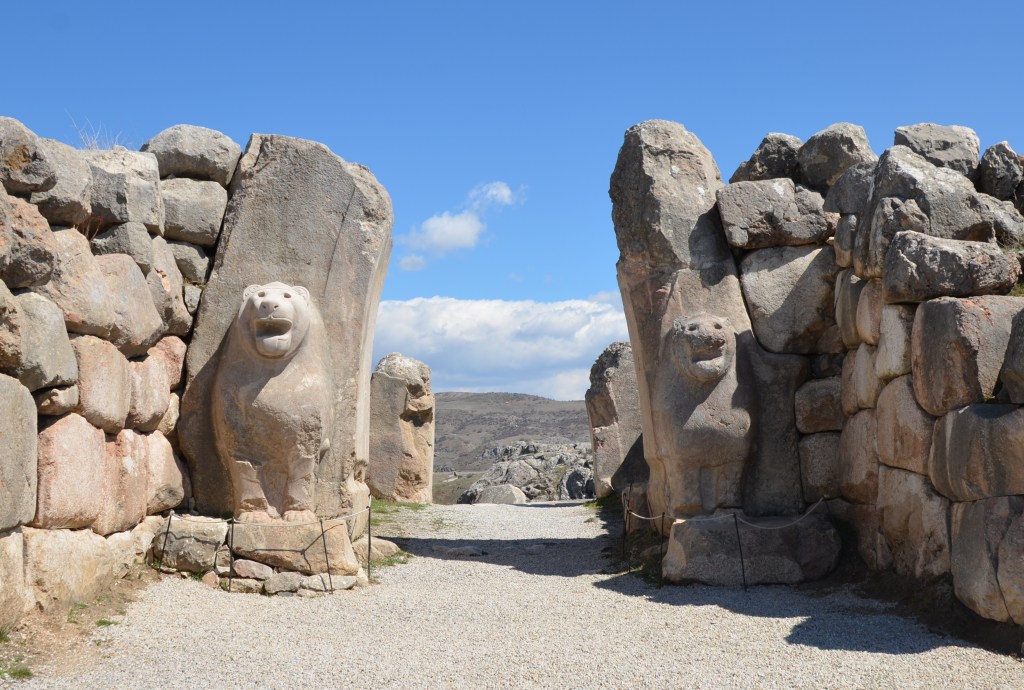
The earliest traces of Hattusa are from the sixth millennium BC during the Chalcolithic (Copper Age) period. The complex contains numerous features aligned in a variety of ways. The orientation of the Kingโ€™s Gate on the east side of the site is closely aligned to minor lunar standstills. The Lionโ€™s Gate, on the west side, is closely aligned to minor lunar standstills relative to the previous pole in Hudson Bay. Other structures within the site appear to reference both the current and previous pole. The mysterious Green Nephrite Stone within the Great Temple complex is aligned to solstices relative to the Hudson Bay pole.

Lion Gate at Hattusa (top right) is aligned in the direction of minor lunar standstills relative to the Hudson Bay pole (bottom right). Green Nephrite Stone at Hattusa and surrounding structures (top left) are aligned in the direction of the summer solstice sunrise and winter solstice sunset relative to the Hudson Bay pole (bottom left). (Acar54/Creative Commons, Carole Raddato/Creative Commons and Apple Maps

Termessos

Termessos, which is one of the best-preserved ancient cities in Turkey, is linked to the Solymi people, who are mentioned in Homer’s Iliad in relation to the legend of Bellerophon. Termessos was founded by the Solymi, a tribe likely related to the peoples of Isauria and Cilicia. The city’s name, according to Strabo, is derived from the Anatolian god Solymeus, later identified with Zeus. One of the most intriguing aspects is that Alexander the Great failed to conquer Termessos in 333 BC, despite his extensive campaigns. The city’s location on a high mountain, combined with its strong natural defenses, made it nearly impossible to breach. The city was eventually abandoned, likely due to an earthquake that destroyed its essential water supply. The specifics of the disaster and the full timeline of the city’s abandonment remain subjects of mystery. Despite its importance, the site has seen limited excavation, leaving many questions about the city’s history and daily life unanswered.

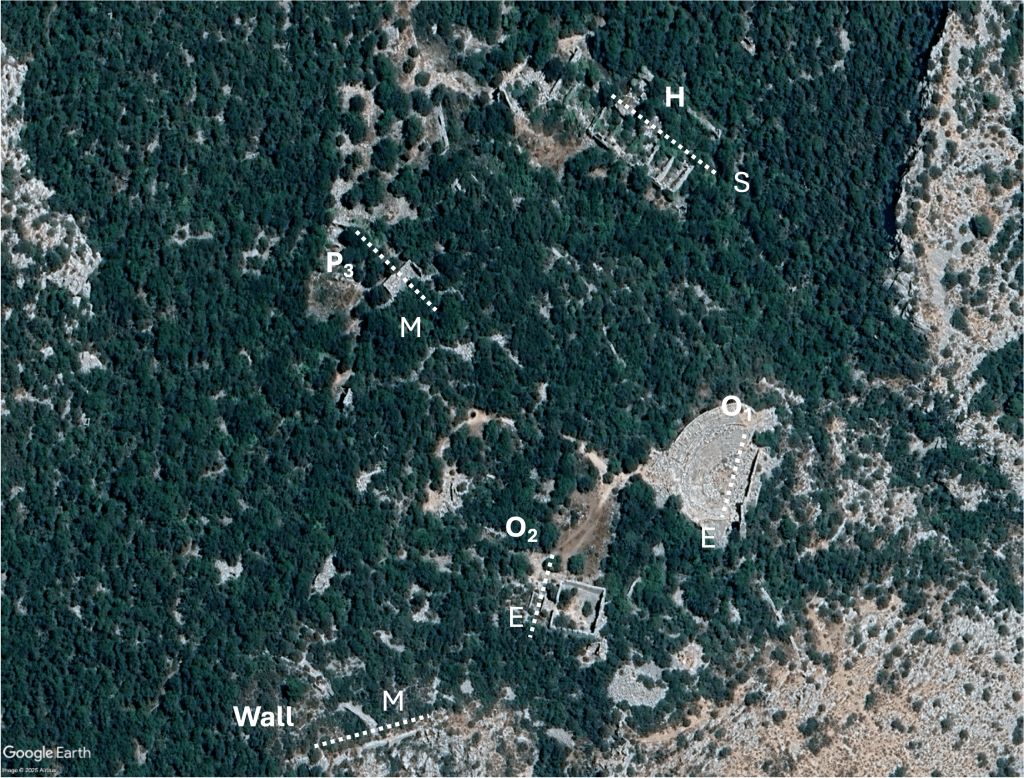
The most distinctive feature is the amphitheater built in the Hellenistic period, showcasing Greek architectural styles. Later, the theater was rebuilt by the Romans. Unlike similar structures aligned to the equinox sunrise such as the amphitheater at Cyrrhus, the one at Termessos is rotated about 14ยฐ south of east. Sites misaligned several degrees south of east can usually be explained by the Sun rising over an elevated horizon such as a mountain range. This is not the case here as the amphitheater is oriented 10 degrees south of the equinox sunrise direction, which is 4ยฐ south of east at the height of the hill to the east. Aside from this problem, we find that some of the structures are aligned in luni-solar directions including the gymnasium, buildings, and residential ruins. Changing the frame of reference to the Bering Sea pole provides a possible explanation for the unusual alignment of the amphitheater and some of the other structures in the ancient city (see below).

Alignments at Termessos relative to the Bering Sea pole. Current equinox sunrise direction which is 4 degrees south of east is shown for comparison (top left). Two kinds of stonework at Termossos at the amphitheater and bouleuterion (top center and right). Alignments of specific structures to the Bering Sea pole (bottom) include the amphitheater (O1), bouleuterion (O2), and portico (L3) cardinally aligned to the Bering Sea pole, building P3 and a wall aligned to major lunar standstills, and gymnasium (H) aligned to solstices relative to the Bering Sea pole. (Apple Maps, Sedat Boz/Google Earth and Ansgar Bovet/Creative Commons, and Turkish Museums).

Discussion

Is the long history of settlement in Anatolia from the late Neolithic to the present just the latest chapter in an even longer history of this region, extending back to the last ice age?

In contrast to the prevailing paradigm that modern human culture developed as a response to climate and ecological changes at the end of the ice age, Furter offers a different perspective:

The entire conscious, fundamentalist, common sense paradigm of archaeo astronomy is wrong. The โ€œmysteriousโ€ thing in the cultural record, is that we have a large universal repertoire of standard subconscious behaviour. That behaviour is imprinted all over the cultural record. But our conscious mind finds it hard to see what is hidden in plain sight. The consequences for our self-image are significant. We did not invent, develop, or change culture. Culture is part of the human package, at least since Gobekli at BC 8000, cave art about BC 20 000, Blombos shelter about BC 70 000, and perhaps even Border Cave about BC 100 000, with the usual ensemble of tools, clothing, cosmetics, and trade. Human behaviour is static, and thus predictable, down to the structure of artworks and building sites.

If Furter is correct โ€“ that human behavior is static down to the structure of ancient sites, perhaps human societies have always aligned buildings to the Sun and the Moon. In other words, there is nothing special about Gรถbekli Tepe โ€“ it is simply an example of how the people at that time were expressing the same patterns of behavior that have existed throughout human history.

The inability of conventional archaeoastronomy to explain the alignment of so many ancient sites across the world has led to mixed approaches that often rely on local knowledge (context). Furter asks:

Could archaeo astronomy tell the difference between a myth cycle, a calendar, a zodiac, and a star map? And could it reveal the core content of culture, or explain perception? Correspondences simply mix and match shapes and star lore. Archaeo astronomy needs better theories, and a more scientific paradigm, to rise above the level of parlour games.

If crustal displacement theory is correct, by shifting the geographic reference frame we can explain the alignment of most ancient sites across the world using the same basic alignments we find at Gรถbekli Tepe, thus supporting Furterโ€™s โ€œuniversal repertoireโ€ and offering a more scientific foundation (albeit tentative and hypothetical) for archaeoastronomy.

Click here to read a more detailed working paper.

(Feature image at the top of the article courtesy Sue Fleckney/Creative Commons)

An Inconvenient Theory: Part 3 – An Underlying Mechanism

Chapters 4-6 in An Inconvenient Theory show that crustal displacements can not only account for most unknown archaeological site alignments but could also be the “missing link” in understanding glacial cycles, ice ages, and certain mass extinctions. However, without an identified physical mechanism, the evidence, no matter how compelling, is not sufficient for it to be considered a proper scientific theory.

Tides of Change

Hapgood originally believed that polar ice imbalances caused crustal shifts, but later abandoned this idea. Picking up from Hapgood left off, Chapter 7 builds on modern geoscience, proposing that Earth-Sun-Moon tidal forces through interactions in the low-viscosity zone (LVZ) beneath the lithosphere might cause the crust to periodically rotate westward relative to the mantle. Drawing from studies of lithospheric drift, the global tectonic pattern, and lunisolar influences on the theoretical rotational axis of the crust relative to the mantle, possible pole shift trajectories and timelines are determined over the last glacial cycle. It is argued that changes in the LVZ could effectively unlock the crust, allowing Earth-Sun-Moon tidal forces to shift the crustal thousands of kilometers over periods of several thousand to perhaps ten thousand years.

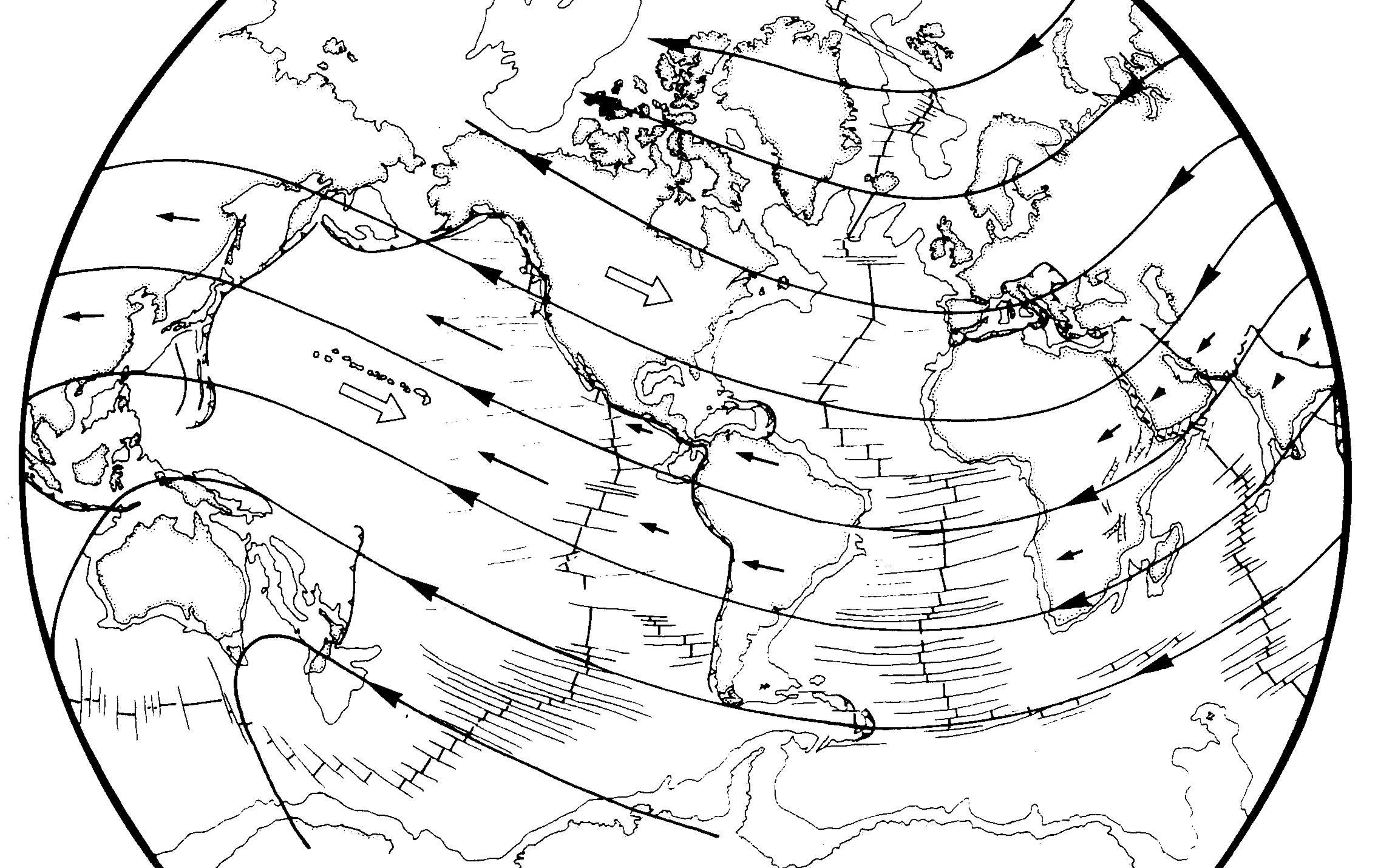
Map of the global tectonic pattern where the tectonic mainstream in the same direction as the lithospheric drift. (Courtesy C. Doglioni)

Cycles Within Cycles

Chapter 8 explores the interconnectedness of Earthโ€™s internal dynamics, focusing on how mantle convection may drive major geological and climatic phenomena such as geomagnetic field variations, mass extinctions, true polar wander, and supervolcanic eruptions. It discusses the fractal nature of Earth processes, with self-similar patterns seen across multiple timescales in ocean temperatures and geomagnetic activity. Evidence suggests correlations between geomagnetic excursions and temperature shifts, as well as between supervolcanic eruptions and pole shifts, all possibly rooted in fluctuations in mantle convection. The chapter raises the possibility that changes in mantle convection could be linked to pole shifts, supervolcanic eruptions, and extreme climatic changesโ€”suggesting a deep, potentially cyclical mechanism underlying these and other surface-level phenomena.

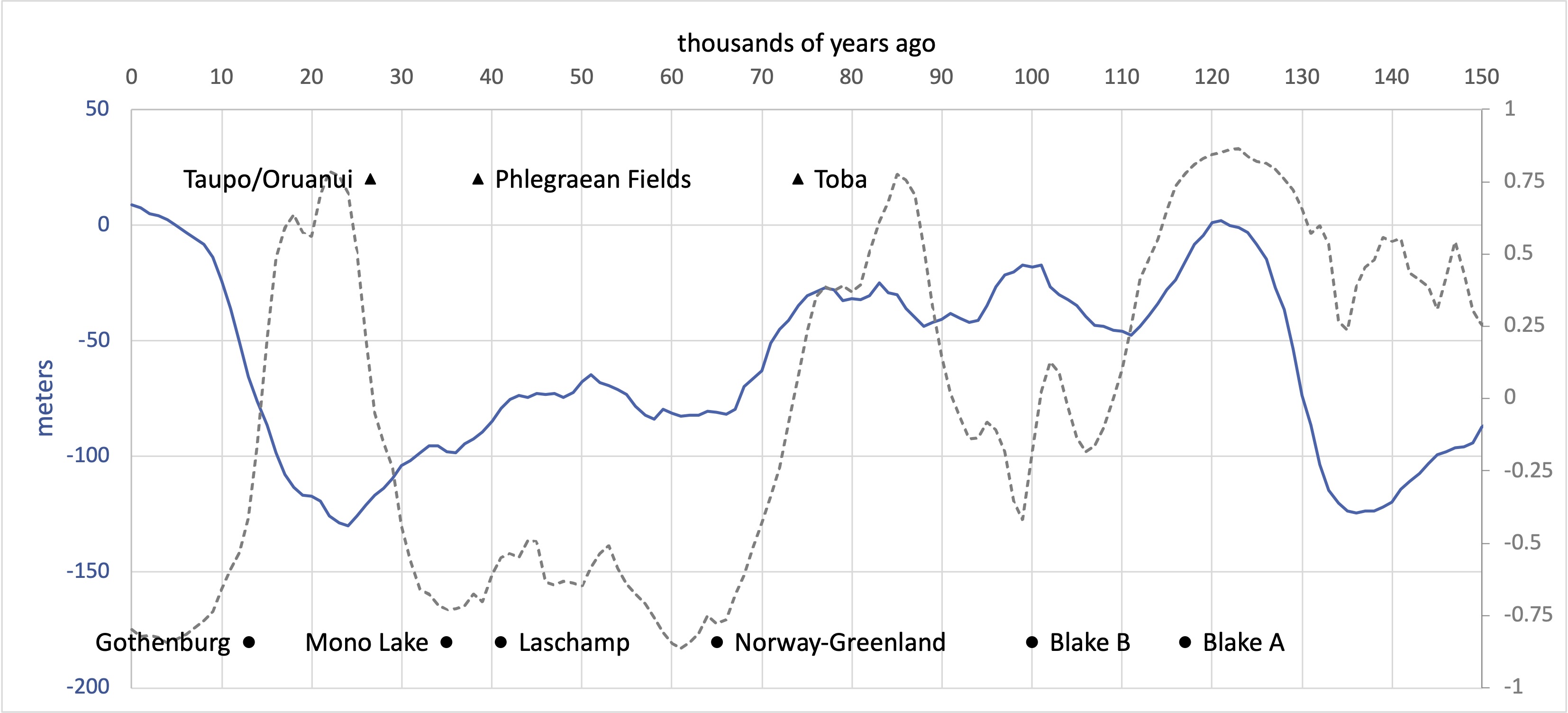
Temperature-geomagnetic field correlations (dotted line) with global sea level (blue) shown for comparison.

The Next Ice Age

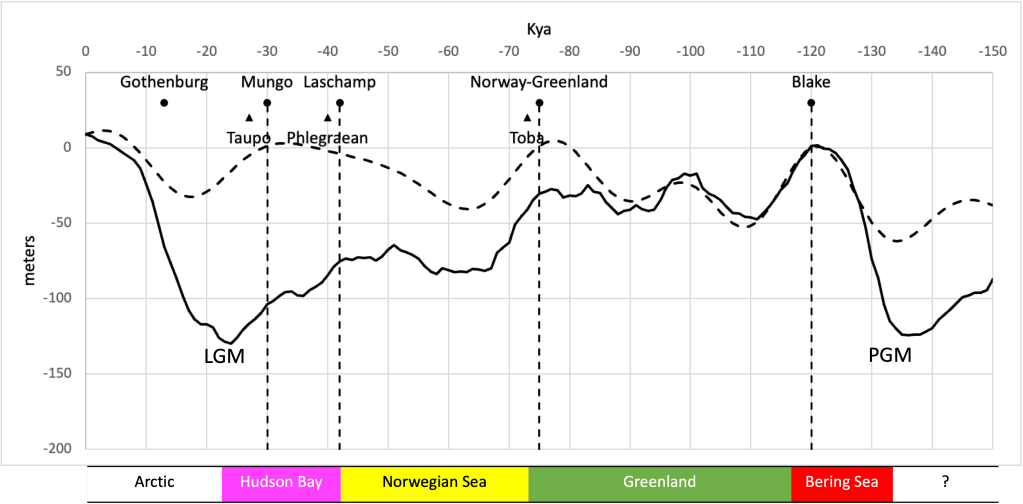
Chapter 9 examines the cyclical and fractal nature of Earthโ€™s temperature and geomagnetic field changes, proposing that glacial cycles are not solely driven by solar radiation (Milankovich cycles) but by deeper geophysical forces such as mantle convection. Mantle convection may reduce the viscosity of the Earthโ€™s LVZ, enabling crustal displacements that shift landmasses in and out of polar regions, thereby influencing global temperatures. The chapter argues that these forces work together, influencing the “shape” of the ice ages. It also discusses how global warming could end the current Quaternary Glaciation and forecasts a potential future pole shift that may once again trigger regional glaciation, particularly in Europe. Finally, the chapter examines the importance of the geomagnetic field in shielding Earth from cosmic radiation and speculates that ancient underground cities, such as those in Cappadocia, might have served as protection during periods of weakened magnetic shielding, like the Laschamp geomagnetic excursion 42,000 years ago.

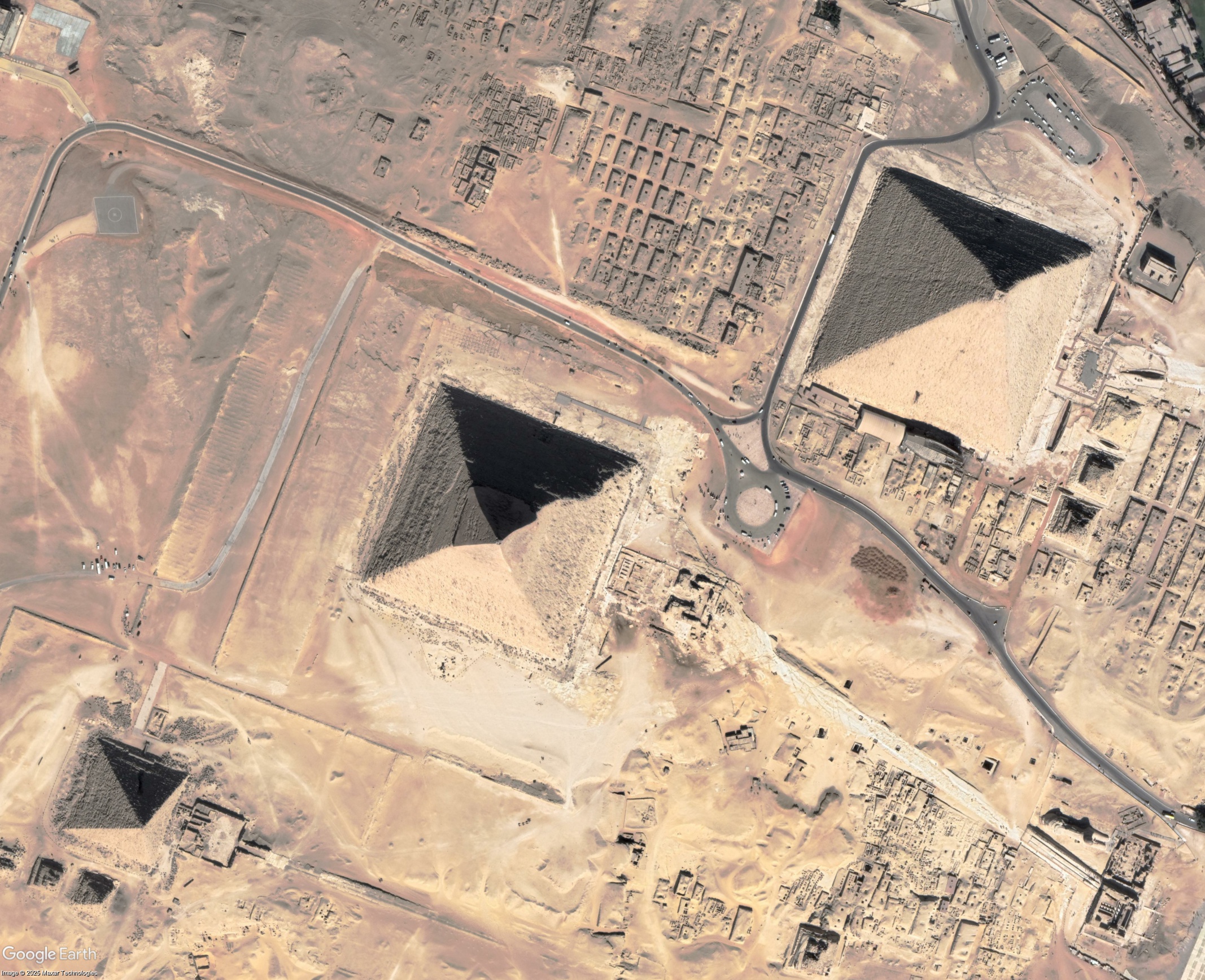
If the North Pole were to shift from the Arctic to another location (discussed in the book), the orientation of the Great Pyramid in Giza would rotate about 20ยฐ clockwise over the course of ten thousand years. (Google Earth)

A final chapter summarizes the new theory, discusses lingering issues, and suggests new directions for future research and discovery.


Feature image at the top of the article: “King tide, Oregon coast.” (Bonnie Moreland/Creative Commons)

An Inconvenient Theory: Part 2 – Toward a New Theory

The first three chapters in An Inconvenient Theory highlight key problems with current theories. Problems or anomalies are what drive the scientific process of coming up with new hypotheses, experiments, and ultimately new theories. Chapters 4-6 trace the development of a revised and expanded version of Hapgoodโ€™s theory.

Other Frames of Reference

Chapter 4 examines the hypothesis that many ancient structures around the world, currently misaligned with modern cardinal or astronomical directions, may have been originally aligned to different geographic poles due to shifts in Earth’s crustโ€”a theory proposed by Charles Hapgood. Using great circle algorithms and site orientation data, analysis of over 900 ancient sites identifies four historical pole locationsโ€”Hudson Bay, Norwegian Sea, Greenland, and the Bering Seaโ€”that explain the orientations of hundreds of previously unexplained alignments. These alignments suggest a global pattern of intentional astronomical positioning consistent with solar and lunar cycles, and statistical analysis indicates the improbability of such correlations occurring by chance. This framework challenges conventional archaeology by proposing a testable, mathematical approach that supports the theory of pole shifts and has significant implications for understanding ancient civilizations and past climate changes.

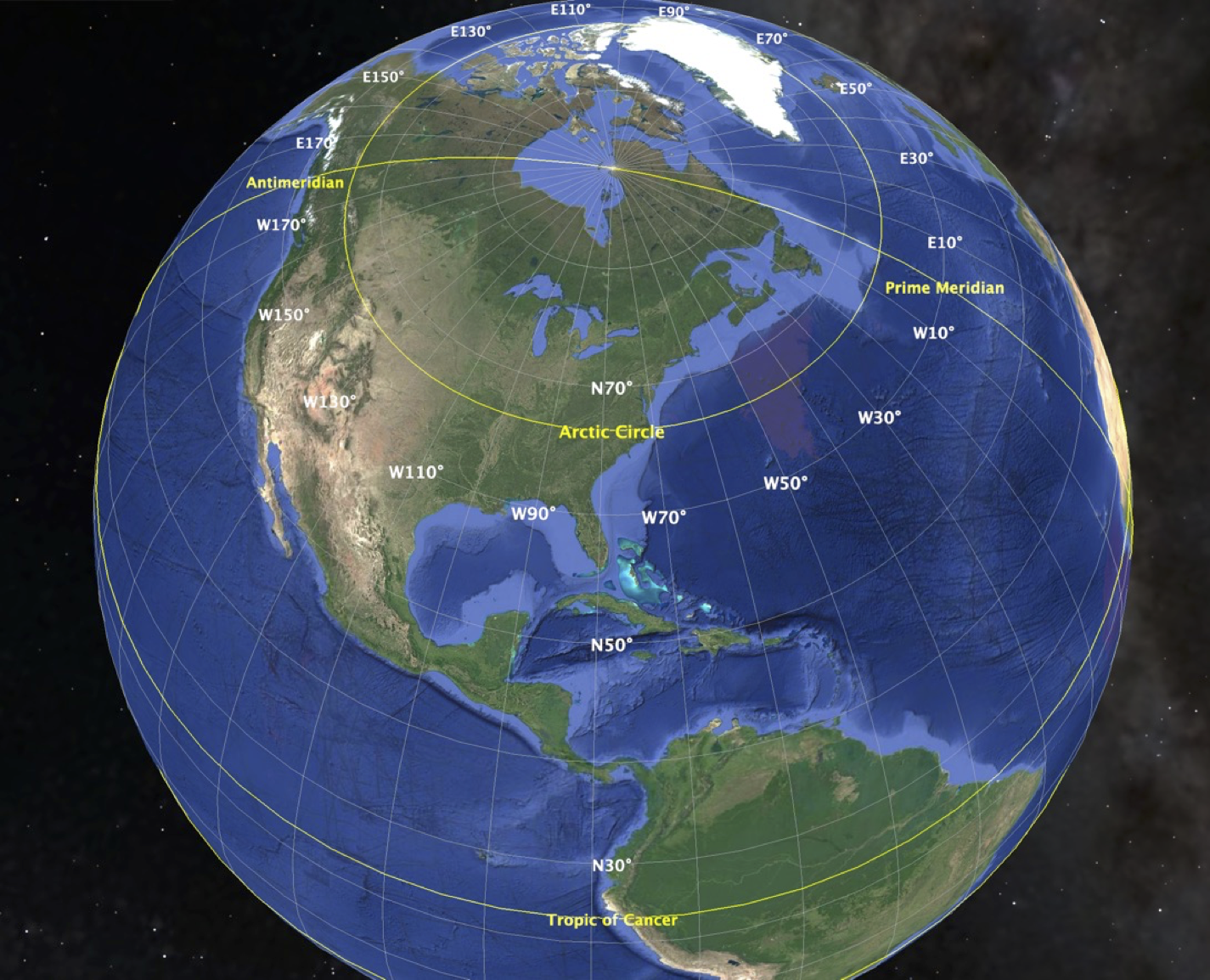
World geography redefined relative to the North Pole in Hudson Bay. (Google Earth)

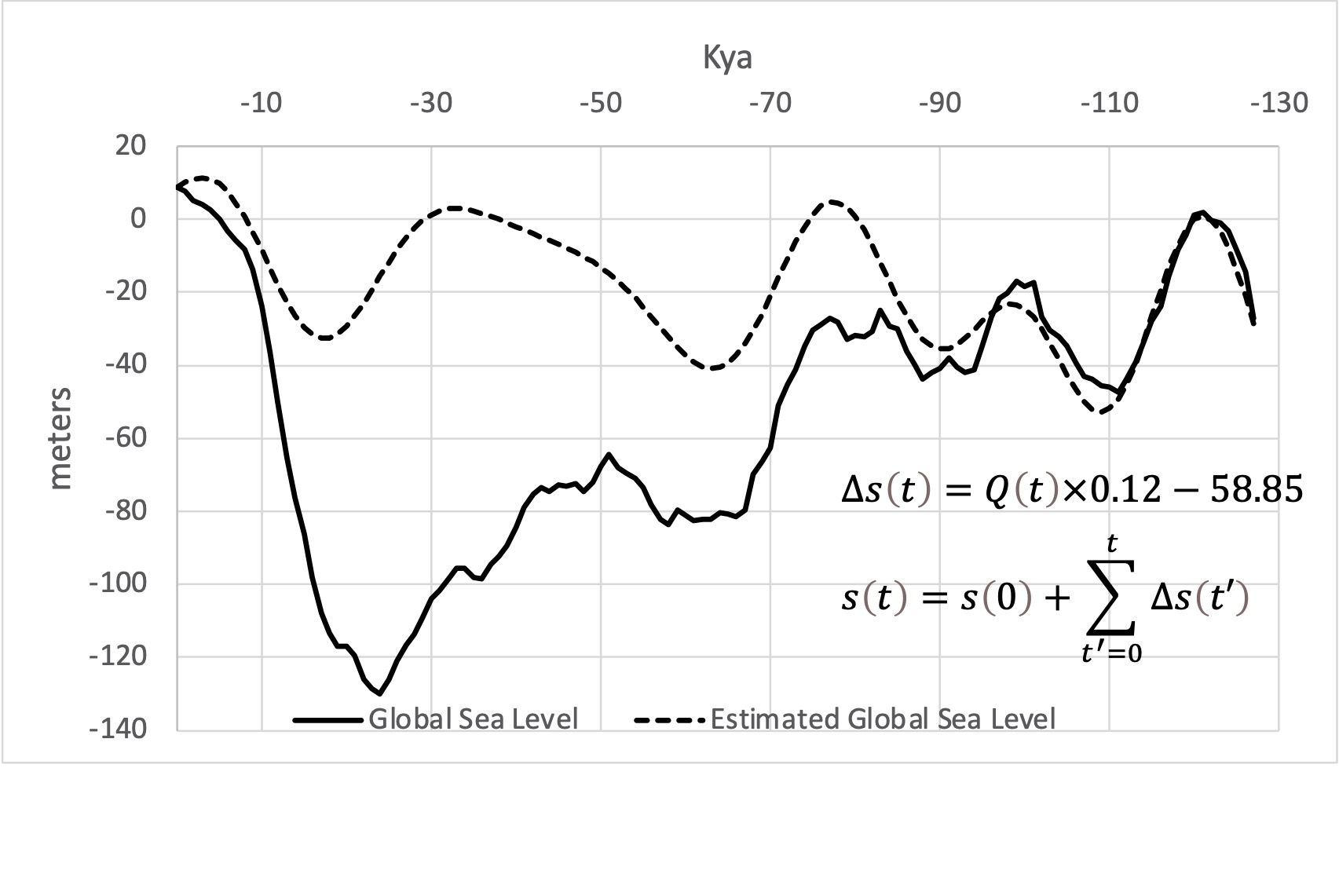
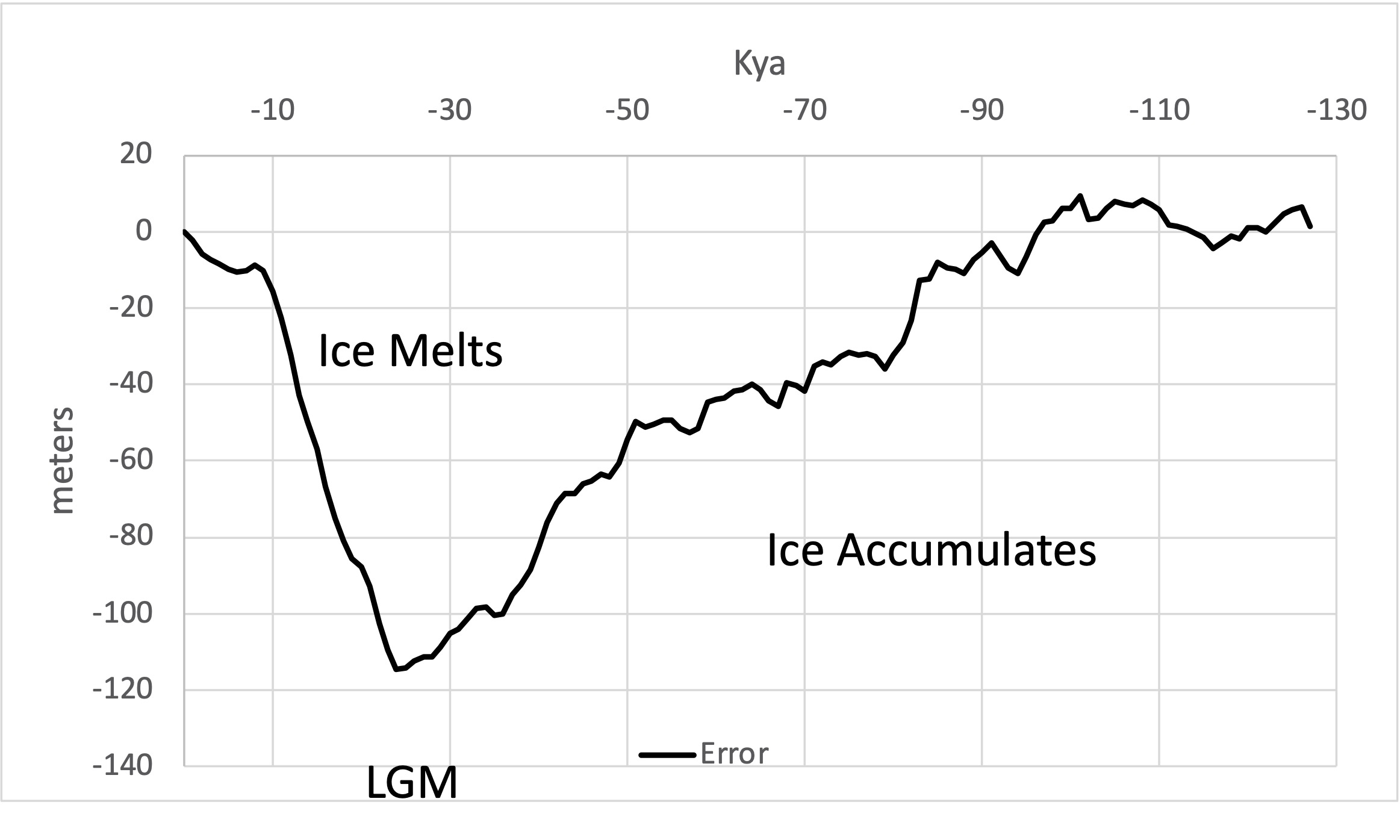
How to Melt Ice in a Cold World

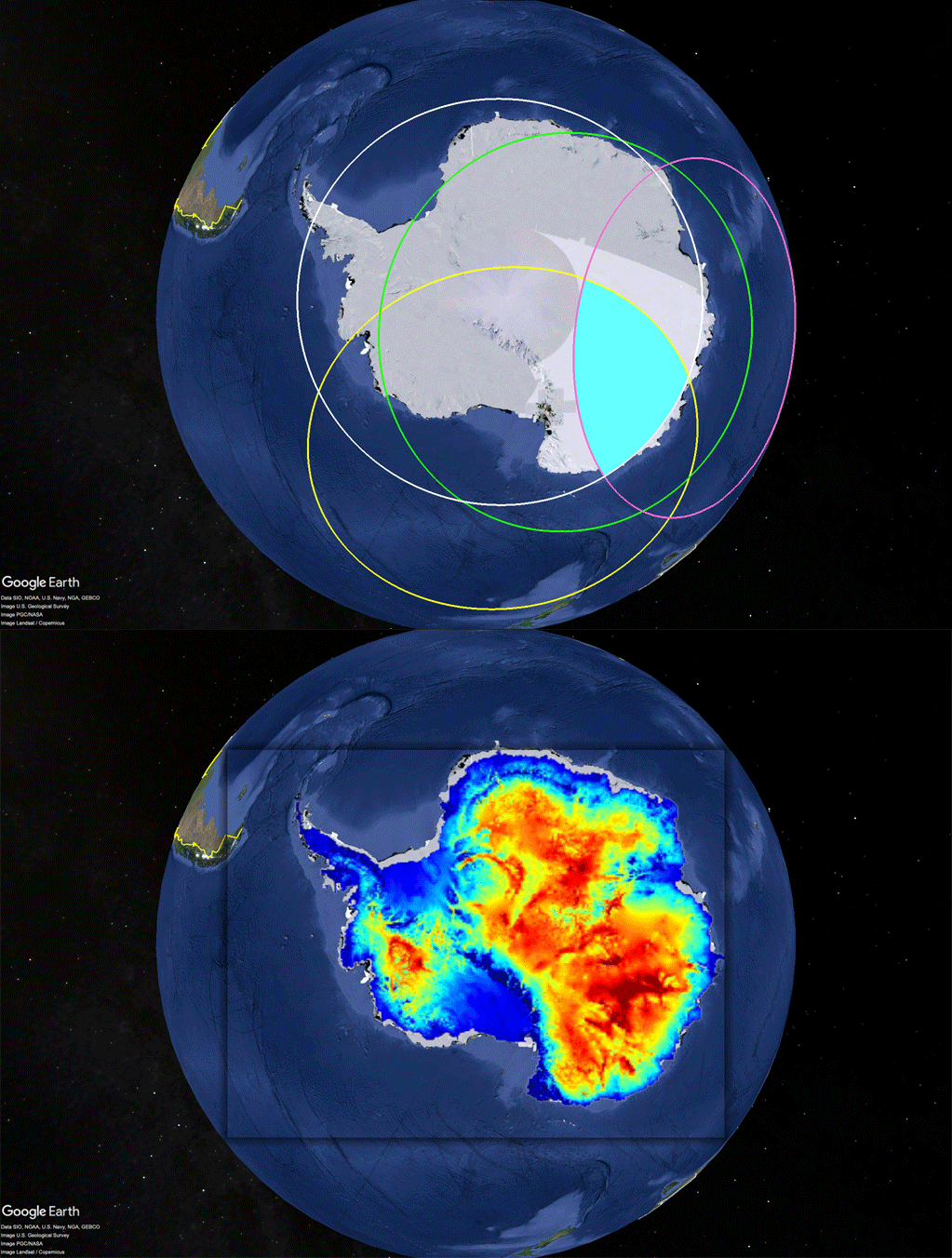
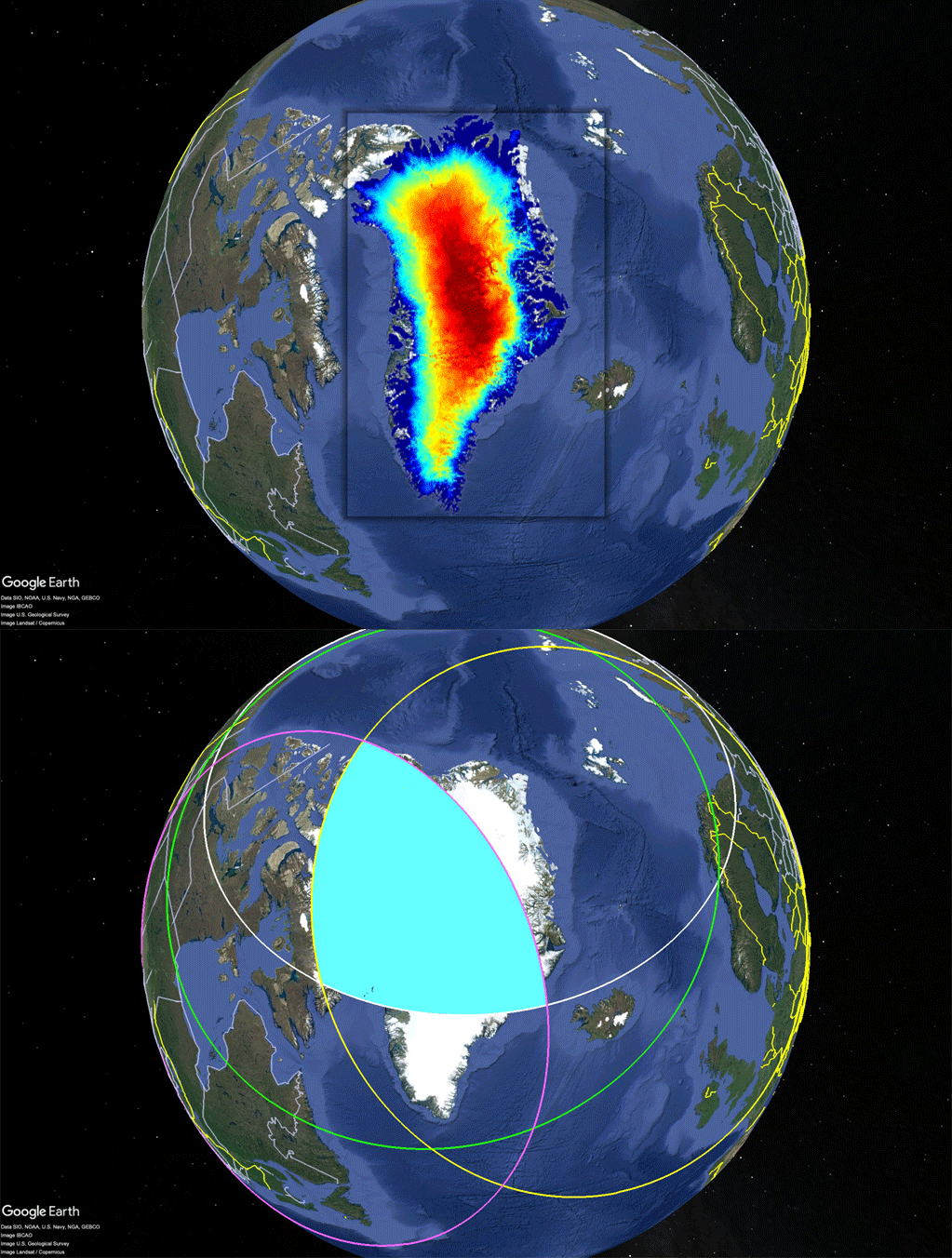
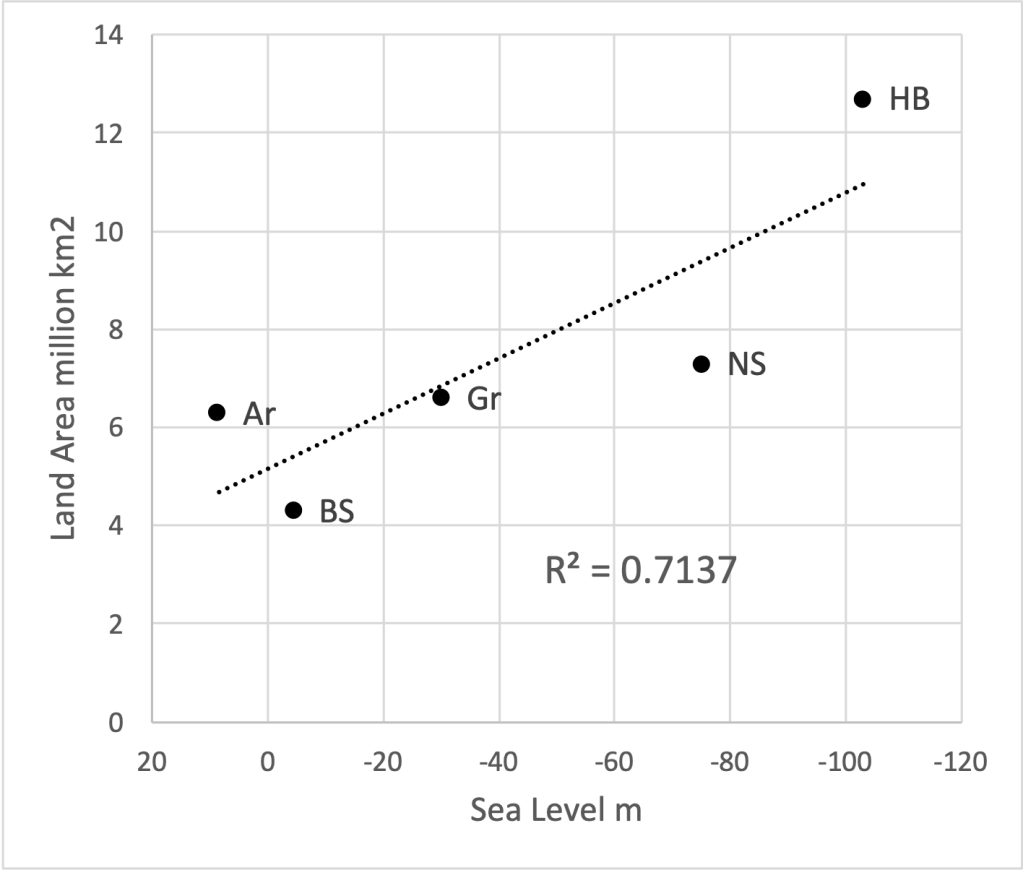
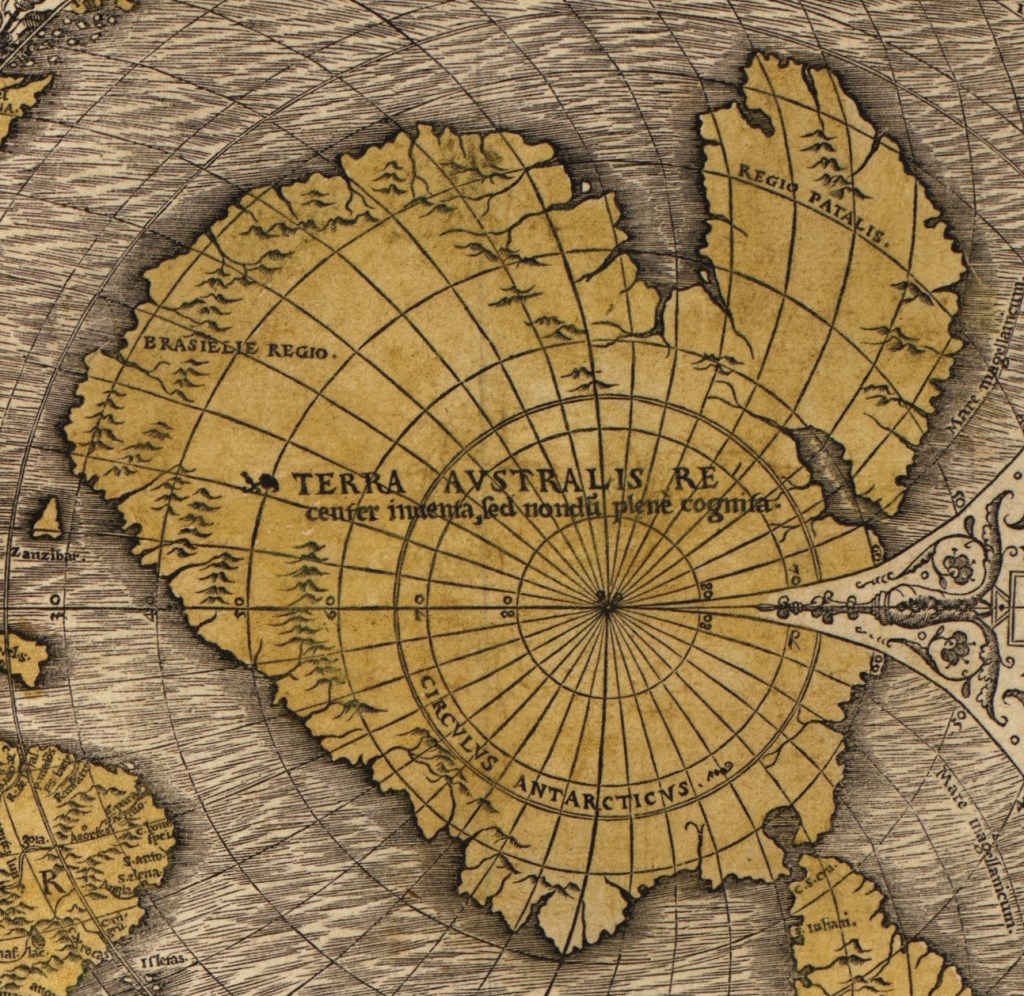
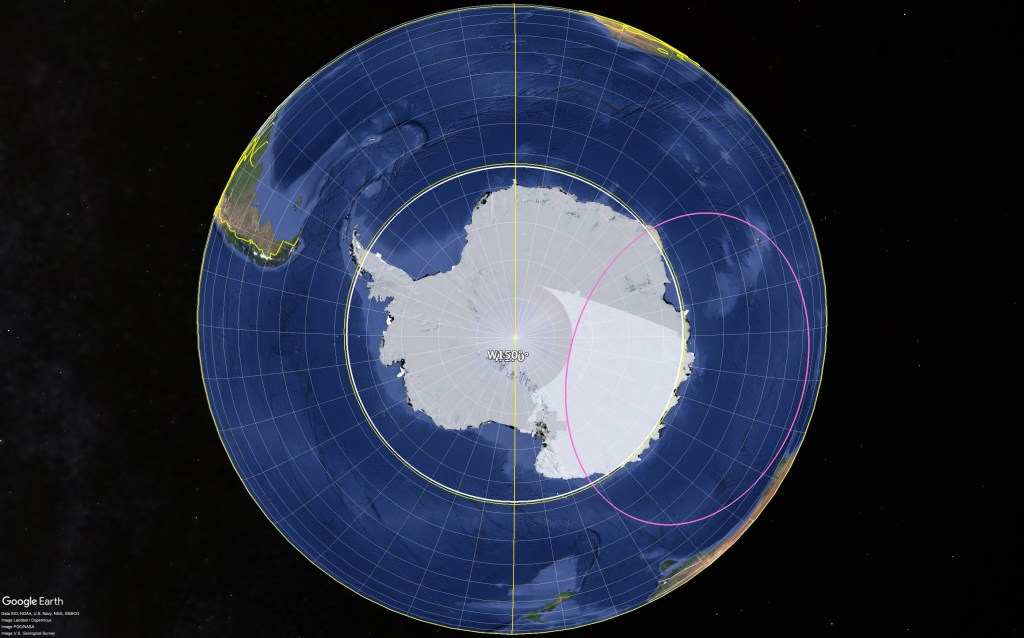
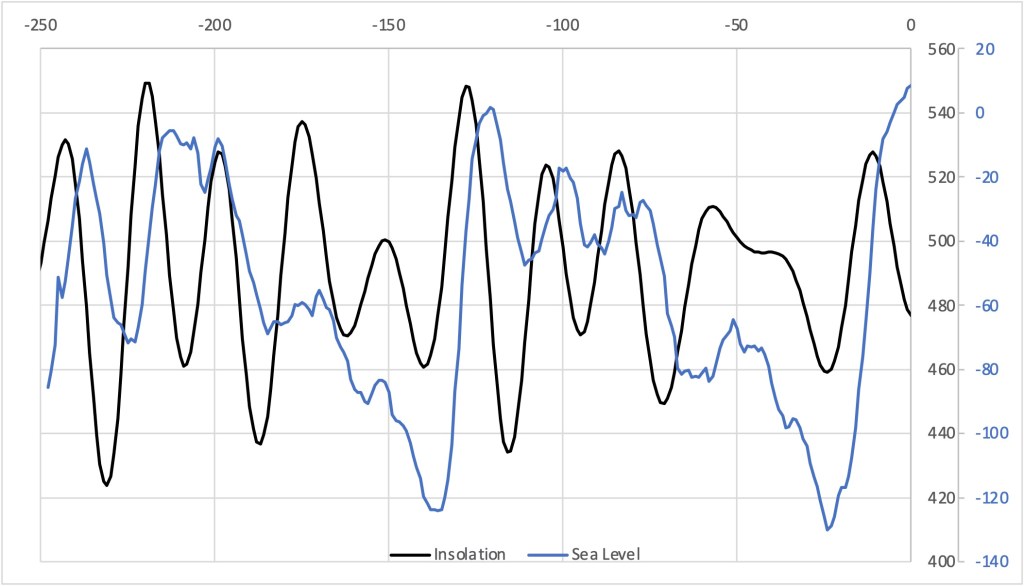
Chapter 5 explores the inadequacy of traditional climate models in explaining how massive polar ice sheets melted during the coldest periods of Earthโ€™s last glacial cycle, and proposes an alternative mechanism involving crustal displacements. Drawing parallels to Copernicus’s simplification of planetary motion, the chapter critiques existing theories like Milankovich cycles and COโ‚‚ feedback for failing to fully account for sea level changes. Instead, it advances the idea, inspired by Charles Hapgood, that geographic pole shifts repositioned ice sheets to lower latitudes, where increased solar insolation caused rapid melting. This hypothesis is supported by correlations between polar land area and sea level, as well as the location of the thickest ice in Greenland and Antarctica aligning with regions that remained in polar zones over successive shifts. The chapter also examines ancient maps like the Orontius Fineaus map, suggesting they may depict an ice-free Antarctica based on observations made during past pole configurations, reinforcing the plausibility of large-scale crustal movement as a driver of climate transitions.

Ice Ages Revisited

Chapter 6 considers an alternative theory to Milankovitch cycles by proposing that dramatic shifts in Earth’s climate during the Ice Ages were caused by displacements of the lithosphere and corresponding pole shifts, not fluctuations in solar radiation. Drawing on Karl Paulyโ€™s 1952 analysis and Charles Hapgoodโ€™s theory of Earth crustal displacement, the chapter presents evidence that shifting pole positions led to changes in geographic climate zones, explaining alternating glacial and interglacial periods. Fossil and archaeological records from Britain, Mexico, the San Augustin Plains, the Arabian Peninsula, and other places are used to correlate shifts in fauna, flora, and human activity with these hypothesized pole movements. Key examples include the presence of tropical animals in Ice Age Britain, changes in mammoth habitat linked to pole shifts, and archaeological water symbolism in Teotihuacan aligning with a wetter, temperate climate during earlier pole locations. The chapter questions conventional climate models, suggesting that geographic pole shifts better account for regional climate anomalies observed in the paleoclimatic record.

Fossils of the hippopotamus and spotted hyena indicate that Britain had a humid subtropical climate 130,000 years ago. This is consistent with the North Pole being located in the Bering Sea north of the Aleutian Islands at that time. (Google Earth)

As the archaeological implications of crustal displacement theory were covered in Before Atlantis and Beyond Atlantis, the last article in this series delves into the search for an underlying mechanism.


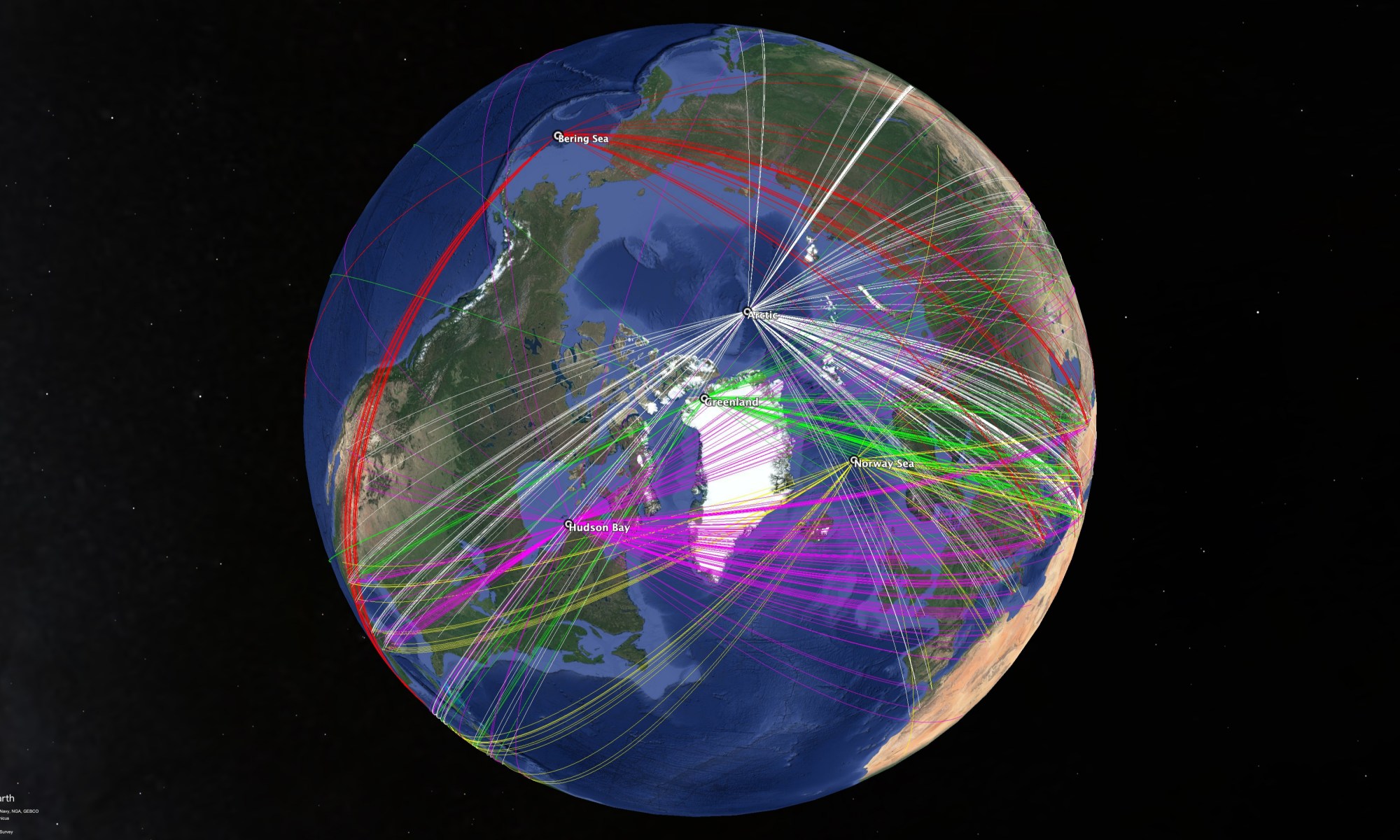
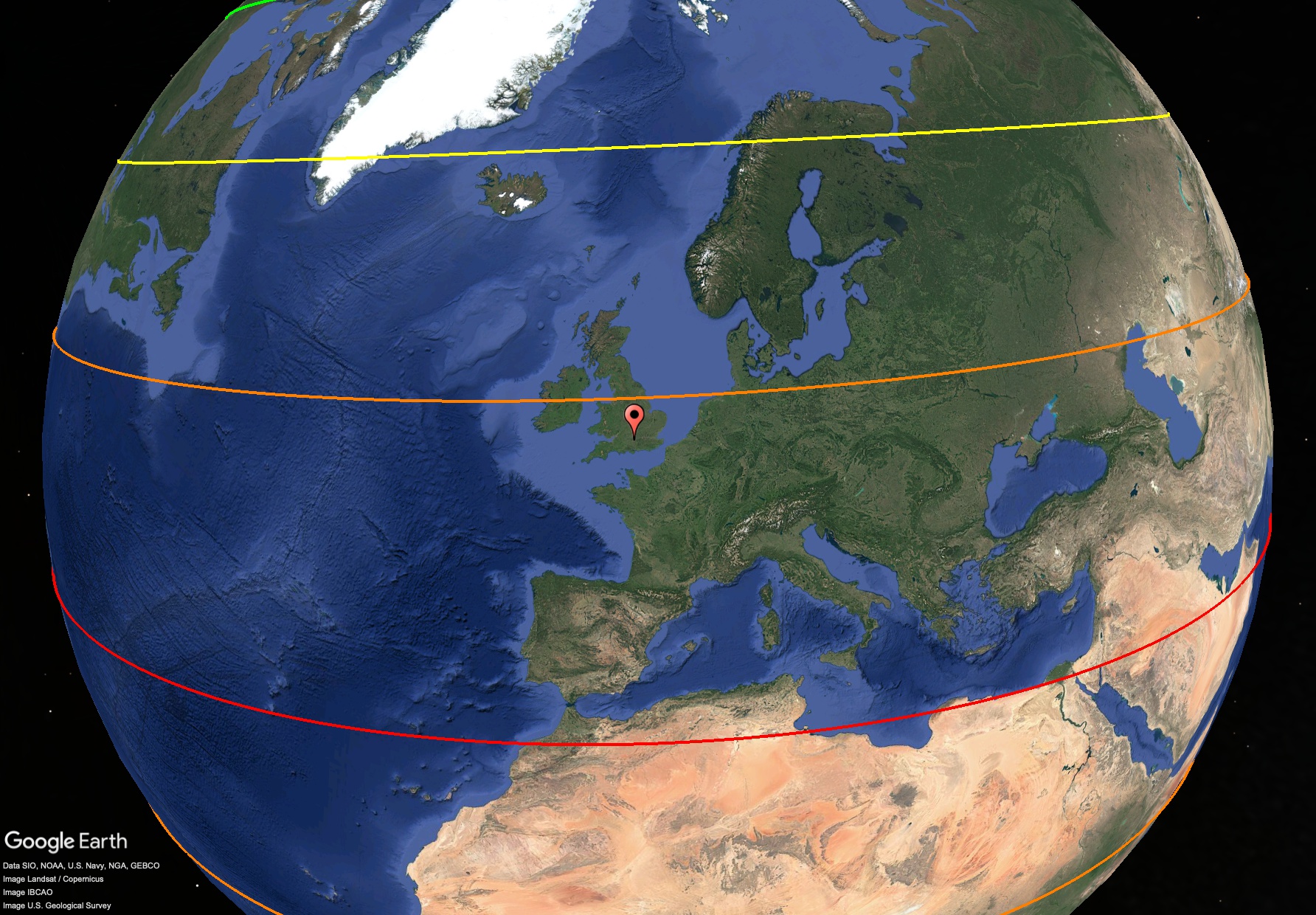
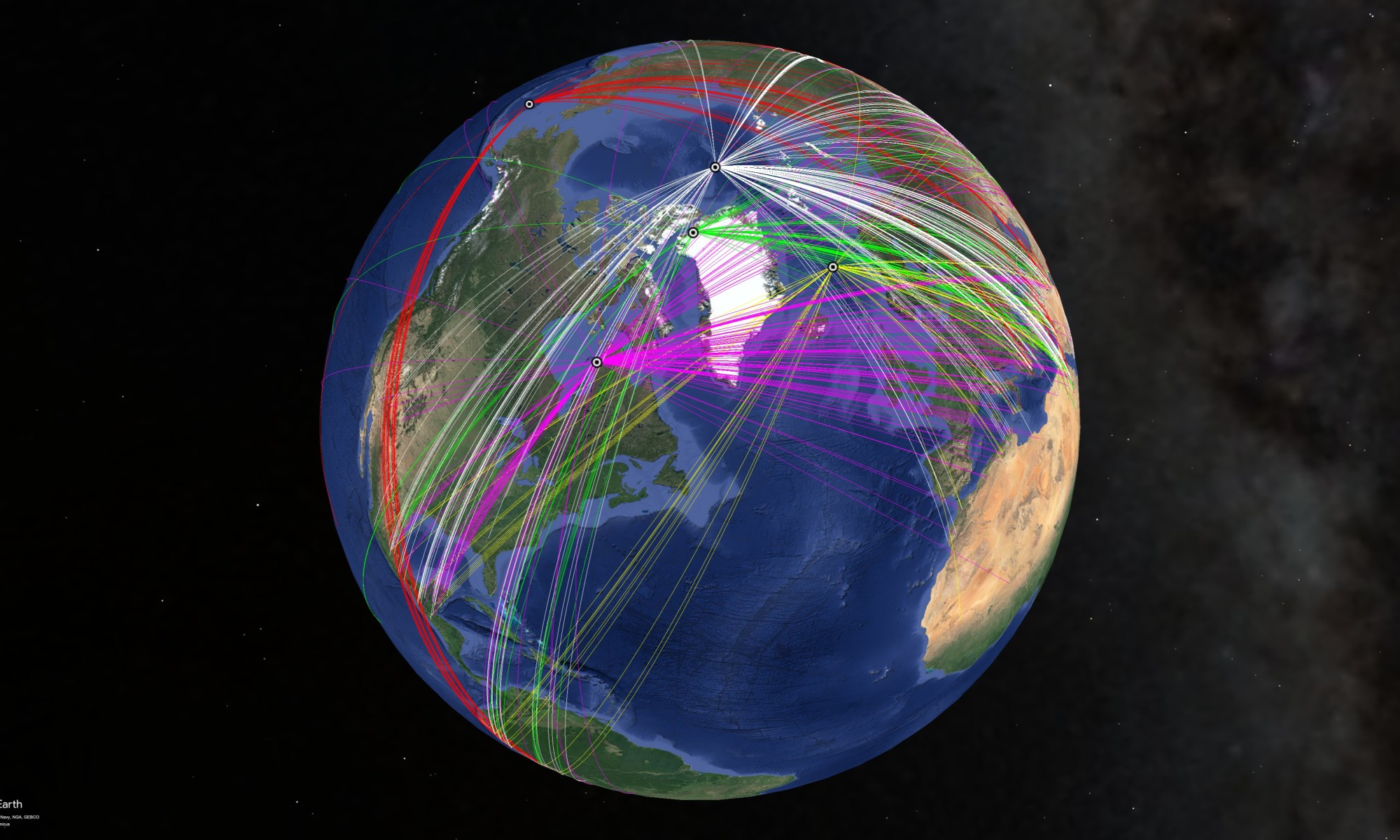
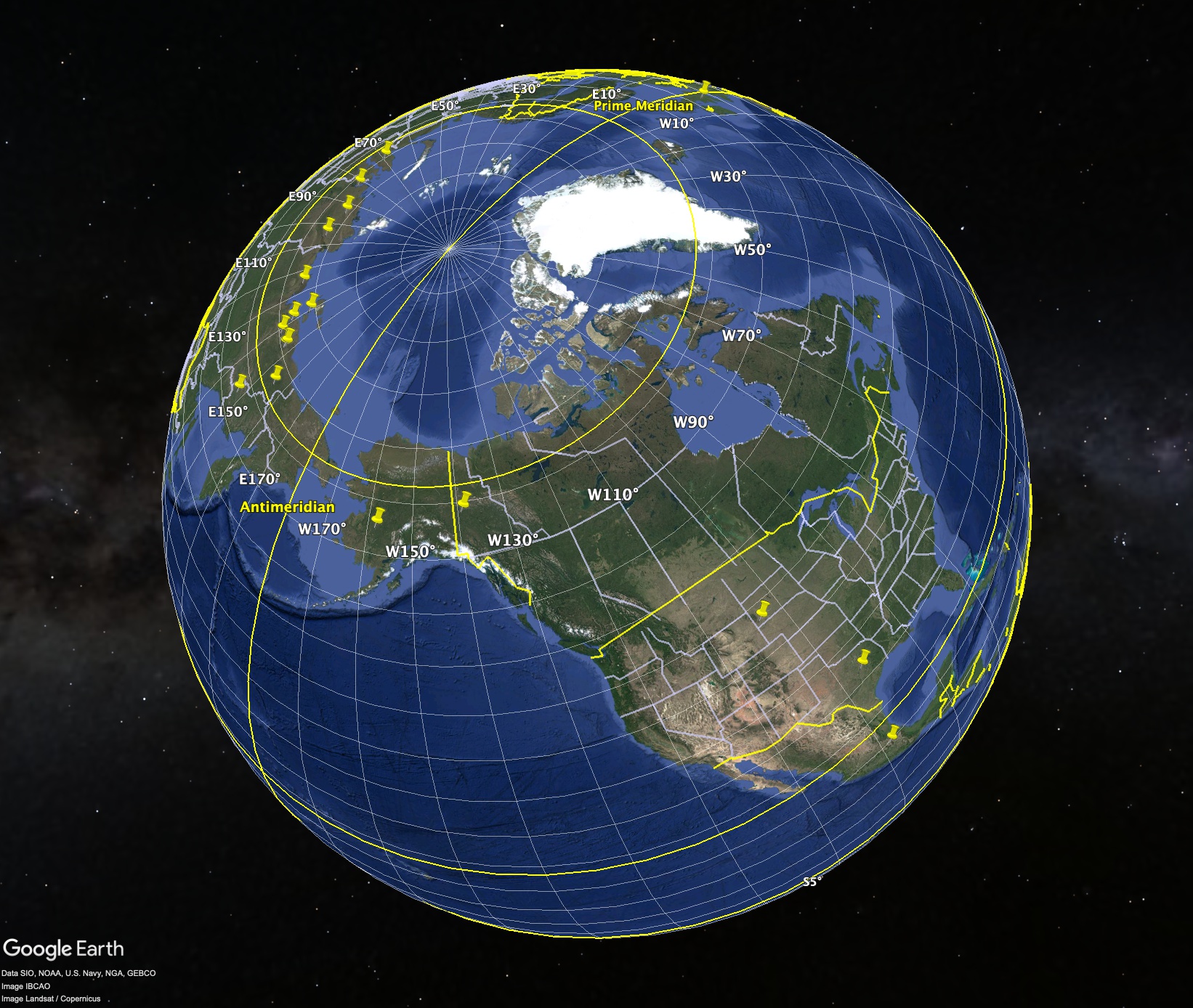
Feature image at the top of the article: Meridians to sites aligned to the current pole (white) and four previous locations of the North Pole in Hudson Bay (magenta), the Norwegian Sea (yellow), Greenland (green), and the Bering Sea (red). (Google Earth)

An Inconvenient Theory: Part 1 – The Anomalies

An Inconvenient Theory continues the search for evidence of ancient civilizations that may have existed long before the end of the last Ice Age. While many researchers have focused on deciphering the technologies behind so-called “out of place” artifacts, my first book, Before Atlantis, takes a different approachโ€”challenging mainstream views of prehistory by investigating site alignments with ancient geographic poles as potential markers of lost civilizations. Building on this foundation, my second book, Beyond Atlantis, presents compelling evidenceโ€”drawn from the alignments of over 500 ancient sites to four former pole locationsโ€”that multiple advanced civilizations may have existed across the globe over the past 130,000 years.

That so many sites seem to point to these four locations had to mean something. The odds of this happening by chance were virtually zero. At a recent conference, someone said the statistical significance of the alignments cannot be disputed, only the dating, and went on to suggest that I should change the dates to be more in line with “what we already know.โ€ The first three chapters in An Inconvenient Theory highlight key problems with current theories, with “what we already know.โ€ 

Chapter 1 – The Riddle of the Ice Ages

Earthโ€™s climate history is marked by dramatic shifts influenced by complex interactions among atmospheric composition, tectonic activity, and solar radiation. In Chapter 1, we show that ice ages, particularly during the Quaternary period, show strong correlations between temperature, COโ‚‚ levels, and sea level, though changes in these variables do not happen simultaneously. While Milankovich cyclesโ€”variations in Earthโ€™s orbit and tiltโ€”are thought to initiate glacial cycles by altering solar insolation, their weak correlation with climate proxies and the unresolved “100,000-year problem” suggest additional factors are needed to explain the timing and magnitude of ice ages. Climate feedbacks, especially from COโ‚‚ released during warming periods, appear to amplify small orbital changes and may better explain sea level shifts, yet challenges remain in explaining glaciations, indicating gaps in current climate theories.

The riddle of how to melt ice in an unusually cold world remains unsolved and is the fundamental problem with current ice age/climate theories. (Christine Zenino/Creative Commons)

Chapter 2 – Mysteries of the Pleistocene

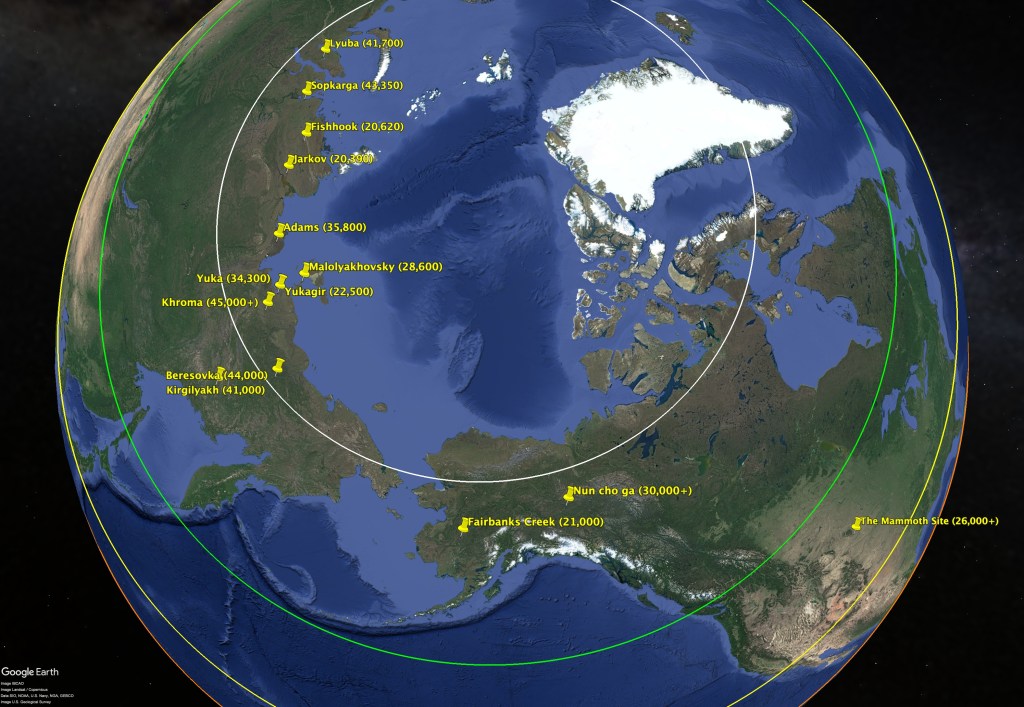
Chapter 2 explores a wide array of fossil discoveries that challenge conventional understandings of Earthโ€™s climatic and ecological history, particularly during the late Pleistocene. The Pleistocene Epoch, spanning from approximately 2.6 million to 11,700 years ago, was characterized by significant climatic fluctuations, leading to the formation and retreat of extensive ice sheets across the globe. These dynamic environmental changes influenced the distribution and evolution of diverse megafauna, including woolly mammoths, giant ground sloths, and saber-toothed cats. Fossil discoveries in regions like the Arctic, Sahara, and Australia reveal that these areas once hosted ecosystems vastly different from today’s, indicating dramatic shifts in climate and habitat. Ultimately, the chapter underscores how puzzling fossil records from diverse locations point to episodes of extreme environmental transformation during the late Quaternary that are not fully explained by current scientific models.

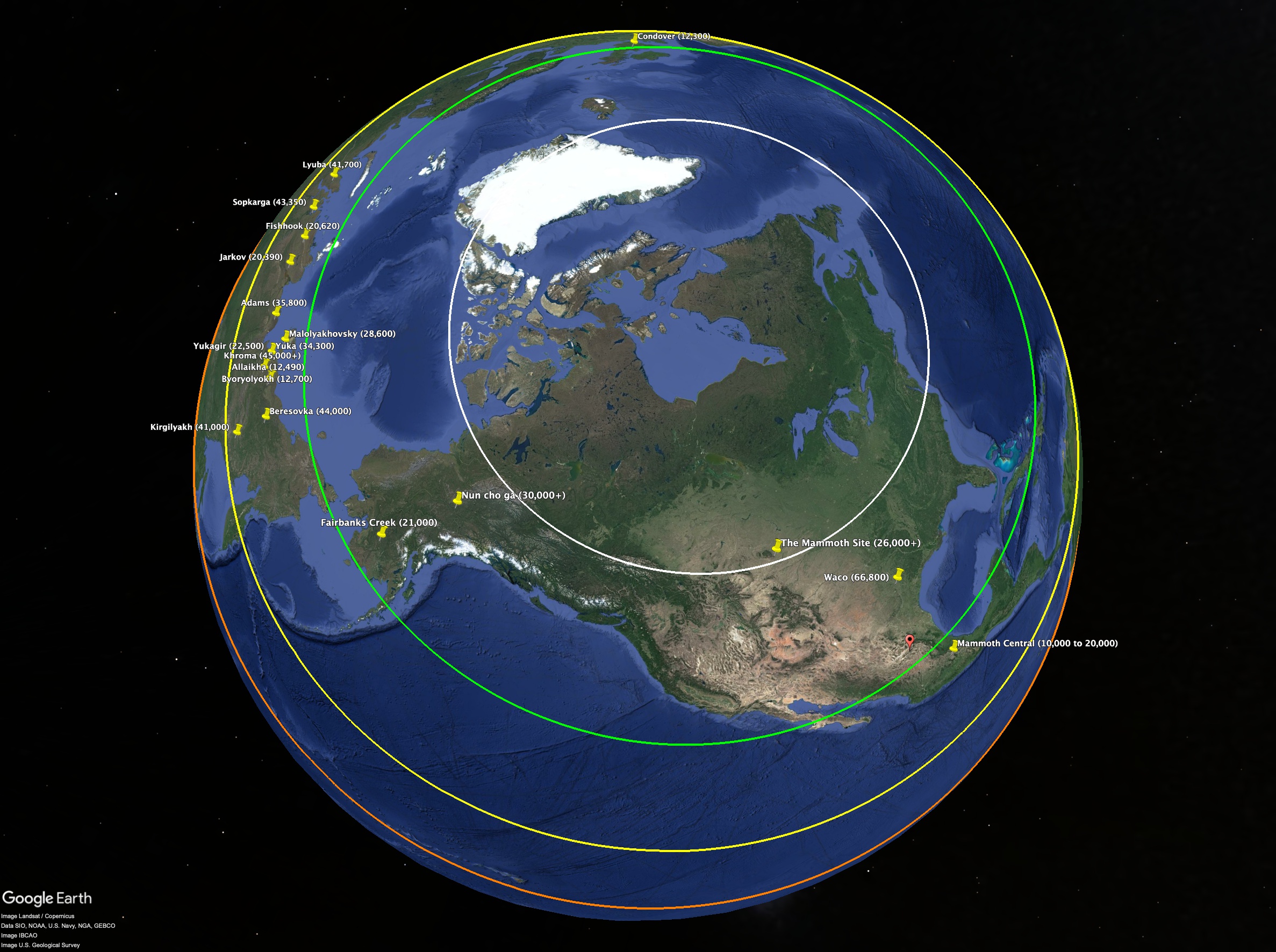
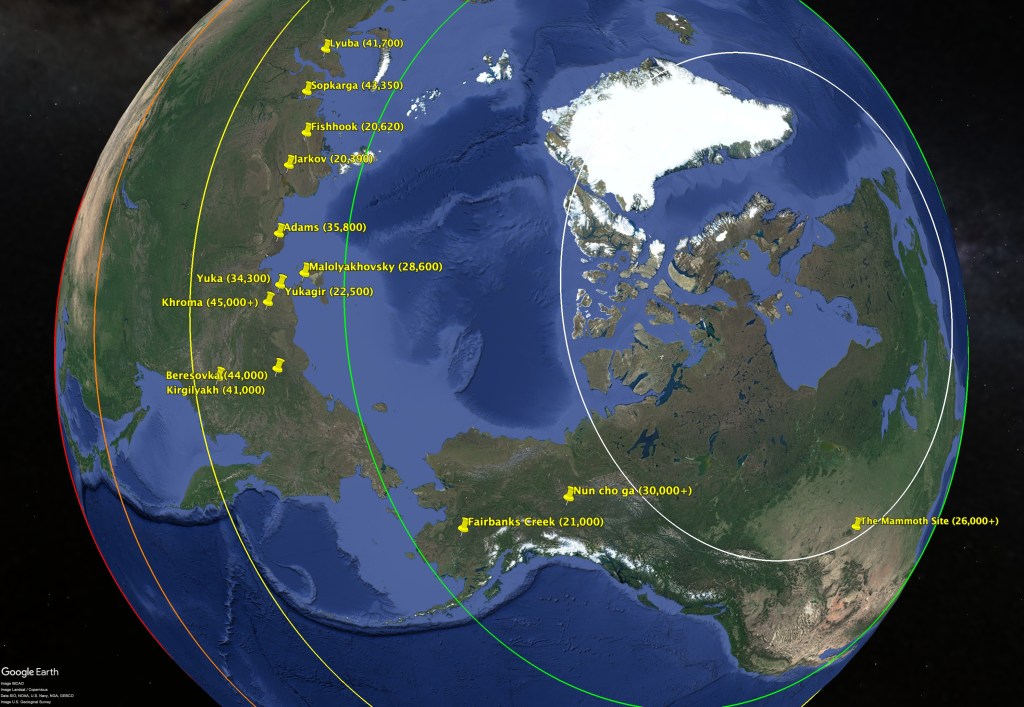
Mammoth sites ranging from above the Arctic Circle to Mexico are hard to explain in terms of current climate models. (Google Earth)

Chapter 3 – As Above, So Below?

The concept of “As Above, So Below” from Hermetic philosophy suggests a fundamental unity between the cosmos and the Earth, an idea that has long inspired the alignment of ancient structures with celestial phenomena. Archaeoastronomyโ€”the study of how ancient people understood and utilized astronomical eventsโ€”has uncovered evidence that many sites across the globe were deliberately oriented to align with the Sun, Moon, stars, or cardinal directions, as seen in places like Stonehenge, Karnak, and Chichรฉn Itzรก. Pioneers such as Norman Lockyer and Alexander Thom proposed bold theories about these alignments, some controversial, laying the foundation for this multidisciplinary field. As we see in Chapter 3, despite significant progress, a large fraction of ancient site orientations remain unexplained, with places like Teotihuacan, Machu Picchu, and Baalbek defying easy categorization. These enigmatic alignments challenge modern researchers to consider not only astronomical, but also cultural, geographical, and possibly unknown factors in interpreting the intentions of ancient builders, leaving the question open as to whether deeper, perhaps lost knowledge once guided these monumental designs.

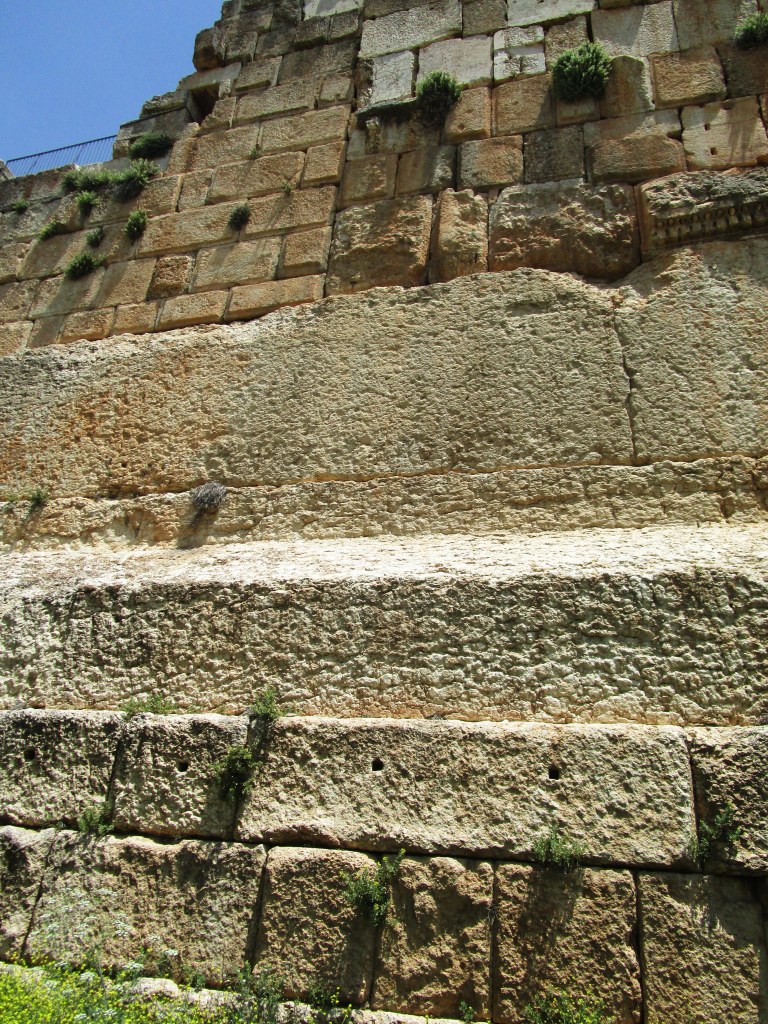
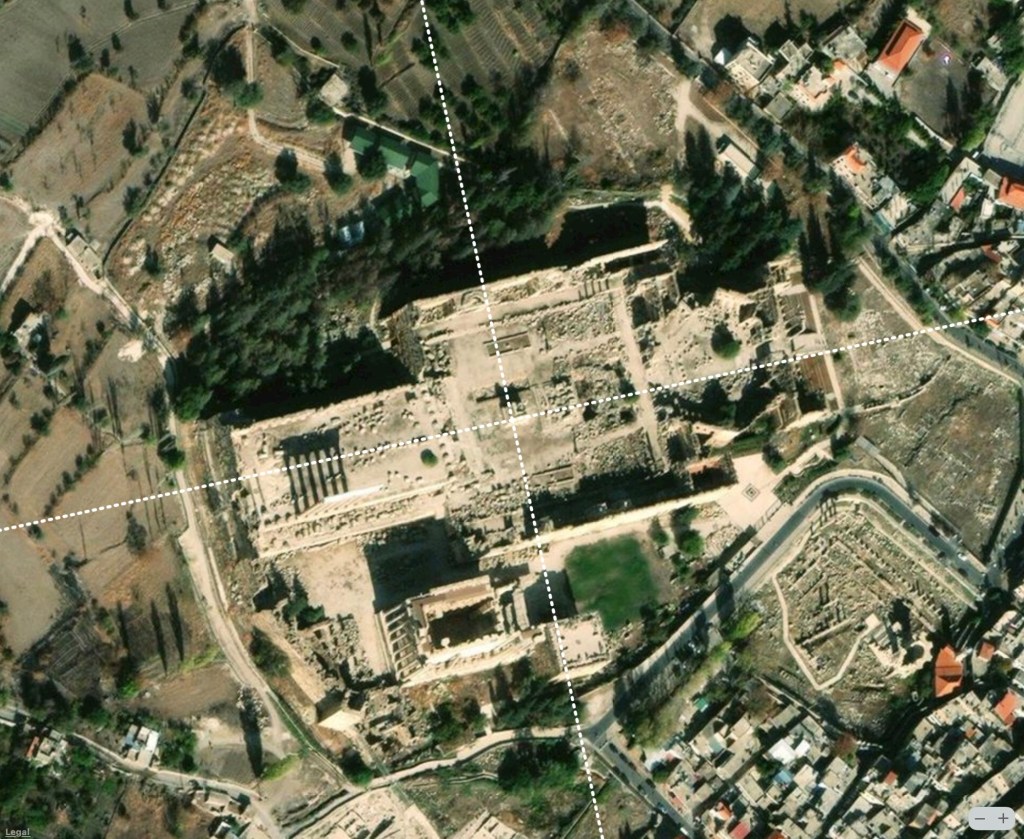
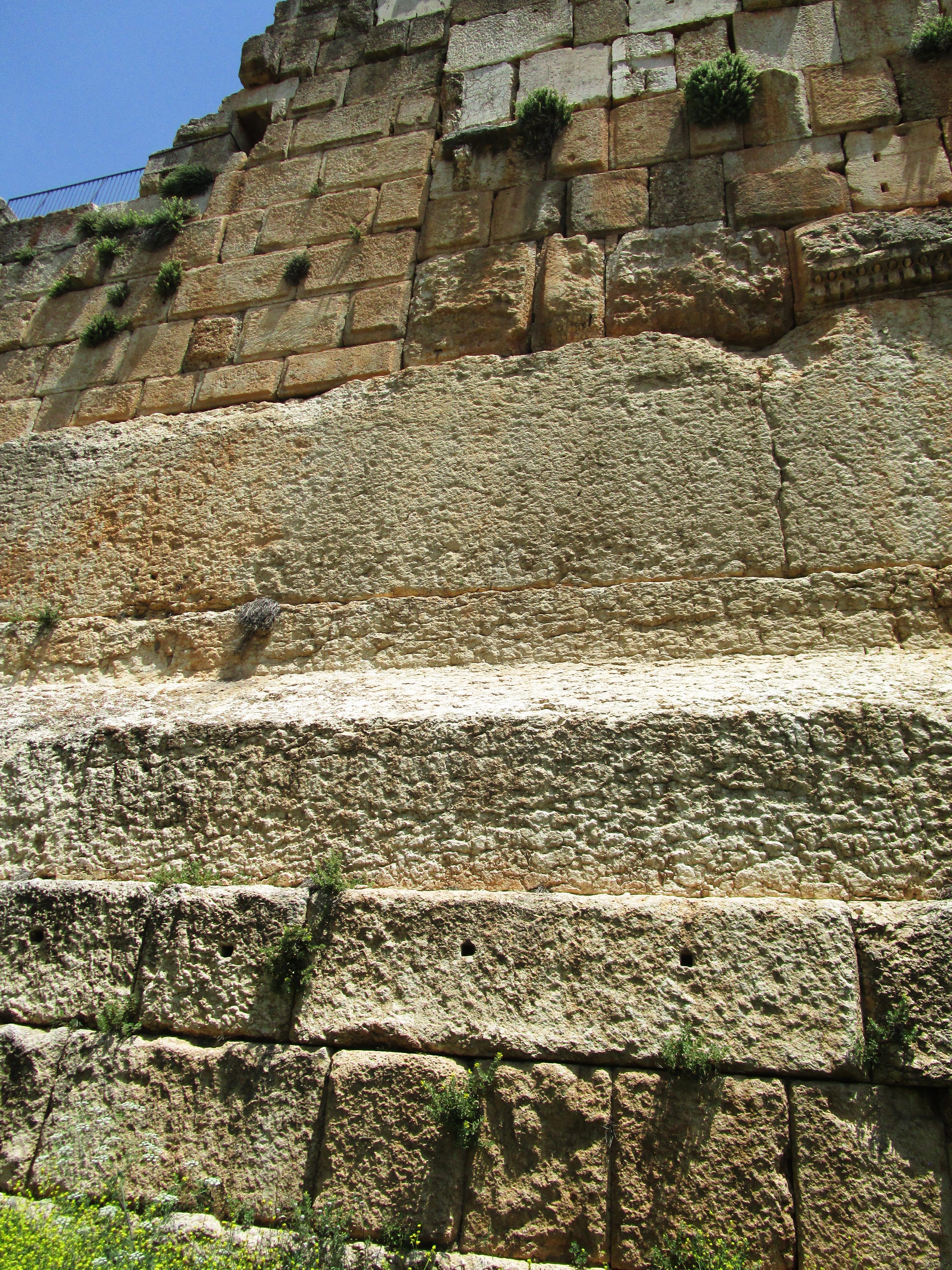
The foundation of Baalbek, which is constructed from some of the largest megaliths in the world is not aligned in any known geographical/astronomical direction. (Creative Commons/ Lodo27)

The next article describes how these unexplained problems or anomalies drive the scientific process of coming up with new hypotheses, experiments, and ultimately a new theory.ย 


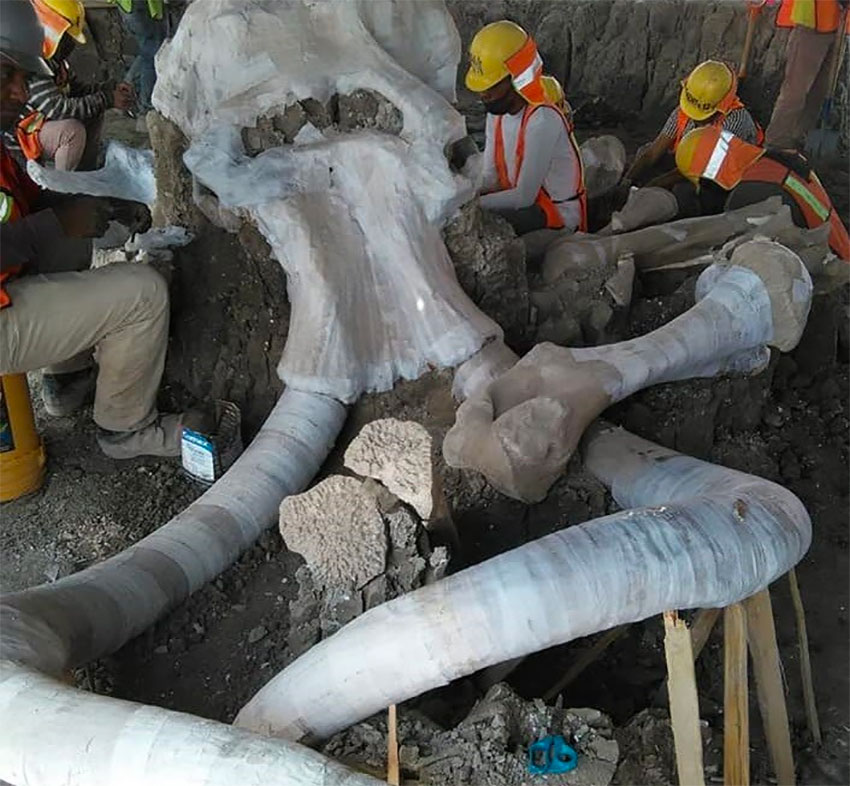
Feature image at the top of the article: Mammoth remains radiocarbon dated 10,000โ€“20,000 years before present unearthed near Mexico City in 2020. (Mexico News Daily)

An Inconvenient Theory: Of Ice Ages and Lost Civilizations

In Before Atlantis, I presented evidence that advanced civilizations existed throughout the world during the last ice age. My claim was based on over a hundred ancient sites that appeared to point to previous positions of the North Pole. That Earthโ€™s North Pole not only shifted during the last ice age but was responsible for it was a revolutionary idea proposed by Charles Hapgood in his 1958 book Earthโ€™s Shifting Crust. Its publication was somewhat ill-timed in that his theory of crustal displacement was almost immediately dismissed as the emerging theory of plate tectonics, which explained the movement of the continents โ€“ an idea first proposed by Alfred Wegener in the early 20th century, was becoming a dominant paradigm in the geosciences. There were also technical problems with his theory, in particular, Hapgoodโ€™s contention that crustal displacements were caused by a buildup of ice at the poles, an idea that was later shown to be wrong.

Historically, the geoscience community has rejected crustal displacement theory due to the lack of an identified physical process that can shift the crust thousands of miles in relatively short periods of time. The situation is not unlike Wegenerโ€™s theory of continental drift. In 1912, Alfred Wegener proposed that continents were once joined in a supercontinent called Pangaea and have since drifted apart. While he gathered compelling geological, fossil, and climatic evidence, his theory was rejected by many scientists because he could not explain how the continents moved. In the 1960s, Harry Hess proposed the idea of seafloor spreading, where new ocean crust forms at mid-ocean ridges and pushes older crust away. This process gave a mechanism that could move continents, supporting Wegener’s idea.

Long thought to be a theory lacking a plausible mechanism, my latest book, An Inconvenient Theory, explains crustal displacements within the context of existing theories in the geosciences, specifically that changes deep within the Earth can cause the crust at certain times to become “unlocked” from the mantle allowing Earth-Sun-Moon tidal forces, the same forces that move Earthโ€™s oceans, to move its crust. This newly revised and expanded theory of Earth crustal displacement goes beyond the scope of Hapgoodโ€™s original theory in that it connects past poles not only with glacial cycles/ice ages but with what could have been past ages of humanity and offers new hypotheses concerning human history.

In the next three articles, I will highlight how this new theory solves key problems in climate science, paleontology, and archaeology including:

  • Glacial cycles/ice ages – How massive amounts of ice can melt when global temperatures are coldest at the end of an ice age
  • Extreme late Pleistocene climate changes and mass extinctions – The presence of woolly mammoths from northern Mexico to above the Arctic circle, the Hippopotamus and other sub-tropical animals at one time in Britain, and Arctic fox and other animals native to polar climates at another time in Britain, and a paleolake in the middle of the Arabian desert, all within the past 130,000 years
  • Unexplained sites – Why the majority of archaeological sites, including the most enigmatic places in the world, are not aligned in any known direction.

The first article summarizes fundamental problems that current theories cannot explain. These problems or anomalies drive the scientific process of coming up with new hypotheses, experiments, and ultimately a new theory, which is discussed in the second article. The third article in the series proposes possible mechanisms behind crustal displacements.


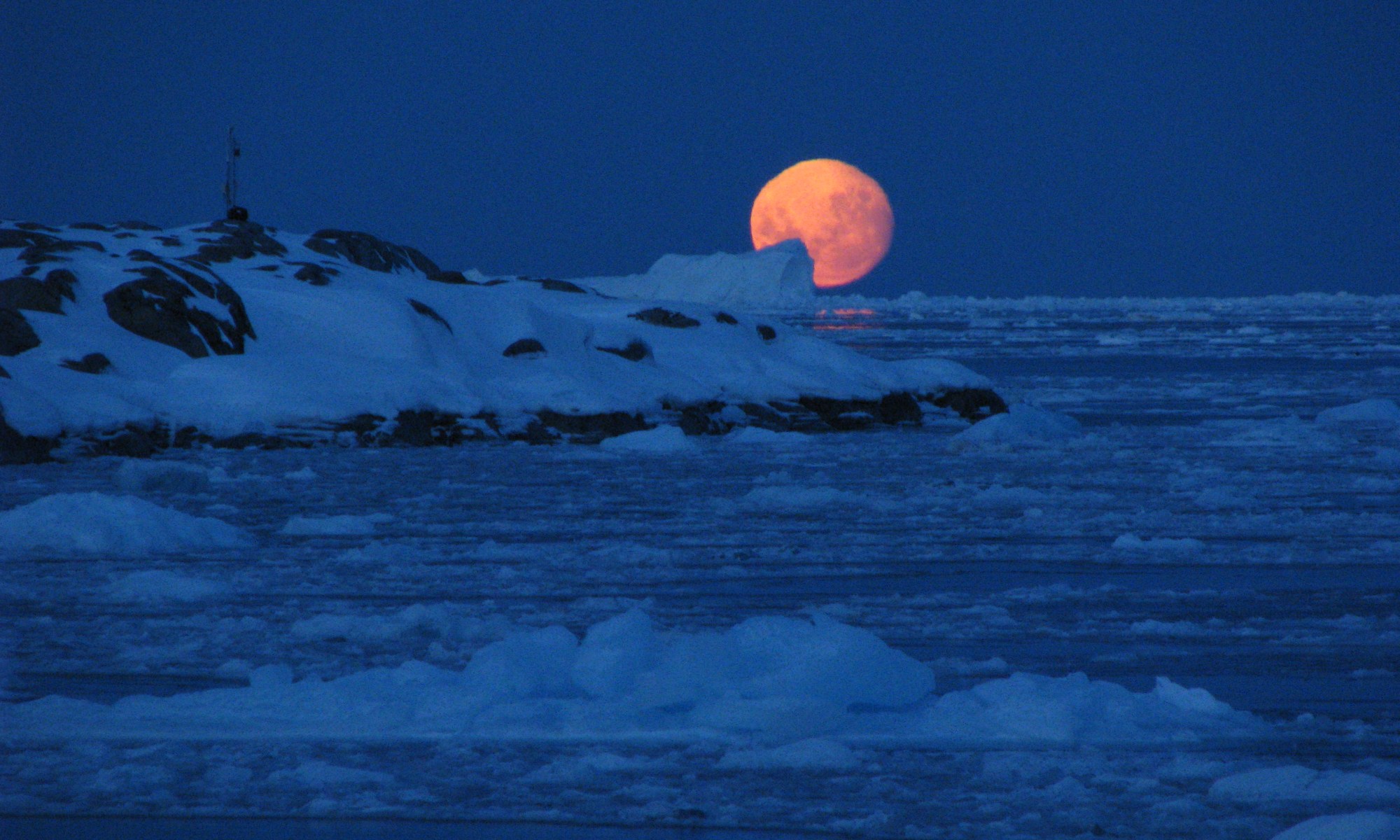
Featured image at the top of the article: “The moon sets behind Bonaparte Point, Anvers Island, across from Palmer Station, the U.S. Antarctic Programโ€™s smallest research station.โ€  September 2, 2009. Courtesy Ken Keenan/Creative Commons CC BY-NC-ND 4.0.

The Cuban Underwater Formations

During an exploration and survey mission off the west coast of Cuba in 2001, unusual stone structures were detected in sonar imagery at depths ranging from 600 to 750 meters. The discovery was announced by Pauline Zalitzki, a marine engineer, and her husband Paul Weinzweig, who led the mission under the auspices of the Cuban government. Widely reported at the time by the popular press, the discovery has since become a topic of some speculation due to what seemed to be the lack of any follow-up investigation.

More than a decade later, a scientific report was published by the expeditionโ€™s lead scientist, Manuel A. Iturralde-Vinent, in which he states:

At depths between 600 and 750 metres below sea level, EXPLORAMAR researchers found a set of unusual structures that they called MEGA. Since the discovery was revealed to the press, various opinions have been raised about its origin, which have captured the popular imagination. There has been talk of a “submerged city”, the remains of “Atlantis”, a Mayan settlement, among other similar ideas.

He goes on to describe a follow-up investigation that was never reported by the popular press or cited in the scientific literature:

Investigations in the MEGA area were conducted over several years and included the collection of underwater video images, bottom sediment samples, mosaics of side-scan sonar lines, maps of the location of the lines and structures, photos of the observed structures and objects, aerial photos, several detailed bathymetric maps, topographic maps and scientific literature on western Cuba. A group of technicians and navigators on the Cuban Navy research vessel SS Ulysses participated in this work under the direction of engineer Paulina Zelitsky. The author participated in the final phase of the investigation, studying all the collected materials and performing the geological and geomorphological evaluation and interpretation of the possible origin of MEGA.

While researching these structures, I rediscovered Iturralde-Vinent’s report, which has been translated into English. Using it as a starting point, with the help of Google Earth, we can refine the location and depth of the MEGA site, and estimate the orientation of the underwater structures in the sonar scans.

Where Are the Structures?

According to Wikipedia, the underwater formations are at 21.772547ยฐN 84.836736ยฐW southeast of the San Antonio lighthouse at the extreme western tip of Cuba. In his report, Iturralde-Vinent states they are between 21.85 degrees and 21.9 degrees in a submerged valley between the mainland and the Bajo de San Antonio. By registering his map to Google Earth we place the formations at approximately 21.991ยฐ N 84.983ยฐ W, almost 18 miles away from their previously stated location.

Location map of the megalithic structures registered to Google Earth. The shallowest area is the Bajo de San Antonio northwest of the mega structures. The submerged plain to the east is the extension of the Cuban insular platform in Guanahacabibes. (Iturralde-Vinent/Google Earth)

How Deep Are The Structures?

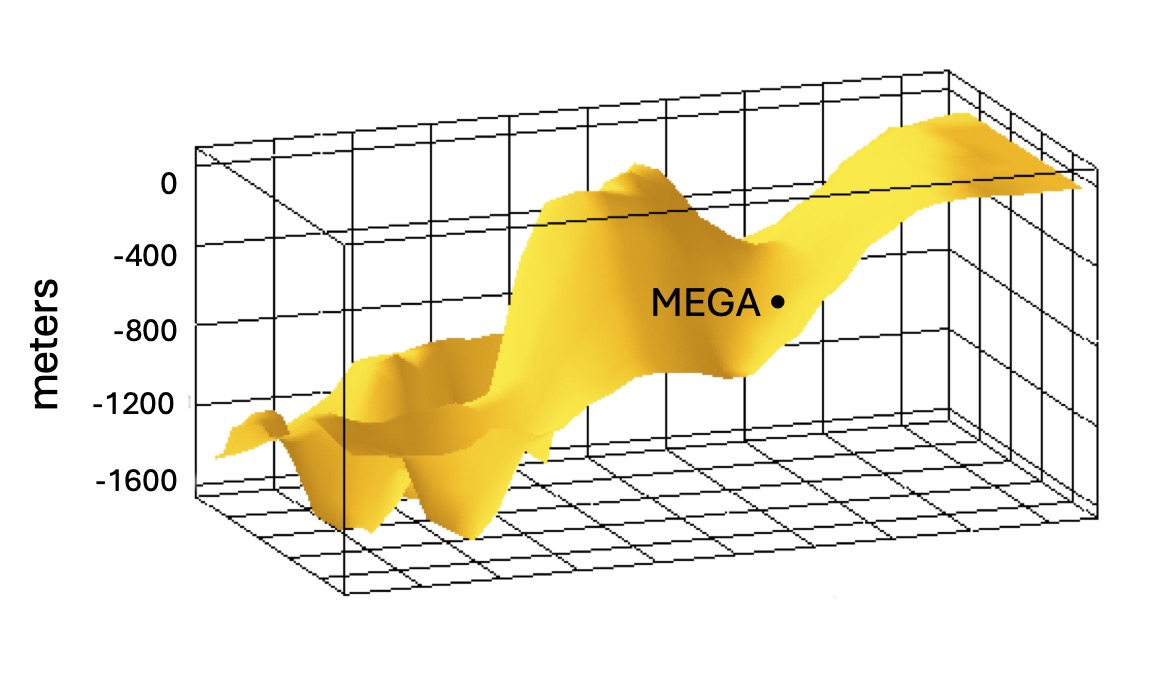
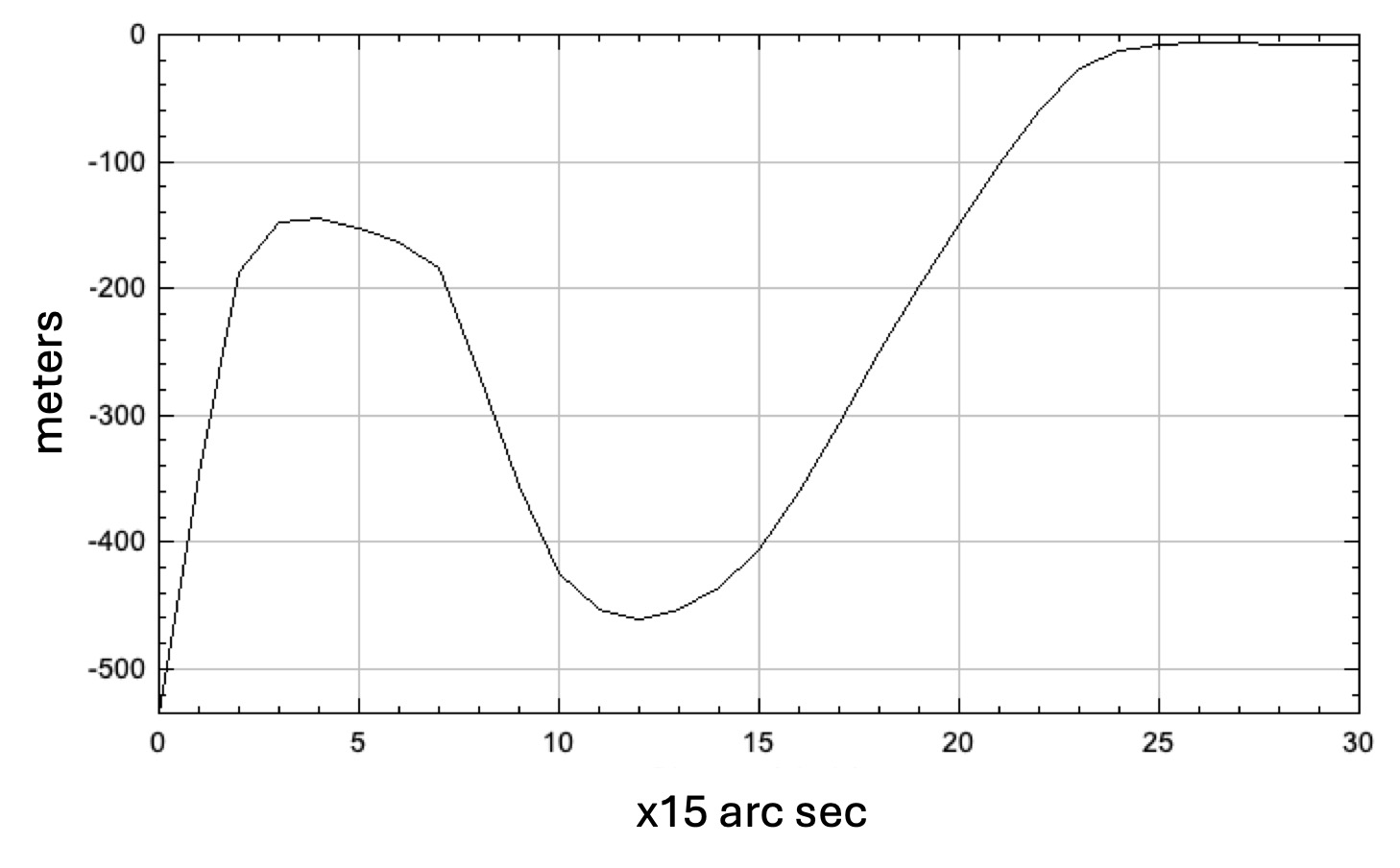
Iturralde-Vinent notes in his report that these structures are in the southeastern portion of the San Antonio Lowlands at depths between 600 and 750 meters. Registering 15 arc-second depth data over this area to Google Earth indicates a shallower range of depths from west to east at the estimated latitude of the structures. The data shows that the water becomes deeper as we move south and shallower north. Thus the structures may be further south than shown here or are in somewhat shallower water than he reported.

15 arc-second SRTM+ depth data registered to Google Earth (above), and plotted as a 3d surface (below left). Depth profile (west to east) at the estimated latitude of the structures (bottom right).

The Sonar Data

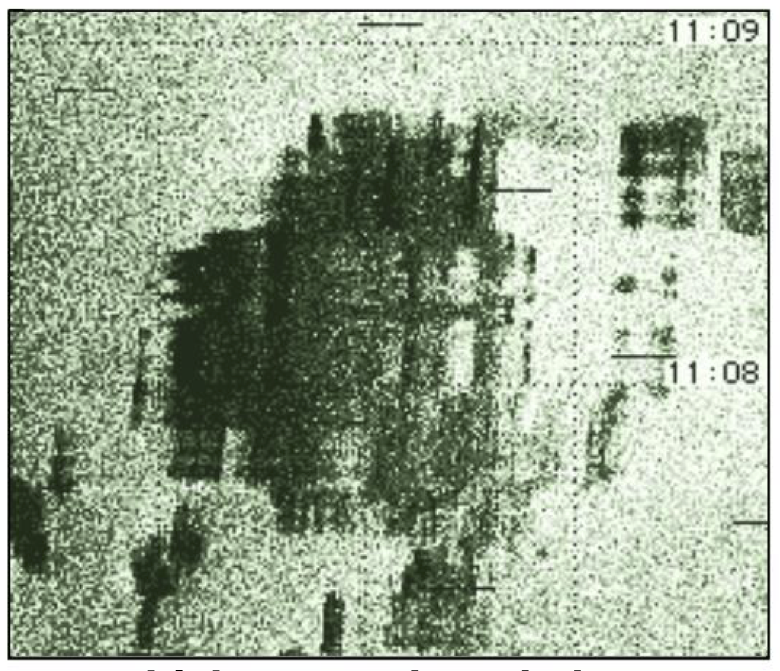
According to his analysis, side-scan sonar maps indicate two kinds of structures. The largest ones have the appearance of elongated geometric crests and depressions that resemble amphitheaters. Smaller ones are cubic, parallelepiped and pyramidal blocks, whose faces are relatively polished.

Sonar scan in the southeastern portion of the San Antonio Lowlands oriented west (left) to east (right) that shows an โ€œamphitheaterโ€ (A) and possible megalithic structures (B). (Iturralde-Vinent)

Iturralde-Vinent states โ€œthe linear nature of some structures and the presence of sectors with the appearance of elements are evidentโ€ and notes features that appear to be thick “walls” and “corridors.” Several examples are shown below. He goes on to say that the side-scan sonar image on the right โ€œexemplifies one of the most striking structures and one that is difficult to explain by natural causes.โ€

Site Alignments

Assuming the sonar scans were accurately registered to a geographic (N-S-E-W) reference frame, the underwater structures are rotated clockwise from the cardinal directions by several degrees.

An analysis of the geographical orientation of almost two hundred archaeological sites in the Western Hemisphere (Beyond Atlantis, chapter 20) reveals that only about 1/3 are cardinally aligned N-S-E-W or in astronomically significant directions. The alignments of five of these sites, provided as context, along with one of the underwater formations, are shown below.

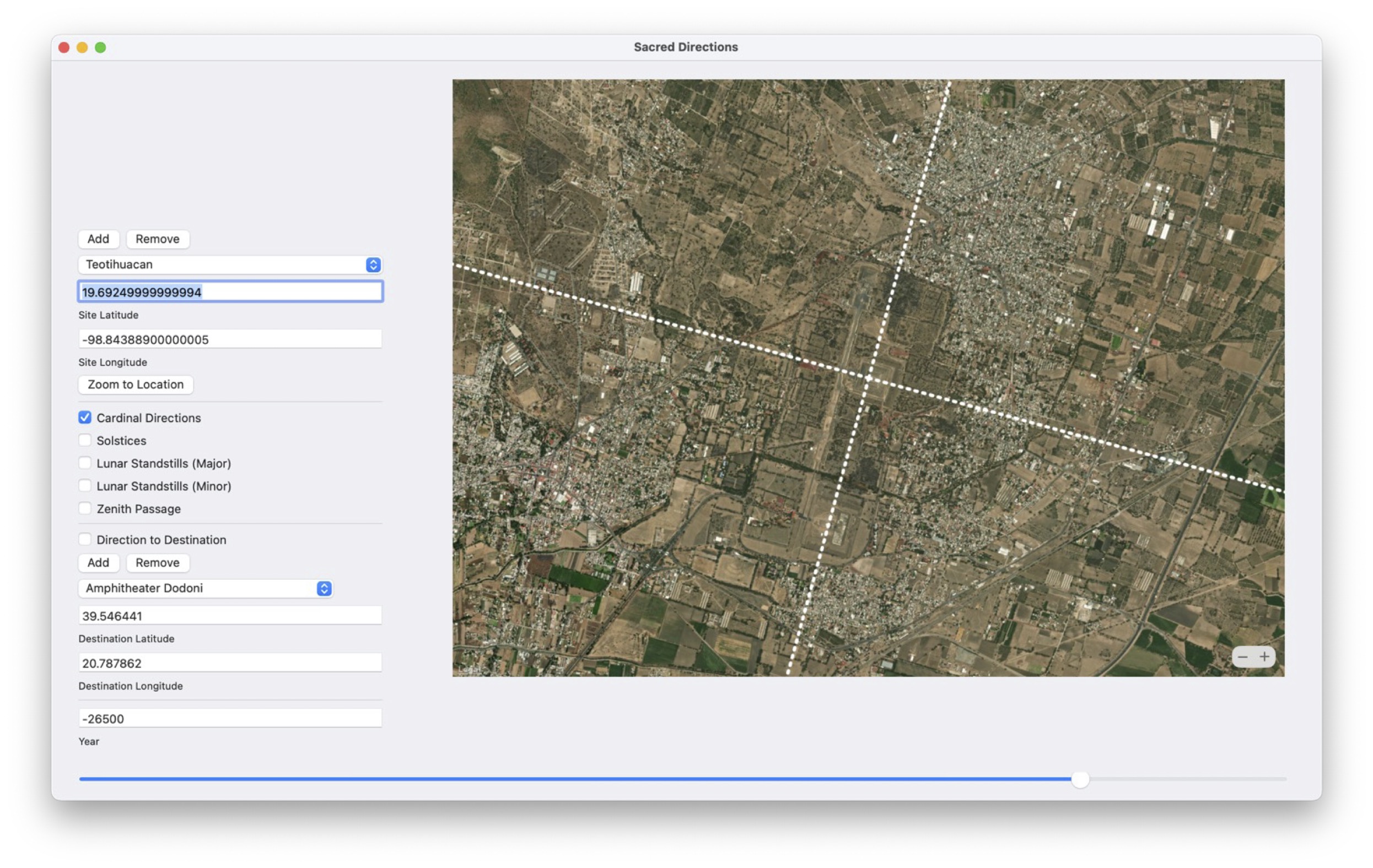
Notice the clockwise rotation angle of the sites decreases from west to east. In other words, Teotihuacan, north of Mexico City, which is furthest west is rotated 15.2ยฐ east of north, while the underwater formation off the western coast of Cuba, which is furthest east is rotated 5.6ยฐ. The misalignment of all of these sites can be resolved if we shift the point of reference from the current North Pole in the Arctic Sea to a previous hypothesized geographic pole location in Hudson Bay as shown below.

Alignment of the above sites to the Hudson Bay pole.

Thus, based on their alignment, if these structures are artificial, they could be 20,000 to 40,000 years old according to the pole shift timeline proposed in Before Atlantis.

Pole shifts are correlated with geomagnetic excursions (circles) and super-volcanic events (triangles). Click here for more information.

Out of Time and Out of Place

In his analysis of the MEGA site, Iturralde-Vinent notes the presence of โ€œwell-rounded pebblesโ€ and โ€œvolcanic scoriaโ€ in the area. Scoria is a pyroclastic, highly vesicular, dark-colored volcanic rock formed by ejection from a volcano as a molten blob and cooled in the air to form discrete grains called clasts. As there are no volcanoes in the area, the presence of scoria mixed in the seabed is hard to explain. Similarly, there is no mechanism to explain the presence of rounded pebbles that are typically found near rivers.

The depth of these structures would seem to rule out an artificial origin, even during the last glacial maximum (LGM) when global sea levels were at their lowest. However, if the Cuban underwater formations turn out to be artificial, something extraordinary must have happened for them to now lie hundreds of meters below the surface.

After more than two decades, isn’t it time to return to MEGA and find out?

The featured image at the top of the article depicts the Caribbean approximately 20,000 years ago during the last glacial maximum (LGM). (Google Earth/Zรผrich University of Applied Sciences)

Ice Age America

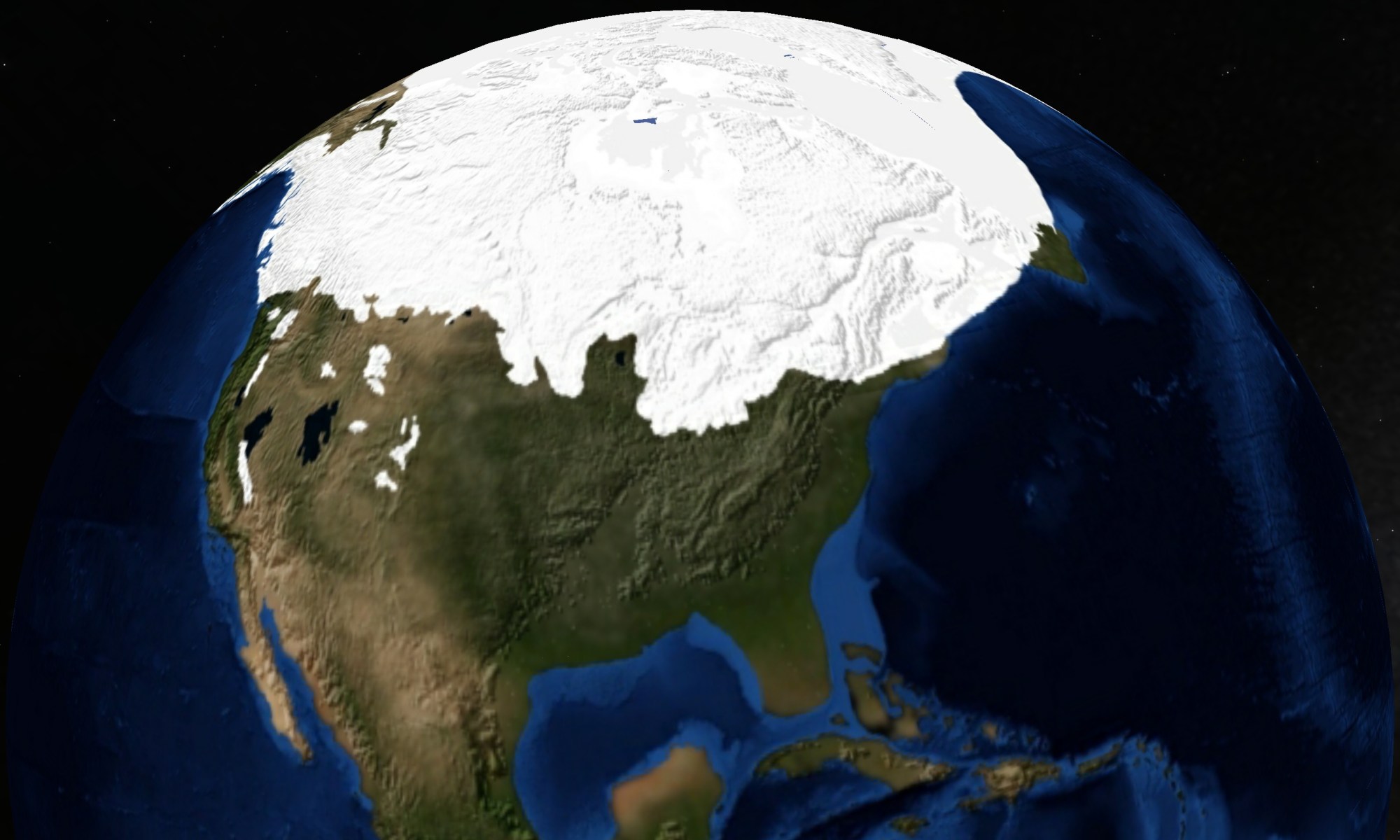
20,000 years ago, much of North America was covered by an enormous ice sheet. Geoglyphs, burial mounds, and other structures thought to have been built by the indigenous people of North America can be found throughout the US and Canada. This article explores the possibility that some of these structures could have been built by an earlier prehistoric civilization that inhabited the southern US during the last ice age.

Clovis Second (or Third)?

The prevailing theory is that the first people of North America arrived by way of a land bridge from Asia at the end of the last ice age. Genetic analysis indicates that a group of people, known as the Clovis culture, based on the distinctive stone tools they used, were the ancestors of most of the native people of North and South America. Genetic analysis also reveals links to populations in other parts of the world that challenge the โ€œClovis Firstโ€ hypothesis. One possibility is that an even earlier people known as the Solutreans migrated from southern Europe 21,000โ€“15,000 years. Regardless of how they arrived, evidence in form of human footprints shows humans were living in the American Southwest 21,000 to 23,000 years ago during the last glacial maximum (LGM).

Archaeological Sites

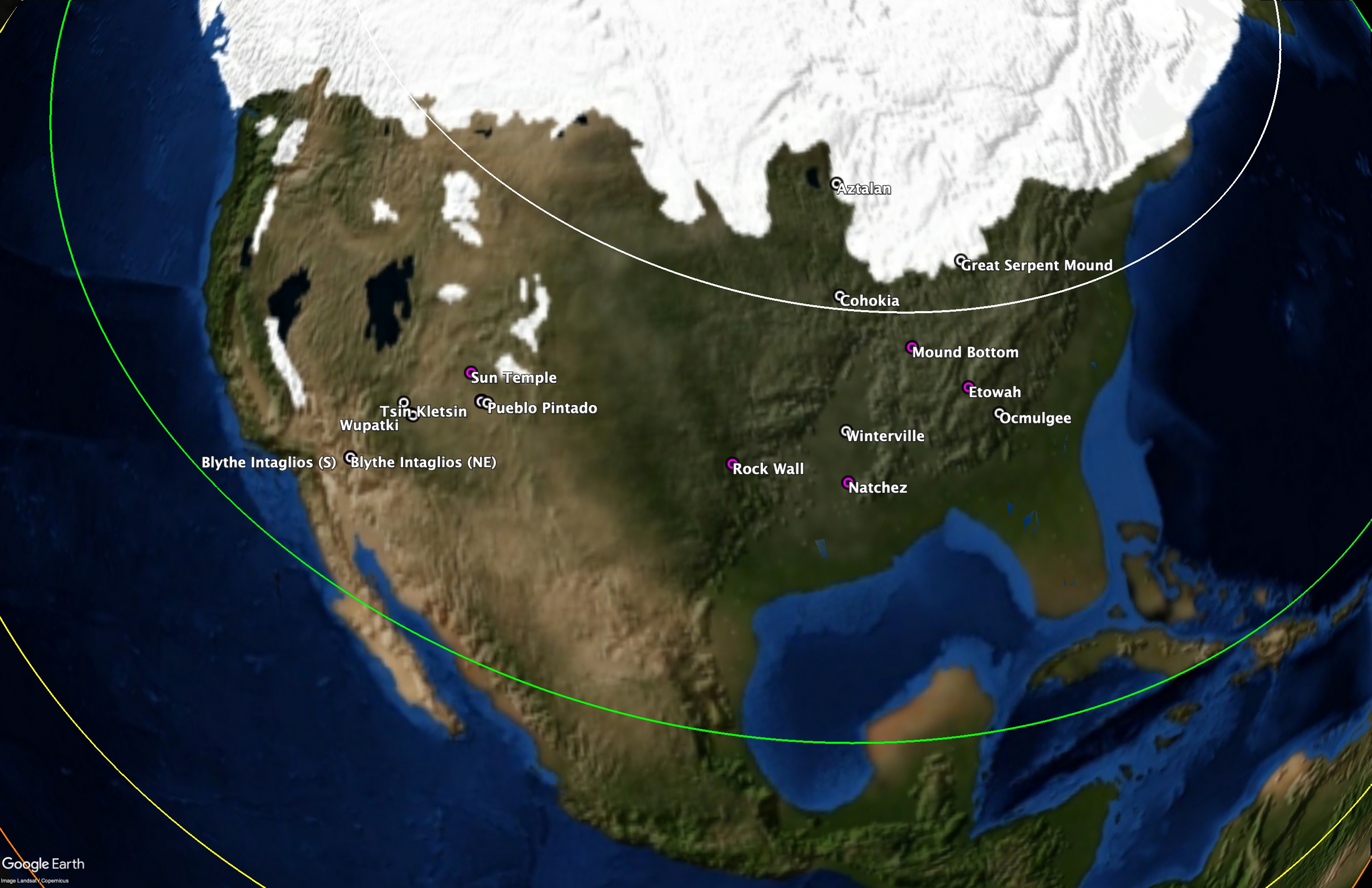
Using Ancient Locations and other sources to identify candidate sites, the geographic orientations of almost two dozen structures were analyzed with respect to the equinox (E), solstices (S), major (M), and minor (m) lunar standstills.

Site/StructureArctic PoleHudson Bay Pole
Natchez E
OcmulgeeS 
Rock Wall E
WintervilleM 
Blythe Intaglios (S) S
Blythe Intaglios (NE)E,S 
Blythe Intaglios (NW) E,S
Etowah S
WupatkiM 
NalakihuM 
Pueblo Pintadom 
TusayanM 
Tsin KletsinE 
Pueblo Bonito, Chaco CanyonE 
Chetro Ketl S,m
Pueblo del Arroyom 
Mound Bottom E
Sun Temple, Mesa Verde S
CohokiaE 
Great Serpent MoundS 
AztalanE 

About 2/3 of the sites/structures are oriented in directions that reference the current (Arctic) pole.

The other 1/3 are not aligned in any of these directions but instead appear to reference a location near Hudson Bay that Charles Hapgood argued was the position of the geographic North Pole during the North American ice age.

South of the Ice Sheet

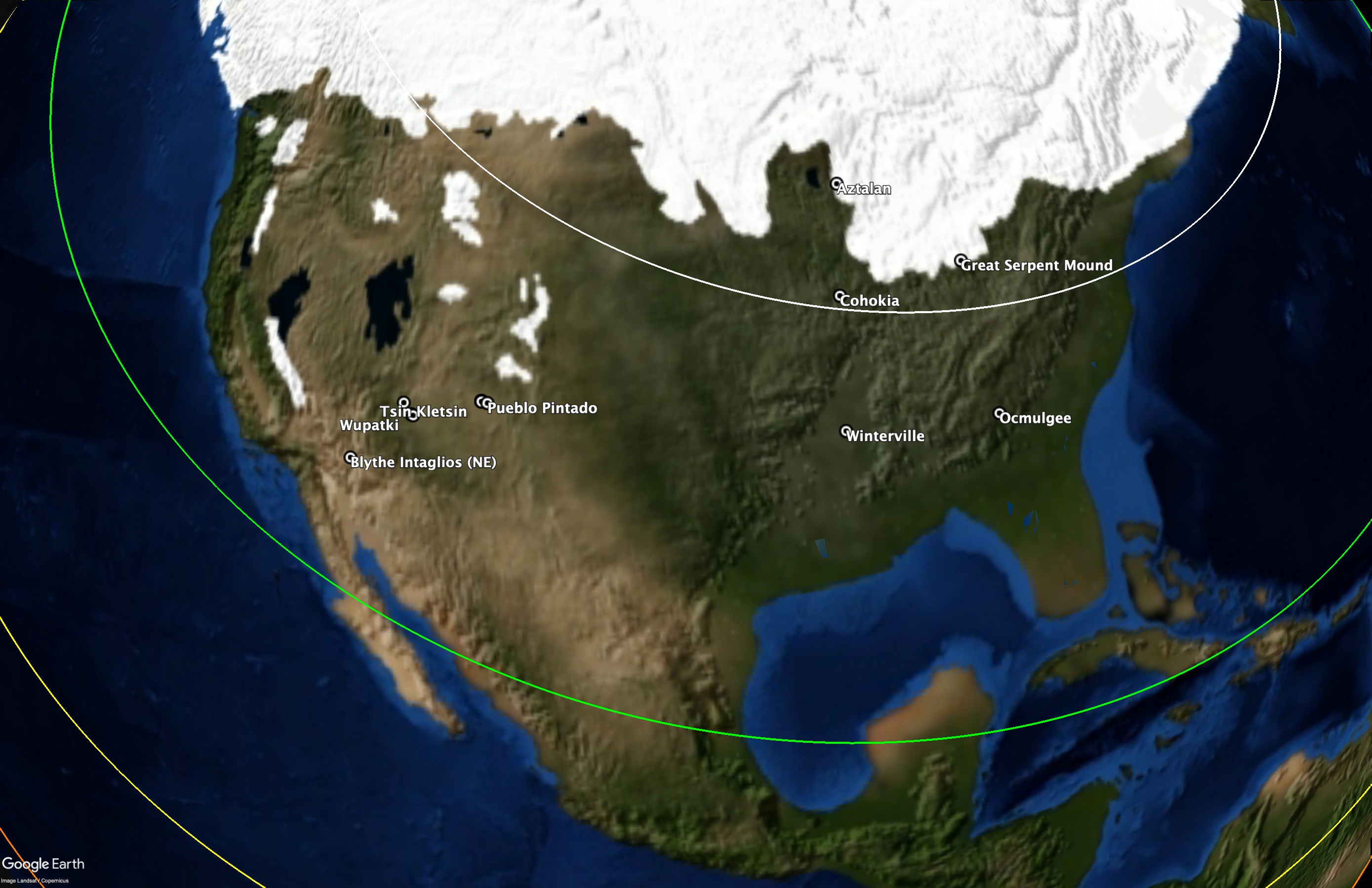
If the North Pole were in Hudson Bay, the southern US would have been in the northern temperate climate zone and ice-free during the LGM. Sites aligned to the current pole are found throughout the area while those aligned to the Hudson Bay pole are only found south of the Laurentide Ice Sheet, which is what one would expect if they were built during the LGM.

Although all of these sites are attributed to various Native cultures, like sites throughout the world believed to have been established within the past few thousand years, the alignment of sites to the Hudson Bay pole raises the possibility they could be much older, perhaps built over more ancient structures.

Rock Wall

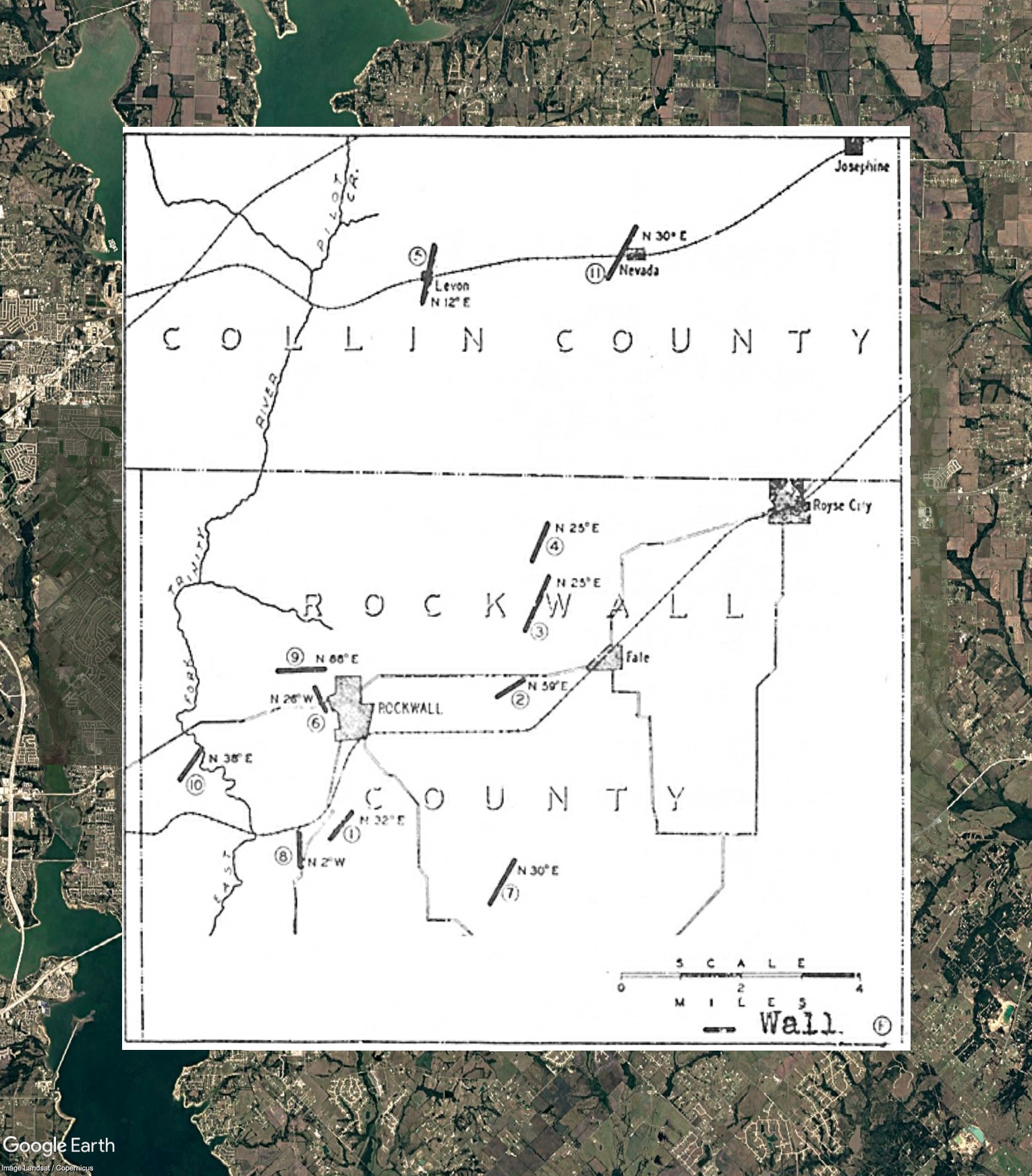
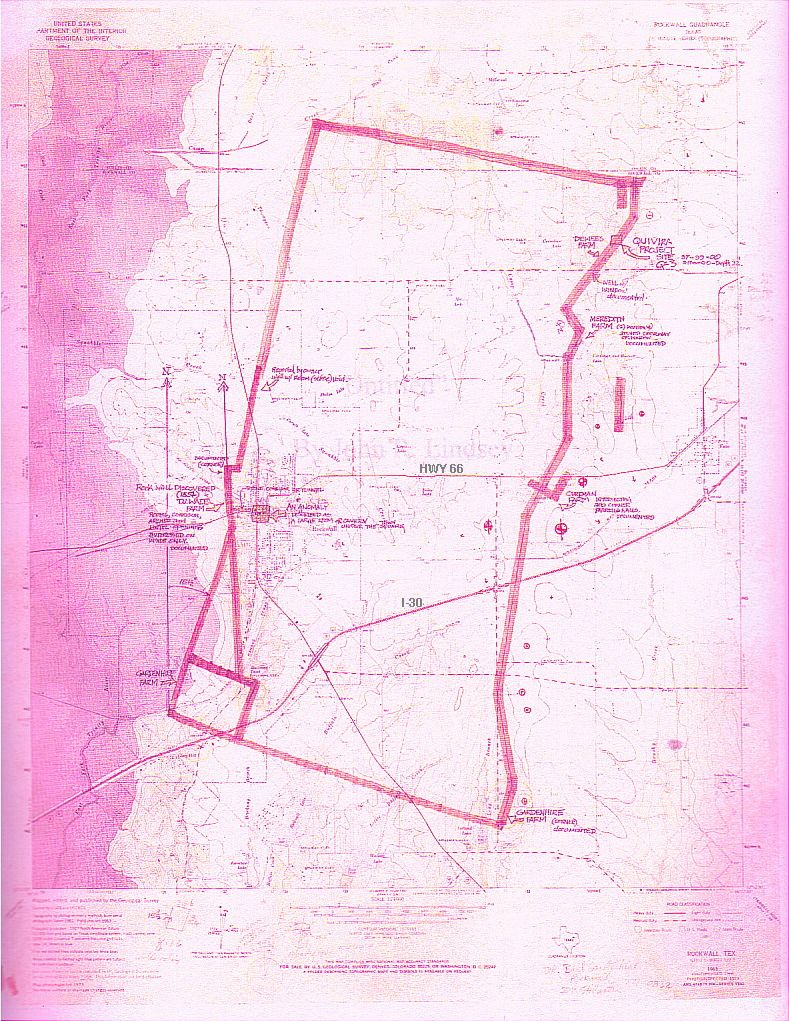
Approximately 20 miles northeast of Dallas is the town of Rockwall, Texas. Soon after the first settlers arrived in the 1840s, a rock wall was discovered on a farm owned by Terry Utley Wade. Later another rock wall to the northeast was encountered while digging a well. A square opening resembling a window was found at a depth of 35 feet. In 1933, a map prepared with the help of the county surveyor showed the location of numerous rock outcrops.

Section of rock wall excavated in 2013. (Rockwall County Historical Foundation)

Geological investigations found the outcrops to be clastic sandstone dikes โ€“ natural structures associated with geological faults that resemble stone masonry. Comparing this map with another compiled by John Lindsey, a native Rockwall architect, who led a reinvestigation of the reported features, including an excavation in the 1990s, independent investigator Josh Reeves determined that the sections of the rock wall analyzed by geologists and found to be natural were not part of the structure mapped by Lindsey.

In an independent analysis of the geology of the rock wall motivated by Lindseyโ€™s investigation, James J. (Bud) Shelton, a petroleum geologist, found โ€œthe current geological explanation, that of a clastic sandstone dike sourced by the Upper Cretaceous Trinity Group Lower Wolf City sandstone member does not adequately explain the presence of the featureโ€ citing โ€œseemingly out of place and context stone, possible mortar and plaster-like materials related to distinguishable architectural-like featuresโ€ specifically โ€œstaggered joint stone masonry featuresโ€ and โ€œlinteled portals and archways complete with arch guiding springer stones.โ€ Also in Sheltonโ€™s report was the presence of large cavities in the rock wall complex, which corroborates descriptions of reported underground spaces mentioned by Reeves in his video.

Although none of the rock wall is currently visible from the air, it is possible to register Lindseyโ€™s map to Google Earth using roads and other cultural features. As shown in the above figure, the lower left section of the rock wall complex appears to be oriented in the direction of the Hudson Bay pole. Our discovery of other sites in the southern US that reference the Hudson Bay pole suggests the orientation of the rock wall in this same direction may not be a coincidence and that the largest antediluvian structure in North America may be beneath the suburbs just outside Dallas.


Image at the top of the article courtesy Google Earth/ Zรผrich University of Applied Sciences.

On the Alignments of Ancient Sites – A Global Survey

If we were to examine the orientation of ancient places across the world, what fraction would be aligned to the sun, moon, stars, or in other known ways? This question was first posed in a paper published by the Journal of Scientific Exploration in 2018. The key finding of a worldwide survey of ancient sites was that only about 40% of the over 200 sites examined appeared to be aligned in known astronomical or geographical directions. Over the past six years, hundreds of additional sites have been analyzed. This article, which is based on a presentation at the Altars of the Sun and Moon conference organized to coincide with the recent April 2024 total eclipse by the New England Antiquities Research Association (NEARA), updates the original survey by providing compelling statistical evidence supporting the hypothesis that hundreds of sites worldwide are probably far older than we think.

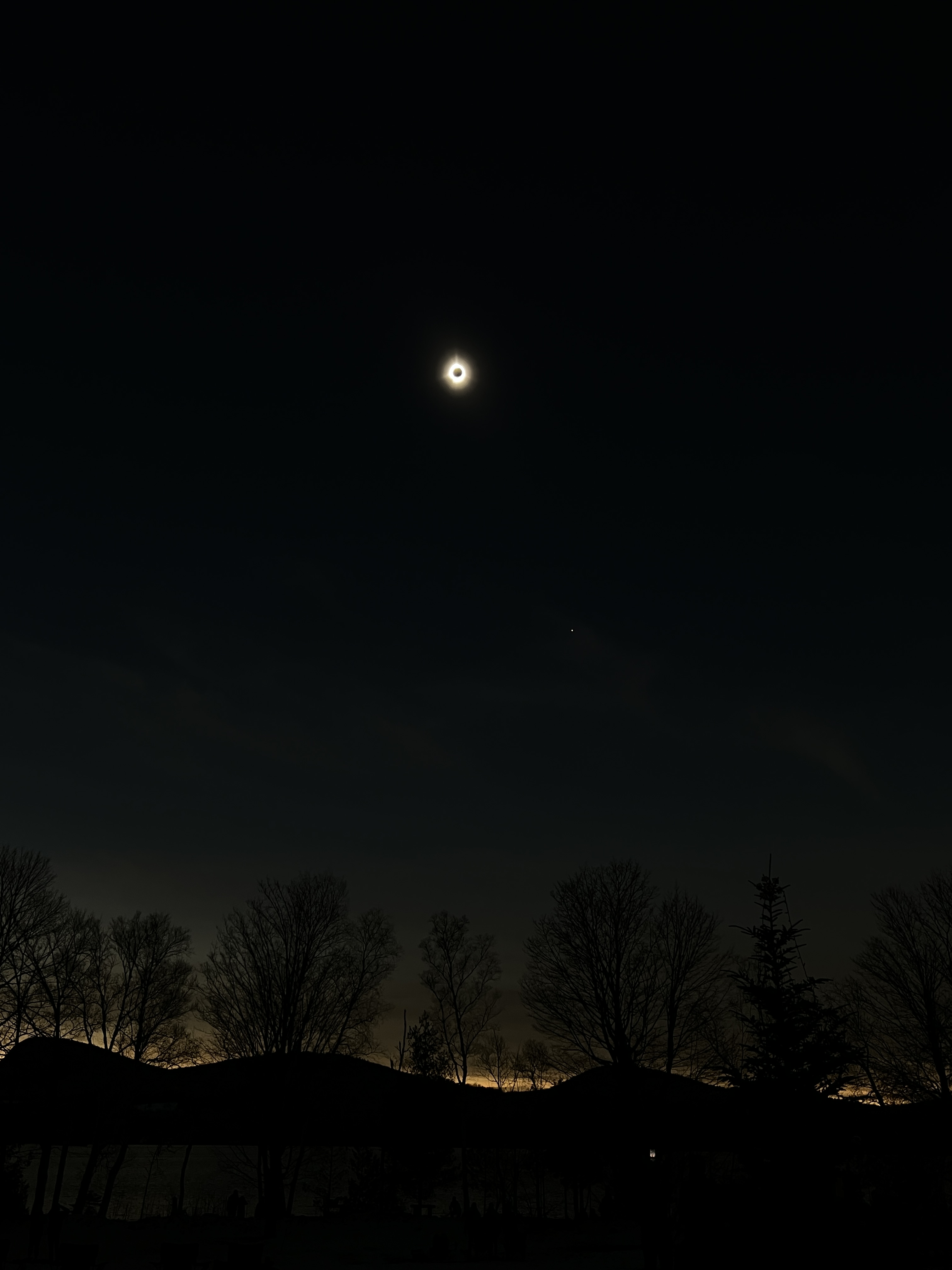
Total eclipse at Lake Willoughby in northern Vermont on April 8, 2024. (Photo by Mark Carlotto)

Determining the Alignment of a Site

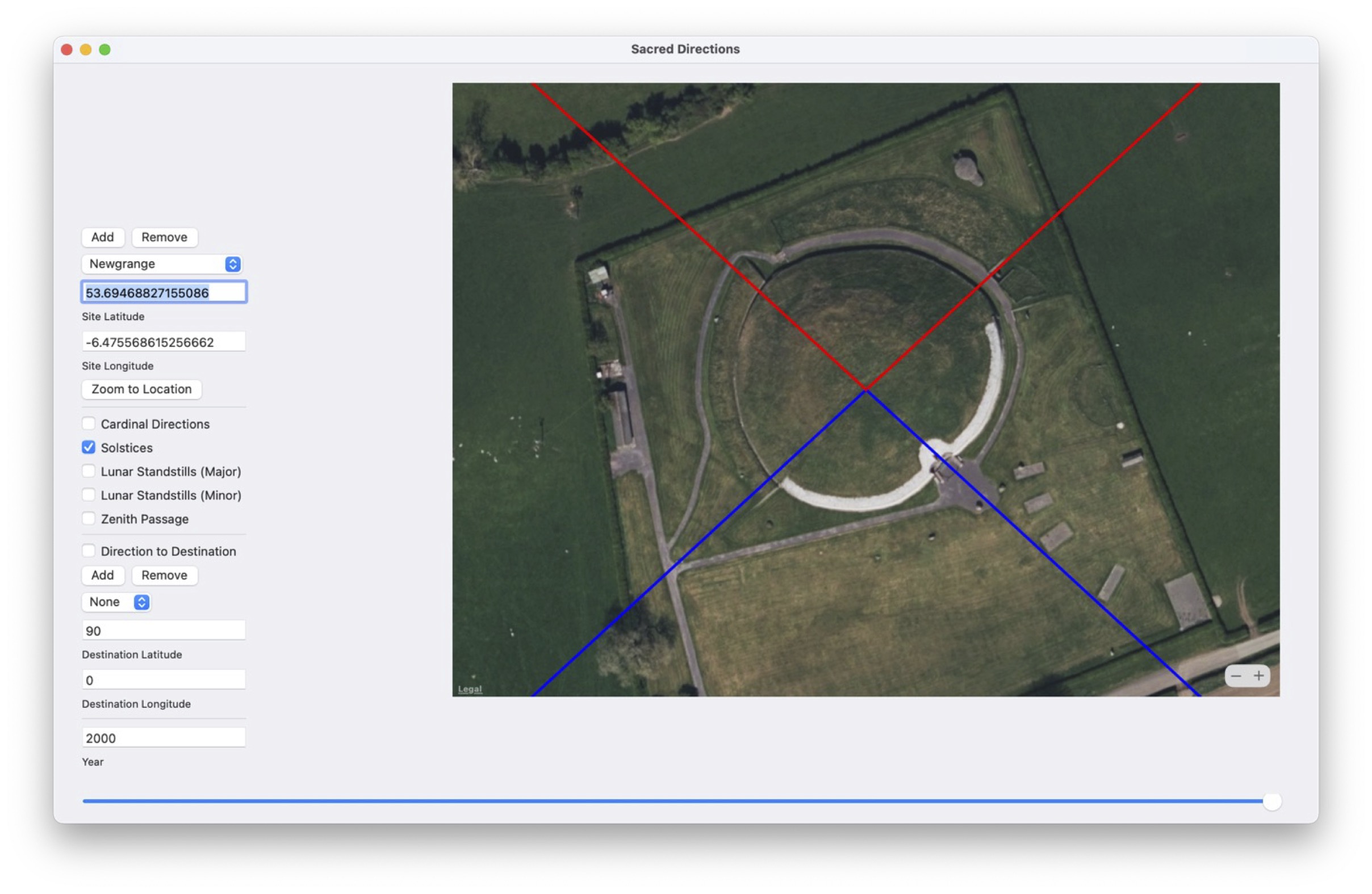
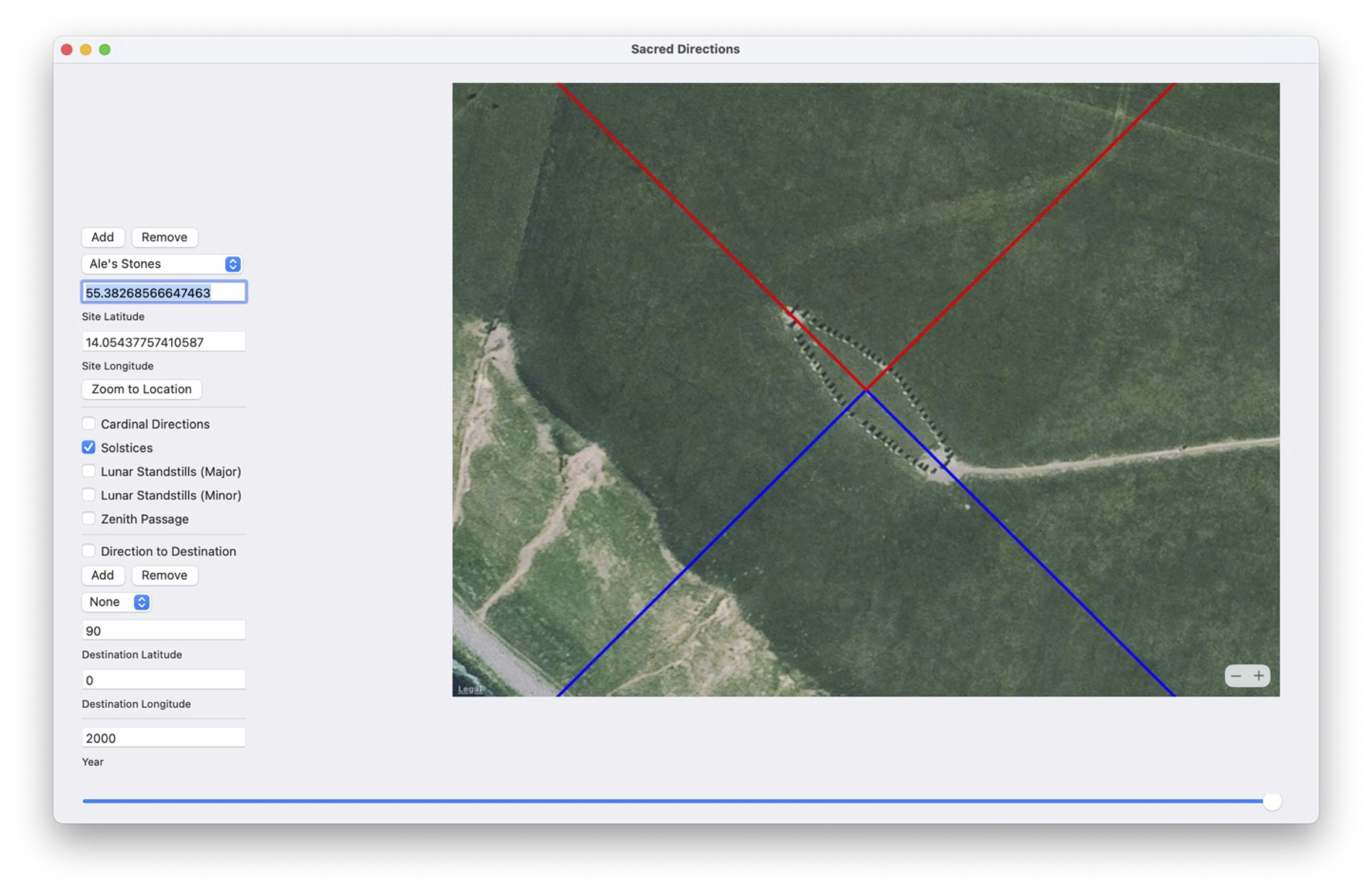
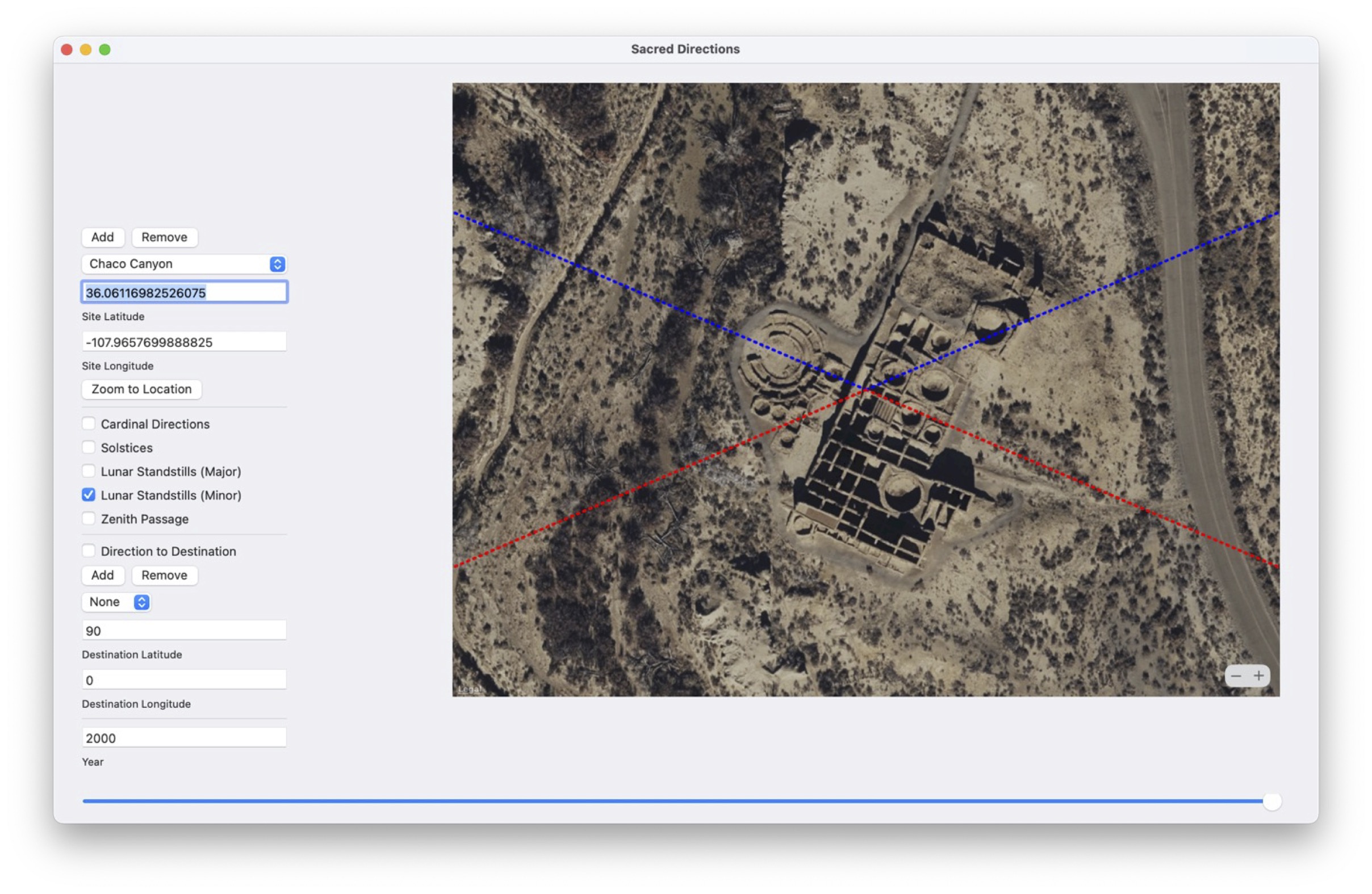
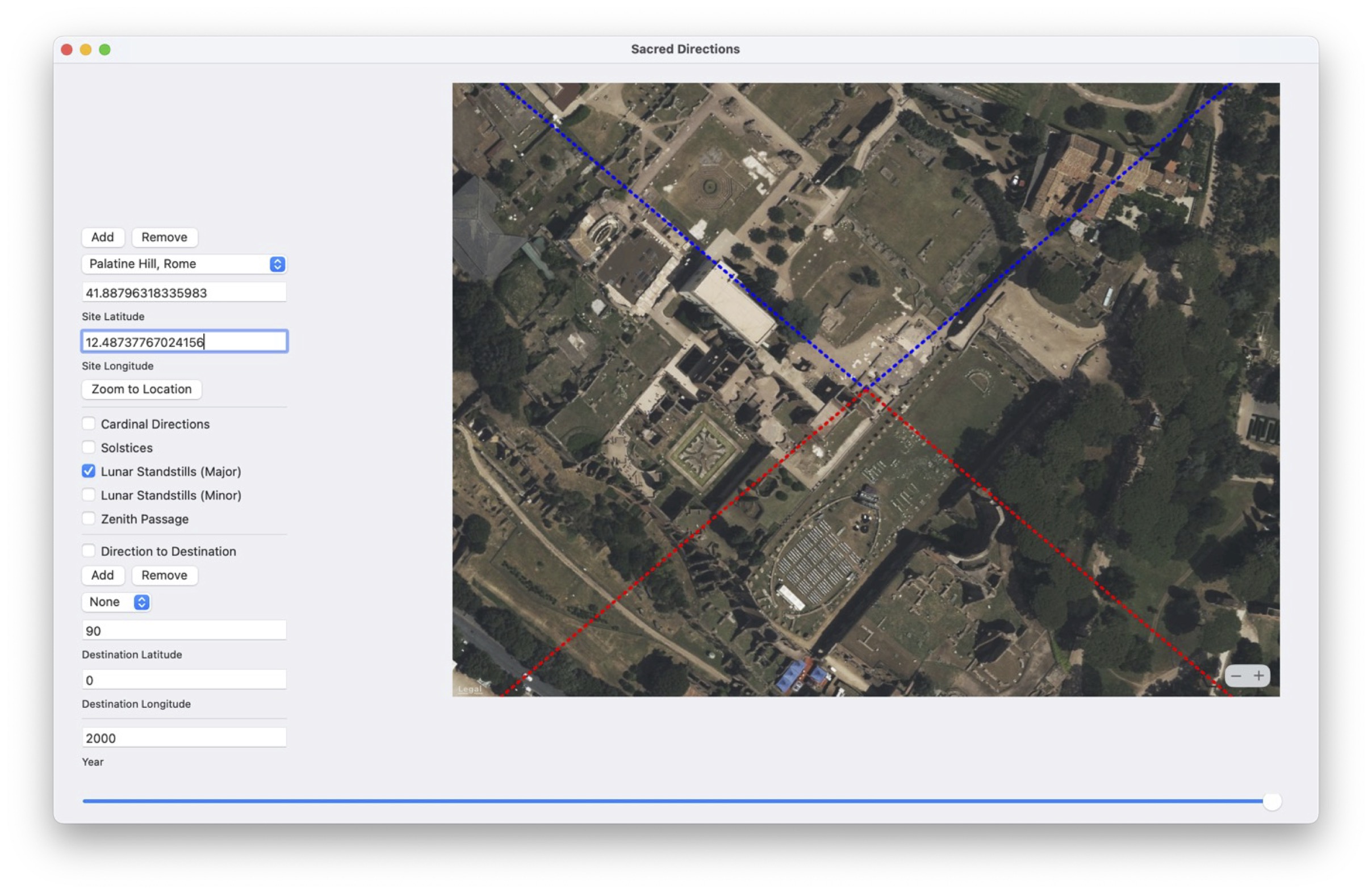
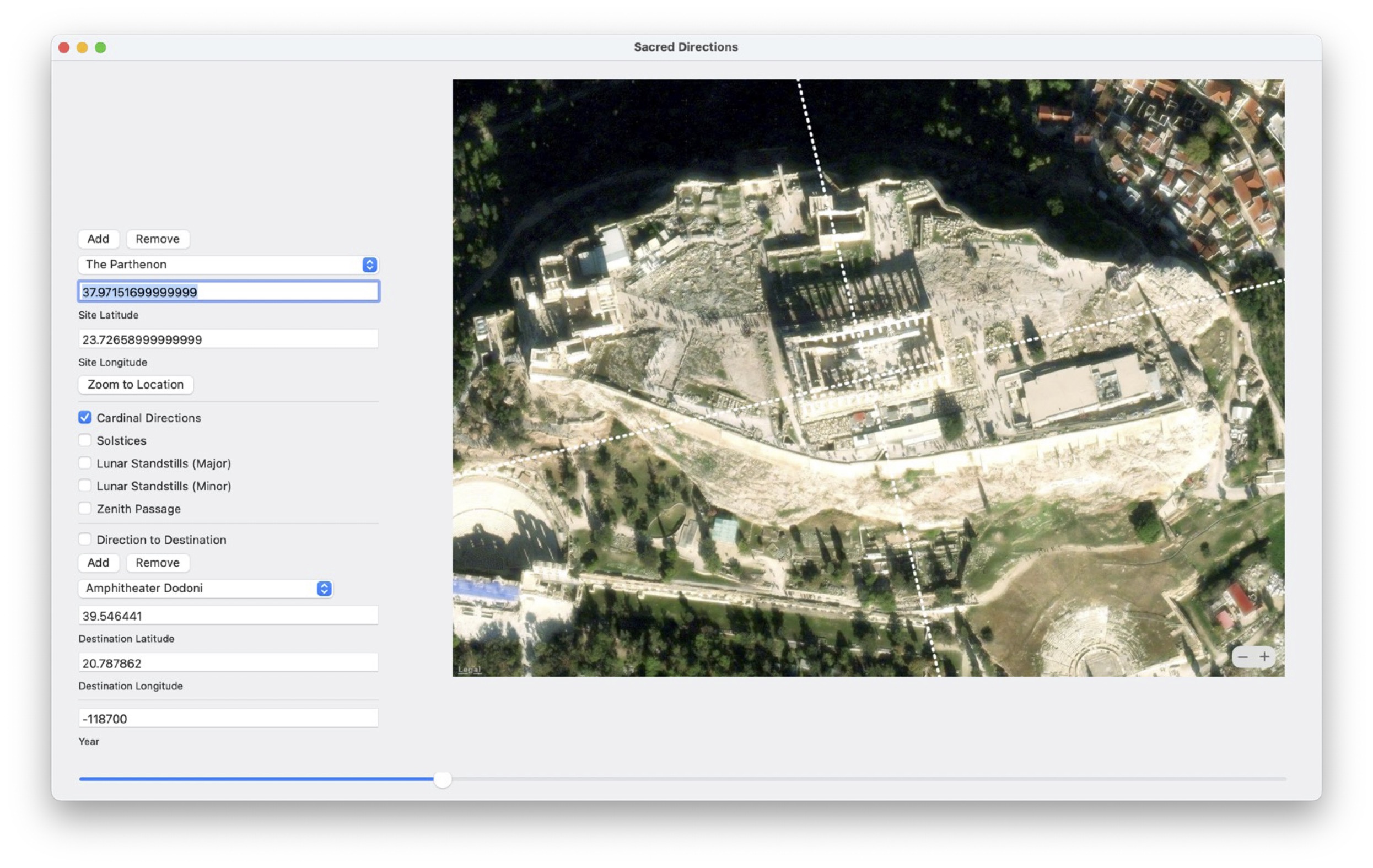
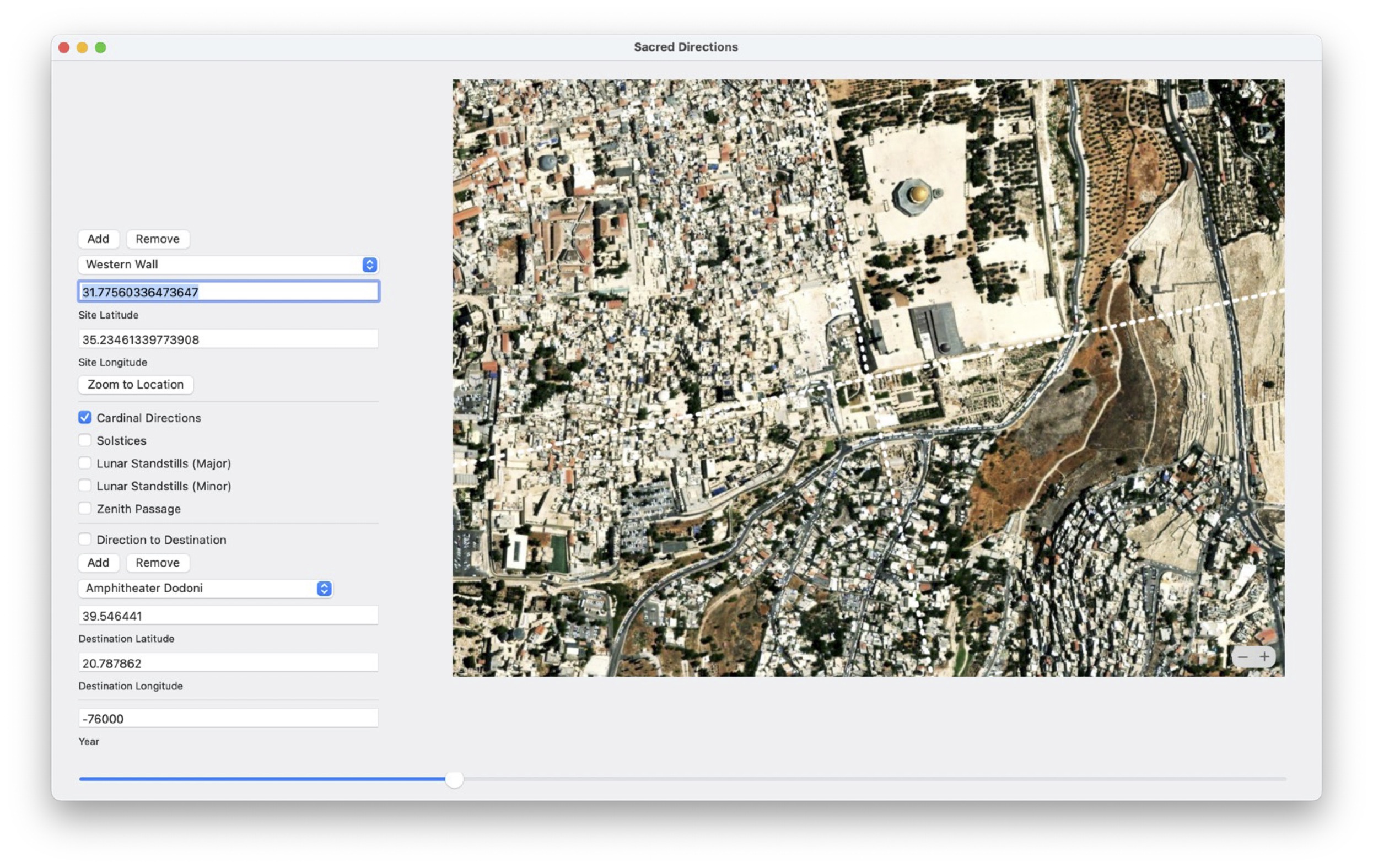
In order to determine if a site is aligned to something we must first measure its orientation with respect to true (geographic) north. One way to do this is on the ground with a compass using a declination table to correct for differences between true and geomagnetic north. A far more accurate and efficient way is with overhead (satellite) imagery (provided the site is visible from above). At first, I used the ruler tool in Google Earth to measure the heading (clockwise angle from true north) of linear features and rectilinear structures having well-defined edges. I then compared the angles with solstice sunrise/sunset and other directions to determine if the site was aligned in a particular way. Later, to automate the process so that more sites could be examined, I developed an app known as Sacred Directions. By simply entering the latitude and longitude of a site, the app plots lines in the cardinal directions, directions of solstices, lunar standstills, and zenith passages, geomagnetic alignments, and directions to other sites over high-resolution satellite imagery. With the help of Sacred Directions, I have examined thousands of sites over the past six years.

Let’s first examine some sites that are aligned to the sun and the moon. Many places are oriented to face in the cardinal directions – north, south, east, and west. A previous article discussed the precise alignment of 3rd and 4th Dynasty Egyptian pyramids to the cardinal directions and how it is likely the ancient Egyptians aligned these structures on the equinox when the sun rises and sets due east-west.

Solstice alignments mark the longest and shortest days of the year. The alignment to the summer solstice sunrise at Stonehenge in England is well known. A passage tomb at Newgrange in Ireland, the Temple of Karnak in Upper Egypt, and the Ales Stones in Sweden are places that are oriented in the direction of the winter solstice sunrise.

Where solstice alignments mark the most northern and southern risings and settings of the sun over the course of a year (longest and shortest days in the northern hemisphere), lunar standstills do the same for the moon over its 18.6-year cycle. Examples of sites aligned to the moon include structures at Chaco Canyon in New Mexico, Palatine Hill in Rome, and the Ziggurat of Ur in Iraq.

Some ancient sites within the zone of the tropics are aligned in the direction of zenith passage sunrises/sunsets – days in which the sun passes directly overhead. A temple at Koh Ker in Cambodia is one such place.

Besides marking the motion of the sun and moon, a study of ancient sites reveals other reasons for their alignment. For example, numerous earthen pyramids in China appear to have been aligned in the direction of the geomagnetic pole at the time they were constructed. Certain sites are thought to have been oriented in the direction of specific stars such as the Temple of Hathor at Dendera in Egypt to Alkaid in Ursa Major. There are also sites that face in directions of importance such as Islamic qibla, Greek oracles, and Quechua ceque. We even found over a dozen sites in northwestern Europe that appear to face in the direction of Paris.

What We Discovered

The initial 2018 survey found 19% of the sites were aligned to the cardinal directions, 9% to solstices, 15% to lunar standstill, 5% to the geomagnetic pole at the time of construction, 5% to other sites, 4% to zenith passages, and 1% to stars, leaving 42% unexplained. In expanding the study to almost 900 sites, 19% of the sites were cardinally aligned, 7% oriented in solstice directions, 11% to lunar standstills, and 6% (mostly in China) to geomagnetic north. To our surprise, more sites appear to be aligned to lunar standstills than to solstices. In fact, broken out by geographical region, alignments to the moon occurred more frequently than those to the sun in 6 of the 15 regions considered (see table below). The most surprising result was that the orientation of about 70% of the sites could not be explained in terms of any of the alignments discussed above.

RegionEquinoxSolsticeLunar StandstillSunMoonUnexplained
Arabia013 X5
Central Asia232X 26
China026 X16
Egypt851015X 70
Greece6212 X51
India820X 20
Italy024 X14
Levant6110 X47
Mesoamerica9711X 63
Mesopotamia2254X 47
N. Africa024 X32
N. America415  11
S. America064X 58
Torgai130X 4
N. Europe031X 10

Evidence of Civilizations Before Our Own?

That so many sites could not be explained by current models was an unexpected finding – an anomaly. According Thomas Kuhn in The Structure of Scientific Revolutions, the discovery of “anomalies” during revolutions in science leads to new paradigms. New paradigms then ask new questions of old data, move beyond the mere “puzzle-solving” of the previous paradigm, change the rules of the game and the “map” directing new research. In analyzing the orientations of unexplained sites, we found that most appear to reference four locations within about 30 degrees of the current geographic pole. If these were previous locations of the North Pole, Hapgood’s theory of earth crustal displacement offers a simple explanation and an interesting alternative to current theories regarding the age of these sites.

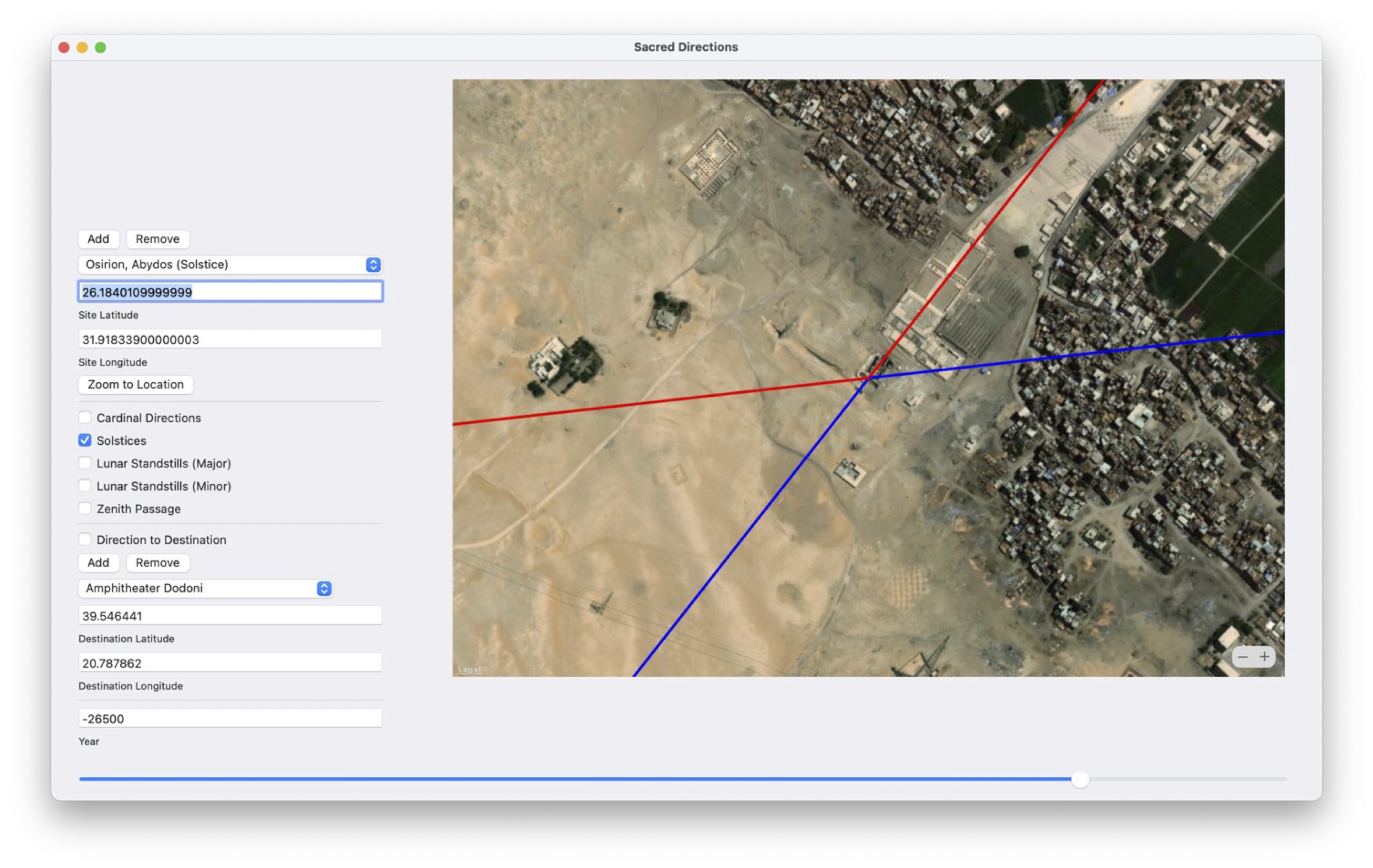
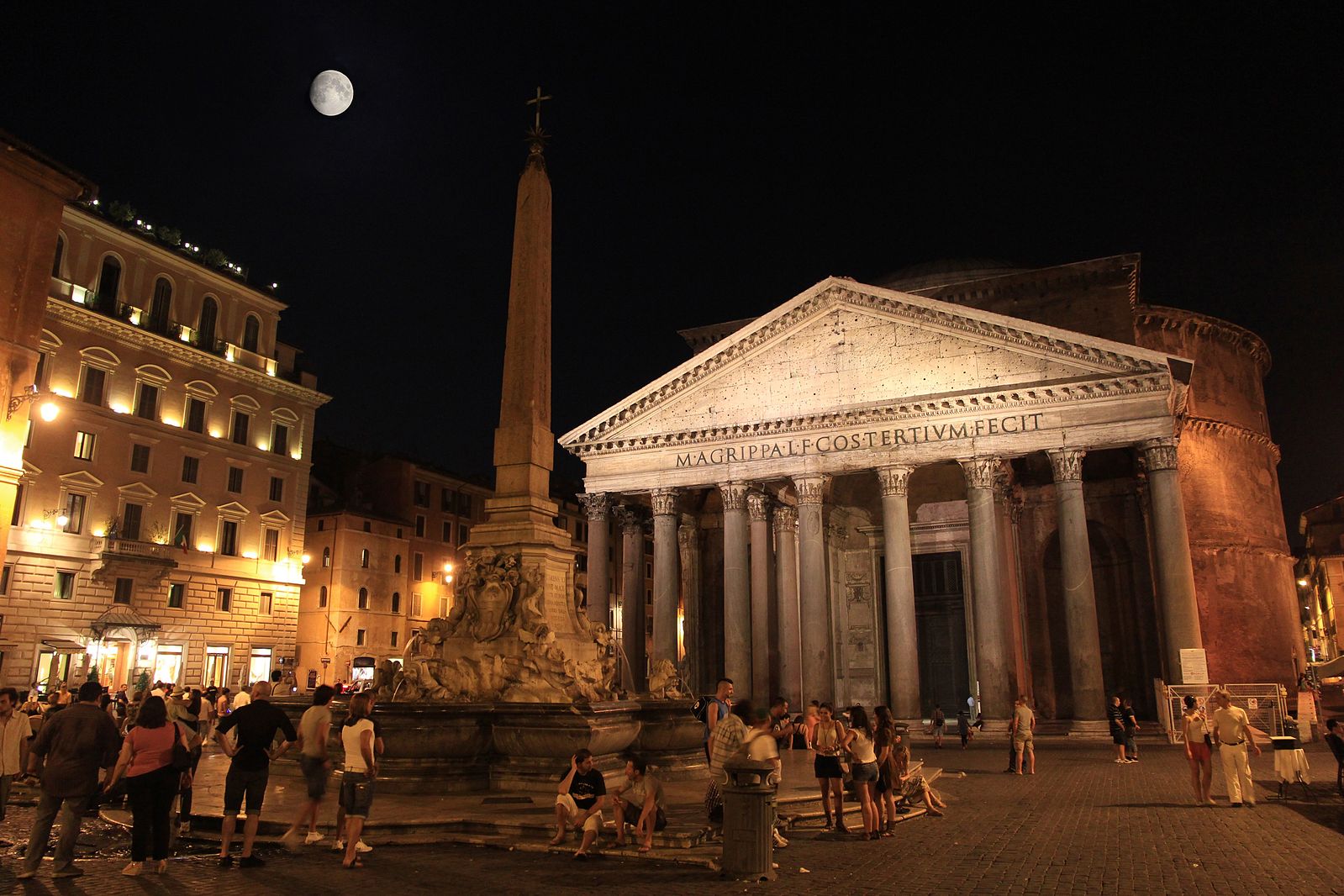
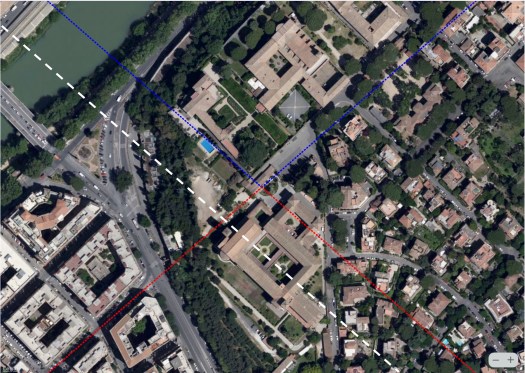
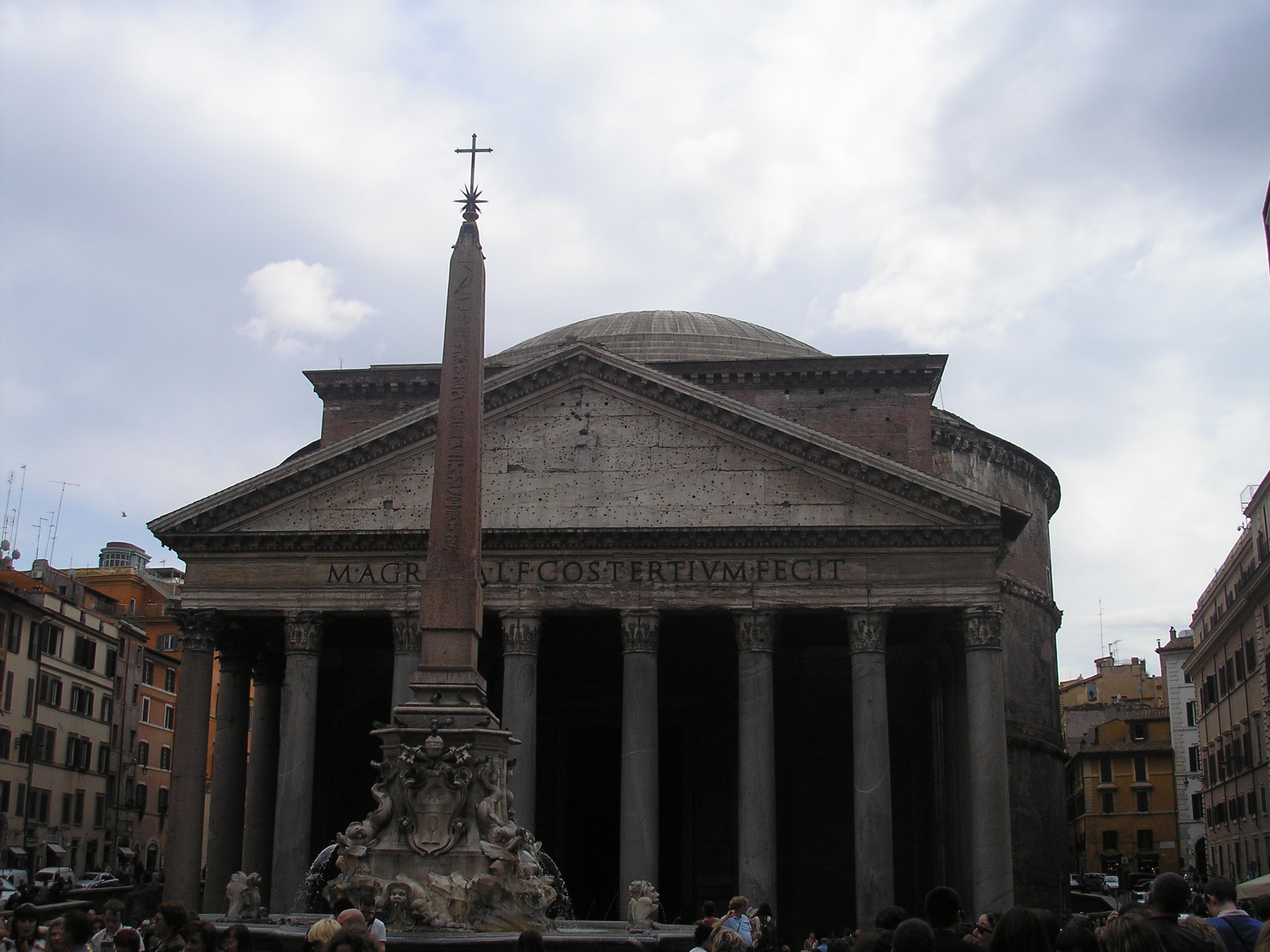
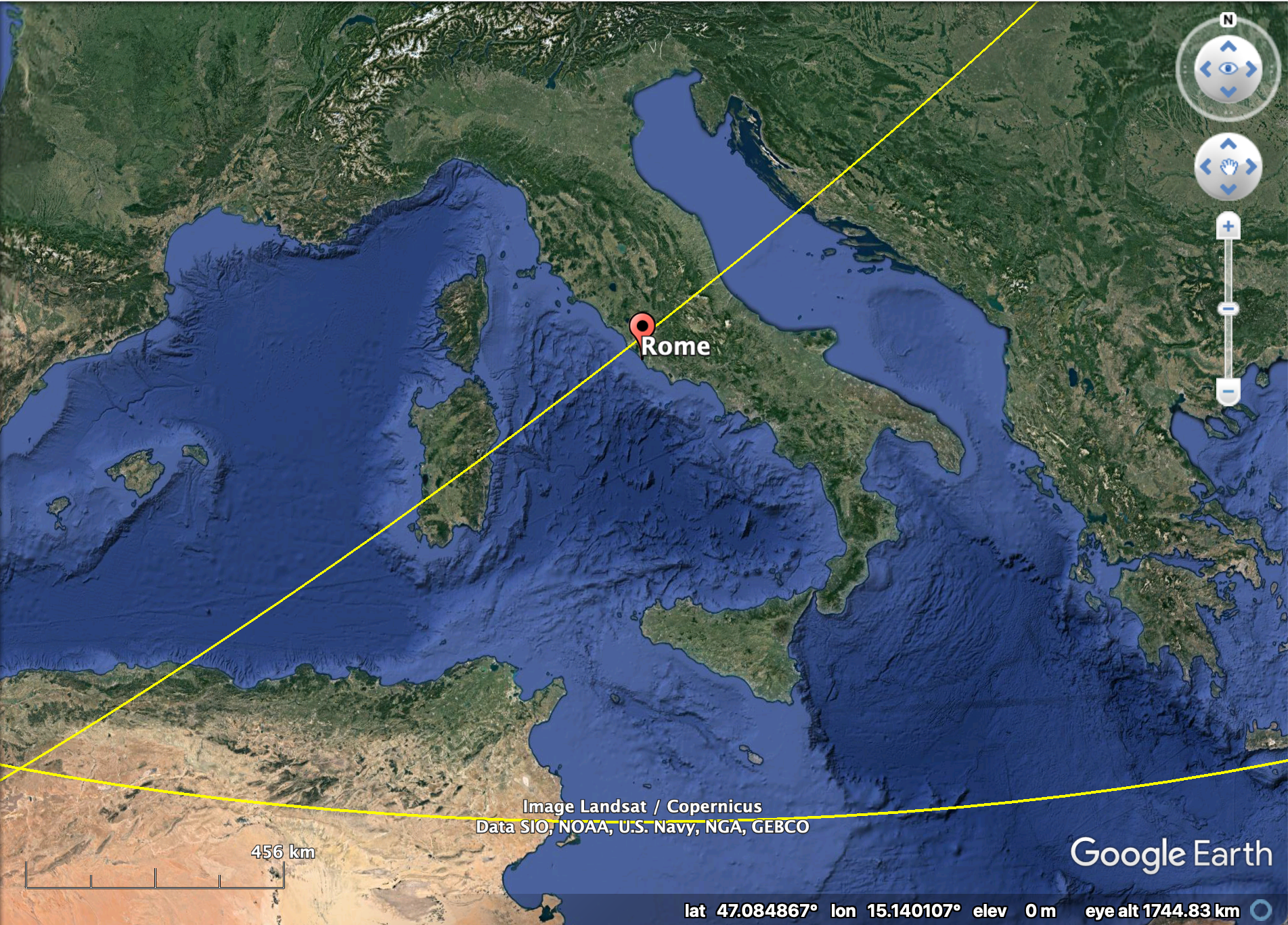
According to our revised and expanded version of Hapgood’s theory, sites aligned to a North Pole in Hudson Bay could be 20-50 thousand years old – places like Teotihuacan, north of Mexico City, which is cardinally aligned to the pole, the Osirion in Upper Egypt aligned to the summer solstice sunrise, and the Pantheon in Rome aligned to major lunar standstills relative to the Hudson Bay pole.

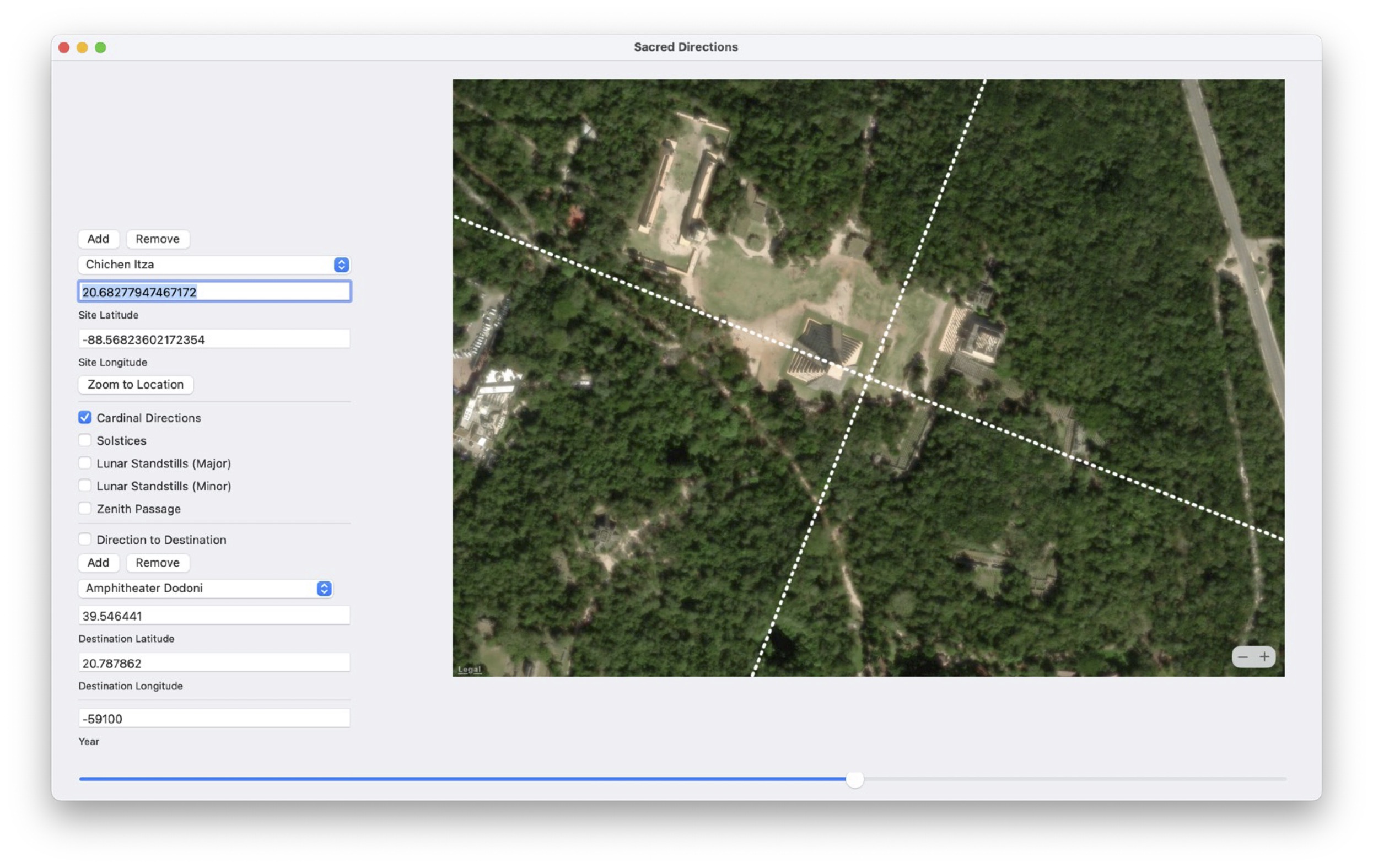
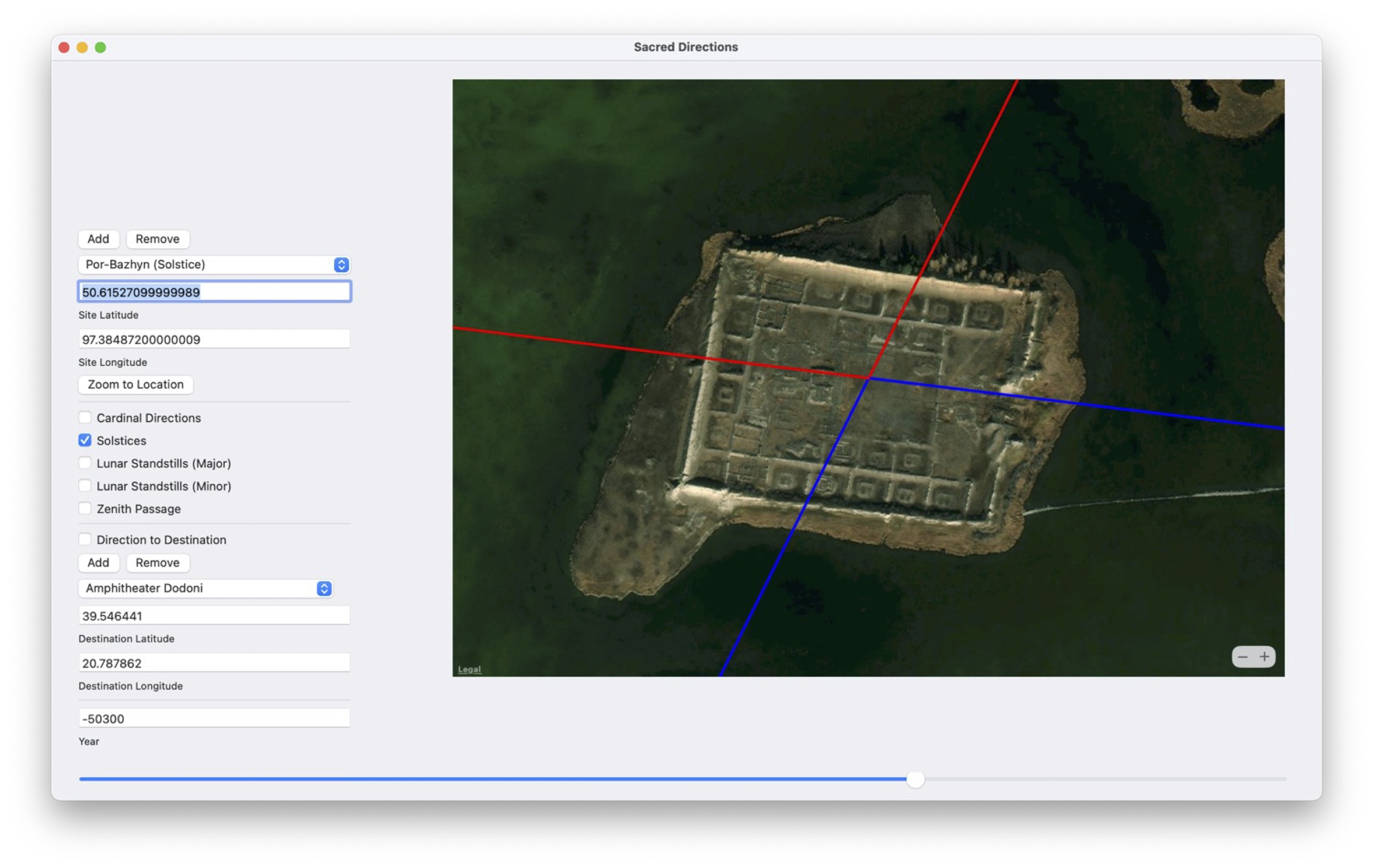
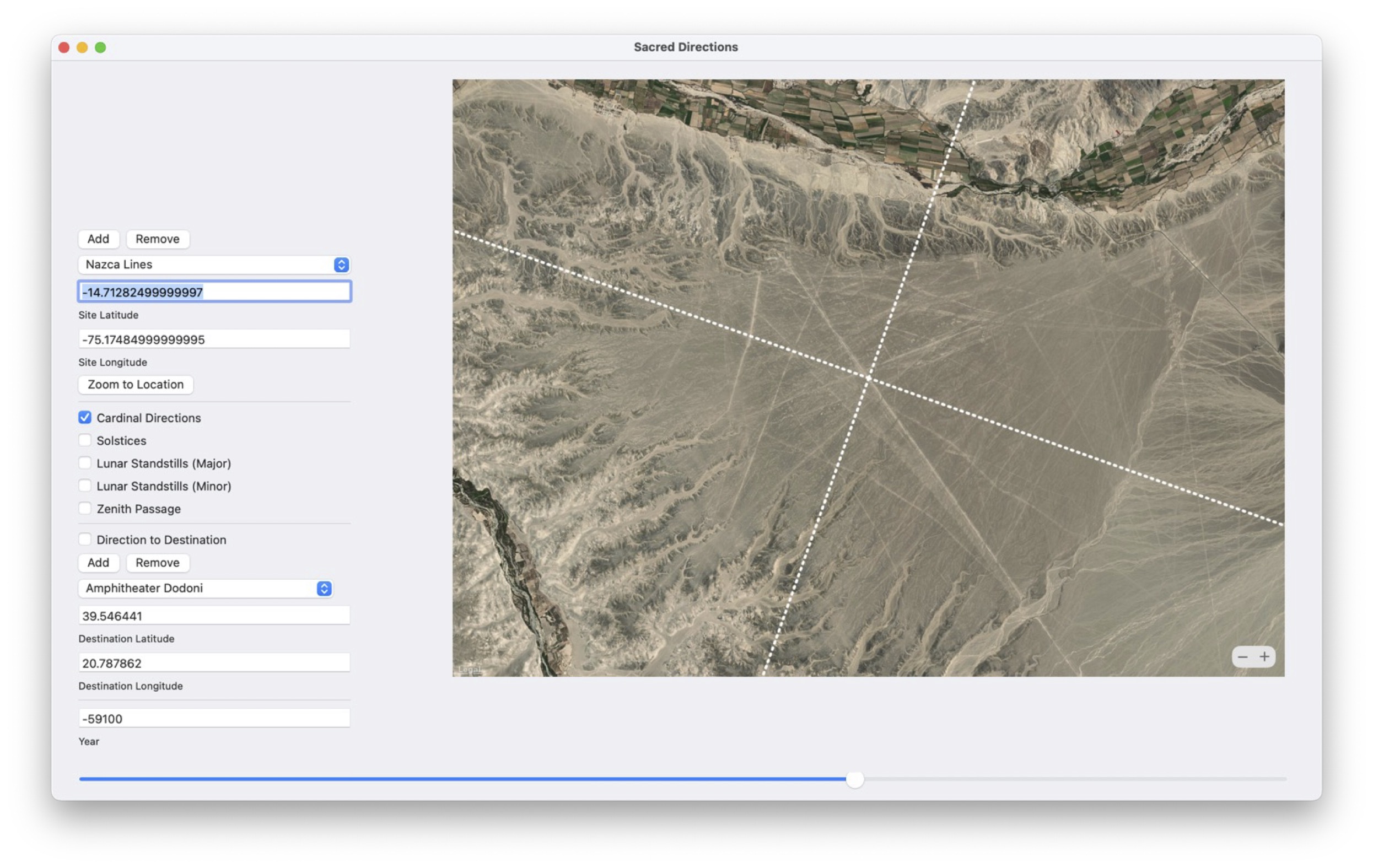
According to Hapgood’s theory, before Hudson Bay, the geographic pole is hypothesized to have been located in the Norwegian Sea 50-75 thousand years ago. Three sites that reference a North Pole in the Norwegian Sea include Chichen Itza in Mexico, Por-Bazhyn in Siberia, and one of the more prominent Nazca lines in Peru.

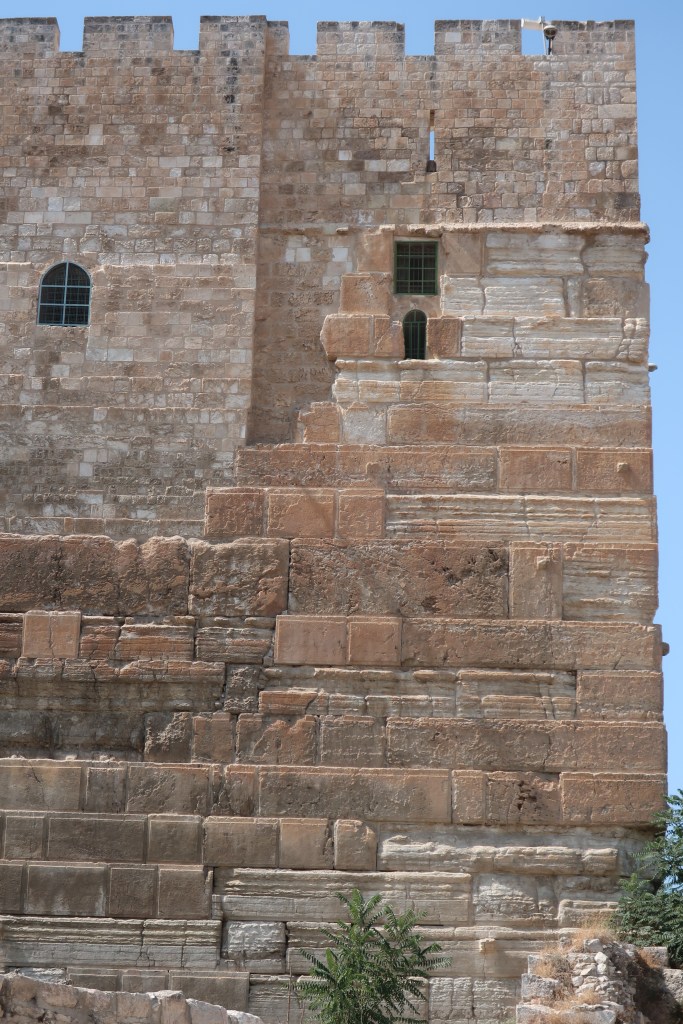
Between 75 and 130 thousand years ago, climate data suggest the North Pole was in northern Greenland, not far from where it is today. The Parthenon atop the Acropolis in Athens, Baalbek in Lebanon, and the western and southern walls surrounding the Temple Mount in Jerusalem are all cardinally aligned with respect to the Greenland pole.

The oldest pole is thought to have been located in the Bering Sea more than 130 thousand years ago. The most prominent of the Nazca lines points to the Bering Sea pole as do a number of ancient sites in Peru’s Sacred Valley including the Temple of the Sun at Ollantaytambo. Lion’s Rock and the surrounding complex at Sigiriya are aligned to the winter solstice sunrise relative to the Bering Sea pole.

These are just a few of the previously unexplained sites whose orientations can be explained by changing the frame of reference. Perhaps the best evidence in support of Hapgood’s theory is the sheer number of sites we have found that can be explained in this way.

RegionArHBNSGrBSXESM
Greece2617812146321321
N. Europe7100000677
Mesoamerica3337141022621116
Egypt11120834801073238
Pacific040000130
Mesopotamia3320410130412013
Torgai421100530
Central Asia713373015153
India111414102282
Arabia430110325
Levant191481870351021
China5010141426410
Italy61220003712
N. Africa1024620091422
N. America111100001088
S. America12111112240162319
Easter Is.000470335
TOTALS344222671198150376183202
Site alignments by pole: Arctic (Ar), Hudson Bay (HB), Norwegian Sea (NS), Greenland (Gr), and Bering Sea (BS). Alignments are geomagnetic (X), equinox (E), solstice (S), and lunar standstills (M).

The last chapter in Beyond Atlantis examines the statistical significance of these numbers and several interesting patterns discovered in the data. As shown in the table below, the probability that a group of sites randomly faces a particular location decreases exponentially as the number of sites increases. The alignment of 344 sites to the Arctic pole is clearly not a coincidence. The probability that this could have occurred by chance is zero. Similarly, the probability of 222 sites randomly lining up to the Hudson Bay pole is practically zero. Statistically, this too cannot be a coincidence. Although the other probabilities appear at first to be less significant, it is plausible that there are fewer sites aligned to older poles because older sites had less of a chance of surviving the ravages of time and were more likely to have been destroyed or buried.

PoleNumber of SitesProbability of Random Alignment
Arctic3440
Hudson Bay2221.87 x 10-42
Norwegian Sea670.0077
Greenland1190.00002
Bering Sea810.045

Critics insist there is no need of a new theory as unexplained sites might not have have been purposefully aligned or were aligned in other unknown ways. That “unexplained” sites are found in all parts of the world implies the anomaly is both global in scope and systematic in nature and not due to a lack of knowledge regarding local factors, cultural context, etc. The idea that unexplained sites were not purposefully aligned to anything is not consistent with our finding similarly aligned structures in most regions.

Although it may be difficult to prove Hapgood’s theory of earth crustal displacement, the power of a good theory is in its ability to explain a lot and to do so in a simple way. Hapgood’s theory provides a simple way to explain the climate changes associated with ice ages as well as the alignment of hundreds of ancient sites that cannot otherwise be explained.

In the words of Arthur Conan Doyle, โ€œWhen you have eliminated all which is impossible, then whatever remains, however improbable, must be the truth.โ€

Archaeoastronomical Dating of the Cyclopean Ruins at Tarragona, Spain

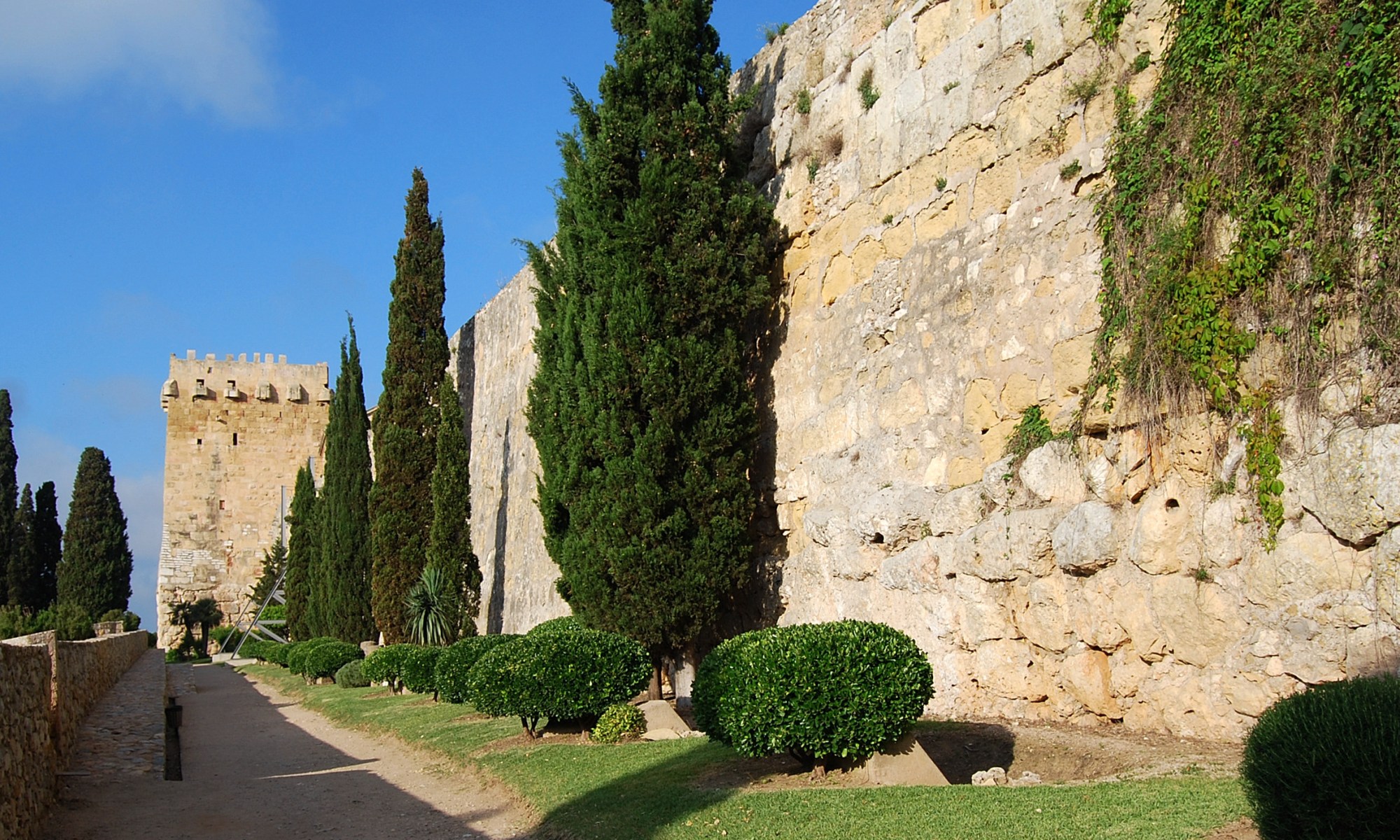
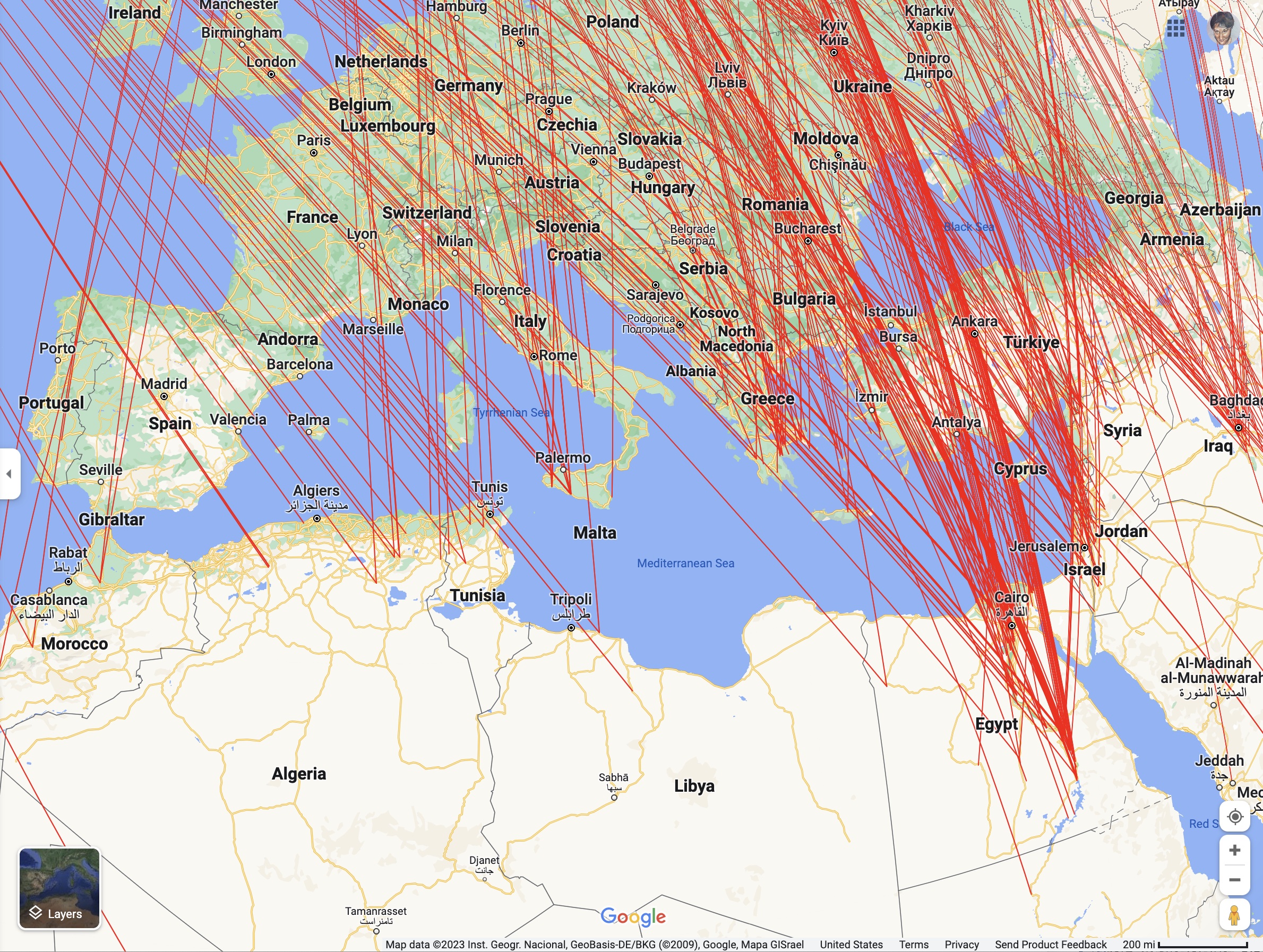
Richard Cassaro first brought the amazing cyclopean walls in Spain to my attention several years ago. Many sites in the Mediterranean are either cardinally aligned N-S-E-W or in directions of solstices and lunar standstills. But almost as many are in directions that are not explainable in conventional terms. As I was expanding my search for other sites that supported the Before Atlantis hypothesis, I discovered numerous sites that appeared to reference previous pole locations. 

Archaeological sites in the Mediterranean aligned to previous pole locations.

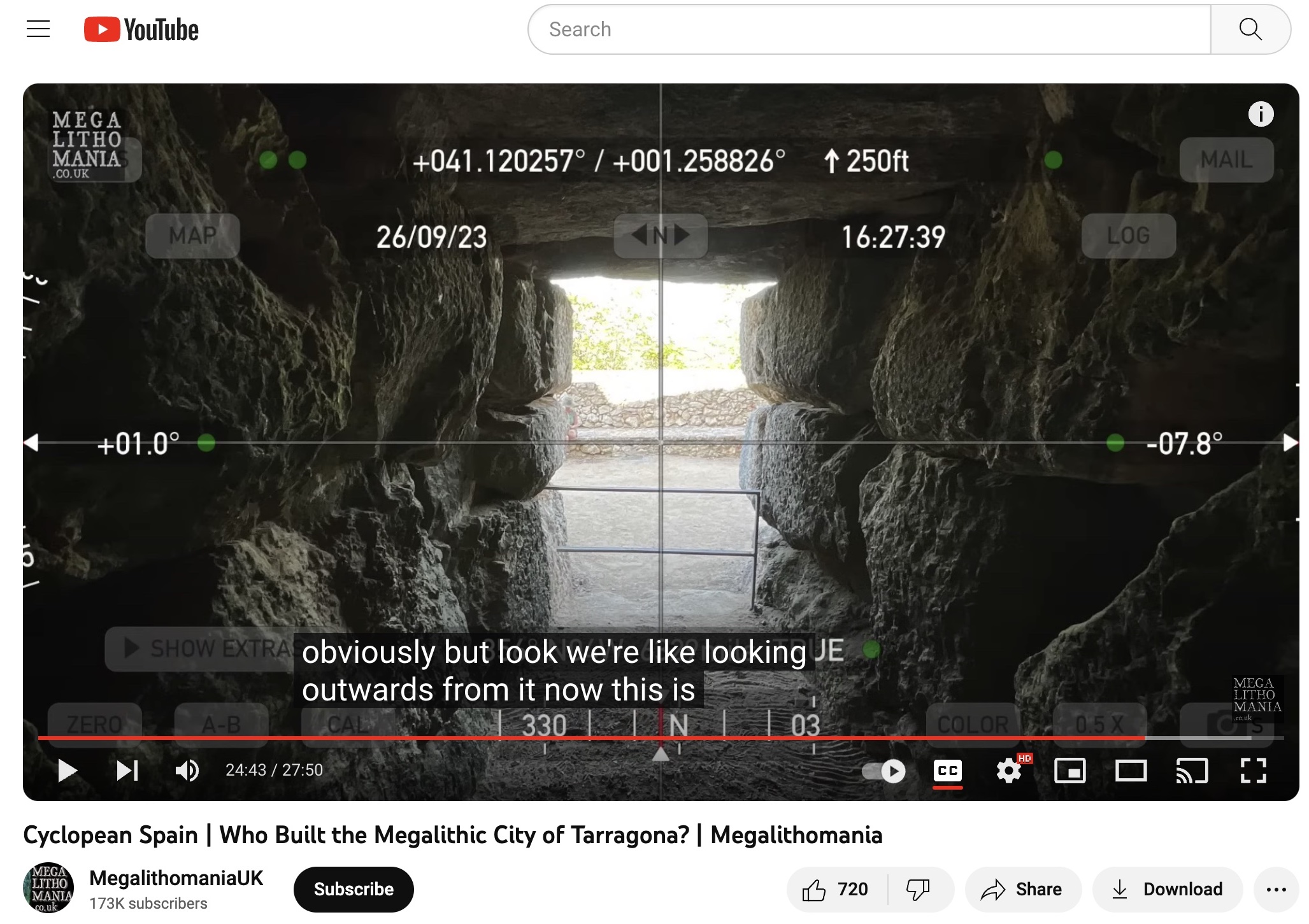
A recent video by Hugh Newman had a very interesting shot from out of one of the gates leading into the old walls of Tarragona, a city on the east coast of Spain. It showed a compass reading that was a few degrees west of due north. 

Video shot of north alignment at Tarragona. (Courtesy Megalithomania/YouTube)

The largest structures on earth tend to be the most precisely aligned. For example, the Giza pyramids, as well as the oldest (and deepest) foundations at Teotihuacan, Chichen Itza, Baalbek, and Machu Picchu, were all precisely aligned to the cardinal direction at the time of construction, according to the Before Atlantis hypothesis. The Giza pyramids being the most recent were aligned to the current pole, Teotihuacan to the previous pole estimated to have been located in Hudson Bay 20,000 to 50,000 years ago, Chichen Itza to the Norwegian Sea pole 50,000 to 75,000 years ago, Baalbek to the Greenland pole 75,000 to 130,000 years ago, and Machu Picchu to the Bering Sea pole, at least 130,000 years ago.

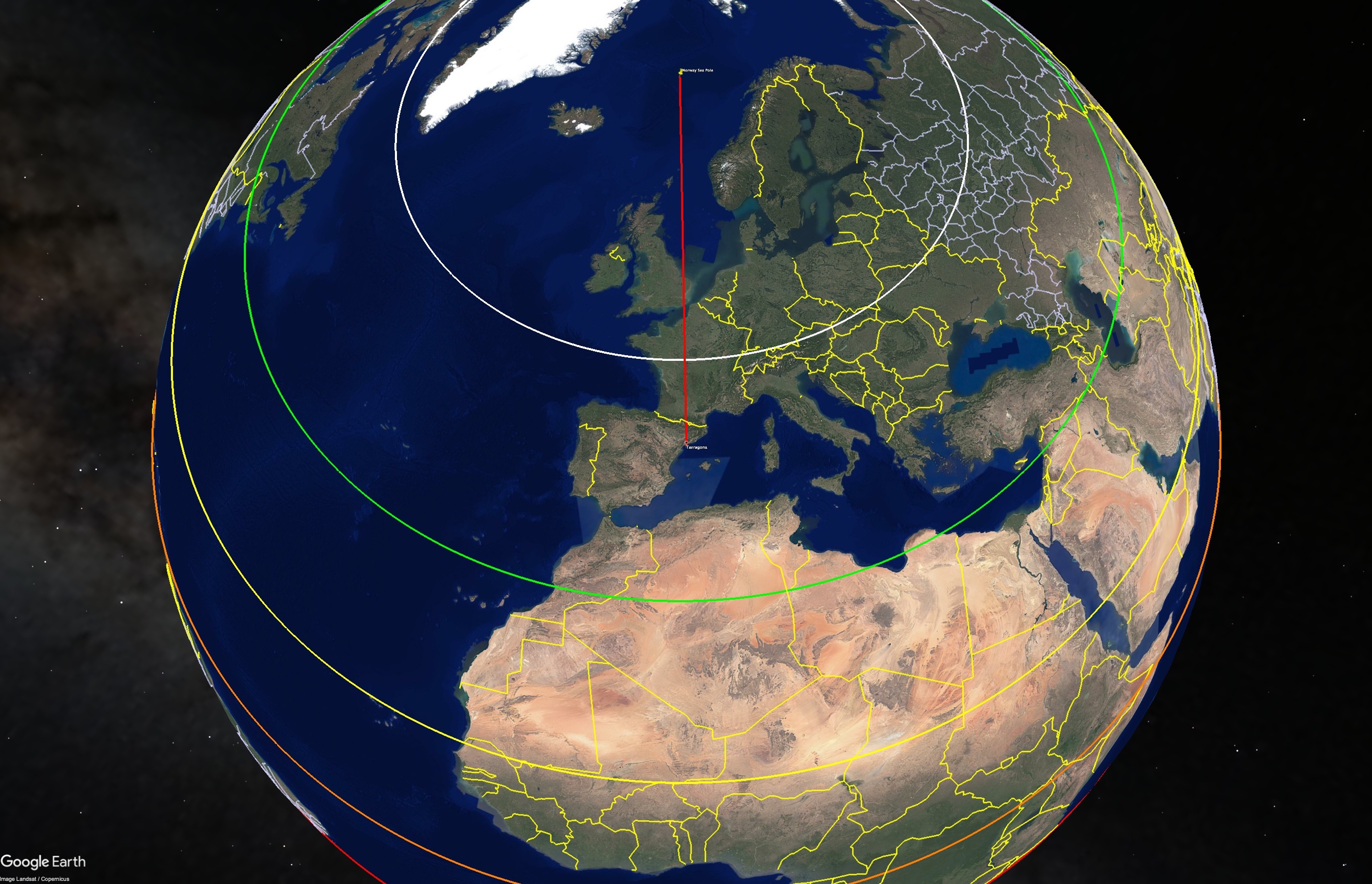
So why would Tarragona be a few degrees off from due north? It turns out that if the North Pole were in the Norwegian Sea, the pole would be several degrees west of its current location and the view from that gate at Tarragona would have faced exactly due north. Coincidence? 

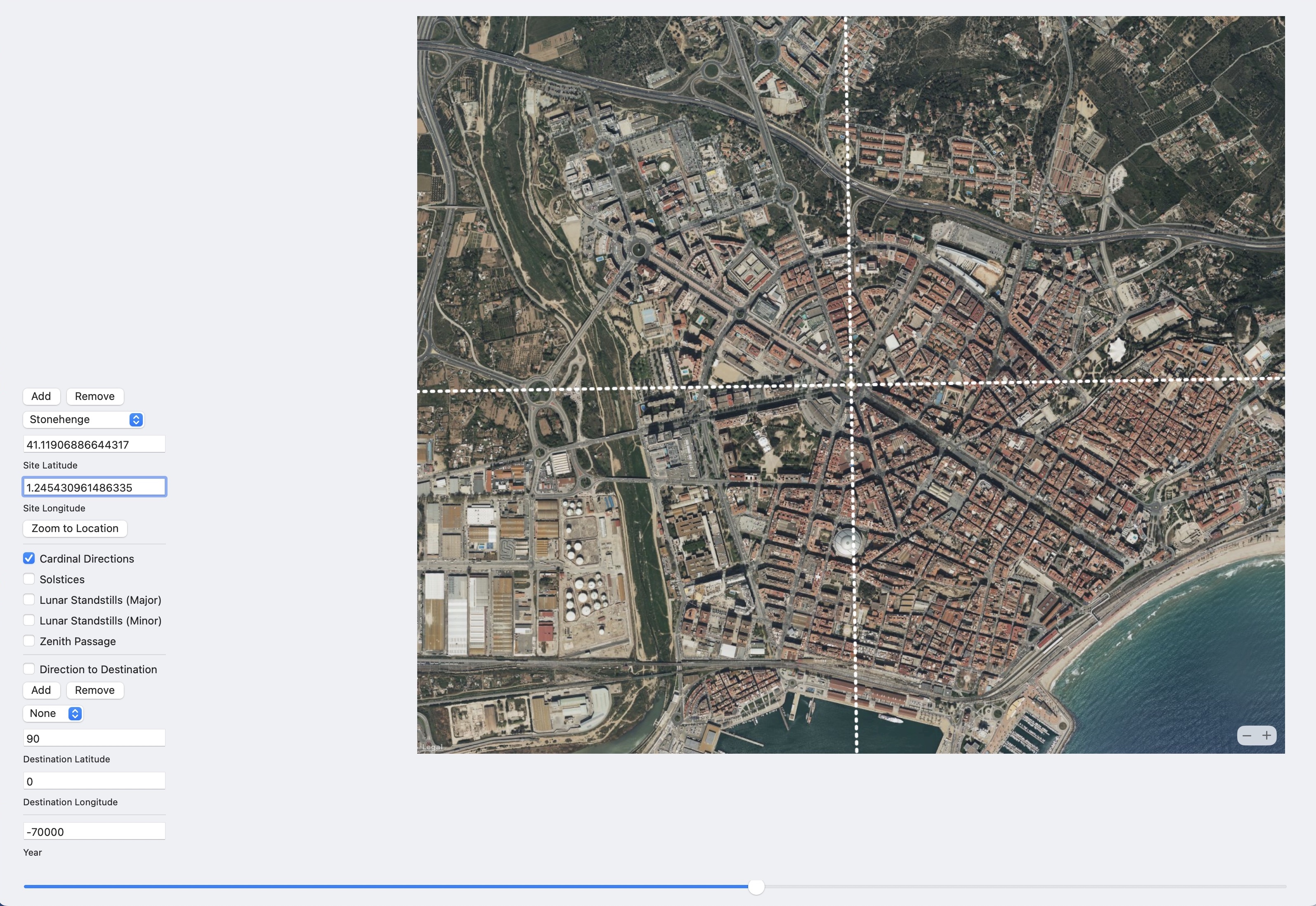
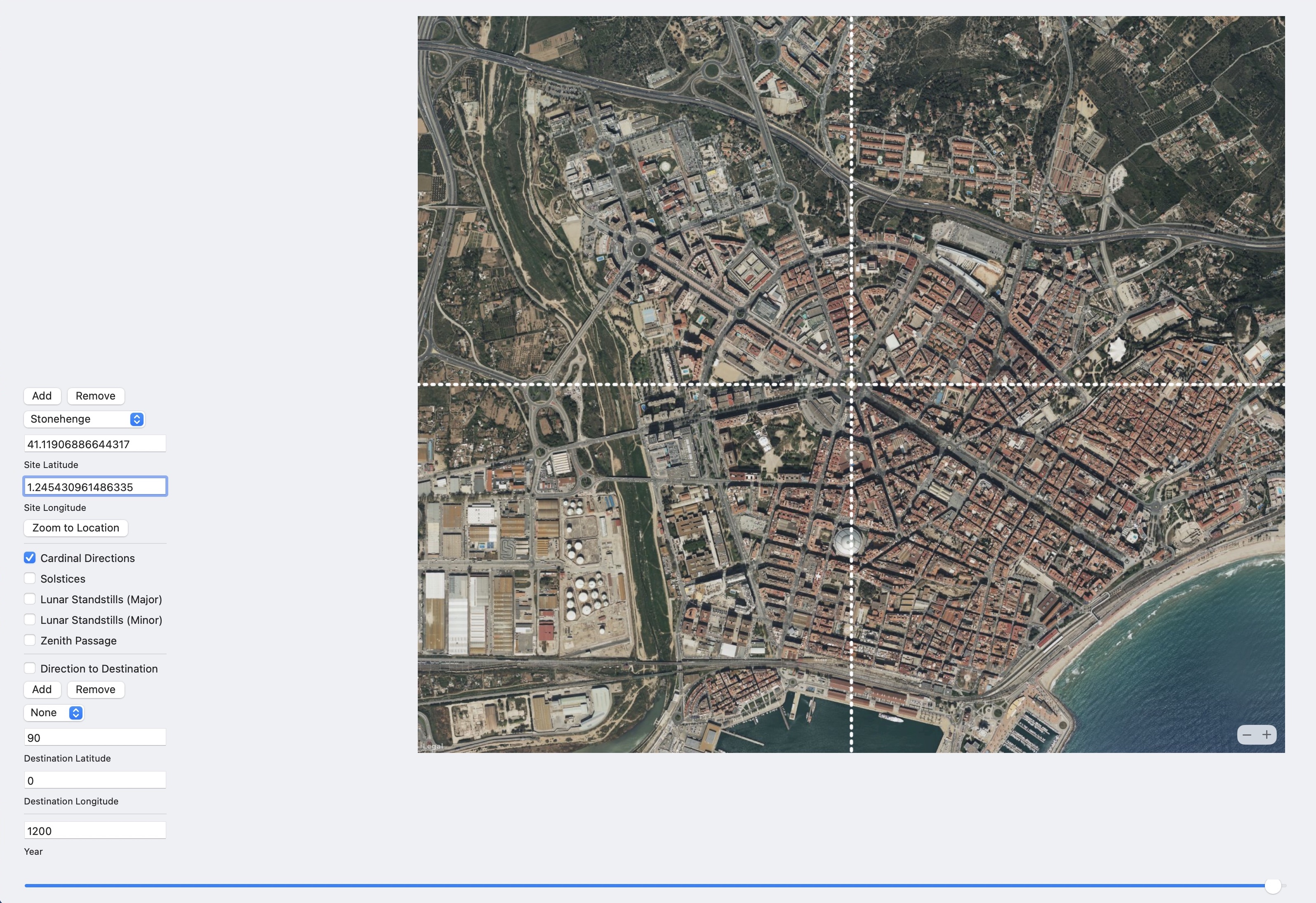
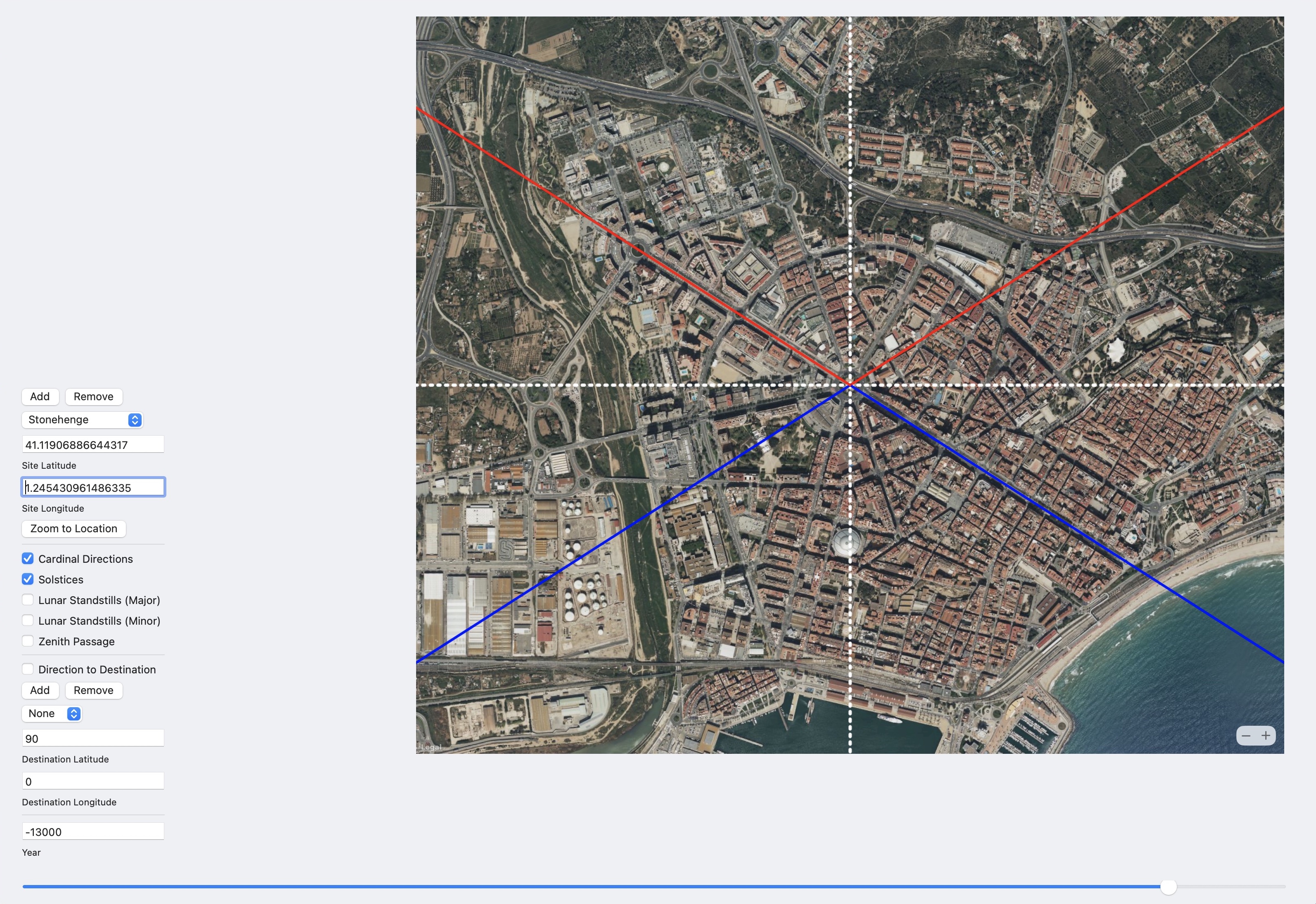
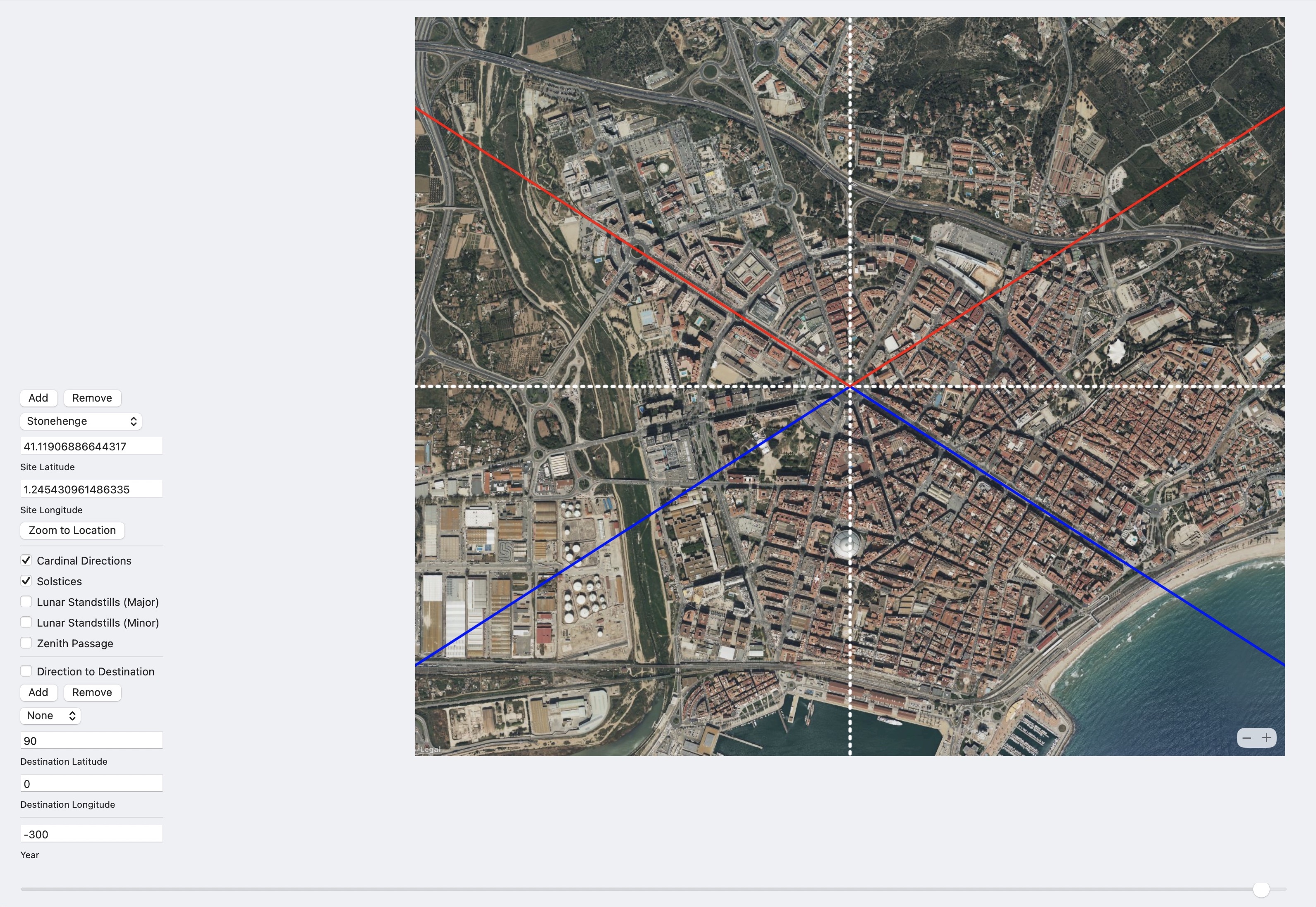
The main thoroughfare, Rambla Nova, is oriented in a direction that is closely aligned to the winter solstice sunrise and summer solstice sunset. The alignment would have been exact around 300 BCE. Changes in the earthโ€™s axial tilt causes the direction of the solstices to change over a 41,000-year cycle. Based on the timing of the cycle another exact alignment also existed in 13,000 BCE.

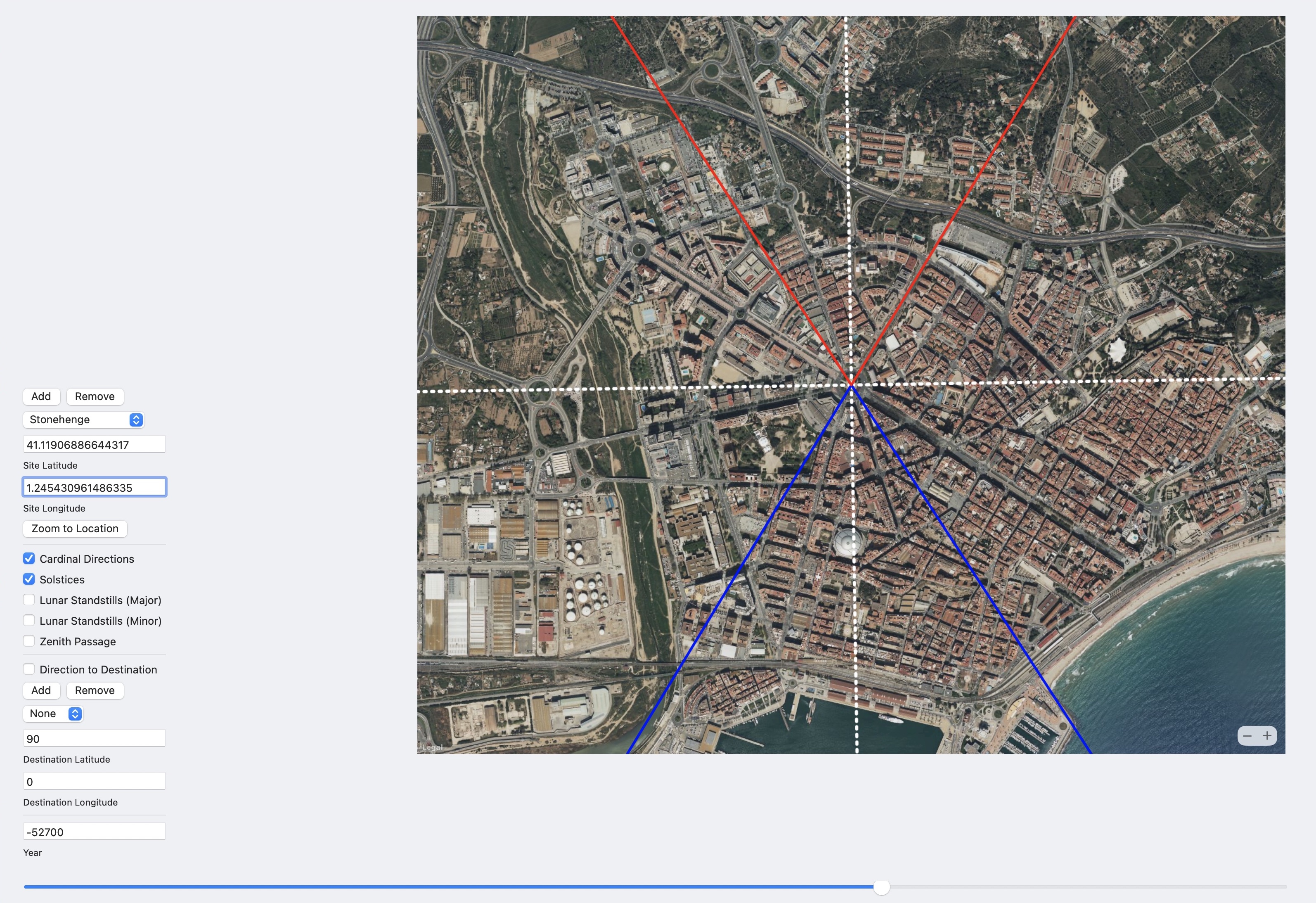
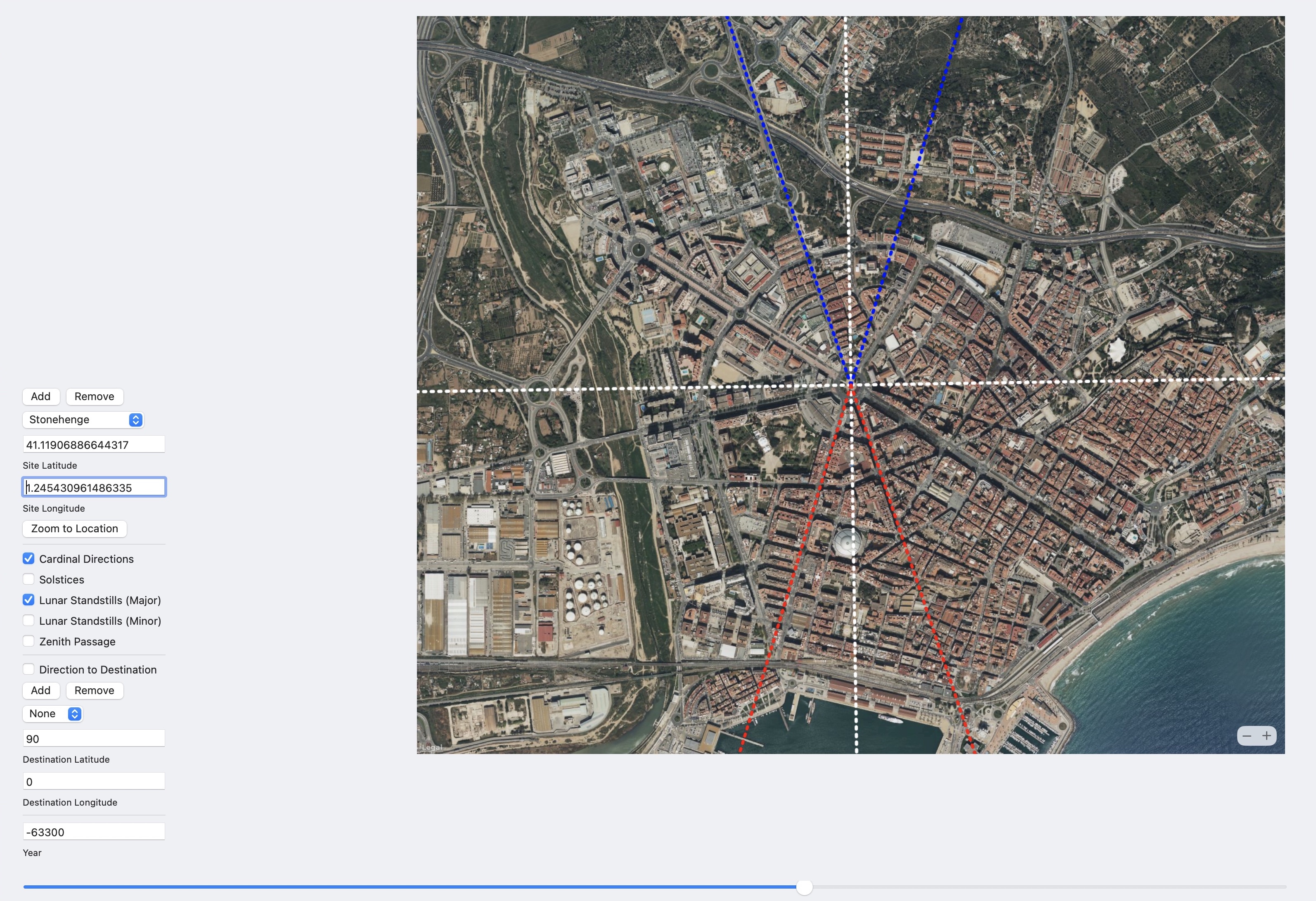
Three other streets emanate like the spokes of a wheel radially from Font del Centenari at the center of the city. All three appear to be oriented in solar and lunar directions relative to the Norwegian Sea pole – C. de Pete Martell and Av. de Prat de la Riba to major lunar standstills circa 63,000 BCE and Av. Marques de Montoliu to the summer solstice sunrise and winter solstice sunset 52,700 BCE.

Is it possible that the oldest foundations at Tarragona were built when the North Pole was only 2,000 miles away in the Norwegian Sea? At that distance, Tarragona would have been in the northern temperate zone at roughly the latitude as Anchorage, Alaska. It is interesting that there do not appear to be similar constructions in northern Europe, only in the Mediterranean region. Why?

Hapgood’s pole shift hypothesis provides a plausible explanation. At the northern extreme of the temperate zone, places further north would be in the polar zone and not suitable for human habitation. That the earth’s poles have shifted several times over the past 100,000 years provides not only a simple and compelling explanation for ice ages and glacial cycles but also explains the alignment of hundreds of archaeological sites across the world that otherwise have no conventional explanation. Although it has and continues to be dismissed by the geological community, that so much climate and archaeological evidence appears to support his hypothesis makes it hard to ignore.

Feature image at the top of the article courtesy Tomร s./Flickr/Creative Commons

An Ancient City That Was Suddenly Destroyed

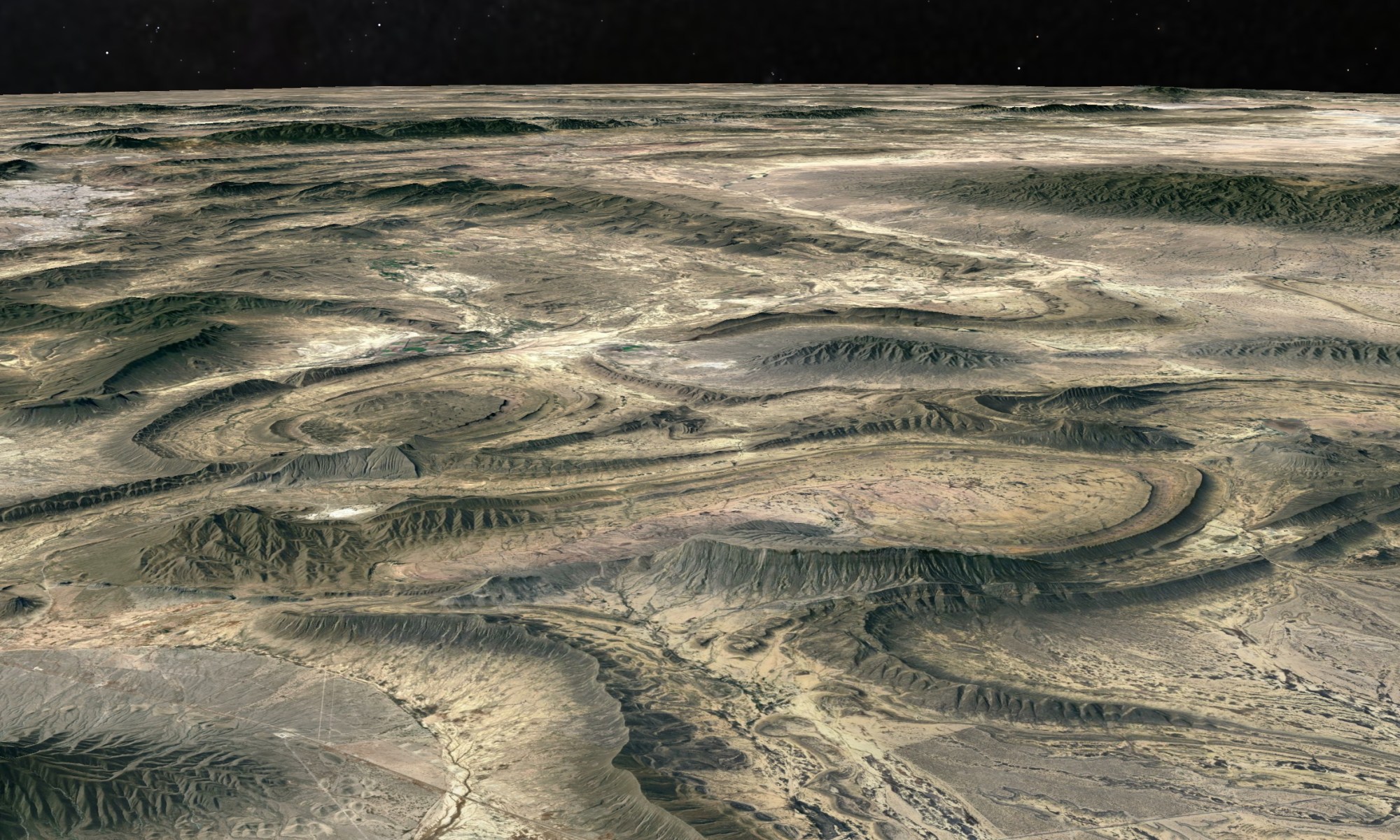
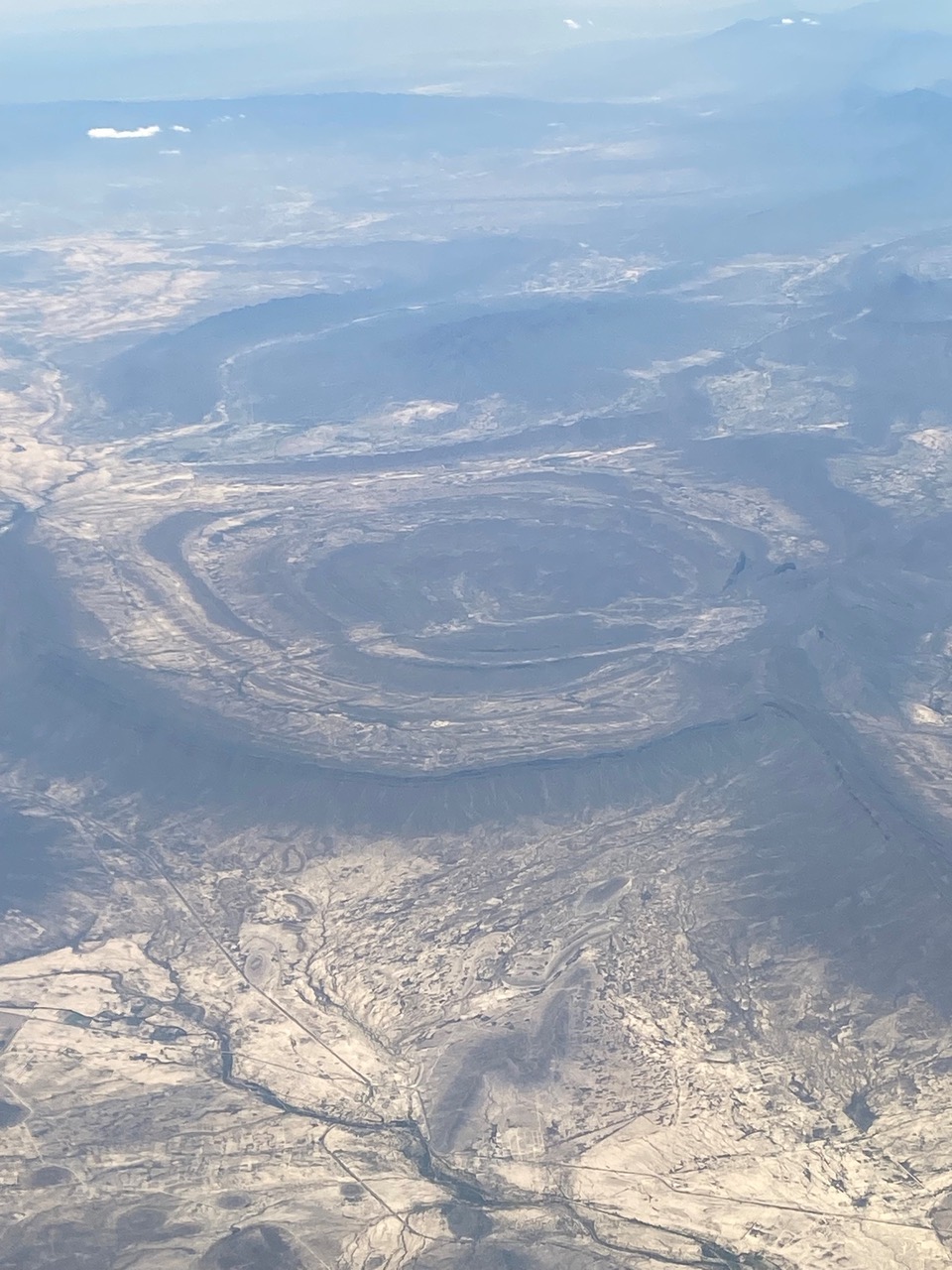
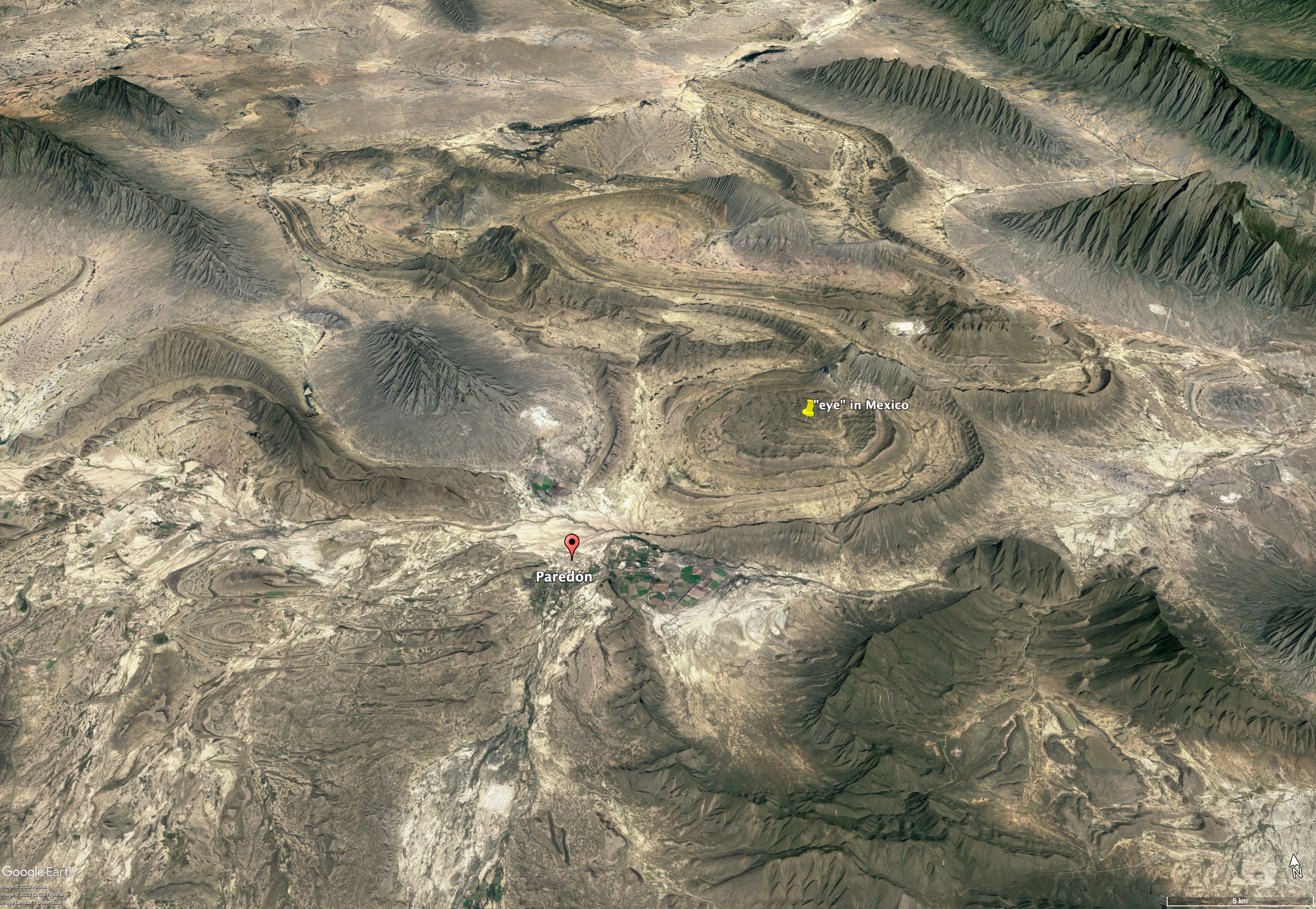
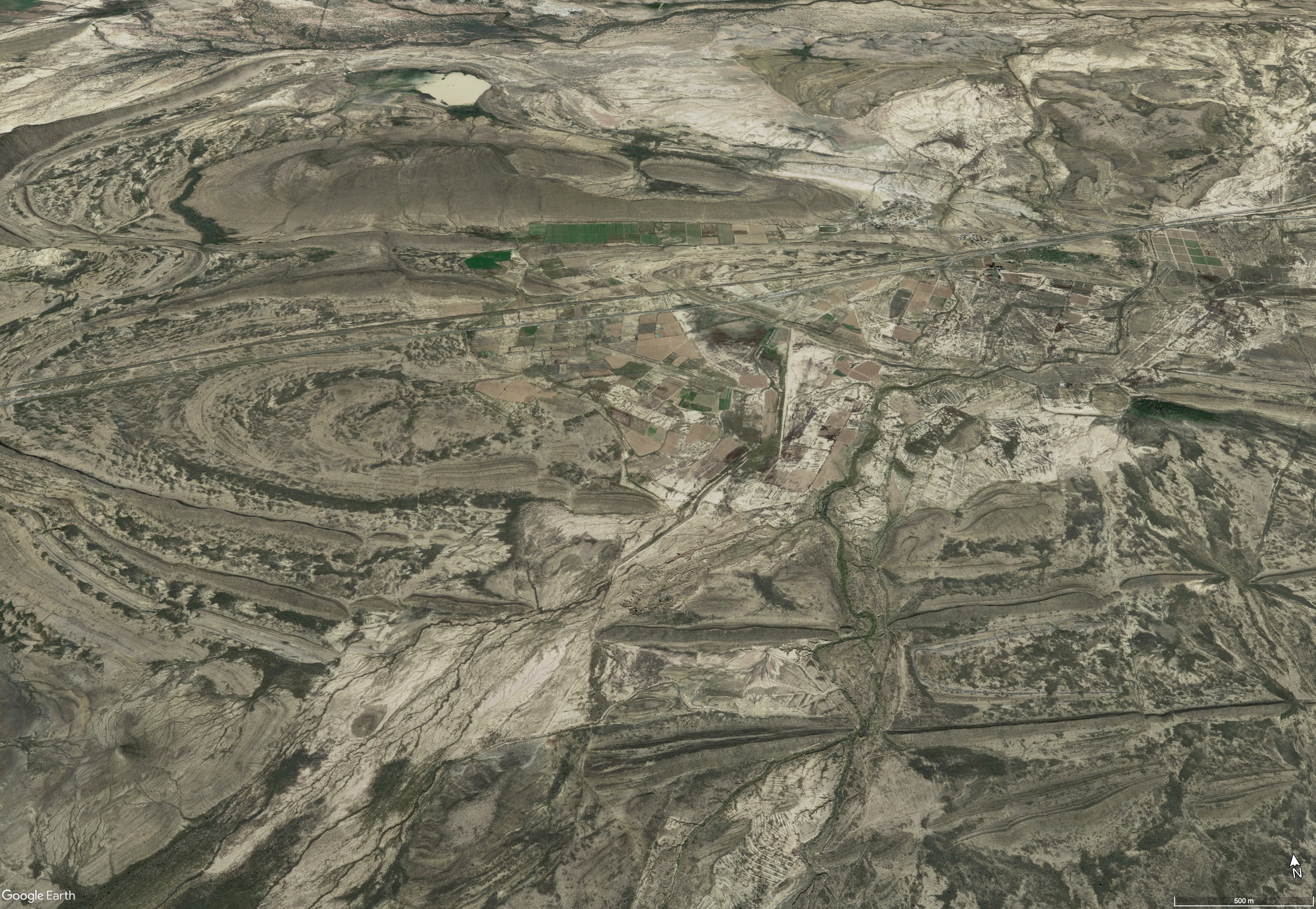
The Richat Structure also known as the โ€œeyeโ€ of the Sahara in Mauritania is a deeply eroded geological structure of exposed layers of sedimentary rock that appear as concentric rings. Because of its shape, some believe it to be the remains of Platoโ€™s Atlantis. Scott Sanem contacted me about a similar structure in Paredon located in northeastern Mexico that he has seen many times from the air.ย 

Elephant Remains in Mexico

Wondering if this feature like the Richat Structure could be evidence of a previous civilization in this part of the world, Scott discovered an interesting article in the November and December 1903 issue of The American Antiquarian. The article entitled โ€œElephant Remains in Mexicoโ€ begins with the following introduction:

From the City of Mexico comes a statement bearing the signature of Dr. Nicholas Leon, archaeologist of the National Museum of Mexico. The signature would justify the belief that proper investigation of the facts related has been made. The one great fact is that an ancient city, which was located near the present town of Paredon, in the state of Coahuila, some 500 miles north of the City of Mexico, was suddenly destroyed in some past age by an overflow of water and mud, and that its remains are still existent on the spot. Many massive walls have been found, but they are covered with a mass of deposited earth, sixty feet in thickness. And mingled in this earth are human skeletons, the tusks of elephants, etc., distributed in a way which indicates that the overflow of water and mud was sudden, giving no time for escape.

Dr. Leon, who was one of the most respected archaeologists in Mexico at this time, joined the National Museum in Mexico City in 1900 and became head of the Department of Anthropology. The article continues:

The account which has fallen under our notice is somewhat brief. We cannot vouch for its accuracy, and simply present the report:

Portions of buildings, so far unearthed, show that the city โ€” at least the largest of the cities were covered by the debris of the flood, there being at least three cities destroyedโ€” was very extensive. The indications are that there were many massive structures in the fallen city, and that they were of a class of architecture not to be found elsewhere in Mexico. According to the estimates of the scientists under whose directions the excavations are now being made, the city in question had a population of at least 50,000.

The destruction which was brought by the flood was complete. All the inhabitants of the cities were killed, as well as all the animals. Skeletons of the human inhabitants of the cities and of the animals are strewn all through the debris, from a depth of three feet from the surface to a depth of sixty feet, showing that all the debris was deposited almost at once. Measurements show that the debris is on an average, sixty feet-deep where the largest of the cities stood.

Most remarkable of the minor finds that have been made at Paredon is that of the remains of elephants. Never before in the history of Mexico has it been ascertained positively that elephants were ever in the service of the ancient inhabitants. The remains of the elephants that have been found at Paredon show plainly that the inhabitants of the buried cities made elephants work for them. Elephants were as much in evidence in the cities as horses. Upon many of the tusks that have been found were rings of silver. Most of the tusks encountered so far have an average length, for grown elephants, of three feet, and an average diameter at the roots of six inches. Judging from the remains of the elephants so far unearthed, the animals were about ten feet in height and sixteen to eighteen feet in length, differing very little from those at present in existence.

Several editorial comments follow that leave with reader with some doubt about the credibility of Dr. Leon’s report:

Now, these statements in reference to the elephantsโ€™ bones found among the ruined cities need confirmation, before they are accepted by the majority of archaeologists. It is true that the tusks and bones of mastodons are frequently found in the swamps of Michigan, Ohio, and Indiana, but they are supposed to belong to the same species which are found in the frozen mud of Siberia and the gravels of the Northwest coast. A species covered with hair and adapted to the cold climate, and quite different from any-that would be found as far south as Mexico. The circumpolar regions are full of these creatures, which have perished, but their bodies have been preserved in the ice-beds. Other animals, such as the buffalo and bison, have over run portions of this continent, since the days of the mastodon, but none of them reached as far south as Mexico.

Mammoth remains unearthed near Mexico City in 2020. Image courtesy Mexico News Daily.

An Ice Age Civilization in Northeastern Mexico?

The discovery of hundreds of mammoth skeletons recovered at an airport construction site north of Mexico City in 2020 suggests the bones unearthed by Dr. Leon were not those of elephants but of mammoths. As we saw in the previous article, if we accept the possibility of crustal displacements as a working hypothesis, according to Hapgoodโ€™s theory, if the North Pole were in Hudson Bay during the North American ice age, most of the places mammoth remains have been found would have been in the temperate zone relative to the former pole. That region, which is known as the Mammoth Steppe stretches from the Iberian Peninsula in western Europe, across Eurasia, through Beringia, and into North America. The discovery of mammoth remains near Mexico City suggests this region extended into Northern Mexico.ย 

The continuation of the Mammoth Steppe into Mexico is in the temperate zone (green line) relative to the Hudson Bay Pole. (Click to enlarge)

The bones found at โ€œMammoth Centralโ€ near Mexico City are estimated to be 10,000 to 20,000 years old. If the elephant remains found by Dr. Leon were those of mammoths, then this portion of his report becomes extremely interesting:

The one great fact is that an ancient city, which was located near the present town of Paredon, in the state of Coahuila, some 500 miles north of the City of Mexico, was suddenly destroyed in some past age by an overflow of water and mud, and that its remains are still existent on the spot. Many massive walls have been found, but they are covered with a mass of deposited earth, sixty feet in thickness. And mingled in this earth are human skeletons, the tusks of elephants, etc., distributed in a way which indicates that the overflow of water and mud was sudden, giving no time for escape.

Google Earth image showing the location of “eye” and the city of Paredon in northeastern Mexico. (Click to enlarge)

Geological Evidence of a Crustal Displacement?

The Richat Structure is thought to be a kind of symmetrical uplift feature known as a dome, probably volcanic in origin. Where the Richat Structure is an isolated formation in the Sahara, the โ€œeyeโ€ of Mexico, exists along with other similar features in a region that lies between the mountains to the west and the coastal plain to the east. 

Although it is not itself an impact feature, domes can sometimes be found near impact craters. Besides volcanism, domes can also form as the result of a process known as diapirism in which less dense materials rise to the surface, and from horizontal stresses resulting in the formation of a system of basins and domes, a process known as refolding.

Temperate zones: current (top green line) and Hudson Bay (bottom green line). Maximum crustal displacement was south to north from the former Hudson Bay pole to the current location of the North Pole in the Arctic Ocean (along the blue line). Paredon is the red placemark approximately 1400 miles west of this line. (Click to enlarge)

If a crustal displacement shifted the North Pole from Hudson Bay to the Arctic, the line of maximum displacement would have been only about 1400 miles to the east. Could horizontal stresses caused by a crustal displacement have been responsible for the unusual landscape around Paredon?

Google Earth image showing the unusual landscape around Paredon. (Click to enlarge)

Conclusion

Evidently, Dr. Leon never published a detailed account of his findings in a scientific paper:

The cities of Mexico are supposed to have been built not earlier than 1500 A. D.โ€”about 500 years ago. If any were built earlier, they are in ruins, but no remains of elephants have been discovered among the ruins, in fact no semblance of the elephant has been recognized in the sculpture, except in a few cases, where what resembles an elephantโ€™s trunk, or the trunk of a tapir, is found on the sculptured columns at Copan. The discovery of elephant bones would bo too important a matter to be ignored, but the article seems sensational and has been sent to the newspapers as a sensational item, and not to the scientific societies, so far as we have learned.

One has to wonder if Dr. Leonโ€™s field notes still exist in some form, in some place, say in the basement of the National Institute of Anthropology and History (INAH) in Mexico City, and if so, do they provide sufficient detail to tell us where his finds are located? In the same way ancient sites discovered in Turkey dated to 10,000 BCE or more replaced what had been the most ancient sites in Mesopotamia, could there be ruins in Mexico that are even older, perhaps thousands of years older than even the Younger Dryas, dating to the end of a previous age, to the end of the last ice age?

The Mammoth Steppe

During the Last Glacial Maximum (LGM), the Mammoth Steppe was a vast region that stretched from the Iberian Peninsula in western Europe, across Eurasia, through Beringia, and into North America. Besides the woolly mammoth, reindeer, muskox, antelope, bison, horses, and the woolly rhinoceros lived there during the North American ice age. Now extinct, the mammoth, which weighed up to nine tons, is estimated to have required about four hundred pounds of food each day to survive. With numerous mammoth remains found in Siberia above the Arctic Circle, it is a mystery how an animal the size of an elephant was able to find that much food in such a barren place. 

Mammoth sites that have been radiocarbon dated 20,000 – 45,000 years before present (click to enlarge). Approximate location of remains displayed with estimated extent of the northern ice sheet during the LGM. (Google Earth/Zurich University of Applied Sciences)

Explaining the Thickest Ice on Earth

As Earth warms, sea levels rise as ice at the poles melts. Similarly, as Earth cools, sea levels fall as glaciers form at the poles. 

In the north polar region, the thickest ice is in the mountainous interior of Greenland, about 1200 miles from the North Pole. In Antarctica, the thickest ice is not at its center at the South Pole but almost 1000 miles away in the high plateau of Eastern Antarctica. 

In the case of Greenland, the ice sheet has been accumulating for over 110,000 years, with some of the oldest ice found dating back over 800,000 years.  But why is the ice in Greenland just as thick in Antarctica, and why it is located where it is and not at the poles?

Hapgoodโ€™s Theory of Crustal Displacement

Hapgoodโ€™s theory, which is the starting point of our research in Before Atlantis, provides a simple and compelling explanation for why the thickest ice is where it is. In a previous article, we showed that the regions of thickest ice are the regions that have remained in the polar regions during the last four crustal displacements

All of the northern polar zone (regions above the Arctic Circle) were covered in ice during the LGM except for Siberia. Why?

According to Hapgoodโ€™s theory of crustal displacement, ice ages and inter-glacial periods are not caused by the Earth as a whole becoming significantly colder and then warmer but by different regions shifting into and out of the polar regions. If according to Hapgoodโ€™s data, now corroborated by Mark Gaffney, the North Pole were in Hudson Bay, not only would North America have been frozen under a continental ice sheet but Siberia and the whole Mammoth Steppe would have been in the temperate zone.

If a crustal displacement approximately 20,000 years ago shifted the North Pole from Hudson Bay to the Arctic Ocean, it would have changed Siberia from a temperate climate where mammoths and other animals that inhabited the steppe would have found more than enough food to the cold barren landscape we see today. Although the evidence is anecdotal, stories about the remains of plants that grow in temperate climates in the guts of frozen mammoth remains, support this hypothesis.

Feature image at the top of the article “Mammoth Steppe” generated by DeepAI’s Fantasy World Generator.

The Labyrinth, the Colossi, and the Lake: New Evidence of Advanced Prehistoric Civilizations in the Faiyum

This article presents the first verifiable space-based evidence of an enormous underground structure at Hawara that is likely the below-ground portion of the Labyrinth first mentioned by Herodotus. Combining historical sources with modern geospatial data reveals a discrepancy between Herodotusโ€™s account of colossal stone structures in the middle of Lake Moeris and Petrieโ€™s archaeological survey of much more modest ruins at Biahmu. An analysis of the alignment of the Labyrinth and other ancient sites in the Faiyum suggests they may be much older than we think.

Click here to read the full paper.

Click here for a more detailed paper about the Labyrinth.

The Labyrinth

The legendary Labyrinth of Hawara was brought to the attention of the Western world by Herodotus in the fifth century BC. He describes an above-ground structure that he saw, and one below-ground that he was denied access to by the Egyptians.

Moreover, they decided to preserve the memory of their names by a common memorial, and so they made a labyrinth a little way beyond lake Moeris and near the place called the City of Crocodiles. I have seen it myself, and indeed words cannot describe it; if one were to collect the walls and evidence of other efforts of the Greeks, the sum would not amount to the labor and cost of this labyrinth. And yet the temple at Ephesus and the one on Samos are noteworthy. Though the pyramids beggar description and each one of them is a match for many great monuments built by Greeks, this maze surpasses even the pyramids. It has twelve roofed courts with doors facing each other: six face north and six south, in two continuous lines, all within one outer wall. There are also double sets of chambers, three thousand altogether, fifteen hundred above and the same number under ground. We ourselves viewed those that are above ground, and speak of what we have seen, but we learned through conversation about the underground chambers; the Egyptian caretakers would by no means show them, as they were, they said, the burial vaults of the kings who first built this labyrinth, and of the sacred crocodiles. Thus we can only speak from hearsay of the lower chambers; the upper we saw for ourselves, and they are creations greater than human. The exits of the chambers and the mazy passages hither and thither through the courts were an unending marvel to us as we passed from court to apartment and from apartment to colonnade, from colonnades again to more chambers and then into yet more courts. Over all this is a roof, made of stone like the walls, and the walls are covered with cut figures, and every court is set around with pillars of white stone very precisely fitted together. Near the corner where the labyrinth ends stands a pyramid two hundred and forty feet high, on which great figures are cut. A passage to this has been made underground.

Sir Flinders Petrieโ€™s 19th-century survey provides a rough idea of the scale of the above-ground structure. His assessment was that the Labyrinth was maintained up to the second century BCE โ€“ “at least as late as Kleopatra I, 193 B.C., the Labyrinth was still in royal care, and probably being restored in some degree. Soon after that, ruin fell upon it, and in Pliny’s time it was โ€˜marvellously ravaged.โ€™โ€ Petrieโ€™s reconstruction of the western half of the Labyrinth indicates a north-south length of approximately 526 feet. Squaring that (assuming the structure is roughly square) yields an area of about 277,000 square feet.

Mataha Expedition

In 2008, the Mataha expedition reported the discovery of below-ground features resembling archaeological structures south of the Hawara pyramid of Amenemhet III:

These features covering an underground area of several hectares, have the prominent signature of vertical walls on the geophysical results. The vertical walls with an average thickness of several meters, are connected to shape nearly closed rooms, which are interpreted to be huge in number.

Very low frequency electromagnetic (VLF-EM) surveys revealed โ€œspatially distributed elongated and square shaped subsurface anomalies, which may identify the walls and rooms of the labyrinth mortuary temple complex.โ€

Approximate geolocation of an electrical conductivity map computed from VLF-EM surveys in Google Earth.

The presence of possible archeological features below ground suggests the possibility that what Petrie thought was the foundation of a large above-ground structure could instead be the roof of an undiscovered structure below ground. As the VLF-EM and other surveys were conducted over a limited area, it was not possible to determine the full extent of the underground structure.

Inspired by the discoveries of the Mataha expedition, a remarkable 3D reconstruction of the site using proprietary space-based technology revealed two levels of subterranean chambers over an extended area surrounding the pyramid of Amenemhat III. But unlike the Mataha findings, no accompanying scientific paper describing either the methodology or the data used was ever published making it difficult to corroborate their findings.

Spaceborne Radar Imaging

Under certain conditions, spaceborne synthetic aperture radar (SAR) is able to penetrate desert sands to reveal subsurface features. Sentinel-1, the first of the five missions developed by the European Space Agency under the Copernicus initiative, transmits vertically polarized waves and receives horizontally and vertically polarized waves that are processed to form VH and VV images. VV images tend to pick up height/vertical features whereas VH images tend to be more sensitive to surface textures. A portion of a C-band Sentinel-1 SAR image collected 7/6/2023 over a region in Western Egypt containing the Faiyum Oasis centered on the pyramid of Amenemhet III in Hawara is shown below.

Although there are a number of strong returns in its vicinity, the lack of a strong response from the pyramid itself is likely due to its highly eroded state. Several bright returns north of the pyramid (A) are from high-voltage transmission line towers (you can see one of the towers in the feature image at the top of the article). Below the pyramid in what is believed to be a mortuary complex are at least three returns that are rectangular in shape.

Sentinel image (left), with delineated regions (middle), and coregistered Google Earth image (right).

One of the delineated regions (B) is about 275,000 sq. feet โ€“ almost the same size as the rectangular area excavated by Petrie. Another region (C) may be the continuation of the above structure. A second rectangular area (D) west of the Faiyum canal is also evident in the SAR image. The lack of any structures in Google Earth imagery over these areas indicates that they are subsurface features. It is interesting that the orientation of these structures is not the same as the pyramid of Amenemhet III suggesting they are not part of the mortuary complex.

One of the Pedestals of Biahmu. (Einsamer Schรผtze/Creative Commons)

The Pedestals of Biahmu

Herodotus goes on to describe what he saw north of the Labyrinth:

Such is this labyrinth; and still more marvellous is lake Moeris, on which it stands. This lake has a circumference of four hundred and fifty miles, or sixty schoeni: as much as the whole seaboard of Egypt. Its length is from north to south; the deepest part has a depth of fifty fathoms. That it has been dug out and made by men’s hands the lake shows for itself; for almost in the middle of it stand two pyramids, so built that fifty fathoms of each are below and fifty above the water; atop each is a colossal stone figure seated on a throne. Thus these pyramids are a hundred fathoms high; and a hundred fathoms equal a furlong of six hundred feet, the fathom measuring six feet or four cubits, the foot four spans and the cubit six spans. The water of the lake is not natural (for the country here is exceedingly arid) but brought by a channel from the Nile; six months it flows into the lake, and six back into the river. For the six months that it flows out of the lake, the daily take of fish brings a silver talent into the royal treasury, and twenty minae for each day of the flow into the lake. 

When Petrie visited the ruins at Biahmu, he found the remains of two stone structures. Based on his reconstruction, stone figures, about forty feet tall, were emplaced on platforms about 30 feet high, for a total height of about 70 feet. This is only ยผ of the above water height reported by Herodotus, who coincidentally overestimated the circumference (perimeter) of the lake by a factor of four as well.

Lacking modern technology Herodotus cannot be faulted by the inaccuracy of his measurements. But there seems to be more to the discrepancy. In fact, Petrieโ€™s description of Biahmu does not seem to match Herodotusโ€™s at all:

When, six years ago, I visited the two so-called pyramids of Biahmu, about four miles north of Medinet el Fayum, I concluded from their appearance that it was very unlikely that they had really been pyramids, but rather that they were courts surrounding two great pedestals on which statues had stood. This result agreed nearly with the description of Herodotos, of two pyramids rising out of the water, each bearing a stone statue seated on a throne. His idea that they were large pyramids half submerged was easily to be explained by the fact of his visiting the province during the inundation, and his viewing them from Arsinoe, and not going down to Biahmu. The Arab name, Kursi Faraun, or โ€œthrone of Pharaoh,โ€ accords also with this idea ; they are, however, more usually known as es sanatn, the โ€œhigh placesโ€ or โ€œhigh things.โ€

Where was Herodotus when he saw the Colossi? The water level of Lake Moeris (see below) has varied considerably (up to 60 meters) over the last 10,000 years. Using a digital elevation model (DEM), we can estimate the water level when Amenemhet III is thought to have built the Colossi and when Herodotus saw them. Based on the DEM, Biahmu was above water at the time of Amenemhet III and below water when Herodotus was there. But more importantly, if the Colossi were partially below water, so too was the surrounding area over a radius of more than six miles. From this distance, the pyramids in Giza are barely visible let alone a structure the size reconstructed by Petrie. If the stonework that Petrie believed was a courtyard around the figures was the base of a pyramid 120 feet tall, even that would not be large enough to be visible from that distance.

Another possibility is that Herodotus was in a boat. But if he were, one would think he would have sailed up to Colossi to see them close up. After all, he did attempt (unsuccessfully) to visit the Labyrinthโ€™s underground.

An aerial view of the site shows the courtyards are not well-aligned in any particular direction. Different parts of the stonework surrounding the pedestals vary by several degrees in azimuth. This is in contrast with other Egyptian temples and monuments such as the Colossi of Memnon, which are aligned to the solstices.

If Herodotus was right about the Labyrinth, perhaps he was right about the Colossi as well.

A way of reconciling Herodotusโ€™s account and Petrieโ€™s reconstruction is to hypothesize that the structure Amenemhet III built, or possibly co-opted was once much larger. Like the Labyrinth, perhaps the original structure at Biahmu was dismantled and used as building material leaving only the modest reminder we see today.

Discussion

Qasr al Sagha is a megalithic structure north of Lake Moeris. Seemingly in the middle of nowhere, Qasr al Sagha would have been close to the lake shoreline when the water level was higher. The same is true of another site, Dimai (Soknopaiou Nesos), which is also north of Lake Moeris. It is believed that Lake Moeris existed as a paleolake more than 10,000 years ago. Although there have been variations in lake level even before the Faiyum canal, it has decreased significantly in size over the past 2500 years.

Devoid of any inscription, little is known about Qasr al Sagha. Composed of giant limestone blocks, its architectural style indicates Middle to Old Kingdom. That it is oriented in the direction of minor lunar standstills, not uncommon in desert regions, suggests Qasr al Sagha could have been a lunar temple.

Alignments of Qasr al Sagha (top left) and Medinet Madi (top right) to the moon. Alignments of Medinet Madi (bottom left) and Labyrinth (bottom right) to the Greenland pole.

Other sites in the Faiyum are more difficult to explain in terms of their alignment. Madinet Madi (โ€œCity of the Pastโ€) is not aligned in known geographical/astronomical directions, however, its minor axis would have aligned with minor lunar standstills relative to the Hudson Bay pole – the hypothesized location of the North Pole during the North American ice age, 20,000 to 45,000 years ago. The alignment of its major axis would have been in the direction of the Greenland Pole, another proposed location of the North Pole even further back in time, 75,000 to 130,000 years ago. Subsurface features at Hawara, which are not aligned with the pyramid of Amenemhet III, are also oriented in the direction of the Greenland pole. Based on an application of Hapgoodโ€™s theory of crustal displacement theory, these alignments may be the fingerprint of at least two prehistoric civilizations in the Faiyum over the past 100,000 years or so.


Feature image at the top of the article courtesy Explore Faiyum .

New Discoveries at Mitla

In 1674, a Catholic priest, Francisco de Burgoa reported the discovery of a subterranean labyrinth under the ruins of Mitla. Immense stone chambers were said to extend many miles underground. 

In 2022, a joint research expedition by the Mexican National Institute of History and Anthropology (INAH), the National Autonomous University of Mexico (UNAM) and the Association for Archaeological Research and Exploration (ARX) uncovered evidence of a large void under the Catholic Church. Electrical resistivity tomography revealed the void is connected to underground chambers extending west, north, and east of the church.

Site Alignment

Numerous places in Mesoamerica contain structures aligned in a direction roughly 17 degrees east of north – places such as Teotihuacan, Tenayuca, Xochicalco, Ekbalam, Altun Ha, Copan, Tikal, Uxmal, and Mitla.

No single compelling reason for their alignment exists within the mainstream archaeological community. In Before Atlantis, we propose that these sites were first established during the last ice age when, according to Charles Hapgood in his theory of earth crustal displacement, the North Pole was in Hudson Bay and Mexico would have had a temperate climate. It is our contention that what archaeologists have discovered about the more recent pre-Columbian people that lived there is but one chapter of a much more ancient history.

Overlaying current geometrical and astronomical alignments on a Google Earth image of the Church Group of structures at Mitla shows the site is not aligned to the cardinal directions (N-S-E-W), or to the sun (solstices) or moon (lunar standstills).ย 

Current geometrical/astronomical alignments at Mitla.

Displaying alignments relative to the Hudson Bay pole suggests the possibility that if the site was first established when the North Pole was in Hudson Bay the original structures would have been cardinally aligned N-S-E-W relative to the former pole.

Hypothesized geometrical/astronomical alignments of Church Group relative to the Hudson Bay pole.

Structures in the Columns Group would have been similarly aligned.

Hypothesized geometrical/astronomical alignments of Columns Group relative to the Hudson Bay pole.

What makes this hypothesis compelling not only for Mitla but also for the other sites mentioned above is that it explains the alignment of all of them in a simple way.

Hypothesized alignments of Mesoamerican sites to Hudson Bay pole.

In the next few months, the independently-funded joint research expedition hopes to continue its investigation of Mitlaโ€™s underground spaces. Click here and support one of the most important archeological discoveries in decades.

The image at the top of the article is courtesy Thayne Tuason/Creative Commons.

New Evidence At the Poles Supports Crustal Displacement Theory

In Before Atlantis, we set out to explore the idea that shifts in the location of the North and South Poles were responsible for the misalignment of hundreds of ancient sites across the world. In the process, we have discovered (or rather rediscovered) how displacements of Earth’s crust – the reason the poles move – could also explain glacial cycles. In a recent paper, we described how changes at the North Pole predicted by pole shifts are correlated with the rise and fall of global sea levels over the past 130,000 years. In this article, we show that what was happening at the South Pole over this period also supports the crustal displacement theory.

Changes in the Northern Polar Zone

Charles Hapgood first hypothesized that glacial cycles were the result of climate changes caused by slippages of the Earthโ€™s crust – that ice ages were not caused by global temperature fluctuations but were the direct result of different geographic regions moving in and out of the polar zone. 

If the crust displaces over the mantle, climate zones change in predictable ways. The circles define climate zones. In this figure, white is the polar zone, green is the temperate zone, yellow is subtropical, and red is the equator.

We showed in a previous article that the extent of the northern ice sheet at the time of the last glacial maximum (LGM) was consistent with the accumulation of ice over a gradually increasing landmass that had been shifted into the northern polar region by a series of crustal displacements as illustrated below.

As shown below, the union of these regions is a pretty good approximation of the extent of the ice sheet at the LGM.

What is interesting is that if we take the intersection of these circles – the current and past northern polar zones (from about 66ยฐ N) over the past 130,000 years, the area highlighted in the following figure has remained in the polar zone continuing to accumulate snow and ice over this period.

The intersection of polar zones for current (white), Hudson Bay (magenta), Norwegian Sea (yellow), and Greenland (green) poles. The circular triangle region has been in the northern polar zone for more than 130,000 years.

It turns out that the thickest ice in the current northern polar zone, in Greenland, is in this region.

The circular triangle region contains the thickest ice (dark red) in Greenland.

Antarctica

Performing a similar analysis at the South Pole, the largest area in Antarctica having the thickest ice has also been in the polar zone for the past 130,000 years.

The intersection of polar climate zones at the South Pole and an Antarctic ice thickness map (thickest ice is dark red).

Aside from central Greenland, most of the landmass in and around the North Pole is relatively flat. According to our theory, when landmasses move into the polar zone, they begin to accumulate snow and ice. When they move out of the polar zone, the ice melts. The situation in the Antarctic is different because of its elevation. Glaciers exist in the Alps, Himalayas, Andes, and other mountainous areas in the world that are more than two to three thousand meters in elevation. About 40% of Antarctica is 2500 meters or more above sea level.

The ice over most of the Southern Continent (at least 62%), which is more than 1500 meters in elevation probably would not have melted even if it had been shifted well out of the polar zone. Thus, in contrast to the accumulation and melting of ice in the northern polar zone and its effect on global sea levels, changes in the location of Antarctica would have been less of a factor.

The mountainous interior of Greenland has the most ice, which coincidentally has remained in the polar zone for the past 130,000 years. As shown below, areas with the thickest ice in Antarctica are not always the highest in elevation as they are in Greenland.

Antarctic ice thickness map (thickest ice is dark red) and elevation map (highest regions are light red).

The Bottom Line

We have shown that changes in the geographic location of the polar zone, which Hapgood believed was responsible for ice ages in different parts of the world at different times, can explain the extent of the northern ice sheet at the time of the LGM, why the thickest ice at both the North and South Poles is where it is, and how, as discussed in the previous article, portions of Antarctica could have been ice-free during the North American ice age. Future articles will examine other implications of Hapgood’s revolutionary theory.

Computer generated image “Base camp at the edge of the Antarctic glacier” circa 20,000 years ago. This and the image at the top of the article were created using deepAI’s Fantasy World Generator.

Maps of the Ancient Sea Kings โ€“ New Evidence of Their True Antiquity

Hapgoodโ€™s analysis of maps in use during the Middle Ages known as portolans revealed their accuracy was better than what was possible given the nautical knowledge of the time. An analysis of one of those maps โ€“ the Orontius Fineaus map of 1531 supports the hypothesis that the original sources on which it was based could predate the current historical period to a time when the geographic poles were in a different location and Western Antarctica was ice-free.

Click here to read full paper.

Charles Hapgood

In Maps of the Ancient Sea Kings, Charles Hapgood, with the help of his students at Keene State College discovered that certain ancient maps could be thousands of years old or more based on both the detail and accuracy of the information they contain. Perhaps the most famous, the Piri Reis (PR) map of 1513 appears to depict a part of the Antarctic coastline, a fact at odds with the general belief that the southern continent was not discovered until the 19th century. Remarkably, another map, the Orontius Fineaus (OF) map, which was drawn in 1531 shows the whole of Antarctica with details suggesting much of it was once ice-free.

Portion of Orontius Finaeus map showing evidence of an ice-free Antarctica. (Wikipedia/Creative Commons)

An Ice-Free Antarctica?

Although there is no scientific evidence supporting a continent entirely free of ice, Scherer et al. show that some glacial sediment samples recovered from beneath the West Antarctic ice sheet indicate the Ross Embayment could have once been an open marine environment during the Pleistocene as early as Marine Isotope Stage (MIS) 11 or 5e, or 100โ€“400 Kya. The configuration of West Antarctic seaways after a hypothetical collapse of the West Antarctic Ice Sheet is not inconsistent with Hapgoodโ€™s hypothesis of a previous pole in Hudson Bay having the corresponding South Pole off the eastern coast of Antarctica in the South Indian Ocean. With the pole at this location, West Antarctica would have been outside of the south polar region providing an alternative mechanism to explain the collapse of the West Antarctic ice sheet.

South Pole and surrounding polar region (white circle) and the polar region surrounding a hypothesized pole in the South Indian Ocean (magenta circle). (Google Earth)

Analysis of Hapgoodโ€™s Analysis

In a detailed analysis of the OF map, Hapgood found approximately fifty geographical features that he could identify on a modern map. Plotting the difference (error) between the OF and true map coordinates reveals a random distribution of errors with no apparent trend (correlation) with respect to either latitude or longitude.

Errors between OF and true map coordinates (black lines) and between estimated OF and true map coordinates (brown lines) assuming original OF source(s) were based on a spherical model of the Earth. (Google Earth)

Most maps at the time the OF and PR are thought to have been drawn were portolans (port-to-port navigational maps) rendered in planar projections. It has been suggested that certain maps such as the OF were redrawn from earlier maps that had been based on a spherical model of the Earth. In exploring this idea we can estimate what the OF map coordinates would have been had they based on a knowledge of spherical geometry with any remaining differences due to errors in the original source(s). Plotting differences between true and estimated OF map coordinates reveals a subtle, but statistically significant trend.

Scatter plot of location error (in meters) between true and estimated OF map coordinates vs. longitude. A positive correlation (R=0.39) indicates errors are greater in Eastern Antarctica.

Evidence of an Earlier Pole?

Other than there being fewer identified features in the interior of Antarctica, i.e., near the South Pole, there is no statistical evidence that there was any less ice in the interior than along the coastline. The positive correlation in the scatter plot indicates an increase in map errors in positive (eastern) longitudes. This is consistent with the hypothesis that the OF map was compiled when Western Antarctica had less ice (more land area was exposed) than Eastern Antarctica. But why would land west of the South Pole be ice-free while land east of the Pole was not?

One possibility is that Western Antarctica was ice-free because the South Pole was located about 2,000 miles east of its present location. If this were so one would expect errors to be correlated with distance to the old pole. In fact, the largest errors vs. longitude relative to the current pole point in the direction of a hypothesized pole in the South Indian Sea.

Polar plot shows greatest OF map errors are in Eastern Antarctica in the direction of a South Indian Ocean pole. (Google Earth)

What Could This Mean?

Hapgoodโ€™s analysis of portolan maps in use during the Middle Ages revealed their accuracy was better than what was possible given the nautical knowledge of the time. He even goes as far as stating โ€œwe have evidence here that all the portolans stemmed from a common origin in ancient times.โ€ In our analysis of Hapgoodโ€™s analysis of the Orontius Finaeus map, we find OF and true map longitudes are more correlated than OF and true map latitudes, which is hard to explain in light of the fact that accurate longitudes requires accurate clocks, which did not exist at that time.

Our findings support the idea that if the original OF map were based on a spherical model of the Earth, errors would likely increase in Eastern Antarctica if the landscape was covered in ice by virtue of it being closer to the former pole than in Western Antarctica, which would have been well outside of the polar zone and so have been ice-free. It is possible that lands to the east covered with ice were likely less accessible and so not as well mapped as those to the west.

Putting it all together, we propose that the sources of the OF and other similar maps of the time were not only pre-Greek as Hapgood believed but predate the current historical period, specifically to a previous world age in which the North Pole was in Hudson Bay and the corresponding South Pole was in the South Indian Ocean, approximately 2,000 miles east of its current location.

A New Theory of Earth Crustal Displacement

Breathing new life into Charles Hapgoodโ€™s theory of earth crustal displacement/pole shifts, a new paper proposes that short-term reversals of the geomagnetic field may โ€œunlockโ€ the crust sufficiently to allow tidal forces to pull it over the mantle in the same way they move earthโ€™s oceans. With existing climate theories unable to provide a satisfactory explanation of glacial cycles and ice ages, a revised version of Hapgood’s theory has been developed that explains sea-level changes resulting from the buildup and melting of polar ice over ice age/glacial cycles by a combination of Milankoviฤ‡ cycles and Hapgood pole shifts.

Click here to read the paper.

Watch a video presentation sponsored by the Society for Scientific Exploration.

Introduction

In this article, we begin by revisiting Hapgoodโ€™s theory of earth crustal displacement in the context of recent developments in climate and geoscience and show that it may be the missing link in understanding not only the rise and fall of past civilizations, as we first set out to do in Before Atlantis, but ice age/glacial cycles as well. A modified version of Hapgood’s theory is then described based on a new mechanism that is triggered by short-term reversals of the geomagnetic field that โ€œunlockโ€ the crust from the mantle and driven by earth-moon-sun tidal forces, the same forces that move earthโ€™s oceans. 

Courtesy University of Wisconsin-Madison.

Milankoviฤ‡ Cycles

In the 1920s, Milutin Milankoviฤ‡ proposed that changes in earthโ€™s eccentricity, axial tilt (obliquity), and precession result in cyclical variations in the amount of incident solar radiation (insolation) reaching the earth. Insolation is generally assumed to be a major driver of climate change over long periods. From 1โ€“3 million years ago, climate patterns were correlated with the earthโ€™s 41 Ky-long obliquity cycle. Then, about a million years ago, patterns began to follow a 100 Ky cycle that is between the 95 Ky and 125 Ky cycles in earthโ€™s orbital eccentricity. Why the period of climate patterns changed, the origin of the 100 Ky cycle, and why insolation lags rather than leads climate changes are among some of the problems that cannot be explained by Milankoviฤ‡ cycles. Perhaps the greatest shortfall of Milankoviฤ‡โ€™s theory is the inability of insolation in itself to accurately account for the periodic buildup and melting of polar ice over glacial cycles.

Average daily mean top of the atmosphere (TOA) insolation at 65ยฐN over the past 250 Ky and global sea level, which is inversely related to the amount of polar ice. 

The two time series, insolation and global sea level, shown above are weakly correlated (R=0.14). There is a somewhat higher (R=0.33) correlation between insolation and temperature, and an even greater correlation (R=0.63) between insolation and changes in sea level as a function of time. The reason for the increased correlation is that as insolation increases, temperatures increase, polar ice melts, and sea levels rise. Conversely, as insolation decreases, temperatures decrease, precipitation freezes and accumulates at the poles, and sea levels fall. Exploiting this correlation, we can estimate mean sea level change โˆ†s(t) as a function of insolation Q(t) that when summed provide an estimate of sea level s(t) as a function of insolation over time.

Global sea level change predicted from insolation, which when summed provides an estimate of global sea level as a function of insolation.

What Insolation Does Not Predict

Over the last two glacial cycles, insolation tends to underpredict sea level (over predict polar ice) at the beginning of a cycle and over predict sea level (under predict polar ice) at the end. In other words, a greater amount of ice melts at the beginning and accumulates at the end of a glacial cycle than what is predicted by insolation. 

Difference between sea level predicted from insolation and actual sea level over the last glacial cycle.

Pole Shifts and Sea Level Changes

Insolation increases as we move toward the equator. Allowing the geographic location of the earthโ€™s poles to shift relative to the rotational axis as Hapgood proposed provides a means that can potentially account for the difference between the above sea-level curves. Before the start of a glacial cycle, a large amount of water is stored in an ice sheet around the pole. If the crust displaces enough to move the ice sheet out of the polar zone, the increased amount of solar radiation at lower latitudes will cause the ice to melt raising sea levels. After a period, an ice sheet begins to form at the new pole causing sea levels once again to fall.

Crustal displacements cause former polar regions to shift south toward the equator.(Google Earth)

Sea levels decrease in stages during a glacial cycle suggesting a continued buildup of ice near the poles. Notice the land area around the pole is different at different pole locations. Since ice forms and accumulates more readily on land than over the ocean, if the land area at the new pole is greater than the land area at the old pole, sea levels after a pole shift should eventually fall to a lower level as there is a greater area for ice to accumulate. Based on measurements of land area in the Arctic circle and former polar regions there is a strong correlation between the size of the ice sheet (assumed to be determined by land area) and sea level for the current and four prior pole locations. Successive increases in available land area following the Bering Sea to Greenland pole shift have led to successive decreases in sea level. This suggests that the magnitude of crustal displacements during a glacial cycle, i.e., before the last glacial maximum (LGM) and penultimate glacial maximum (PGM) were small enough to keep the accumulating mass of ice in the polar zone. The precipitous rise in sea level after the LGM and PGM suggests that larger magnitude crustal displacements shifted the ice sheet farther south to melt a significant fraction of the accumulated ice. 

A Possible Mechanism for Crustal Displacements

In his original theory, Hapgood proposed polar ice creates mass imbalances that can cause the crust to slip over the mantle shifting the geographic location of the North Pole. Einstein later argued that the force of the ice was not sufficient to cause a crustal displacement. Using models of the crust and ice sheets at the LGM to estimate the degree to which the ice could have affected the earthโ€™s moments of inertia, it has been determined that if the crust were free to move, the ice would have shifted the pole by less than 0.25ยฐ relative to its present position. 

If the first part of Hapgoodโ€™s theory is wrong, that ice cannot move the pole, is there another way to save the rest of his theory?

An analysis of alternative mass distribution models reveals the theoretical axis of rotation (TRA) of the crust deviates significantly from the earthโ€™s rotational axis and so may not be in equilibrium with the earth. We have determined the crustโ€™s TRA is at 1.21ยฐN, 18.52ยฐ W. This location lies in the zone of the tropics almost on the equator. At the equinox, the equator is parallel with the ecliptic plane. At other times of the year, the ecliptic passes through the earthโ€™s equatorial region between the tropics of Cancer and Capricorn. The path of the sun, moon and most other bodies in the solar system lies along the ecliptic. That the crustโ€™s TRA points in this direction suggest the possibility the crustal disequilibrium may have an external (i.e., extraterrestrial) cause.

The influence of the moon, and to a lesser extent, the sun, are responsible for the earthโ€™s tides. The balance between gravitational and centrifugal forces causes the earth (primarily its oceans) to elongate in the direction of the moon by 1.34 meters and the direction of the sun by 0.61 meters. As the earth rotates, tidal forces cause the oceans to rise and fall twice a day. These forces also pull on the crust. It has been proposed that tidal forces acting on the crust could be a possible trigger for certain kinds of earthquakes. 

Possible role of tidal forces in changing the position of the crustโ€™s theoretical axis of rotation (TRA).

Tidal torques acting on the earth and moon dissipate energy. With the crust โ€œlockedโ€ to the mantle, the energy loss manifests as the frictional heating of the crust and oceans. If, however, the crust became โ€œunlockedโ€ the effective work could result in a displacement of the crust over the mantle. The key to crustal displacement thus becomes the question of whether there is a way for the crust to become unlocked from the mantle. 

A growing body of evidence suggests changes in the earthโ€™s magnetic field may influence climate. Over the last 83 million years, 183 geomagnetic reversals have taken place in which the poles changed polarity. Geomagnetic reversals occur, on average, 450 Ky years apart. Long periods (millions of years) in which the magnetic poles do not flip preceded the four largest extinctions on earth: the Cretaceous-Tertiary (KT), Triassic-Jurassic (TJ), and the Permo-Triassic (PT) and Guadalupian-Tatarian (GT) doublet. Between geomagnetic reversals, events known as geomagnetic excursions take place where the field temporarily reverses for a shorter period (thousands of years or less).

Earthโ€™s magnetic field (top). Bottom left to right shows the normal polarity of core and crust, polarity during a geomagnetic excursion, rotation of crust, and return to original field polarity

One possibility is that changes in the magnetic field during a geomagnetic excursion may affect the ease with which the crust can move over the mantle. Magnetic dipoles of ferromagnetic minerals in the crust normally line up in the same direction as those in the core resulting in continental ferromagnetic fields. It is conjectured that when the core magnetic field flips during a geomagnetic excursion, the dipoles in the crust temporarily point in the opposite direction to produce a repulsive force between the crust and core fields. If this force, perpendicular to the crust, is sufficient to reduce the frictional force between the crust and mantle, it may be possible for forces acting on the crust parallel to the surface to move the crust over the mantle while the geomagnetic field is reversed. When the geomagnetic field flips back the crust is once again locked to the mantle maintaining disequilibrium.

Sea level predicted from insolation (dotted) and actual (solid) curves. Approximate dates of geomagnetic excursions (circles) and volcanic eruptions (triangles).

Correlated Events

Although there is no way to test our conjecture directly, correlations between geomagnetic excursions, super-volcanic eruptions, and glacial events could imply causation. The Blake geomagnetic excursion occurred 15โ€“20 Ky after the PGM. The Volcanic Explosivity Index (VEI) is a relative measure of the explosiveness of volcanic eruptions.  The next two geomagnetic excursions were each followed by massive VEI 8 magnitude volcanic eruptions. The most recent Toba eruption 73โ€“75 Kya followed the Norwegian-Greenland Sea excursion. The Oruanui eruption of New Zealandโ€™s Taupo volcano followed the Lake Mungo excursion 28โ€“30 Kya. The somewhat smaller VEI 7 Phlegraean Fields eruption followed the Laschamp event 40โ€“42 Kya.

Although the trigger mechanism for geomagnetic reversals is not clear, crustal shifts could provide an explanation for earthquake activity, volcanic eruptions, and other events that follow geomagnetic excursions. The Blake, Norwegian-Greenland Sea and Lachamps geomagnetic excursions precede three episodes of sea level decline/increase of polar ice. The Lake Mungo geomagnetic excursion occurs just before the LGM after which global sea levels began to rise to current levels. According to the model, crustal displacement(s) triggered by the Mungo Lake and possibly the Gothenburg geomagnetic excursions shifted most of the ice sheet that had formed up to the LGM almost 2,000 miles south well into the temperate zone leading to rapid melting and sea-level rise. The Younger Dryas event was also likely a significant contributor to glacial melt. All four events appear to be somewhat correlated with Milankoviฤ‡ cycles evident in the insolation curve. Three precede major volcanic eruptions. 

Conclusion

We show how Hapgood pole shifts working in conjunction with Milankoviฤ‡ cycles provide a possible explanation for climate changes over past glacial cycles. That the crust does not appear to be in equilibrium with the whole earth in terms of their moments of inertia suggests the possibility that an unknown force could be at work. We propose earth-moon-sun tidal forces may be responsible, and that these forces, which move the earthโ€™s oceans might provide sufficient energy to displace the crust a significant distance during a geomagnetic excursion. It is our hope that these new findings will lead to further work in these and other related areas of research.

The featured image at the top of the article was captured by the astronauts about the International Space Station.

Rome Wasn’t Built In a Day: New Evidence the Eternal City May be Older Than We Think

Although most historical accounts are rooted in the legendary founding of Rome by Romulus and Remus in 753 BCE we present new evidence based on astronomical alignments that the place we now call Rome may have been first established tens of thousands of years earlier.

Click here to download paper from SSRN.

Introduction

Analysis of the alignment of Roman towns reveals the distribution of geographic orientations is decidedly non-random (Magli 2008). Most are laid out in solar directions from due east-west to directions north and south that are within the range of sunrise/sunset directions over the course of the year. These alignments span the range of lunar directions except for extreme northerly and southerly moonrises and moonsets at the time of major lunar standstills which occur every 18.6 years. Spiravigna (2016) has found evidence of lunar alignments at Roman sites including the Decumani of Naples, Augusta Emerita, known today as Merida, in Spain, and Curia Julia in the Forum of Rome. 

Lunar Alignments

Most are familiar with the seasonal path of the sun โ€“ that it rises in the east and sets in the west, more or less. The motion of the moon, however, is more complex and perhaps, as a result, is seen as being more mysterious. The moonโ€™s movements are more complex than the sunโ€™s for several reasons. The moon completes one orbit around us in a much shorter time than we do around the sun and so does in a month what the sun does in a year, in terms of the changing rising and setting direction along the horizon. The plane of the moonโ€™s orbit is tilted by 5.1ยฐ relative to the ecliptic and so can rise and set more northerly and more southerly than the sun. Due to the effects of the sunโ€™s gravity, the moonโ€™s orbital plane does not stay fixed in space but precesses, causing the monthly angles of moonrise and moonset to change over an 18.6-year cycle. Every 18.6 years the moon rises and sets at its maximum northerly and southerly directions, which is known as a major lunar standstill. 9.3 years later a minor lunar standstill occurs when the moon rises and sets at its minimum northerly and southerly directions. Both of these times appear to have been important to ancient builders throughout the world.

Ancient ruins on Palatine Hill.

The City of Rome

According to legend, the city of Rome was founded by the sons of Mars, the twin brothers Romulus and Remus on April 21, 753 BCE. Seven hills comprise the city of Rome. Temples dedicated to the Roman goddess Luna once existed on Aventine and Palatine hills.

The alignment of grid patterns on both Aventine and Palatine hills lie in the direction of most southerly moonrises and northerly moonsets. The alignment of the Roman Senate building, Curia Julia, in the Roman Forum is in the direction of most northerly moonrises and southerly moonsets. Alignments in all three areas are in major lunar standstill directions.

The Field of Mars

West of the old city lies Campus Martius – The Field of Mars. One of the oldest Roman temples, the Pantheon, is here just east of Piazza Navona. Unlike the Roman Forum, and Palatine and Aventine hills, this part of Rome is laid out in a direction that currently has no known astronomical or geographic significance. 

In a study of more than two hundred archaeological sites (Carlotto 2020a), it was discovered that the alignment of almost half of the sites examined could not be explained in terms of known directions. Approximately 80% of the sites were found to reference four locations within 30ยฐ of the North Pole (Carlotto 2019a) that, if Hapgoodโ€™s theory of earth crustal displacement is correct, could have been former locations of the North Pole over the past 100,000 years (Carlotto 2020b). 

The orientation of the Pantheon (right) and surrounding area including the Piazza Navona (left) are in the direction of major lunar standstills relative to the Hudson Bay pole.

The Pantheon is one of these sites. Shifting the geographic reference point from the current North Pole to a previous pole in Hudson Bay, the Pantheon and surrounding area become aligned in the direction of major lunar standstills relative to the Hudson Bay pole. Based on the chronology established by Gaffney (2020), if the Romans had built the Pantheon over a previous structure that was aligned to a former pole in Hudson Hay, based on its alignment, the original site could have been established at least 12,000 to 18,000 years ago.

Ancient Foundations

Examples of newer structures built over older pre-existing structures can be found throughout the world. Seven stages of construction are evident at Baalbek. Under the Parthenon in Athens lies an older Parthenon (Beard 2010). There are many examples of this practice, now known as adaptive reuse, in Rome. Walking through the old city modern buildings built over and alongside ancient ruins are everywhere.

Previous constructions at San Clemente basilica (https://brewminate.com/adaptive-reuse-of-ancient-buildings-in-rome/)

But what lies underneath Rome? According to Tom Mueller in his article โ€œUnderground Rome,โ€ something is buried beneath everything in Rome. Roman architects tore the roofs from old buildings filled their interiors and used them as foundations for newer structures. Four levels have been excavated within San Clemente, a twelfth-century basilica just east of the Coliseum. 

Descend the staircase in the sacristy and you find yourself in a rectangular hall decorated with fading frescoes and greenish marbles, lit by sparse bulbs strung up by the excavators. This is the original, fourth-century San Clemente, one of Rome’s first churches. It was condemned around A.D. 1100 and packed full of earth, Roman-style, as a platform for the present basilica. A narrow stair near the apse of this lower church leads down to the first-century structures upon which it, in turn, was built: a Roman apartment house and a small temple. The light is thinner here; cresses and fungi patch the dark brick and grow delicate halos on the walls behind the bare bulbs. Deeper still, on the fourth level, are several rooms from an enormous public building that was apparently destroyed in the Great Fire and then buried by Nero’s architects. At about a dozen yards below ground the massive tufa blocks and herringbone brickwork are slick with humidity, and everywhere is the sound of water, flowing in original Roman pipes. No one has excavated below this level, but something is there, for the tufa walls run another twenty feet or so down into the earth.[5]

The fourth-century church was filled with rubble and used as the foundation of the current basilica, whose aisle and nave were lined up with that of the one below it. In this way, the alignment of the original structure defines that of later structures built over and around it.

The Oculus

Spiravigna (2018) considers the question of what could have been seen through the opening (oculus) of the Pantheon. Rome is located approximately 42ยฐ north of the Equator. Relative to the Hudson Bay pole, its latitude would have been about 35ยฐ.

35ยฐ parallel relative to current pole (bottom) and Hudson Bay pole (top).

Earthโ€™s axial tilt or obliquity is currently 23.5ยฐ. Numerical models suggest the obliquity, which varies cyclically could be as large as 24.5ยฐ. The declination of the moon at a major standstill at maximum obliquity would be approximately 24.5 + 5.1 = 29.6ยฐ. The diameter of this opening or oculus at the top of the structure subtends a 10ยฐ region centered at the zenith. The angular diameter of the moon is about 0.5ยฐ and so would have been almost visible through the oculus at this time from below. If one looked up and stepped back toward the doorway, the moon would become visible at its zenith.

Side view of the Pantheon. Directly below the oculus, the moon would be hidden. Walking a few steps to the north the limb of the moon would become visible during a major lunar standstill.

Discussion

The Parthenon is thought to have been aligned toward sunrise on August 15, the date of Athenaโ€™s birthday (Carlotto 2019b). Using a similar rationale, we have been unable to find any structure in Rome aligned in the direction of sunrise (74ยฐ) or sunset (286ยฐ) on the cityโ€™s founding date of April 21. The orientation of the Roman Forum (294ยฐ), which is well north of this direction, like structures on Palatine and Aventine hills, is aligned to lunar standstills, in this case, minor standstills.

Worship of the moon is thought to have originated in the early years of the Roman Kingdom. That so much of ancient Rome is aligned to the moon and one of its oldest buildings, the Pantheon, is aligned to the moon relative to the Hudson Bay pole may be no coincidence, particularly in light of the Roman practice of building over older structures, a practice that they could have inherited from an earlier civilization that also held a special reverence for the moon.

References

Giulio Magli (2008), โ€œOn the orientation of Roman towns in Italy,โ€ Oxford Journal of Archaeology 27 (1), 63–71.

Mary Beard, The Parthenon, rev. ed. (Harvard University Press, 2010).

Amelia Carolina Sparavigna (May 29, 2016) โ€œThe Decumani of Naples and the Minor Lunar Standstill,โ€ PHILICA, Article number 608. Available at SSRN: https://ssrn.com/abstract=2786259.

Amelia Carolina Sparavigna (July 10, 2016) โ€œAugusta Emerita and the Major Lunar Standstill of 24 BC,โ€ PHILICA Article Number 635, Available at SSRN: https://ssrn.com/abstract=2807544.

Amelia Carolina Sparavigna (July 19, 2016) โ€œ A Possible Astronomical Orientation of the Curia Julia in the Forum of Rome,โ€ PHILICA Article number 639, Available at SSRN: https://ssrn.com/abstract=2811625.

Amelia Carolina Sparavigna and Lidia Dastrรน (May 27, 2018) โ€œThe Pantheon, eye of Rome, and its glimpse of the sky,โ€ Available at HAL: https://hal.archives-ouvertes.fr/hal-01800694.

Mark Carlotto (2019a) โ€œArchaeological Dating Using a Data Fusion Approach,” SPIE Defense + Commercial Sensing Conference on Signal Processing, Sensor/Information Fusion, and Target Recognition XXVIII (11018), Baltimore MD, April 14-18, 2019.     

Mark Carlotto (2019b) โ€œNew Models to Explain the Alignments of Greek Temples.โ€ Available at SSRN: https://ssrn.com/abstract=3501950 or http://dx.doi.org/10.2139/ssrn.3501950

Mark Gaffney (2020) Deep History and the Ages of Man. Independently Published.

Mark Carlotto (2020a) โ€œAn Analysis of the Alignment of Archaeological Sites,โ€ Journal of Scientific Exploration 34(1):13. DOI: 10.31275/2020/1617

Mark Carlotto (2020b) โ€œA New Model to Explain the Alignment of Certain Ancient Sites,โ€ Journal of Scientific Exploration 34(2):209-232. DOI: 10.31275/20201619

Mark Carlotto (2022) โ€œToward a New Theory of Earth Crustal Displacement,โ€ Journal of Scientific Exploration 36(1):8-23. DOI: 10.31275/20221621


Featured image at the top of the article courtesy Jรถrg Bittner (Unna). Creative Commons. 

On the Geomagnetic Alignment of Chinese Pyramids

An analysis of the geomagnetic alignment of more than three dozen earthen pyramids in China reveals a number of interesting correlations between the date of construction and size. A strong correlation (R = 0.79) between the orientation of a pyramidal mound and the direction of the geomagnetic pole at the time of construction supports the idea that the Chinese used some form of a magnetic compass to align many if not all these structures. A moderate negative correlation (R = โ€“0.59) between the size of a mound and its date of construction reveals that older mounds tend to be larger and decrease in size over time. Comparing these findings with those from a previous study of 3rd to 5th Dynasty Egyptian pyramids suggests that it is possible the ancient Chinese, as well as the Egyptians, could have repurposed/reused older and larger structures as tombs for later day rulers and their families.

Click here to read full paper

The Chinese Pyramids

In China, numerous pyramidal mounds are thought to have been constructed as mausoleums and burial mounds containing the remains of early emperors and their families. Some are oriented in known geographical or astronomical detections, but most are not. These structures were unknown in the West before the 20th century. One of the first to gain widespread attention following World War II was the tomb of Emperor Wu of the Han Dynasty (156 โ€“ 87 BCE), which became known as the White Pyramid.

Most (but not all) of the Chinese pyramids are in the Guanzhong region between the Qinling Mountains to the south and several mountain ranges to the north.

Geomagnetic Dating

Unlike the geographic pole, which is relatively fixed over time, the geomagnetic pole moves as the earthโ€™s magnetic field changes. According to the geomagnetic alignment hypothesis, which was first proposed by Robert Fuson, dates when a site is aligned to the geomagnetic pole (i.e., when a magnetic compass aligns to the principal axis of the site) are possible dates for its construction (or modification). For sites within the range of magnetic declinations in China over the past 4000 years, we selected the geomagnetic pole that most closely lined up to the site and used it as the basis for dating the site. When an alignment could be associated with more than one date, the one closest to the dynastic date was chosen. Dynastic and geomagnetic dates of Chinese pyramid sites are plotted below:

Given the limited accuracy of the geomagnetic pole data, particularly as you go back farther in time, we find significant differences between dynastic and estimated geomagnetic dates. Differences of a century or less in later Sui and Tang dynasty tombs increase to up to five centuries in the early Han dynasty.

Magnetic declination in central China over the past 4000 years. Positive angles are east of north and negative angles are west of north.

Anomalous Alignment

The greatest difference in alignment is for the tomb of Chinaโ€™s first emperor Qin Shi Huang (Tomb of First Emperor in Lintong) located within a massive earthen pyramid approximately 360 x 360 meters (33 acres) in area. Its size is considerably larger in area than the Great Pyramid of Cholula in Mexico (273 x 295 meters) and the Pyramid of Khufu in Egypt (230 x 230 meters. Qin Shi Huang ruled China until 210 BCE. If his burial site was constructed and geomagnetically aligned at this time, it should be oriented approximately 7ยฐ west of north. As shown in the animation below, the pyramid is oriented about 1.5ยฐ east of north. This direction lies between the 1900 BCE and 1800 BCE geomagnetic poles. There is no other geomagnetic alignment at a declination of 1.5ยฐ from 1800 BCE until 200 CE, which is more than 400 years after the death of Qin Shi Huang. It is difficult to account for this discrepancy in terms of geomagnetic pole accuracy.

Geomagnetic pole alignment between 200 BCE and 1900 BCE (date in the upper left corner). The best alignment is between 1800 BCE and 1900 BCE. (Base image courtesy Google Earth.)

A Possible Explanation

If the pyramid was aligned geomagnetically one possible explanation for the discrepancy between its dynastic and geomagnetic date is that the pyramid is much older than the tomb contained within it. In other words, Qin Shi Huang could have been buried within the preexisting structure. Before Consort Ban, geomagnetic dates tend to be earlier than dynastic dates. The negative bias of the geomagnetic dates backward in time suggests the possibility that earlier pyramids could have been reused for later-day burials.

The Chinese historian Sima Qian, writing a century after Qin Shi Huangโ€˜s death, states that it took 700,000 men to construct his mausoleum, a labor force whose size has been disputed. It is interesting that in his account Sima Qian never mentions the thousands of terracotta statues buried east of the pyramid to protect the emperor in the afterlife from evil spirits. The Terracotta Warriors, which were excavated in 1974 are lined up in a direction slightly south of due east. Based on the orientation of its surrounding enclosure, their alignment would appear to be the same as the pyramid suggesting the array of Terracotta Warriors was aligned at the same time as the pyramid. It is possible that Sima Qian did not mention the statues because they were buried at the time and had been buried for more than a thousand years.

Plotting pyramid area versus date shows a low to moderate negative correlation. A negative correlation implies the size of pyramids tended to decrease over time. In other words, the oldest pyramids should be the largest. If we accept the geomagnetic dating of the pyramid containing Qin Shi Huangโ€™s mausoleum, then the oldest pyramid is the largest.  

A Similar Trend?

Based on an analysis of 3rd โ€“ 5th dynasty Egyptian pyramids it was hypothesized that certain 4th Dynasty pyramids could be much older than their accepted age leading to the possibility that they were not built but co-opted and modified by 4th Dynasty pharaohs. The same possibility is suggested for the first Chinese emperor based on the alignment and size of the pyramid within which he is entombed. Did Qin Shi Huang, like Khufu and Khafre, co-opt preexisting structures that were much larger than what was being built at the time for their own purposes? Over this period, the size of Egyptian pyramids strongly correlates with the age of construction, with later pyramids becoming smaller (and less well built). Could a similar trend have occurred in China?

The featured image at the top of the article is an artist’s conception of the northern sky in central China during a geomagnetic storm. (Source images courtesy of Google Earth and Wikimedia Commons.)

The Ruins of the Taklamakan Desert

Ruins of ancient shrines, temples, forts, and settlements in and around the Taklamakan Desert are generally thought to have been established no later than the third century BCE. Some of the structures at these sites excavated by M. Aurel Stein in the early 20th century were built over more ancient foundations and so could be considerably older based on their alignment to previous locations of the North Pole. 

Click here to read the paper

The Sand-Buried Ruins of Khotan

The Kingdom of Khotan was an ancient Iranian Saka Buddhist kingdom located on the branch of the Silk Road that ran along the southern edge of the Taklamakan Desert. The ancient capital is thought to have been founded around the third century BCE during the reign of the Indian emperor Ashoka. Steinโ€™s interest in this region can be summarized in the following section taken from his 1904 book The Sand-Buried Ruins of Khotan:

For systematic excavations, which alone could supply this evidence, the region of Khotan appeared from the first a field of particular promise. In scattered notices of Chinese records there was much to suggest that this little kingdom, situated on the important route that led from China to the Oxus Valley and hence to India as well as to the West, had played a prominent part in developing the impulses received from India and transmitting them eastwards. The close connection with ancient Indian art seemed particularly marked in whatever of small antiques, such as pottery fragments, coins and seals, native agency had supplied from Khotan. And fortunately for our research, archaeology could here rely on the help of a very effective allyโ€”the moving sand of the desert which preserves what it buries. Ever since human activity first created the oases of Khotan territory, their outskirts must have witnessed a continuous struggle with that most formidable of deserts, the Taklamakan; while local traditions, attested from an early date, told of settlements that had been abandoned before its advance.

More than mere stopping points along the Silk Road, Stein goes on to say:

The ruined sites explored by me have more than justified the hopes which led me to Khotan and into its desert. Scattered over an area which in a straight line extends for more than three hundred miles from west and east, and dating back to very different periods, these ruins throughout reveal to us a uniform and well-defined civilization. It is easy to recognise now that this bygone culture rested mainly on Indian foundations. But there has also come to light unmistakable evidence of other powerful influences, both from the West and from China, which helped to shape its growth and to invest it with an individual character and fascination of its own.

Using Stein’s original photos and narratives together with current high resolution satellite imagery we examine several of the sites he first uncovered. The locations of these and other sites discussed in this article are shown below.

Ancient sites in and around the Taklamakan Desert in Central Asia. (Google Earth)

Tashkurghan

Tashkurgan is a town on the western edge of the Taklamakan Desert. The area of interest contains the ruins of a Chinese fort that Stein describes as:

A line of massive but crumbling stone walls crowns the edges of a quadrangular plateau of conglomerate cliffs, roughly one-third of a mile in length on each of its faces. A small portion of the area thus enclosed, on the east side facing the river, is occupied by the Chinese fort. Its high and carefully plastered walls of sun-dried bricks stand undoubtedly on far more ancient foundations.

Shown below, an analysis of the area reveals a circular feature (a), perhaps the remains of a Buddhist stupa, in the ruins north of the fort area. A rectilinear structure at the center rotated west of north is in the same direction of a line that passes through (a) and another circular feature (b) to the south. A line in the same direction passes through two small features along the outer wall of the fort (c). This line is in the direction of a former pole in Hudson Bay suggesting the original foundations Stein alludes to in his narrative could have been first established tens of thousands of years ago and later co-opted by the Chinese. Rectilinear patterns of ruined structures north and west of the fort (d) lie in the direction of the summer solstice sunrise/winter solstice sunset relative to the Hudson Bay pole.

Analysis of the Tashkurgan fortress and surrounding area. Dotted white lines are in the direction of the Hudson Bay pole. Solid red lines are solstice alignments relative to the Hudson Bay pole. (Google Earth)

2.   Rawak

East of Tashkurgan in the western portion of the Taklamakan Desert is Rawak, perhaps Steinโ€™s most remarkable find:

Here an unexpected and most gratifying discovery awaited me. Our honest old guide had spoken only of  “an old house” to be seen there half-buried in the sand, but in reality the first glimpse showed a large Stupa with its enclosing quadrangle, by far the most imposing structure I had seen among the extant ruins of the Khotan region. Large dunes of coarse sand, rising over 25 feet in height, covered the quadrangle and part of the massive square base of the Stupa on the north-west and north-east faces. But towards the south the drift-sand was lower, and there great portions of the Stupa base, as well as the lines of masonry marking the quadrangular enclosure of the Stupa court, could be readily made out. 

Enigmatic figures depicted in sculptures at Rawak. (M. Aurel Stein)

What Stein found most interesting was not the stupa itself but the sculptures decorating the walls of the courtyard that had been buried in the sand for centuries if not millennia. The geometry of the site is perhaps even more remarkable. The axes of the stupa and its quadrangular enclosure are rotated too far away from the cardinal directions to be aligned to the sun (solstices) or moon (lunar standstills). However, like Tashkurgan, if we assume a different reference frame, the southwest-northeast axis turns out to be very closely aligned in the direction of major lunar standstills relative to the Hudson Bay pole placing its origin in the same epoch as Tashkurgan โ€“ at least 12,000 to 18,000 years ago.

3.   Endere

Continuing west to east, an extensive array of ruins can be found in Endere including an ancient fort and Buddhist temple. Steinโ€™s exploration of the fort raised more questions than answers:

During the days following I had almost all the buildings within the enclosing ramparts cleared of sand. These excavations furnished interesting data as to the methods of construction employed, but failed to throw much light on the original destination of the whole of this ruined settlement. The large brick building to the east of the temple, of which a portion left exposed by the sand occupies with its massive walls of sun-dried bricks three sides of a quadrangle over 100 feet square. The dimensions of its rooms suggest public use; but as, with the exception of a walled fireplace or two, they were found completely empty, there was nothing to prove the true character of the structure. Were these the quarters of a well-to-do monastic establishment which found it advisable to protect itself by walls and ramparts? Or do the latter mark a fortified frontier-post which sheltered also a Buddhist temple?

Where Stein felt that he โ€œhad reached the border-line beyond which Indian influences yielded to Chinese,โ€ other structures at Endere seem to straddle an even more ancient border-line between history and prehistory.

Surviving features of the fort (top right) are aligned in the direction of the geomagnetic pole circa 200 BCE, which corresponds to the period when the area was under the control of the Han Dynasty. A stupa northwest of the fort (bottom right) appears to be aligned in a different direction that corresponds to the direction of major lunar standstills relative to the Hudson Bay pole. Nearby ruins (left) are cardinally aligned (N-S-E-W) relative to the same pole suggesting these structures could be considerably older than the fort.

Ruins at Miran including a stupa (top) and several temples that appear to be cardinally aligned relative to the Hudson Bay pole. (Apple Maps)

4.   Miran

The pattern of structures aligned to the Hudson Bay pole extends to Miran, at the eastern end of the Taklamakan Desert. At Miran, Stein first encountered four ancient structures including two stupas – one โ€œwell-preservedโ€ and the other โ€œmuch decayed.โ€ Two remaining ruins were โ€œsquare structures solidly built in sun-dried bricks of unusual hardness.โ€ Visible structures appear to be rotated slightly west of north in the direction of the Hudson Bay pole.

About a kilometer east of these ruins, lies an ancient Tibetan fort that Stein found to be less than remarkable, stating โ€œthe crumbling walls and bastions were massive enough in dimensions, but their inferior construction seemed to suggest a relatively late date.โ€œ Less than 2 km northeast of the fort he found a ruined temple in which he uncovered an enormous Buddha head. Based on his findings Stein concluded that โ€œthe temple dated from a period far more ancient than that ascertained for the Tibetan fort. A number of observations made it appear a priori probable that a site of considerable antiquity had been reoccupied here, as in the case of Endere.โ€

Locations and alignments of sites to the current Arctic (Ar), and previous Hudson Bay (HB), Norwegian Sea (NS), Greenland (Gr), and Bering Sea (BS) poles. Alignment key: equinox (E), solstice (S), major (M) and minor (m) lunar standstills, and geomagnetic north (X).

5.   Discussion

The above table summarizes the alignments of these and other ancient sites in the Taklamakan Desert and surrounding regions. Most of the sites appear to reference previous poles, especially the Hudson Bay pole. This is particularly interesting as it extends a pattern discussed in previous articles that appears to stretch from the Arabian Peninsula, through India, into and now across Central Asia. That the alignments of so many structures appear to reference the Hudson Bay pole supports the hypothesis that these sites were first established by an earlier pre-cursor civilization that existed in this part of the world no less than 12,000 to 18,000 years ago (Carlotto 2022). Although this hypothesis explains the alignment of these sites in a simple way it does not account for the alignment of all of the sites in the region or the possibility that some of the sites might have been aligned in other ways such as to the geomagnetic pole, a possibility that will be considered in a forthcoming article.

Feature image at the top of the article of the Rawak stupa is courtesy of The International Dunhuang Project.


A New Interpretation and Dating of the Sphinx based on the Moon

This article explores the possibility that the Great Sphinx in Egypt was conceived as a temple to a lunar deity in the form of a lion facing the rising of a full moon circa 21,000 BCE. We hypothesize an alignment at the fall equinox with the sun setting behind the Sphinx instead of in front of it at the spring equinox as Bauval and Hancock have proposed. Based on predictions derived from Charles Hapgoodโ€™s theory of earth crustal displacement, this hypothesis places the origin and early history of the Sphinx in the tropics where heavy rainfall over time could have eroded the original structure so as to appear as it does today.

Introduction

The Sphinx is thought to have been built by the 4th-dynasty pharaoh Khafre, around 2500 BCE. Inspired by the research of Schwaller de Lubicz, John Anthony West believed it to be much older. West along with geologist Robert Schoch proposed a dating of 5000 BCE based on indications of water erosion, water erosion that could only have occurred when the climate was wetter. Graham Hancock and Robert Bauval suggested the Sphinx was built circa 10,500 BCE in the astrological age of Leo. They believed the symbolism of the Sphinx facing the sun as it rose on the first day of spring โ€œmirroredโ€ the alignment of the sun in the sky with the constellation Leo at that time. West later went on to propose an even earlier date of 36,000 BCE during the time of the legendary predynastic rules of Egypt.

A Warmer Wetter Egypt

Evidence of water erosion on the Sphinx suggests that it once existed within a much wetter environment. Today, the climate in Lower Egypt is dry due to it being north of the tropic of Cancer within the range of latitudes in the northern hemisphere that has the least amount of rainfall. 

Climate zones relative to the Hudson Bay pole. Egypt would have been located in the tropical zone between the red and orange lines.

Charles Hapgood proposed that ice ages and other climate events were due to displacements of the earthโ€™s crust that shifted the geographic location of the North Pole. As the pole shifts, so too do climate zones. If the North Pole were in Hudson Bay before the latest crustal displacement, which Hapgood estimated occurred 12,000 to 18,000 years ago, Egypt would have had a warm and wet climate.

Anomalous Alignments in Giza

Before Atlantis considers the archaeological implications of Hapgoodโ€™s theory, in particular, that certain ancient sites were aligned to previous locations of the geographic pole. In Giza, if the geographic pole were in Hudson Bay, North would have been about 30ยฐ west from its current direction. 

The three great pyramids and associated temples in Giza are accurately aligned within fractions of a degree to north. Much of the surrounding area contains later-day tombs, settlements, and other structures that are similarly aligned although not as accurately. Like the pyramids, the Sphinx also appears to be aligned to the cardinal directions. 

An area surrounding the Sphinx on the east side of the Giza Necropolis contains structures that are aligned differently. The Temple of Amenhotep II northeast of the Sphinx is rotated about 45ยฐ clockwise from the cardinal directions. The temple was built over the then yet to be revealed temple in front of the Sphinx that was discovered after his son Thutmose IV excavated the Sphinx around 1400 BCE. The Pyramid of Khentkaus I is a two-stepped tomb south of the Sphinx that was constructed during the 4th-dynasty. The tomb, built in two phases coinciding with its two steps, was originally known as the fourth pyramid of Giza. It is unusual in that unlike the other three Giza pyramids this structure is misaligned by a considerable amount, about 6ยฐ west of north.

What is interesting about the Hudson Bay pole hypothesis is that it explains the alignment of these two structures in a simple way. If the North Pole were in Hudson Bay, the Temple of Amenhotep II would be aligned in the direction of minor lunar standstills. The Pyramid of Khentkaus I and neighboring structures east and west would have been aligned in the direction of the winter solstice sunrise/summer solstice sunset relative to the Hudson Bay pole. Even more interesting, we find that the direction of major lunar standstills circa 21,000 BCE corresponds to due east today. In other words if the Sphinx were originally built in alignment with the moon at this time, after the pole shift from Hudson Bay it would now appear to be cardinally aligned.

Alignments to the Moon 

According to Wendell  Phillips, the โ€œIndiana Jonesโ€ of his time, โ€œthe moon was the chief deity of all the early South Arabian kingdoms โ€“ particularly fitting in that region where the soft light of the moon brought the rest and cool winds of night as relief from the blinding sun and scorching heat of day.โ€ 

Sites dedicated to moon gods exist throughout Arabia to the east. The ancient cities of Timna and Marโ€™ib along the southern border of the Rubโ€™al Khali are aligned in the direction of minor lunar standstills. The Temple of Awwam in Marโ€™ib, dedicated to the moon god  Ilumquh is aligned to sun and moon relative to the Hudson Bay pole. Structures in the ancient town of Shabwa to the east are also aligned to the moon relative to the direction of the Hudson Bay pole. (See a previous article for a discussion of these sites.)

A Lunar Temple?

In considering the widespread worship of the moon in this part of the world, was the Sphinx, once thought to have been the representation of a lion, actually a shrine to a lunar deity? 

Lions do not live in arid desert regions but in warm tropical savannas. Like most predators, they sleep during the day and hunt at night. 

Lion at sunset. (Photo by Lynn Carlotto)

Westโ€™s 36,000 year-old dating of the Sphinx is Bauval and Hancockโ€™s plus one precessional cycle of 24,000 years. At that time the sun would have risen in the constellation Leo, and set in Aquarius on the spring equinox. One half precessional cycle earlier, circa 21,000 BCE, the situation would have been reversed with the sun rising in Aquarius and setting in Leo.

24,000 year processional cycle divided into 12 astrological ages.

One can argue that the symbolism of a lion sitting upright at twilight with the sun setting behind it in the constellation Leo, facing the moon as it rises in the opposite direction, is just as compelling (perhaps even more so) as that of a lion facing the sunrise.ย 

A Complex Argument

Similar to Marco Vigatoโ€™s argument that the Giza pyramids could have once been earlier predynastic mastabas or similar structures that were later expanded into pyramids, could the base of the Pyramid of Khentkaus have been built even earlier before the last pole shift aligned to the solstices relative to the pole at the time, the Hudson Bay pole?

Clearly, the Temple of Amenhotep II built over the Sphinx Temple has nothing to do with the origin of the Sphinx itself. However, its presence in Giza together with similarly aligned sites in Upper Egypt suggests the Egyptians aligned structures to the sun and moon relative to the current and previous geographic poles and so could have aligned the Sphinx in this manner as well.

The Temple of Karnak, Hypostyle Hall, Temple of Thutmose II, and Temple of Ramesses II are all lined up in the direction of the winter solstice sunrise/summer solstice sunset relative to the current pole in the Arctic. The Mortuary Temple of Thutmose III and the Colossi of Memnon in Thebes are also aligned in this direction, about 26ยฐ south of east, along with the Mortuary Temple of Hatshepsut. The Mut Temple in Luxor is aligned in a direction a few degrees away that is toward minor lunar standstills.

There are other sites in Upper Egypt oriented in directions around 45ยฐ south of east that are not currently aligned to the sun or moon. One possibility is they were aligned to the stars as proposed by Norman Lockyer. Another is that they were aligned to the sun and moon relative to previous poles.  An analysis of Luxor Temple reveals two sections are aligned with solstices and minor lunar standstills relative to the Hudson Bay pole. Across the Nile River, the Ramasseum is aligned to major lunar standstills relative to the Hudson Bay pole. 

The Temple of Amenhotep II in Giza is aligned in the same direction as the Ramasseum in the Theban Necropolis more than 300 miles away. The Mortuary Temple of Thutmose III in Thebes is aligned to solstices relative to the Hudson Bay pole as is the Pyramid of Khentkaus. Why did father and son rulers Thutmose III and Amenhotep II align temples in Giza and Thebes to directions that have no obvious reference other than to the Hudson Bay pole?

Over 60 temples, mostly in Upper Egypt, are aligned to previous hypothesized locations of the North Pole. A study of how these alignments correlate with different rulers could provide further insight into the question of whether the structures were built over earlier sites or oriented in โ€œsacred directionsโ€ in acknowledgment of mythical rulers or โ€œgodsโ€ of past ages.


Featured image at the top of the article is a painting by K. F. Schinkel entitled “Garden scene with the Sphinx in moonlight.”

New Evidence of Prehistoric Civilizations in the Holy Land and Surrounding Regions of the Levant

The Holy Land and surrounding regions in the Levant contain some of the most sacred and enigmatic places in the world. It has been determined that some of these places contain structures that are aligned to what could have been previous locations of the North Pole over the past 100,000 years or more. This article reveals that these places are not exceptional in this regard but are among numerous other sites in this part of the world that appear to be aligned to former poles and thus could be much older than mainstream archaeological theories maintain.

Click here to read the full paper.

I put to Emir Hangar the question, who built Baalbeck? His answer was โ€“ “There have been three builders; the first was Sanoud, the second was (I have forgotten the name), and then came the Deluge; after that it was repaired by Solomon.”

David Urquhardt, The Lebanon: A History and a Diary, 1860

Baalbek

This site on which a succession of temples and other structures have been built contains, at its base, the largest megalithic blocks in the world. In all, seven stages of construction are evident. The plan of the original structure is a square enclosure (Urquhardt 1860):

A small portion only of this has been completed in the old work, namely, the angle of the north-west, and the adjoining walls. It is there that may be seen the 70 feet stones built into the walls in tiers, and hoisted up 20 feet, and placed on several layers of smaller stones. 

Two unknown periods of construction are above this:

The remainder of the space is filled up with piles of stones, entirely of another order. Through these, two vaults are open, leading to the inference, that it is all vaulted below: these again may be divided into two orders; one [second period] may be called Cyclopic, the stones being irregular, the sides varying from 5 to 6 and 7 feet. The other [third period] is more systematic, and combines some thing of the Etruscan and the Egyptian, an arch being traceable in the one style, and a portal in the other.

Platform of the Temple of Jupiter, west wall, triliton (Baalbek). (Creative Commons/Lodo27)

Above these ancient foundations are four historical periods of construction. According to Urquhardt

In one of the vaults, about eight feet from the ground, a stone has, by some accident, been removed, and my attention having been called to it by traces of fodder, I had myself lifted up, and got into a crypt beyondโ€ฆ I could not doubt that I stood in a Phoenician Temple, perhaps the only one that still exists.

Next are the restored Greek and Roman ruins, an enormous peristyle known as the Temple of Jupiter.

Robinson (1852) describes Baalbekโ€™s megalithic foundation in greater detail:

Not less wonderful than the other parts of the great temple are the immense external substructions, by which the walls supporting the peristyle are enclosed and covered; if indeed that term can be properly applied to huge masses of masonry, on which nothing rests. This external substruction wall is found on the north side and west end of the peristyle; and exists also probably on the south side beneath the mounds of rubbishโ€ฆ

The most imposing of these substructions is the western wall, as viewed from the outside. It rises to the level of the bottom of the columns, some fifty feet above the surface of the ground; and in it is seen the layer of three immense stones celebrated by all travelers. Of these stones, the length of one is sixty-four feet; of another, sixty-three feet eight inches; and of the third, sixty-three feet; in all one hundred ninety feet eight inches. Their height is about thirteen feet; and the thickness apparently the same, or perhaps greater. They are laid about twenty feet above the ground; and below them are seven others of like thickness, and extending somewhat beyond the upper ones at each end.

In a quarry less than a kilometer from the temple lies an enormous stone block approximately 20 x 4 x 4 meters in size and weighing an estimated one thousand tons. It is likely the quarry dates back to the time of the original construction:

On the north, the substruction wall is only about twenty feet in height, and was never completed. It also is built up of cyclopean work; immense stones laid as brought from the quarry, but never dressed smooth. Here are nine stones, measuring on an average thirty-one feet in length, nine feet seven inches in breadth, and thirteen feet in depth. In speaking of the huge block still lying in the quarry, I have said that there would seem to be no place for it in the plan of the present structures. Still, it may not be impossible, that the said block was intended to be placed upon this very wall, in a line with the similar course at the west end; but for some reason the work was abandoned, and the wall left in its present unfinished state.

Interesting, like the uncompleted temple at Ollantaytambo containing the Wall of the Six Monoliths, the megalithic foundations at Baalbek were never completed. To Urquhardt, its great antiquity is clear:

The builders of Baalbeck must have been a people who had attained to the highest pinnacle of power and science; and this region must have been the centre of their dominion. We are perfectly acquainted with the nations who have flourished here or around, and their works; they are the Assyrians, Chaldeans, Medes, Persians, Egyptians, Canaanites, and Jews. These complete the catalogue of ancient empires, and this work is none of theirs.

Baalbek is cardinally-alignment with respect to the Greenland pole. (Apple Maps)

The orientation of the original square enclosure is rotated approximately 12ยฐ west of north. This direction, which has no known astronomical or cultural significance, points directly toward the Greenland pole. By virtue to its alignment to this former pole the earliest foundations at Baalbek could be 85,000 to 130,000 years old.

Jerusalem

No less remarkable than Baalbek are the megalithic foundations in Jerusalem. The Temple Mount is a flat trapezoidal plaza surrounded by retaining walls built during the reign of Herod. The northern wall, together with the northern section of the western wall, is hidden behind residential buildings. The eastern wall is 1530 feet long and oriented approximately 7.5ยฐ west of north. The western wall, which includes the Wailing Wall, is about 1560 feet long and oriented 11.5ยฐ west of north. The southern wall, a little over 900 feet long, is laid out at a right angle to the western wall. Robinson (1852) observes:

A comparison of the antique portions of the southern wall with the masonry of the Jews’ wailing place, and that at the southwest and southeast corners, left upon our minds the strong impression, that instead of this portion of the substructions being of later date than those further north, these remains of the southern wall and southeast corner present decided evidence of higher antiquity, than almost any other portions.

Temple Mount enclosure, showing the courses of stone. (Creative Commons/Davidbena)

The largest stone block is in a section of the western wall foundation that is now below ground. Its estimated weight is 200-300 tons. According to Robinson โ€œit might certainly be conceded that Herod may at least have rebuilt these vaults and substructions upon more ancient foundations. In this way, if necessary, most of the present appearances might doubtless be satisfactorily accounted for.โ€

The cardinal orientation of the site, defined by its western and southern walls to the Greenland pole, suggests the original foundations that defined the plan of Temple Mount, such as those at Baalbek, could be 85,000 to 130,000 years old. Like the Romans, nearly a thousand years later, perhaps Solomon built his temple over an even more ancient foundations that had already been in existence for many tens of thousands of years.

Western and southern walls of Temple Mount are aligned to the Greenland pole. (Apple Maps)

Other Sites Aligned to the Greenland Pole

Of all the former poles, almost as many sites are aligned to the Greenland pole alone than to the current North Pole. A site known as Ain Dara in northern Syria noted for its similarities to King Solomon’s Temple is aligned to the summer solstice sunrise/winter solstice sunset relative to the Greenland pole. Several Roman temples in Niha, Lebanon are aligned in the direction of the Greenland pole, which again raises the question as to the extent to which Roman and other previous civilizations built over earlier sites preserving their relation to former poles.

The Dead Cities

There are more than 700 ruins in northwest Syria that are believed to have been ancient settlements along long-abandoned trade routes dating back to the Byzantine Empire and earlier times. Ten of these locations have been found to contain structures aligned to former poles.

Petra

The rock-hewn city ancient city of Petra in southern Jordan is thought to have been built by the Nabateans, a nomadic people, in the fourth century BCE. Independent researcher Brien Forrester argues that the Nabateans did not build Petra but co-opted and embellished what were already ancient structures.

Recent discoveries made during an excavation at the site of the Temple of the Winged Lions (Corbett and Ronza 2014) support Forrester’s hypothesis. A goal of the excavation was to attempt to reach the level of the natural sandstone bedrock over which the temple was built:

Most perplexing was the discovery that the temple appears to have been built without proper foundations, with the bottom courses of its west wall laid down directly on a thick layer of compacted soil and rubble. What is more, there are indications that the temple was built atop earlier structures, evidenced most clearly by a fragmentary stone pavement that was laid down before the west wall of the temple was built.

Following up with geophysical survey methods they found “clearly defined, higher resistivity anomalies to a depth of 2 m below the surface, suggesting the presence of a lower layer of previously unknown structures, walls, and pavements associated with the temple. Particularly intriguing and worthy of further investigation are several chamber-like voids identified beneath the temple’s inner sanctuary.

Solar paths plotted at Petra. On the equinox, sunrise is at an azimuth of 94.5ยฐ and an elevation of 7.6ยฐ over a hill to the east (intersection of orange and black dashed lines). The point in the sky at the top of the hill that is in line with the Winged Lions temple (intersection of two black dashed lines) is 17ยฐ south of east does not correlate with either the equinox or winter solstice sunrises or moonrise during a minor lunar standstill.

The Temple of the Winged Lions, along with a temple to the south known as Qasr el-Bint, and the surrounding landscape are all oriented in the same direction. Due to the presence of a hill to the east, if the sites were designed to face sunrise on the equinox, they would have to be rotated clockwise by a specific amount, about 4.5ยฐ as calculated graphically (see above figure). Plotting the paths of the sun on the equinox and winter solstice and the path of moon during a minor lunar standstill shows that these structures do not line up to the sun or the moon. The orientation of these sites, approximately 17ยฐ south of east, is in line with the Bering Sea pole suggesting the original foundations could have been established more than 130,000 years ago.

In the hills to the south, using satellite imagery to cue higher resolution UAV surveys, Parcak and Tuttle (2016) discovered a flat plaza approximately 56×49 meters in size with remains of the foundation stones of an old building, paving stones, and a column drum. The site does not appear to be aligned astronomically but is oriented in the same direction as The Great Temple east of the Qasr el-Bint. This direction is toward Baalbek about 250 miles to the north. In a similar manner, the eastern wall of Temple Mount, the Dome of the Rock, and the Church of the Holy Sepulcher in Jerusalem, and several Nabatean sites in the Levant appear to be oriented toward Petra.

Conclusion

Why do certain structures in Jerusalem appear to face Petra, and certain structures in Petra face Baalbek? Why are the ancient foundations of these sites constructed from stones weighing hundreds to thousands of tons? Why do these and dozens of other sites in this part of the Levant reference four former locations of the North Pole?

Proving what ancient people in this part of the world could or could not have done using the technology of the times is problematic. That the layout of so many sites here and in other parts of the world cannot be explained in conventional terms is a problem that has yet to be solved by the mainstream academic community. Like the legend of the Gordian Knot perhaps the solution involves “cutting the knot” by looking at the problem in a different way. We propose the simple explanation that the ancient builders aligned these sites to the sun and moon much as we have for thousands of years. But due to shifts in the location in the North Pole over the past 100,000 years the sites no longer line up in our current frame of reference, that is in relation to the current pole in the Arctic. By analyzing sites relative to former poles, the alignments of a significant number of sites are easily explained.

Our findings reveal that a series of previous (unknown) civilizations could have existed in the Levant far longer than scholars currently believe suggesting that a new interpretation of the archeological evidence may be in order.

References


Edward Robinson (1852) Later Biblical Researches in Palestine, and in the Adjacent Regions: A Journal of Travels in the Year 1852.

David Urquhardt (1860) The Lebanon (Mount Souria): A History and a Diary (Vol 2).

G. Corbett and M. Elena Ronza (2014) “What Lies Beneathโ€”New Insights into Petra’s Temple of the Winged Lions.” ACOR 26, 4: 1-6.

Sarah Parcak and Christopher A. Tuttle (2016) “Hiding in Plain Sight: The Discovery of a New Monumental Structure at Petra, Jordan, Using WorldView-1 and WorldView-2 Satellite Imagery,” American Schools of Oriental Research. BASOR 375 (2016): 35โ€“51.

Mark Carlotto (2019) “Computing Solar, Lunar, and Geographical Alignments of Archaeological Sites,” Available at SSRN: http://dx.doi.org/10.2139/ssrn.3484144

Mark Carlotto (2020) “A New Model to Explain the Alignment of Certain Ancient Sites,” Journal of Scientific Exploration 34(2):209-232. DOI: 10.31275/20201619.


Feature image at the top of the article, “Aerial views of the Temple Mount and parts of the Old City of Jerusalem (2007),” courtesy Andrew Shiva / Wikipedia / CC BY-SA 4.0

The Inca Steps of Quenuani, Peru (Updated)

Inspired by videos created by Megalithomania and Brien Foerster, this article examines the unusual alignment of the Inca Steps of Quenuani, which is located between the towns of Cuturapi and Yunguyo on the Peruvian shore of Lake Titicaca.

From clues in these videos, and with the help of Google Earth, the Inca Steps were originally estimated to be centered at (16.259446ยฐ S 69.171322ยฐ W). Since the article was first posted, a more recent Google Earth image shows a portion of the structure with clearly defined edges just north of this location at (16.259090ยฐ S, 69.171440ยฐ W). As shown in the figure below, the alignment of this feature (approximately 22.5ยฐ north of east) is south of the current summer solstice sunrise direction. Astronomical alignments to the Sun and Moon vary due to changes in Earth’s axial tilt between the time of construction and the present. Sometimes changes in obliquity explain site misalignment. However, in this case, the misalignment increases as we go back in time. For example, in 9500 BCE, the misalignment increases from 2ยฐ to 3ยฐ degrees. Other than measurement error, which is a possibility, could there be another explanation for the difference?

The site of Tiwanaku is located 38 miles southeast of Quenuani. Tiwanaku is not aligned exactly to the cardinal directions but is rotated slightly east of north. In Before Atlantis we propose four prior locations of the North Pole over the past 125,000 years based on Hapgoodโ€™s pole shift hypothesis. Between 75,000 to 125,000 years ago, the North Pole is thought to have been in northern Greenland. In this part of Peru, an ancient Greenland pole would have rotated structures 1-2ยฐ clockwise. In other words, if the North Pole were in Greenland, Tiwanaku would face due north.ย 

Going back to Quenuani, if the North Pole were in Greenland, the Inca Steps would have been rotated 1-2ยฐ clockwise (south of east) from their current direction. As shown below they would have lined up much more closely in the summer solstice sunrise direction.

Alignment (black) is within range of solstice sunrise directions (red) for the Greenland pole.

Based on its orientation, it is likely that Quenuani was built as a place to observe the sunrise over Lake Titicaca on the solstice. It is also possible, if Hapgoodโ€™s theory of pole shifts is correct,ย Quenuani, and other sites in the area such Tiwanaku and Puma Punku and may be related by virtue of their alignment to an ancient pole in Greenland and could be far more ancient than is currently thought.

Top image source