Japan’s Mysterious Megaliths

A recent paper examines a variety of ancient sites including stone circles, tumuli and kofuns associated with Japanese rulers, castles, temples, and other structures. Analysis of site alignments provides insight into the evolution of astronomical knowledge in Japan, and the role of Shinto, geomancy, and other influences in the design and layout of these sites. This article discusses two of Japanโ€™s most enigmatic megalithic structures.

Introduction

Japanese history begins with the long prehistory of the Jomon Period (c. 14,000โ€“300 BCE), when hunter-gatherer communities created some of the worldโ€™s earliest pottery and developed complex ritual and village life long before agriculture became widespread. The succeeding Yayoi period (c. 300 BCEโ€“300 CE) saw the introduction of wet-rice farming, metal tools, and social stratificationโ€”changes largely driven by interactions with the Korean Peninsula and China. By the Kofun period (c. 250โ€“538 CE), powerful clans built massive keyhole-shaped tombs for their leaders and laid the foundations of a unified Yamato state. The Asuka and Nara periods (6thโ€“8th centuries) brought Buddhism, Chinese-style law codes, and Japanโ€™s first centralized imperial institutions. Over time, political power shifted to the warrior class, leading to centuries of samurai rule under various shogunates. Although later eras โ€“ medieval, early modern, and modern โ€“ transformed Japan in dramatic ways, the deep cultural roots of the Jomon, Yayoi, Kofun, and early imperial periods remain fundamental to understanding Japanโ€™s historical identity.

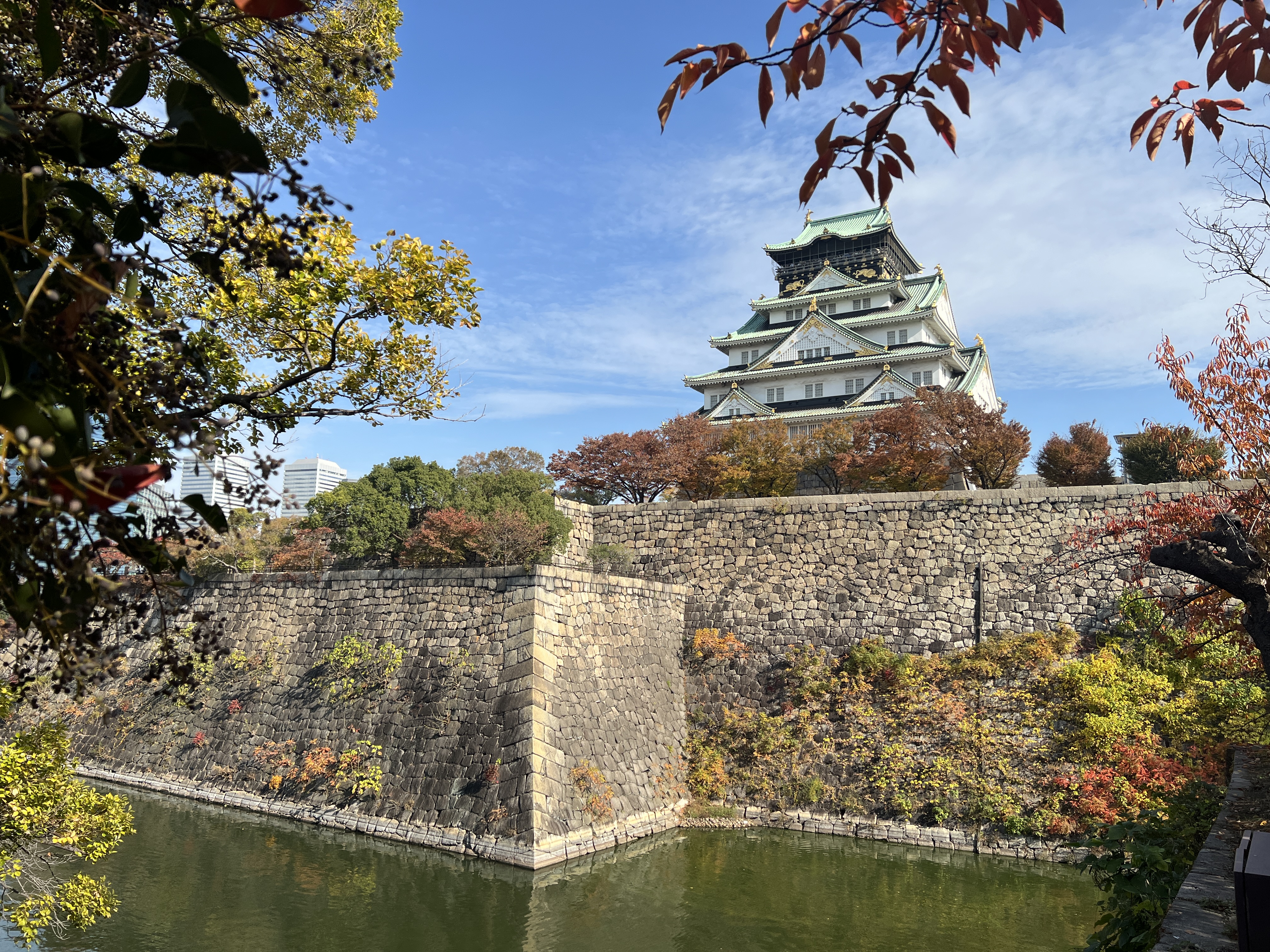
View of Osaka Castle from the southwest. (Photo by author)

Osaka Castle

We begin at Osaka Castle where Japan’s third-largest megalith is a part of one of the castle’s inner walls. Osaka Castle was built during the Shogunate Period when Japan was ruled by a hereditary military commander called a shogun. Numerous castles were established during this period. A practice known as feng shui, which was introduced to Japan from China around the 7th century, played a role in how shoguns and regional lords selected, oriented, and structured castles, castle towns, and even entire capitals. While not every decision was based on geomancy, feng shui principles were widely understood and frequently invoked from the medieval era onward.
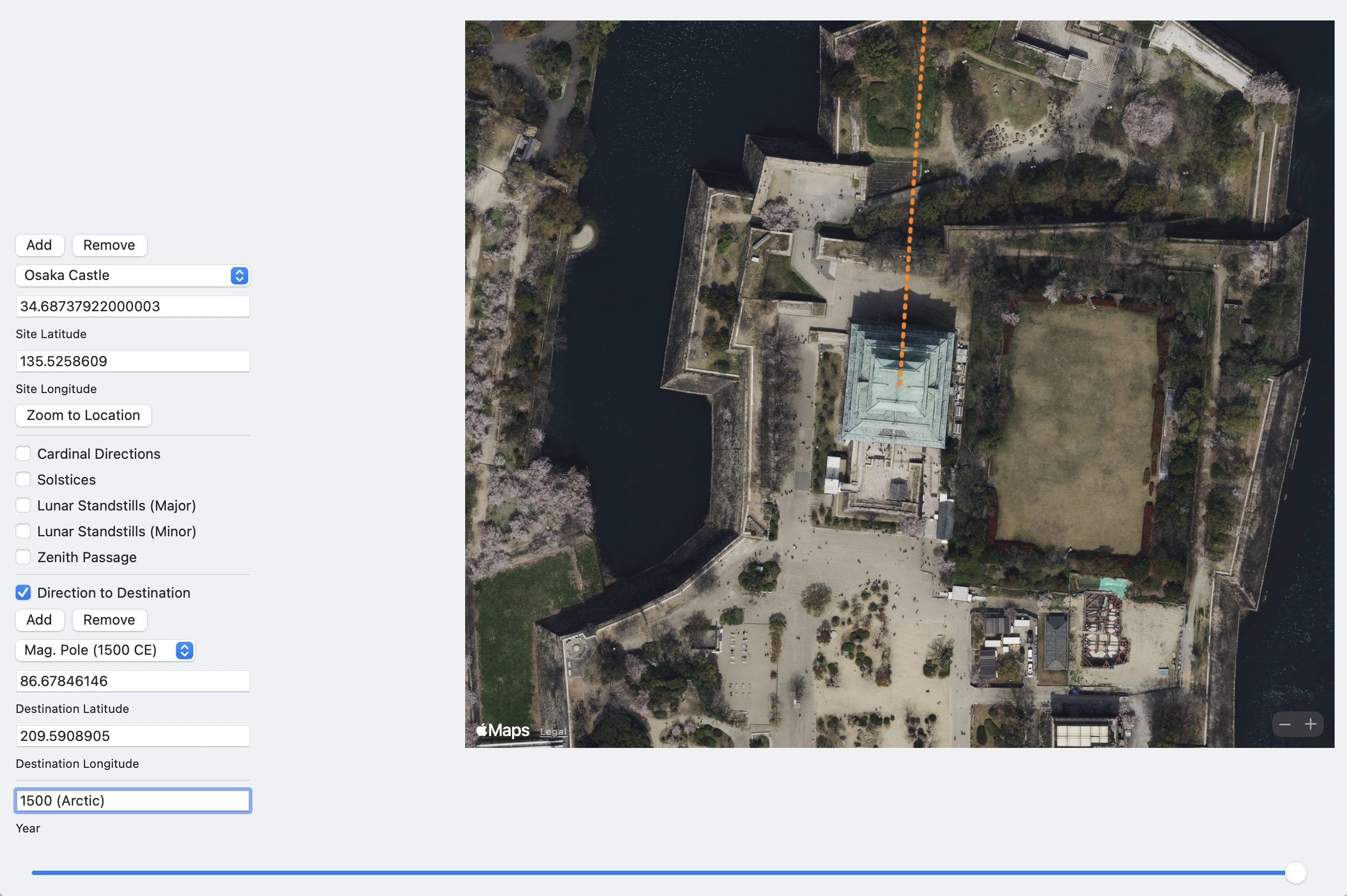
Orange dotted line the approximate direction of geomagnetic north c. 1500 CE.

Osaka Castle is aligned in the direction of geomagnetic north circa 1500 CE, which is close to its actual date of construction of 1597. (A similar practice appears to have been used in China to align enormous earthern mounds that served as tombs and mausoleums for its rulers.) During the Tokugawa shogunate in the 1620s, several large megaliths were incorporated into internal walls. The Tako-ishi (โ€œOctopus Stoneโ€), which is the largest stone in terms of surface area (59.43 mยฒ), is at the south end of the castle along the wall just inside the Sakuramon Gate. The Higo-Ishi, is the second largest stone in terms of surface area (54.17 mยฒ) but is estimated to be heavier (about 120 tons compared to 108 tons for the Octopus Stone). It is a part of the wall just inside the northwest entrance to the castle past the Kyobashi Gate. Where the Tako-ishi is aligned east-west, the Higo-Ishi is aligned to minor lunar standstills. Two paths through the Nishinomaru Garden west of the castle are aligned to major (M) and minor (m) lunar standstills.
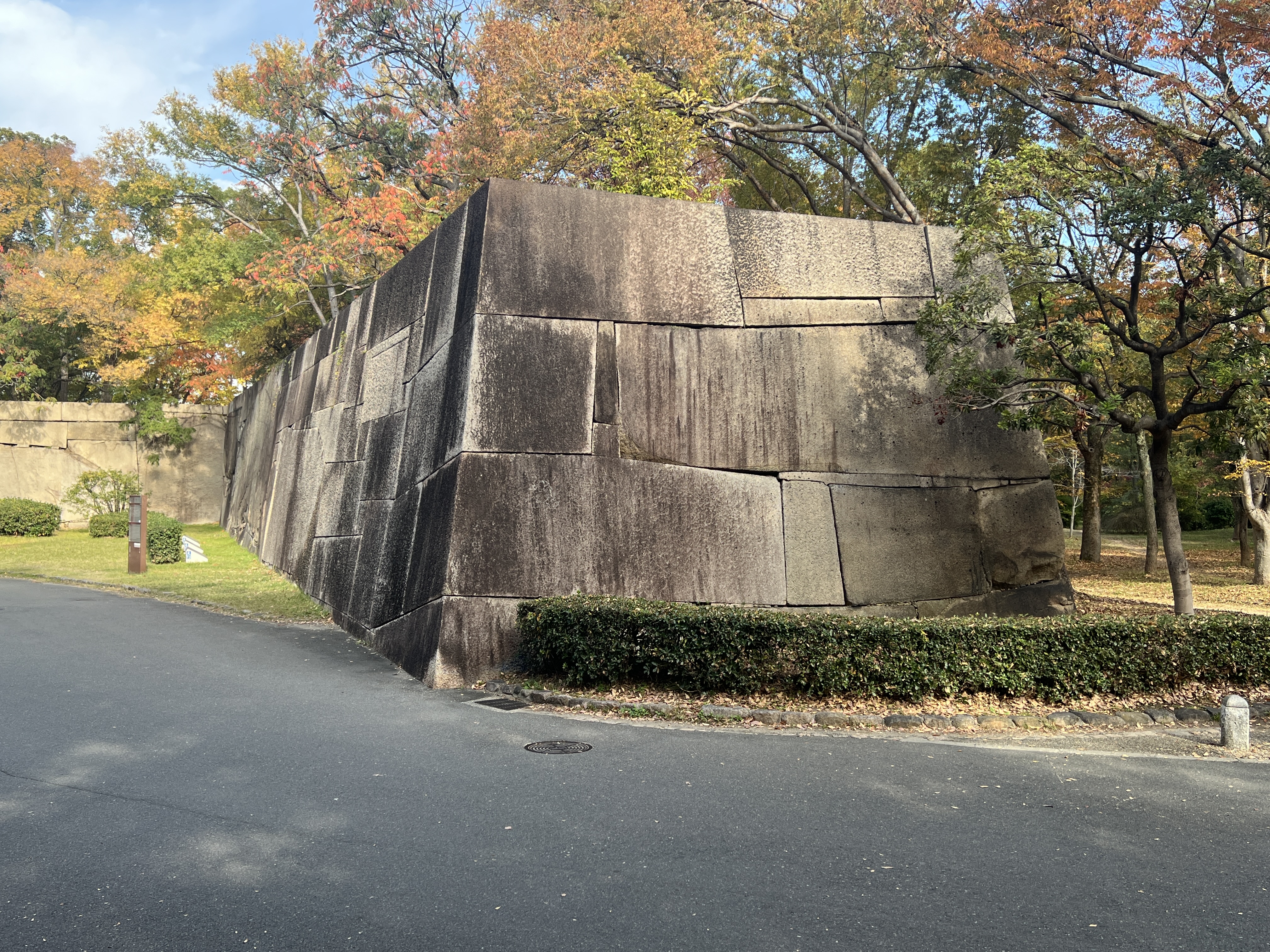
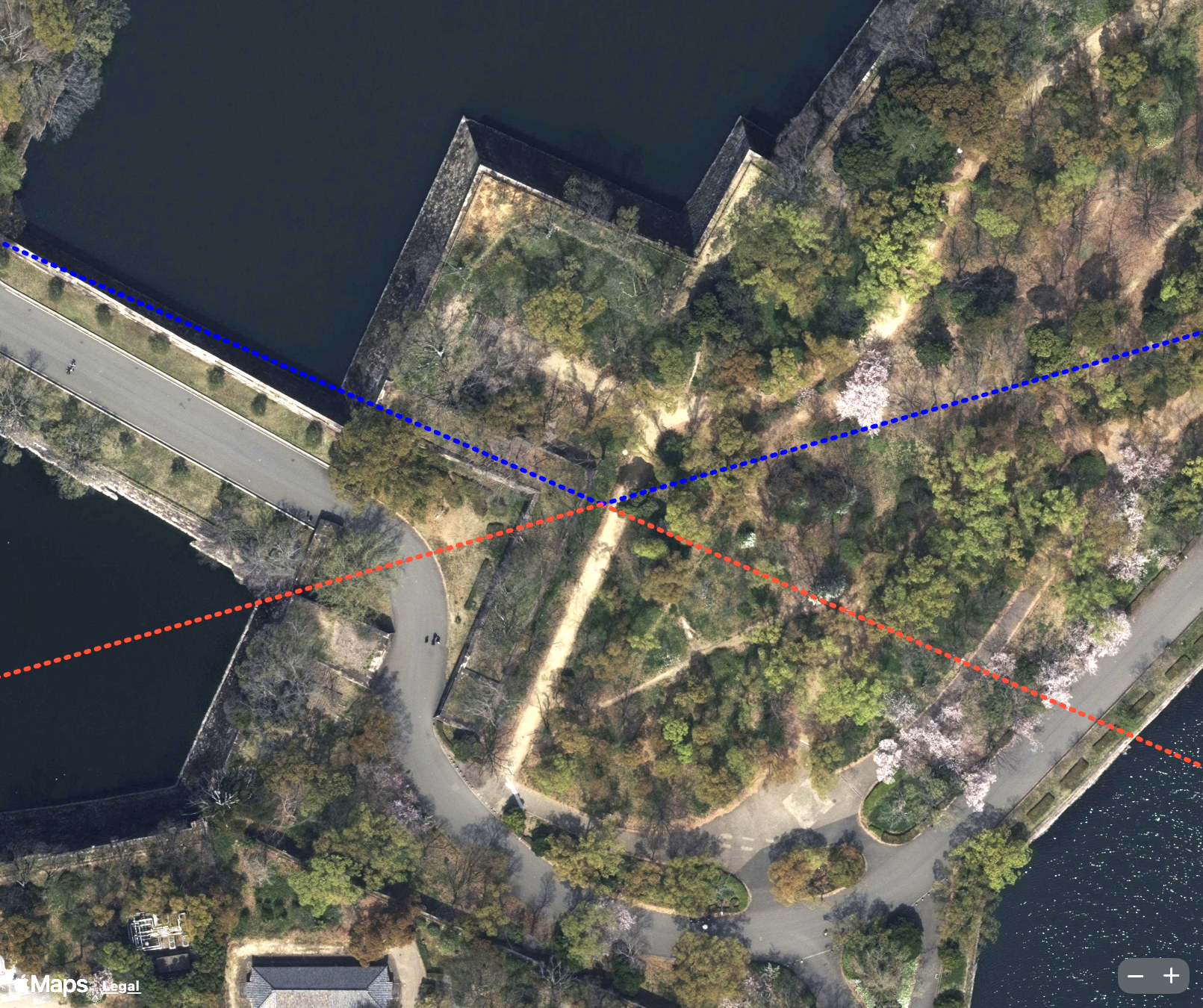
Inner castle wall that contains Higo-Ishi (left) and alignment of wall to minor lunar standstills (right). (Photo by author/Google Earth)

Ishi no Hoden

The Higo-Ishi is the largest megalith (by weight) at Osaka Castle and the third largest in Japan. Where the Higo-Ishi was quarried from islands in the Seto Inland Sea in the 17th century, the dating of the second-largest megalith is unknown. Ishi no Hoden (“Stone Treasure Hall”) is a 500-ton megalith cut from volcanic tuff in such a way as to appear to float above a pond. Philipp Franz von Siebold was the first Westerner to visit the site in 1826. The megalith is mentioned in an ancient historical record compiled from the year 713 CE onward known as the Harima Fudoki. The document says that it was built by Mononobe no Moriya, one of the strongmen of the 6th century, during the reign of Prince Shotoku, who has been considered one of the greatest figures in Japanโ€™s ancient political history. But there is no mention of what it was for. However, the entries in the records are in conflict because Moriya died in 587 before Prince Shotoku came to power in 593.
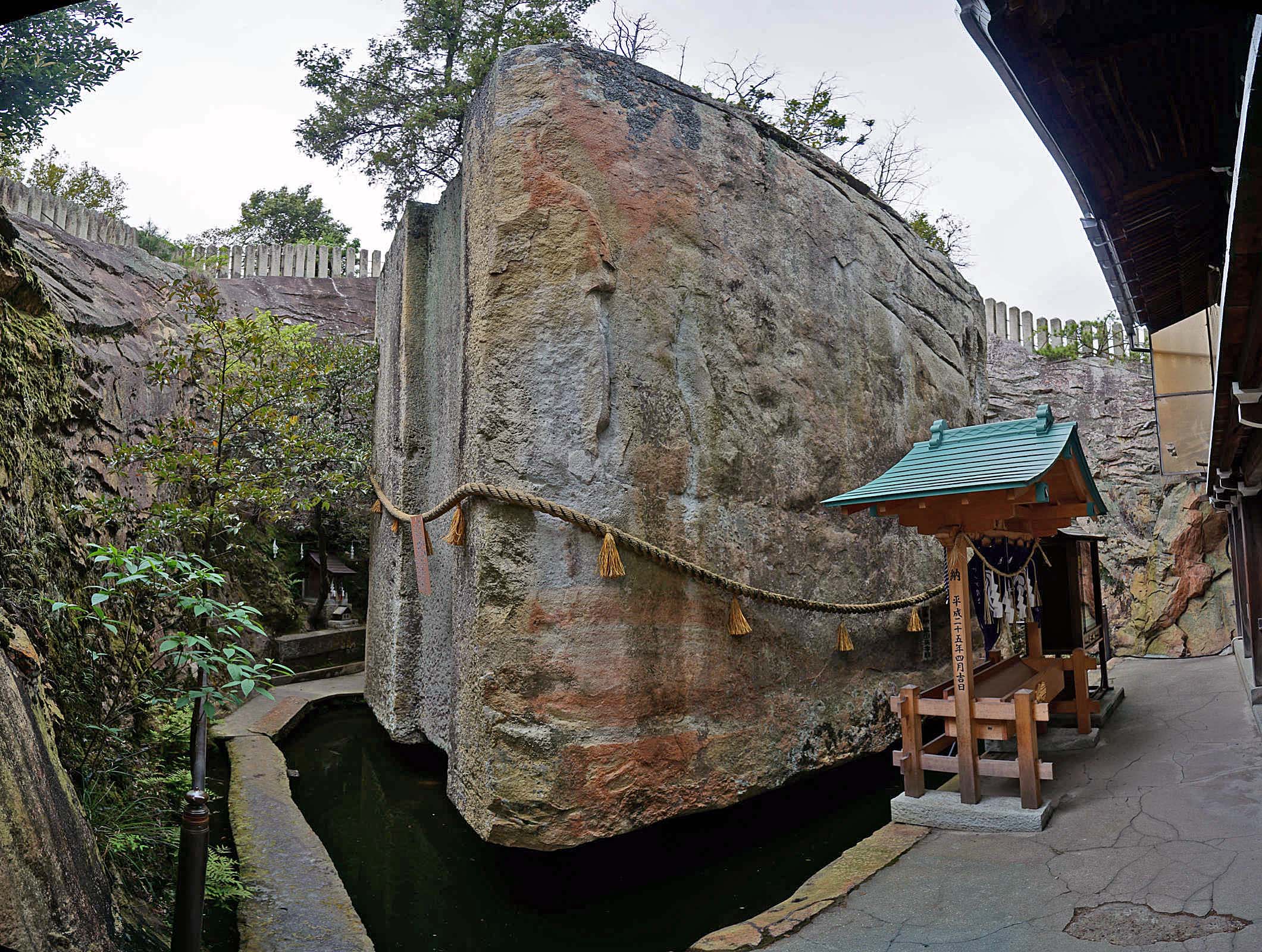
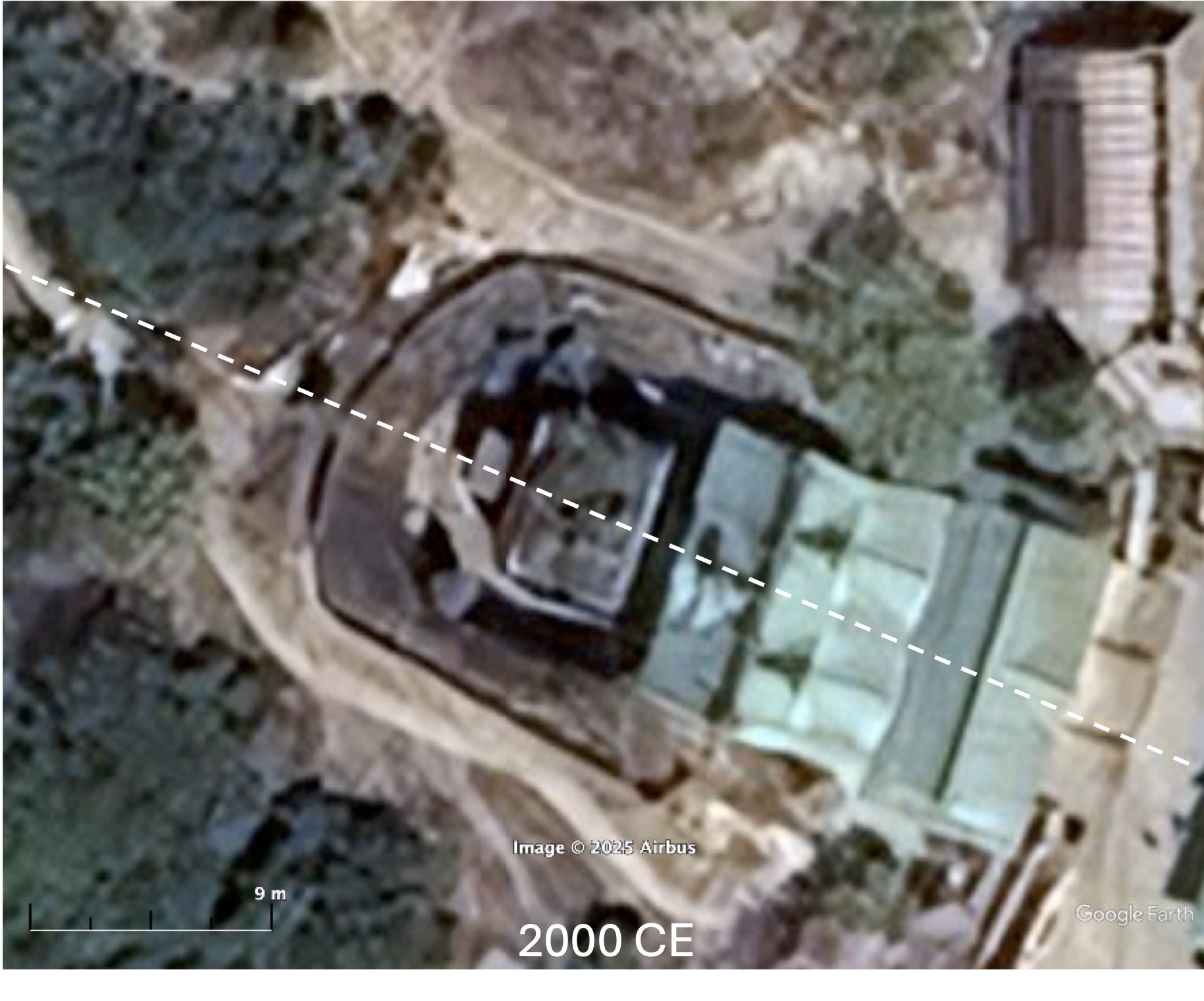
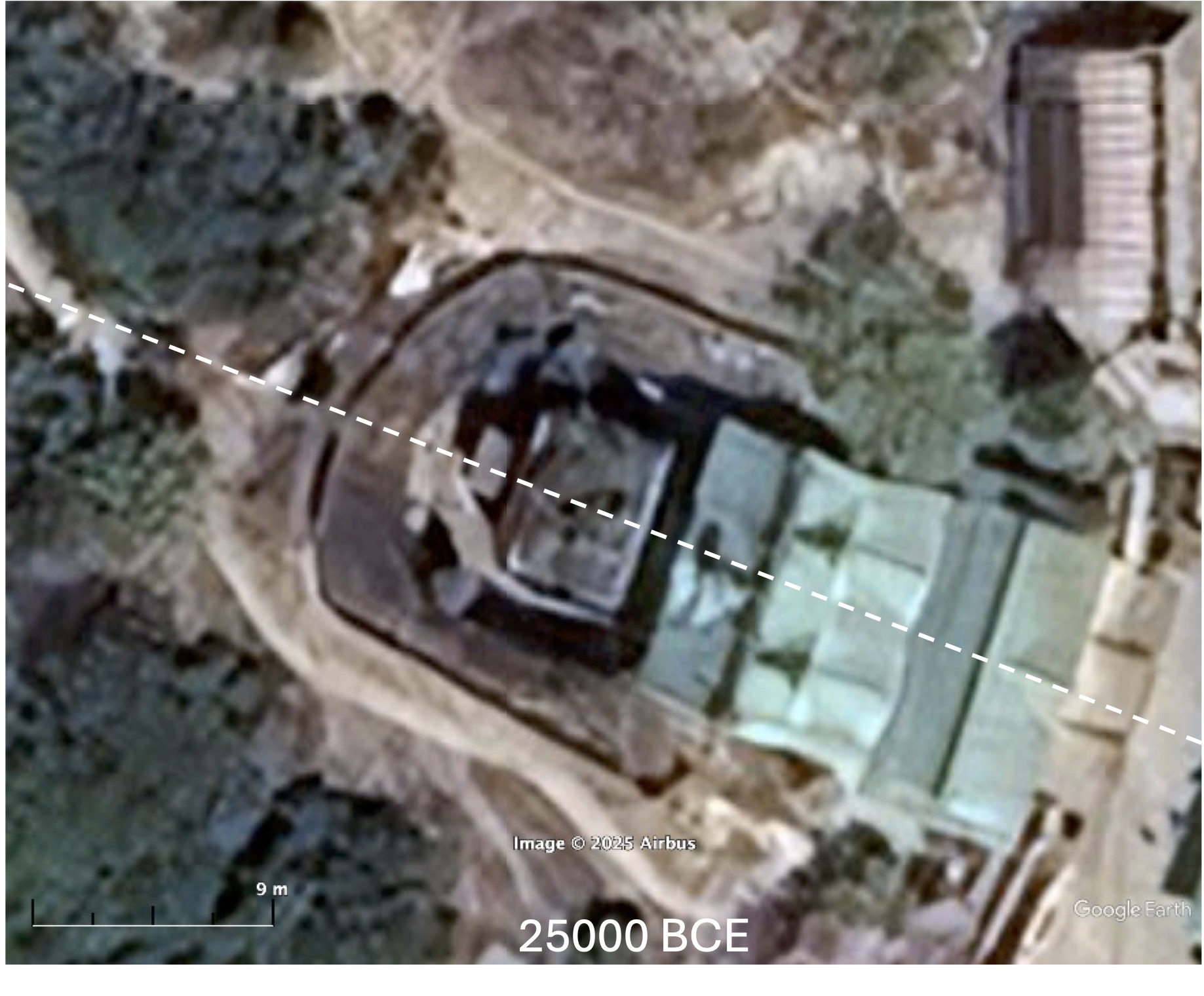
Ishi no Hoden (left) and alignments to minor lunar standstills 2000 CE (top right) and 25,000 BCE (bottom right). (Z Tanuki/Creative Commons and Google Earth)

Ishi no Hoden, which is a sacred object of the adjoining Oshiko Jinja Shinto shrine, is rotated about 20ยฐ south of east. Unlike the Shimogamo Shrine and Kenninji Temple that are rotated to view sunrise over an elevated horizon on the equinox, there are no hills or mountains immediately east of Ishi no Hoden. Its north-south axis is also well outside the range of magnetic declinations over the past 10,000 years. There is, however, another possible astronomical explanation for its orientation. As shown above, the megalith separated from the surrounding bedrock appears to be roughly aligned in the direction of minor lunar standstills.

Lacking specific evidence, Ishi no Hoden is traditionally dated to the Kofun Period. Kofun alignments in the direction of minor lunar standstills suggest the Moonโ€™s 18.6-year Metonic Cycle was known in Japan at that time. Although volcanic tuff is relatively easy to cut and shape compared to granite, there are no other known sites in Japan where a structure of this size was cut out of the native rock and shaped in such a manner.

Many mysteries surround Ishi no Hoden. According to one story, two gods were sent here to build a stone palace. They were given only one day to do it. The local gods rebelled, and by the time the rebellion was suppressed, dawn had broken and the structure was unfinished. The two gods left, saying their spirits would reside within the massive rock and protect the land for eternity.
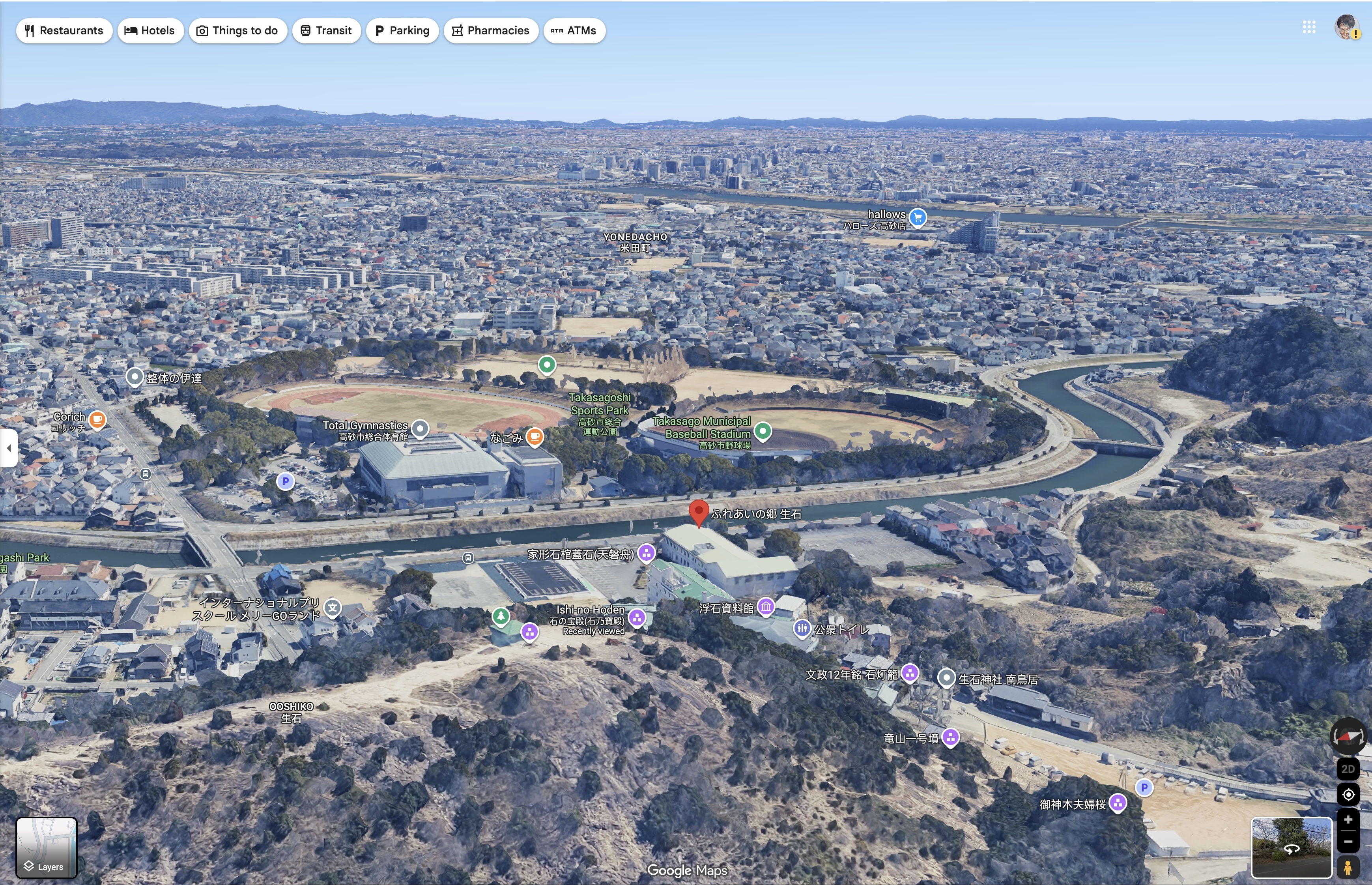
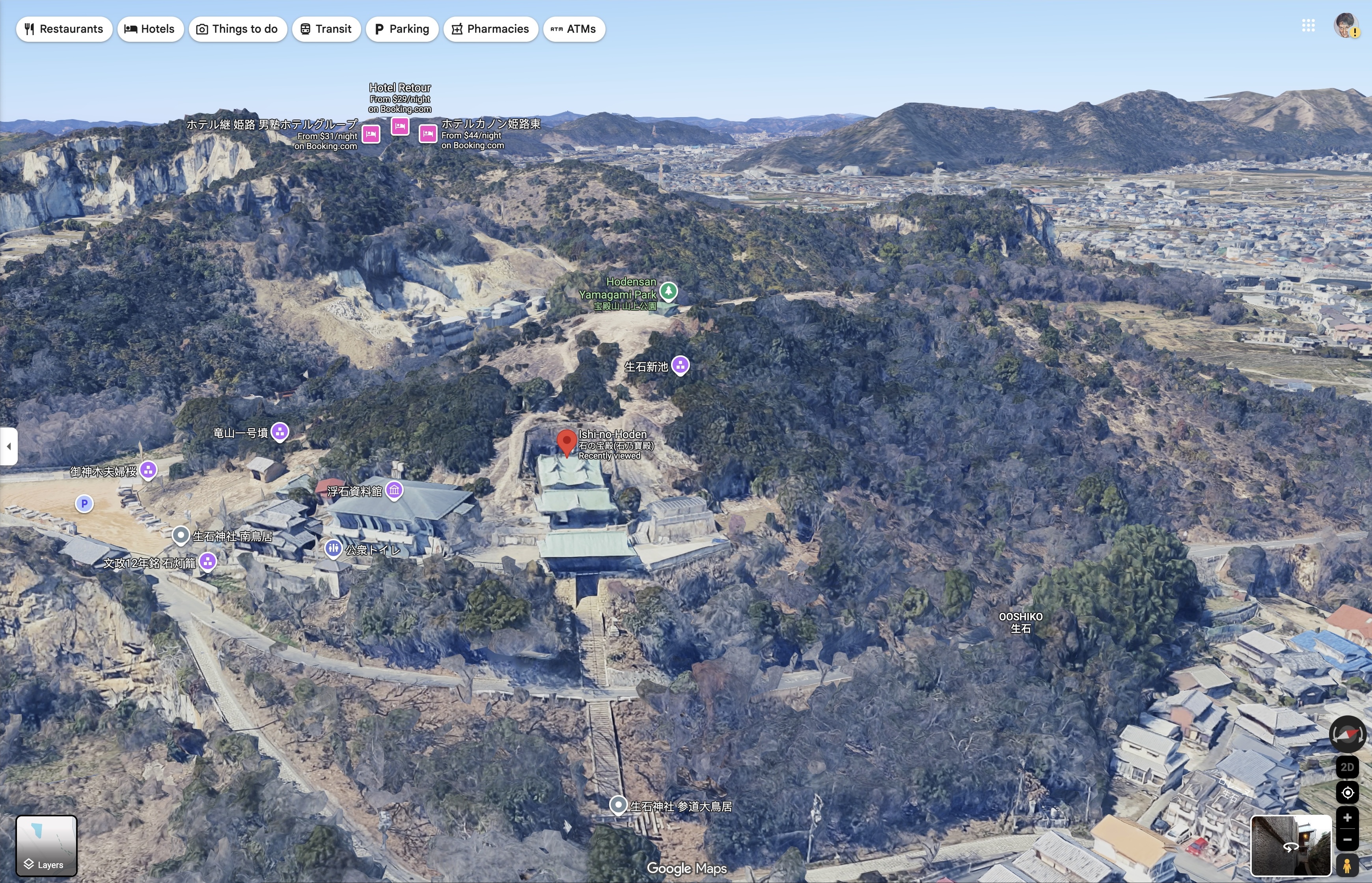
Google Map views of Ishi no Hoden from the northeast (left) and southwest (right).

According to legend, the Oshiko Jinja Shinto shrine was founded in 97 CE during Emperor Keiko’s reign with โ€œdivine instructionโ€ to worship the giant floating rock. If this is true, then Ishi no Hoden existed before the Kofun period. This is consistent with its alignment as the structure becomes more closely lined up with minor lunar standstills as you go back in time. Changes in Earthโ€™s obliquity or axial tilt cause the direction of solstices and lunar standstills to change by several degrees over a 41,000-year cycle. The best alignment with minor lunar standstills would have occurred approximately 25,000 BCE. As shown above, its placement near the top of a hill would have provided an excellent view of the Moon rising in the southeast sky at a minor lunar standstill.
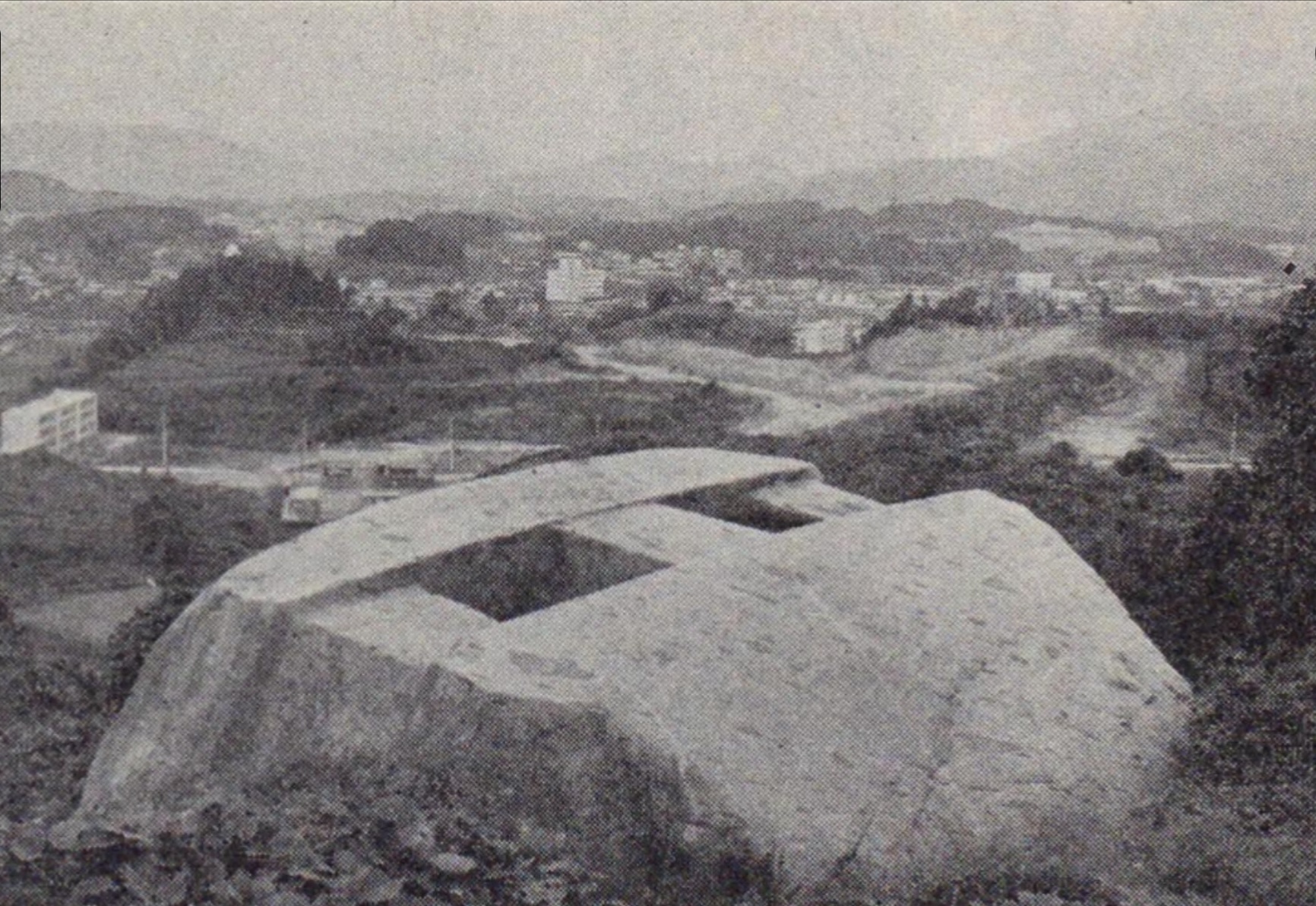
Historical photo of Masuda no Iwafume

Masuda no Iwafume

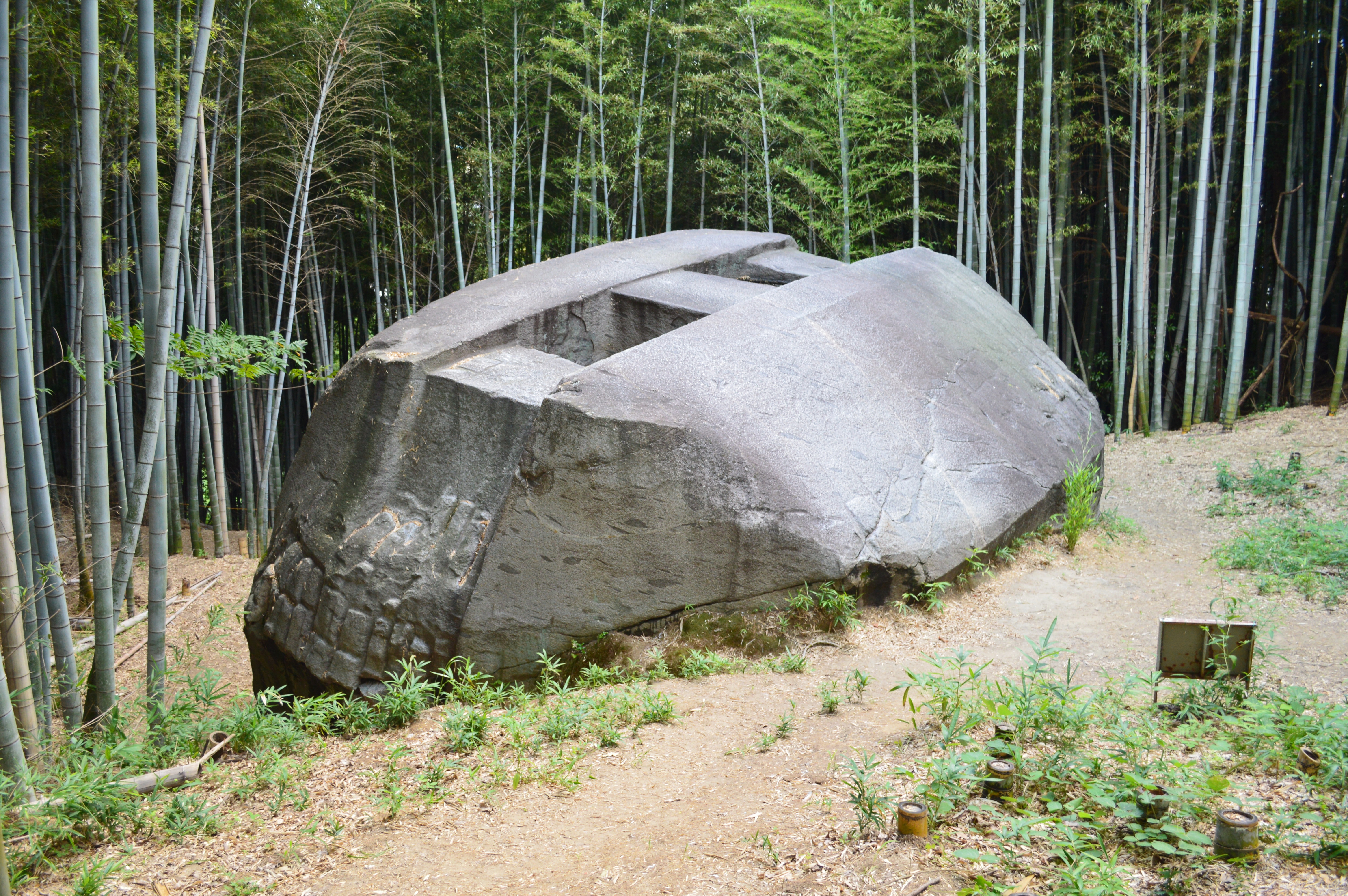
Masuda no Iwafune (โ€œRock Ship of Masudaโ€) is the largest megalith in Japan, weighing an estimated 800 to 1,000 tons. Like Ishi no Hoden, it was cut from the native bedrock, not cut and transported like the large megalith found in Osaka Castle. Masuda no Iwafune first appears in the Yamato Meisho Zue โ€“ a famous Edo-period Japanese woodblock-printed guidebook from 1791, focusing on the historic Yamato Province (modern-day Nara area), featuring detailed text and illustrations of famous places, temples, and shrines.
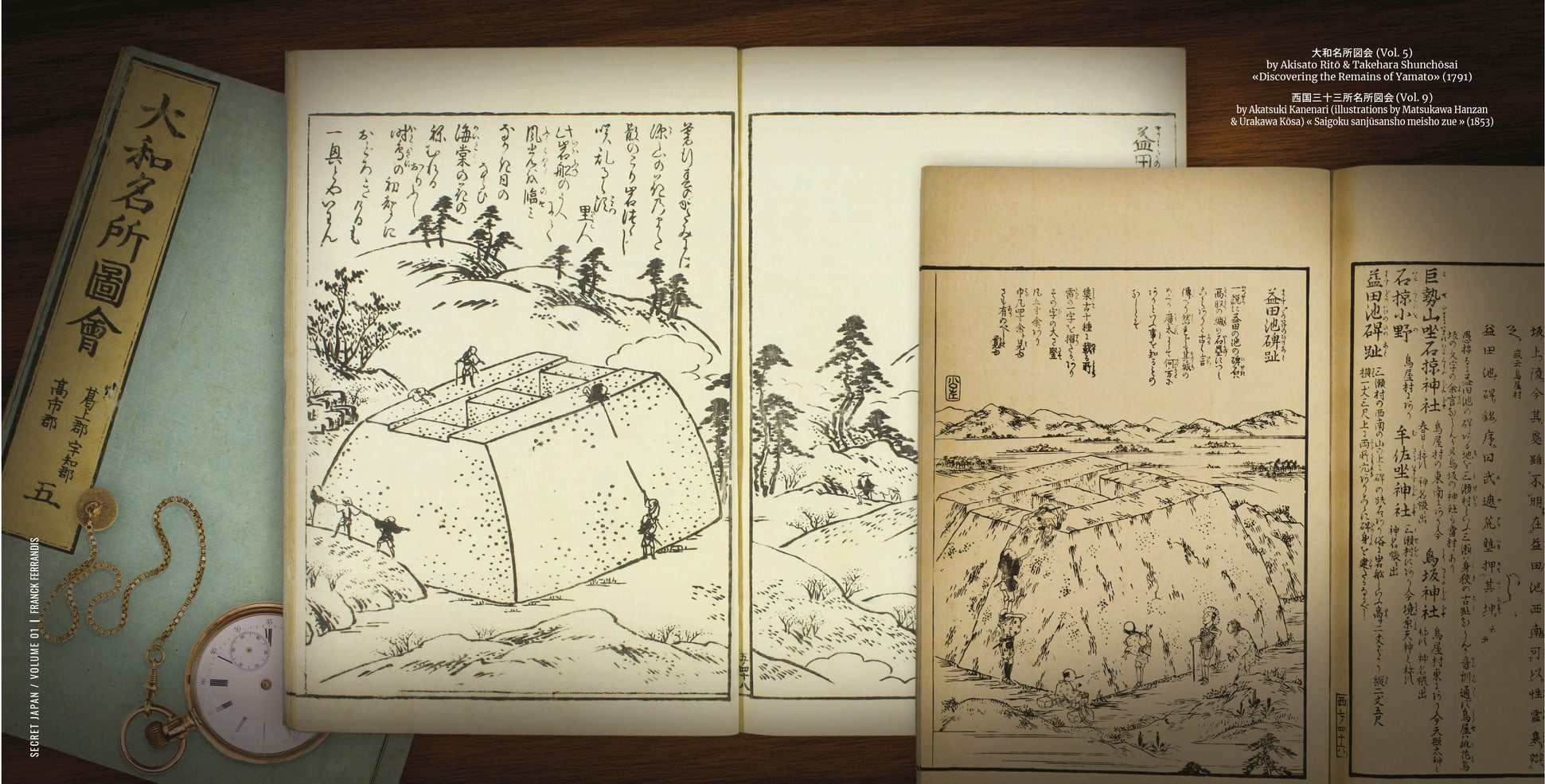
Artist depiction of Masuda no Iwafune in Yamato Meisho Zue.

The megalith is approximately 11 meters (36 feet) long, 8 meters (26 feet) wide, and 4.7 meters (15 feet) high. It lies in a trench with its long axis running roughly eastโ€“west and sloping down from north to south. Partially obscured by trees, it is difficult to precisely measure its orientation from Google Earth imagery as we have done for the other sites. Using a historical photo of the site and a 3D model, we can confirm that its long axis is aligned roughly east-west.
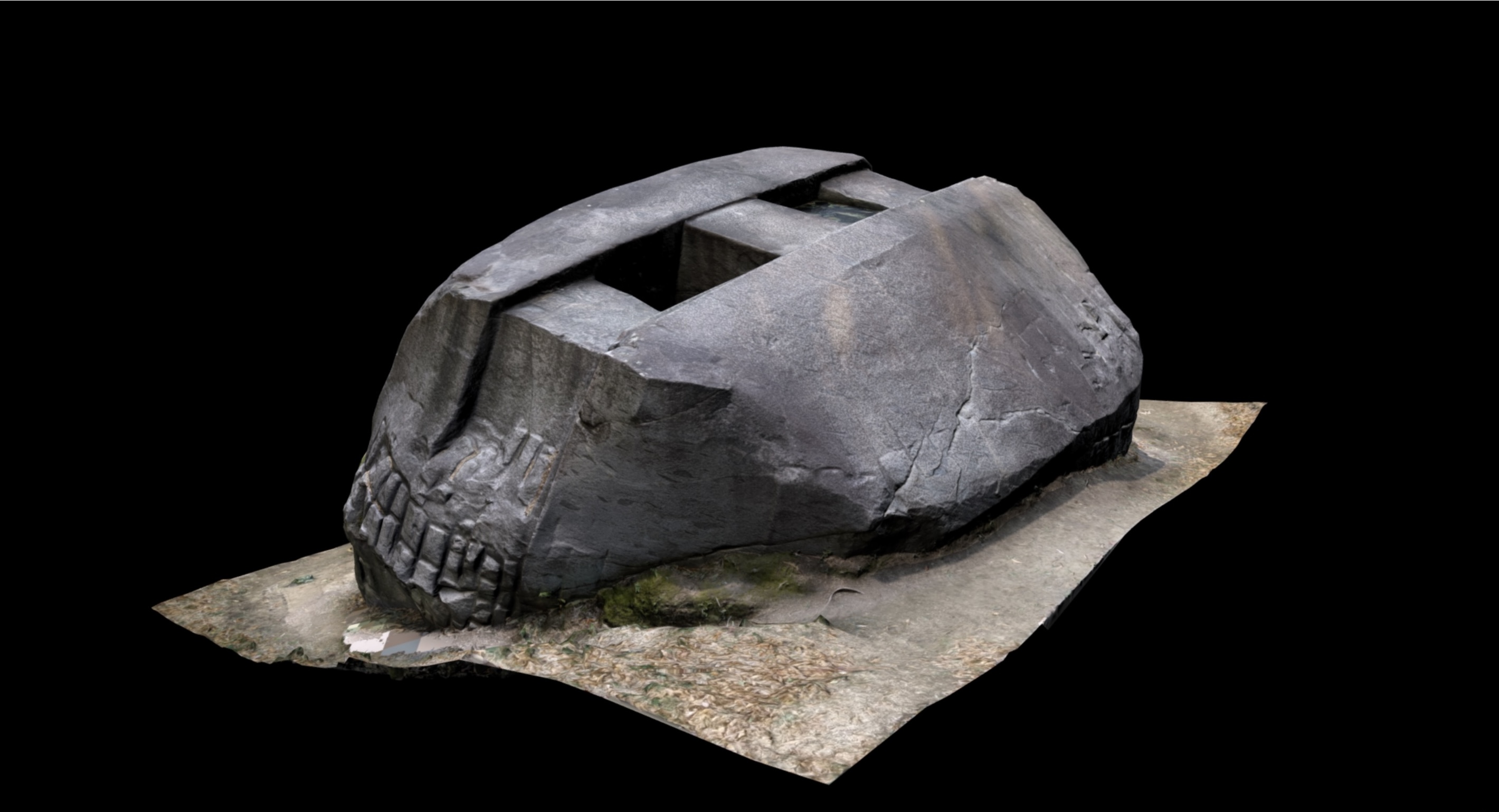
Click to display interactive 3D model by Atsushi Nakabayashi.

Using the most recent 2025 Google Earth image, a section of its long dimension side is visible and appears to be rotated about 4ยฐ south of east. As shown below, this is in the direction the Sun would rise just over the hills to the east on the equinox. Unlike Shinto and Zen sites that are rotated slightly to be perpendicular to the equinox sunrise direction over an elevated horizon, Masuda no Iwafune lies parallel to it.
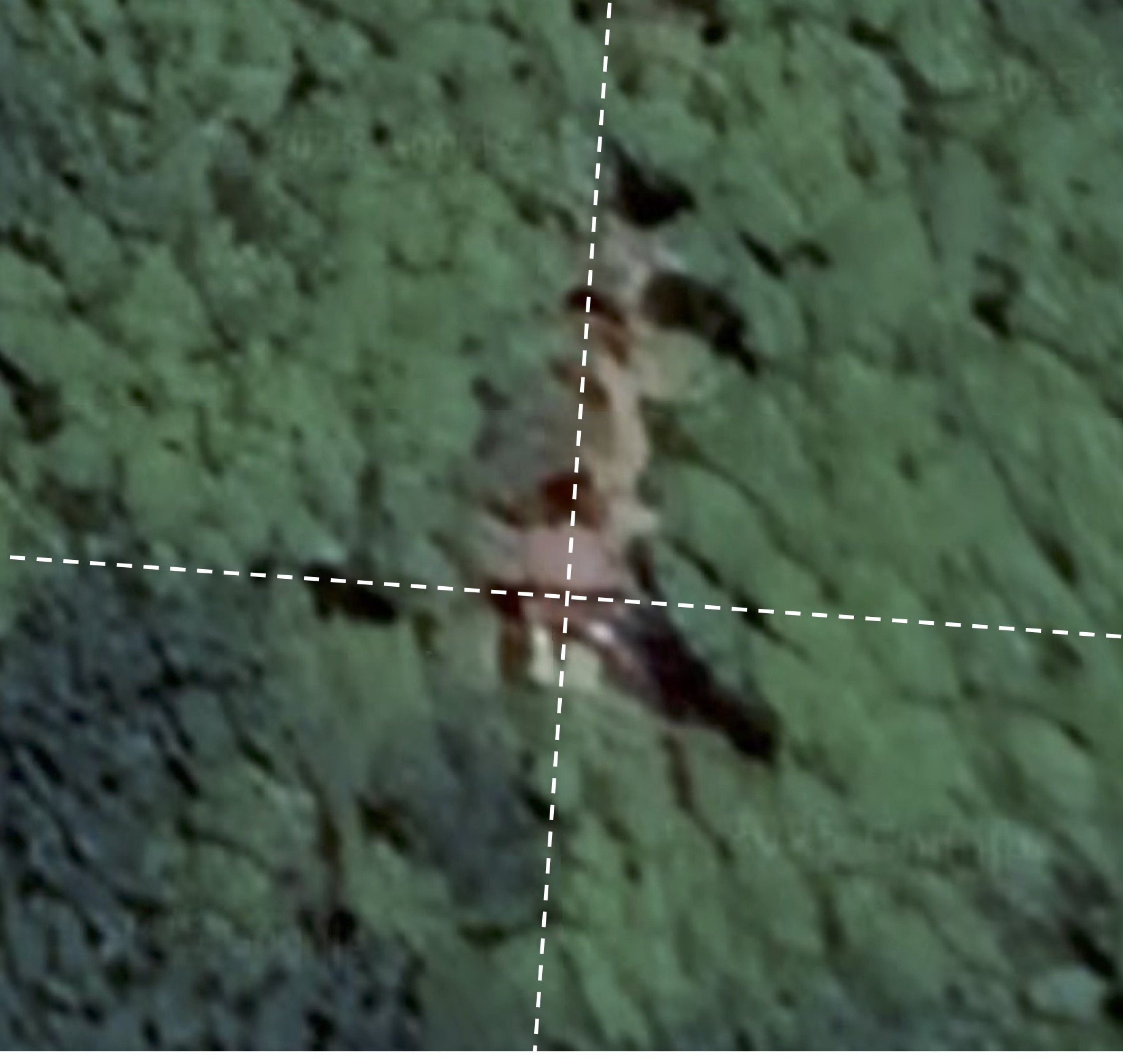
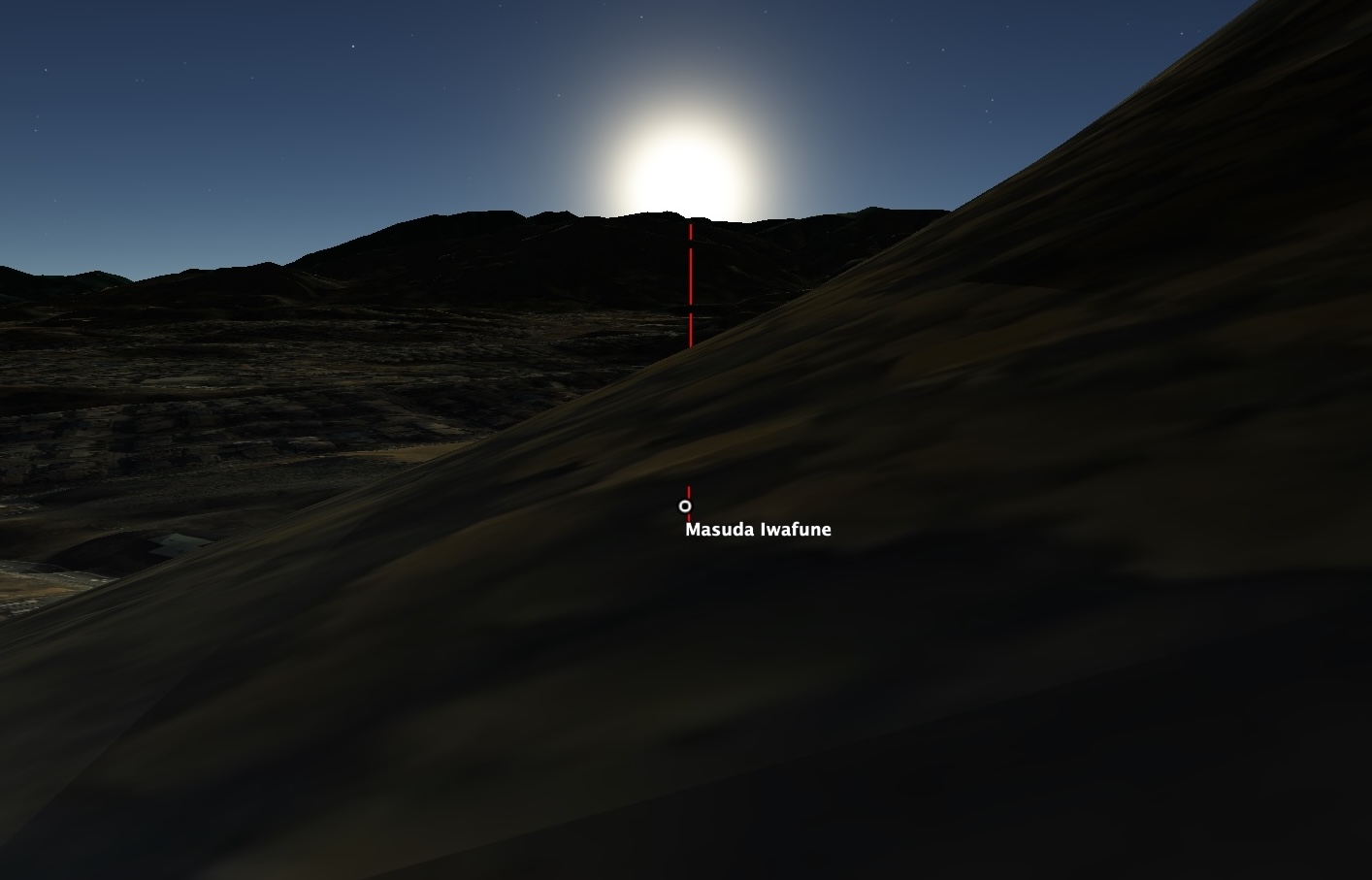
Visible part of Masuda no Iwafune with reference lines rotated 4ยฐ east of north (left) and horizon view at 4ยฐ south of east at sunrise on the equinox. (Google Earth)

Although it is generally dated to the Asuka and Nara periods, Masuda no Iwafune is not mentioned in Japanese historical chronicles and ancient records from that time. This seems strange as Japan’s centralized government was in the Asuka region (Nara Prefecture) in the early 6th century, moving to the first permanent capital, modern Nara, around 710, and finally settling in Kyoto in 794, which remained the seat of the imperial court for centuries.

Lacking other historical references, we turn to folklore and legend for clues concerning its origin and purpose. The name Iwafune literally means “stone boatโ€. Local folklore claims that it is a celestial ship in which the gods descended to Asuka. Some versions say the gods abandoned the stone ship after it became too heavy. Others say it marks a site where a deity landed during the creation of Japan. A long-standing folktale says the stone was meant to be a tomb for a ghost or giant, but the builders were frightened by supernatural events and abandoned the work. Sometimes the โ€œgiantโ€ is identified with monsters who supposedly lived in the hills of Asuka. This story may reflect the stoneโ€™s incomplete appearance and mysterious trench. According to another legend, Masuda no Iwafune, which lies between ancient shrines on the mountain, is a boundary marker placed by the gods themselves to delineate the sacred mountain. Some villagers historically believed it was a kamiโ€™s dwelling stone and is one of the reasons it has never been removed or cut for building stone despite being granite.

Current opinion is that Masuda no Iwafune was a tomb that was started but never finished sometime during the Asuka and Nara periods.

Discussion

Structures built during the Kofun Period appear are aligned astronomically to the arc of the Sun and Moon, and in some cases to the southernmost rising and northernmost setting of the Sun and Moon. Lacking other explanations, several kofun might have been aligned geomagnetically like the Chinese pyramids. Heavily influenced by Chinese Buddhist architectural traditions and indigenous beliefs, temples built during the Shinto and Zen periods tended to be aligned to the cardinal directions. Later influenced by Chinese geomancy, castles and the surrounding towns built during the Shogunate Period were often aligned in geomagnetic directions.
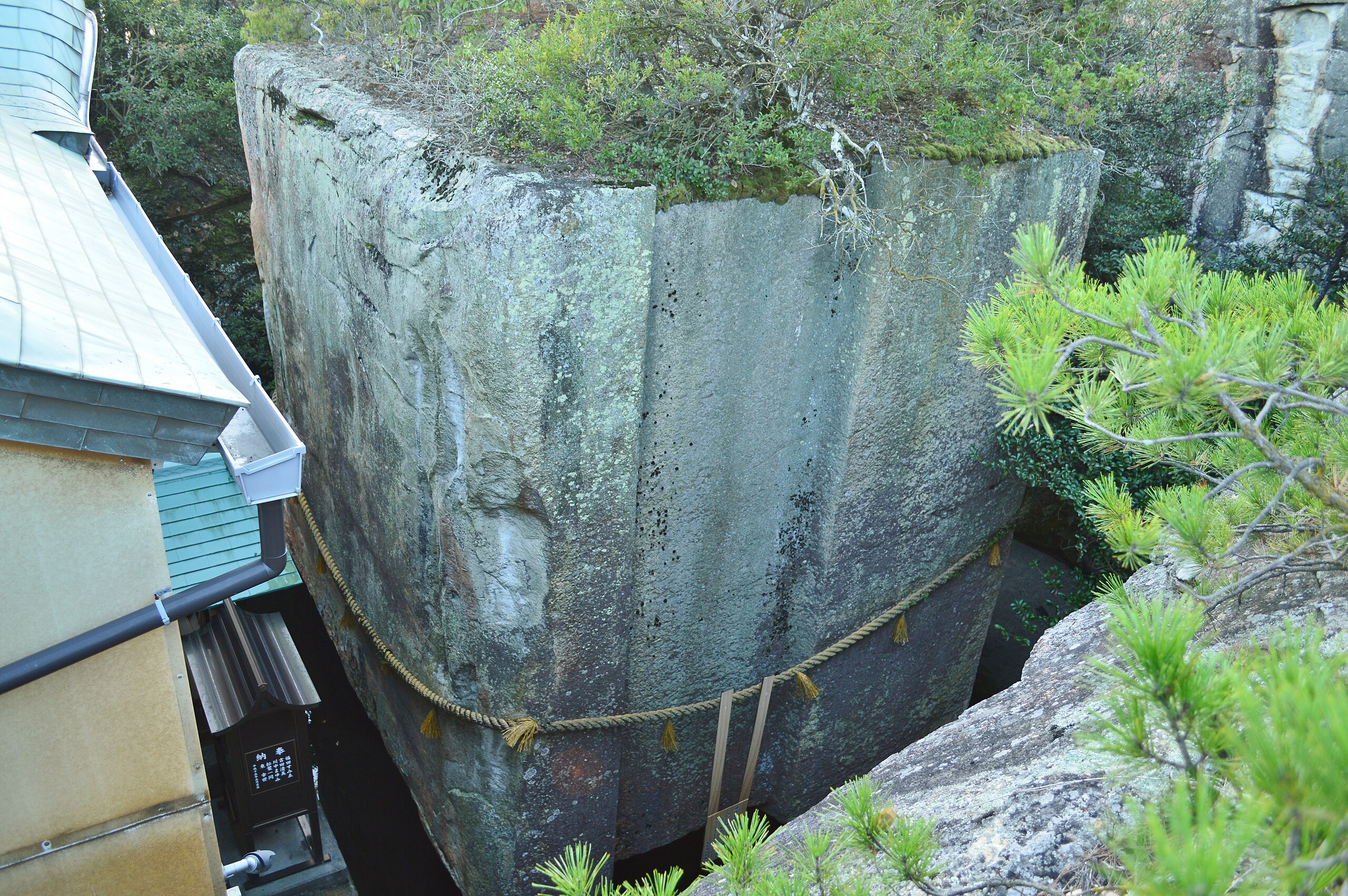
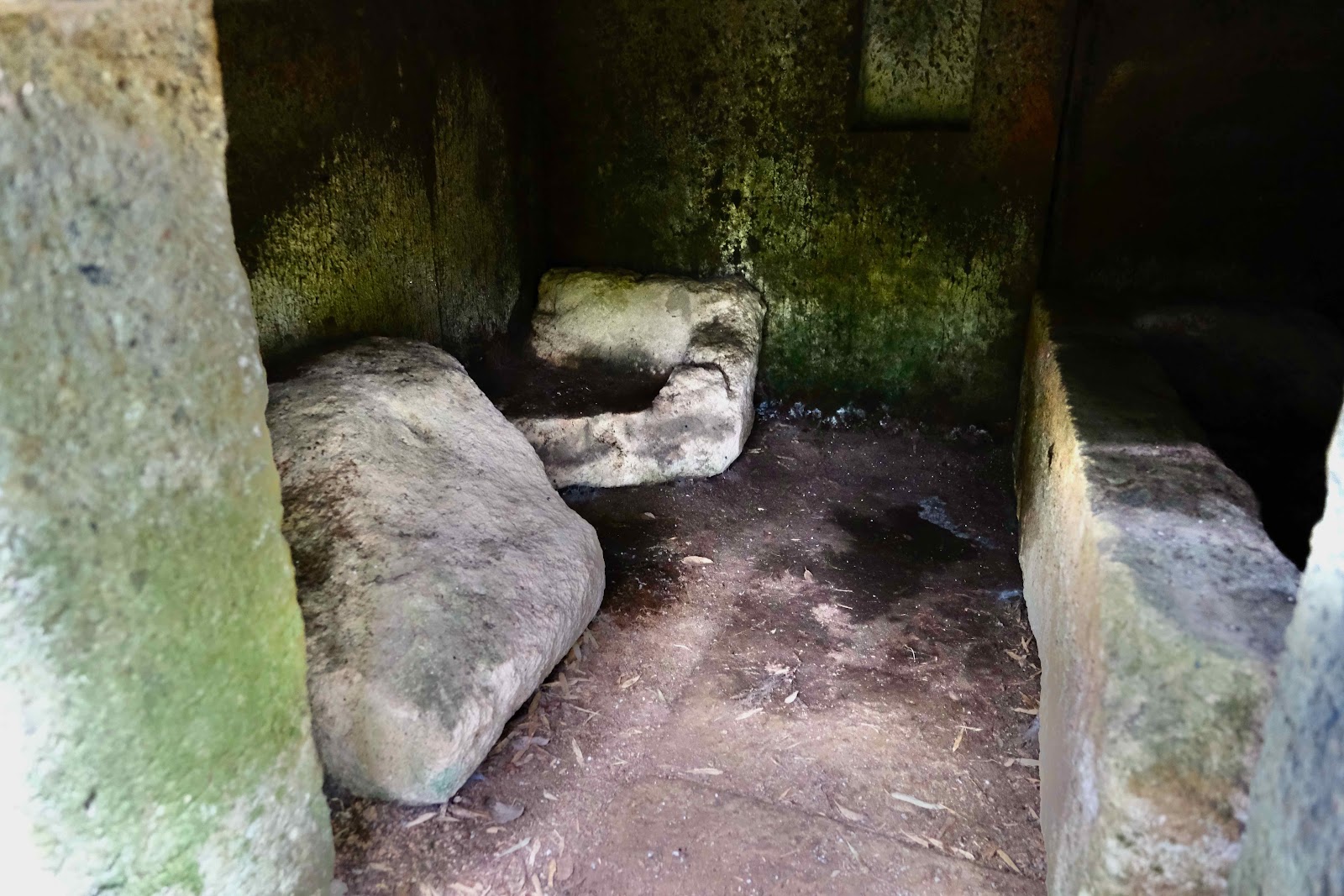
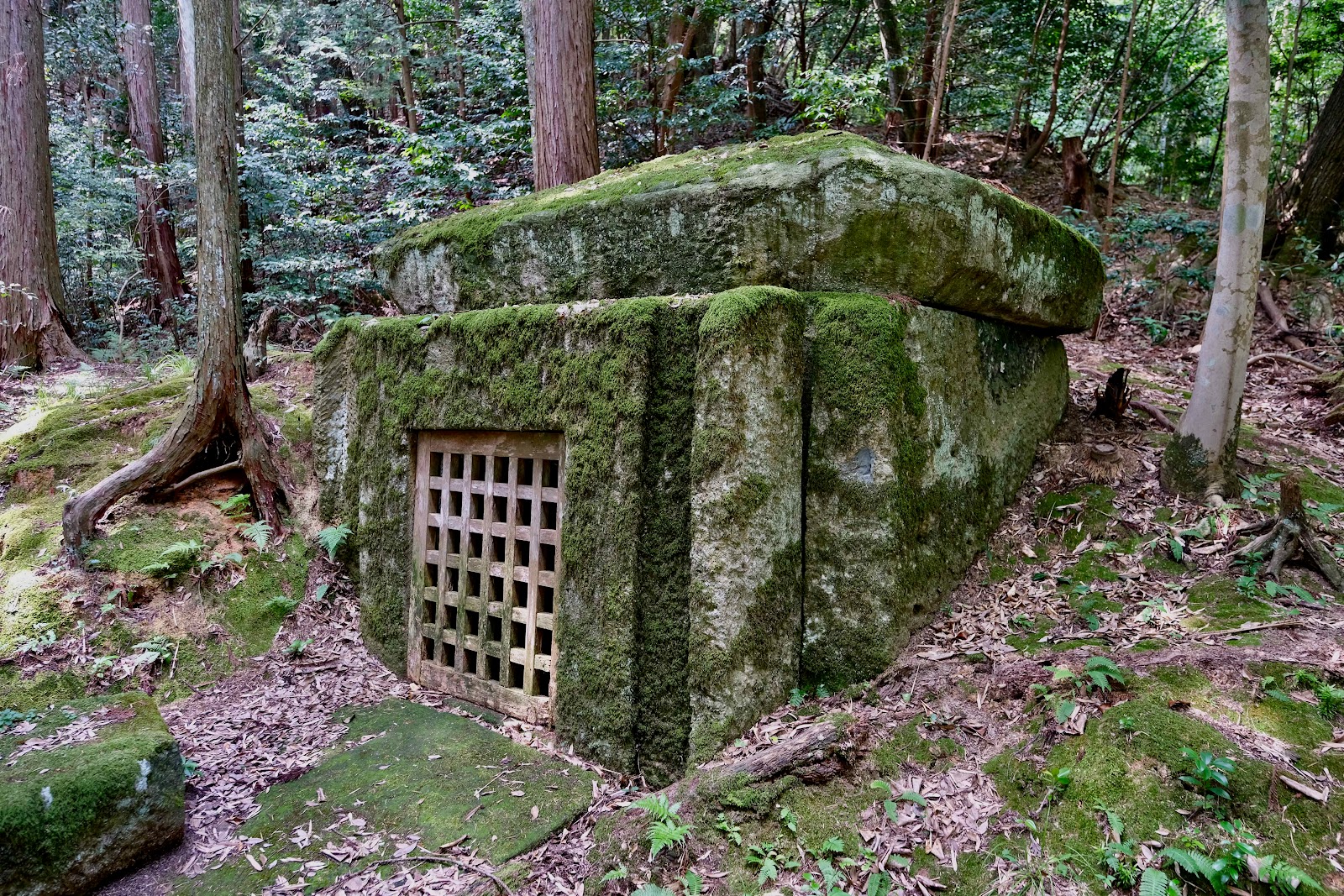
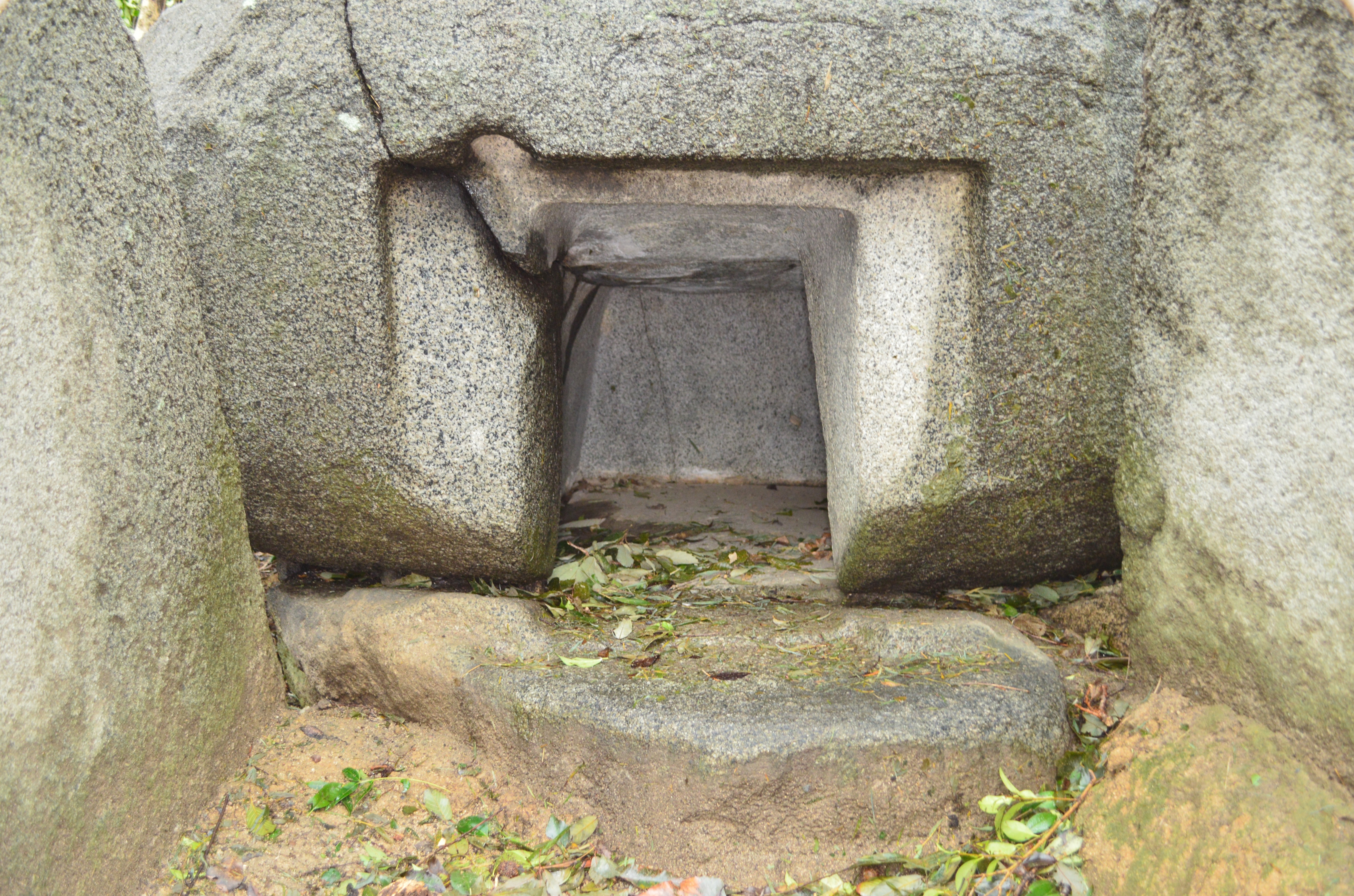
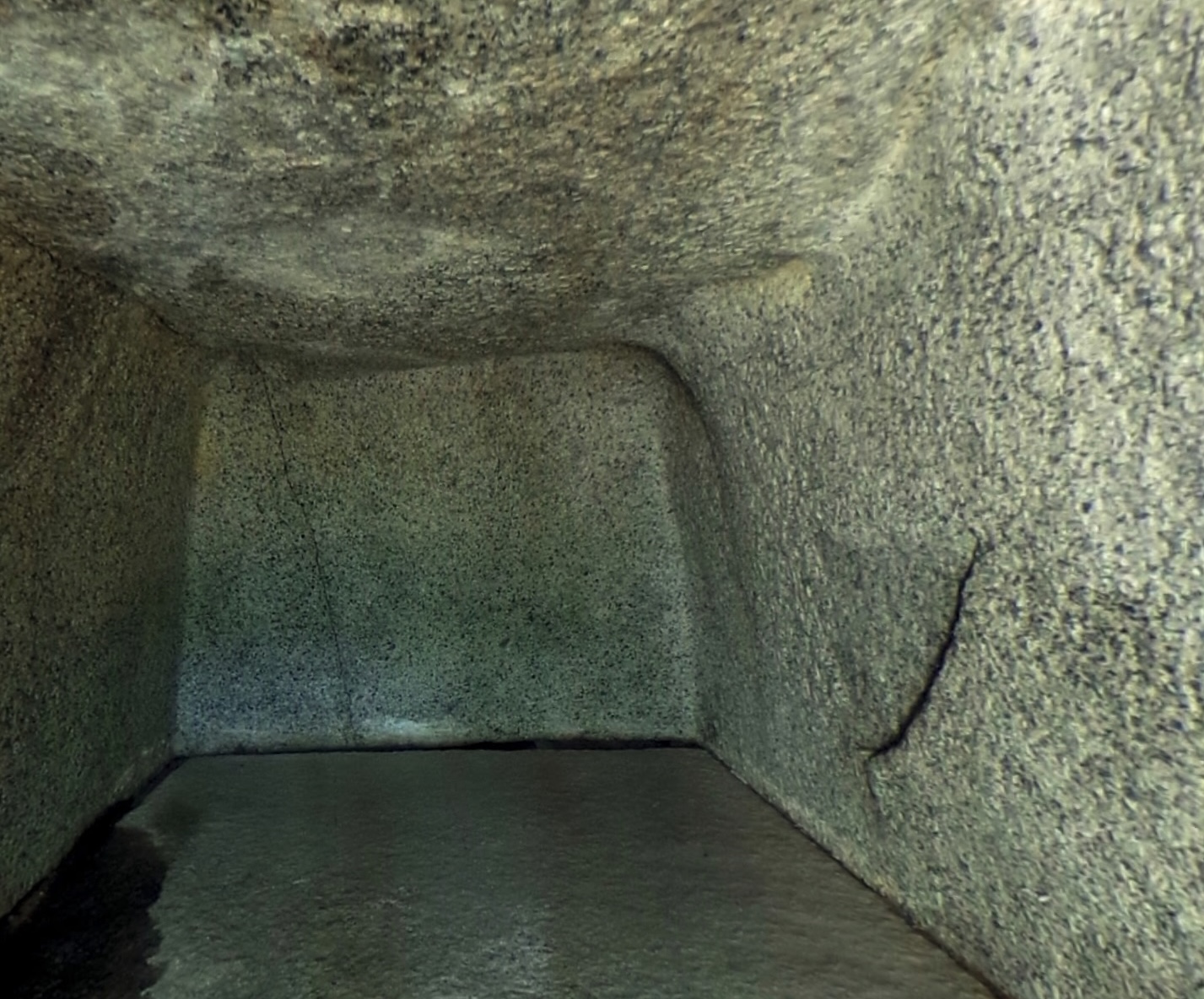
Ishi no Hoden (top left), Iinashi Iwafune Tumulus (middle left) and interior (bottom left). Masuda no Iwafume (bottom right), Ishinohoden Tumulus (middle right) and interior (top right). (Saigen Jiro and others)

Comparing Masuda no Iwafune, Iinashi Iwafune Tumulus, Ishi no Hoden, and Ishinohoden Kofun, counter to expectation, Masuda no Iwafune is similar in material (granite) and stonework to Ishinohoden Kofun, and Ishi no Hoden is similar in material (volcanic tuff) and stonework to Iinashi Iwafune Tumulus. All four structures are conventionally dated to the late Kofun Period. Based on the alignment trends of the Kofun, Shinto/Zen, and Shogunate periods, the cardinal alignments east-west of Masuda no Iwafune and north-south of Ishinohoden Kofun would place them in the Kofun to early Shinto/Zen periods. The same is probably true for the Iinashi Iwafune Tumulus.

Based on its approximate alignment to the Moon, Ishi no Hoden could be dated to the Kofun Period. However, as noted earlier, its alignment to minor lunar standstills is off by a few degrees (Figure 3). That its best alignment would have occurred c. 25,000 BCE suggests the possibility that it could be much older. We present this as a mathematical observation and not a dating proposal as no archaeological evidence currently supports such antiquity in Japan. That said, given the Jomon did not have the know how to cut, shape, and align a stone of such size, if such a claim could be substantiated it would open the possibility that Ishi no Hoden was created by some unknown civilization thousands of years before the Jomon.

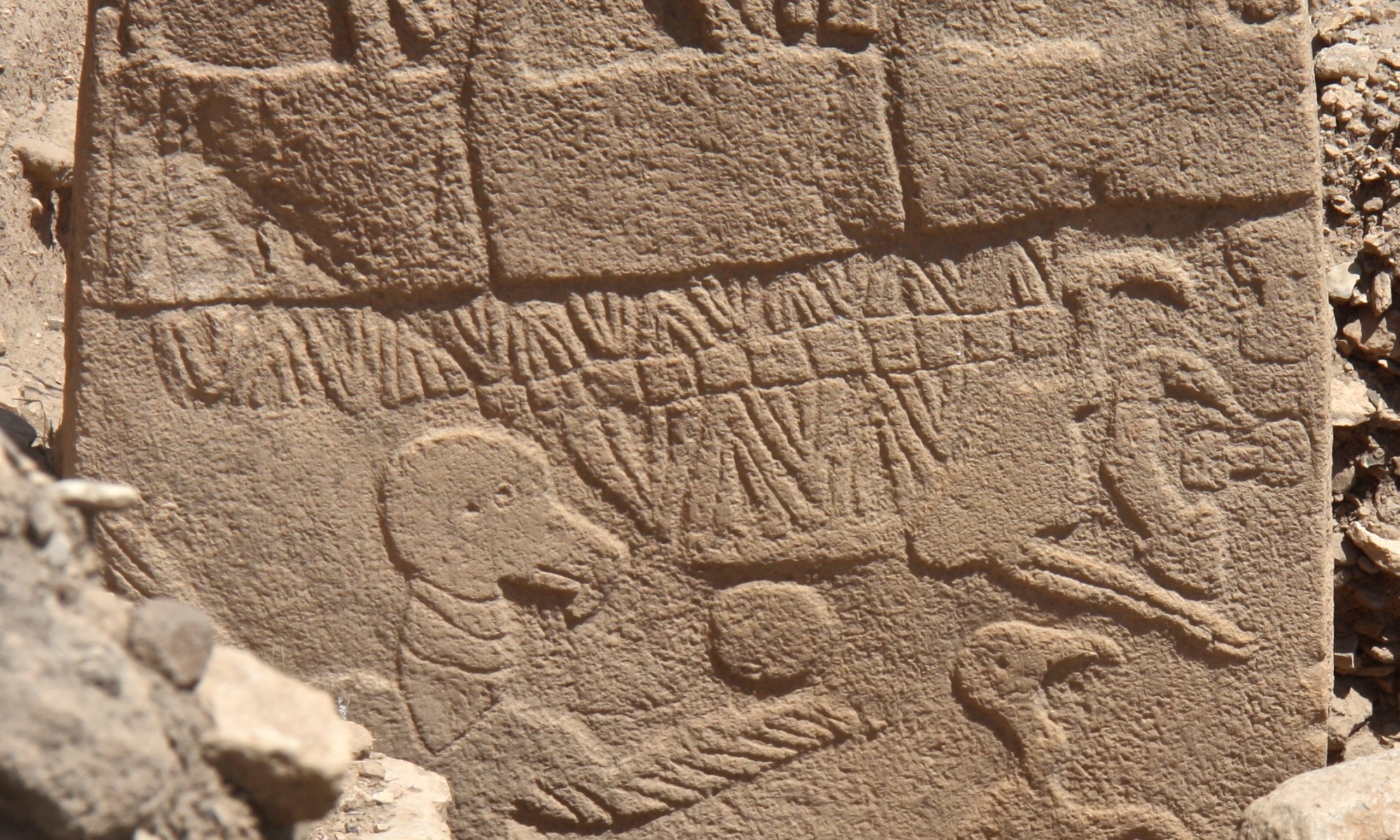
Before Gรถbekli Tepe โ€“ Evidence of Even Older Civilizations in Anatolia

An investigation of astronomical orientations at Gรถbekli Tepe and other ancient Anatolian sites explores the hypothesis that a significant number of early structures were intentionally aligned to lunar standstills. We find that of 54 pillars at Gรถbekli Tepe, 9 are oriented approximately eastโ€“west (equinox), 4 toward minor lunar standstills, and 10 toward major lunar standstills. The probabilities that these alignments occurred by chance are extremely small, implying intentional design. Extending the analysis to more than 300 sites across Anatolia, we identify 34 additional examples of astronomical alignment toward the equinoxes, solstices, and both major and minor lunar standstills, distributed across multiple civilizations from the late Neolithic to the Roman period. A comparative study of luni-solar orientations worldwide shows that lunar alignments occur more frequently than solar ones, suggesting that knowledge of the Moonโ€™s 18.6-year Metonic cycle was more widespread and ancient than previously recognized. Approximately 90% of the sites examined are unexplained within a fixed geographic pole reference frame. Applying Hapgoodโ€™s theory of Earth crustal displacement, we show that alignments at Adada, Selge, Hattusa, Termessos, and other sites are consistent with lunar standstills and solstices relative to former pole locations. Our findings suggest a continuity of astronomical orientation practices extending from the late Pleistocene into historical times and support the possibility that cultural knowledge of celestial cycles predates the Neolithic Revolution. Interpreted within Furterโ€™s model of static human behavioral archetypes, these results imply that the alignment of sacred and monumental architecture to the Sun and Moon may reflect a universal and enduring aspect of human cognition rather than a localized or time-dependent innovation. By incorporating crustal displacement as a working hypothesis, the study provides a quantitative and potentially unifying framework for understanding global patterns of ancient site orientation within a broader geophysical and anthropological context.
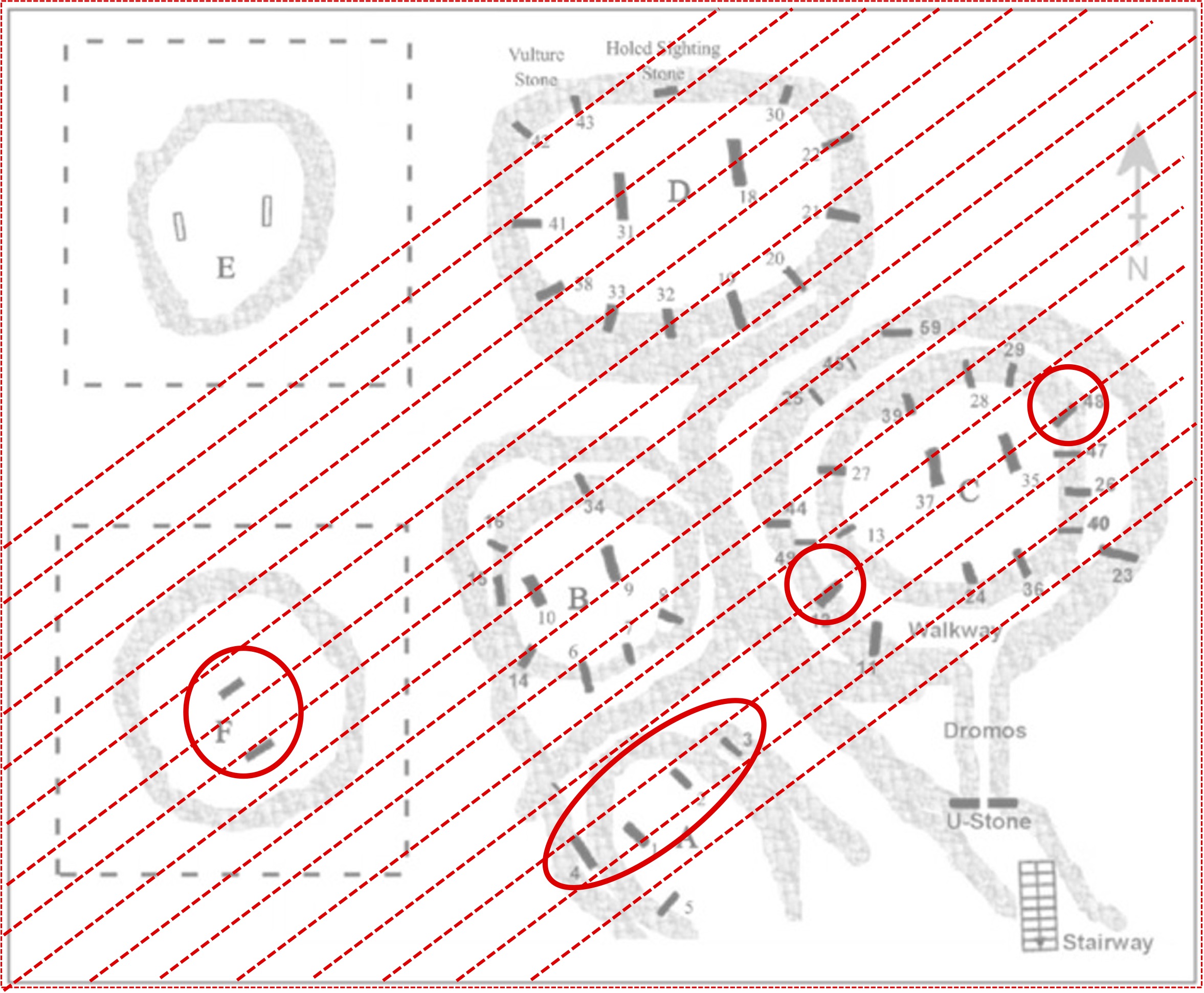
Alignments of individual pillars at Gobeckli Tepe to major lunar standstill moonrise/moonset directions. Base graphic courtesy De Lorenzis and Orofino.

Gรถbekli Tepe and the Moon

Excavations at Gรถbekli Tepe revealed the existence of monumental, circular enclosures built from massive T-shaped stone pillars. Believed to be the world’s oldest known temple, the site is dated to a period in human prehistory known as the Neolithic Transition, when our nomadic hunter-gatherer ancestors began to lead a more settled lifestyle, growing crops, building permanent settlements, and developing new technologies like pottery.

Analysis of the six enclosures at Gรถbekli Tepe reveals several possible astronomical alignments De Lorenzis and Orofino show that four of the enclosures (B, C, D, and E) are oriented towards the setting of the star Deneb, enclosure F is aligned to the rising of the Sun on a day roughly halfway between the summer solstice and the autumn equinox, and enclosure A is aligned to lunar standstills.

Moonrises in one month during the most recent major lunar standstill that occurred in 2024-2025. (Stellarium)
Moonrises in one month during the most recent minor lunar standstill that occurred in 2016. (Stellarium)

Lunar Standstills

Most people have a basic understanding of the motion of the Sun โ€“ that it rises in the east and sets in the west. In the Northern Hemisphere, the most northernly sunrise and sunset occur on the summer solstice and the most southernly sunrise and sunset occur on the winter solstice. The situation is reversed in the Southern Hemisphere. Generally speaking, the Moon does in a month what the Sun does in a year. The Moonโ€™s orbital plane tilts up to about 5.1 degrees above and below the ecliptic plane over an 18.6-year cycle. This together with changes in obliquity affect the angle at which the Moon rises and sets. The northernmost moonrise/moonset is called a major lunar standstill. The southernmost moonrise/moonset is called a minor lunar standstill. The most recent major lunar standstill occurred in 2024-2025 and the most recent minor lunar standstill occurred in 2016.

An analysis of the orientation of over 300 other sites in Anatolia found 34 aligned in astronomical (specifically luni-solar) directions that include 10 equinox/cardinal (N-S-E-W) alignments, 3 to solstices, 6 to major lunar standstills, and 19 to minor lunar standstills. (Google Earth)

Lunar Alignments in Anatolia

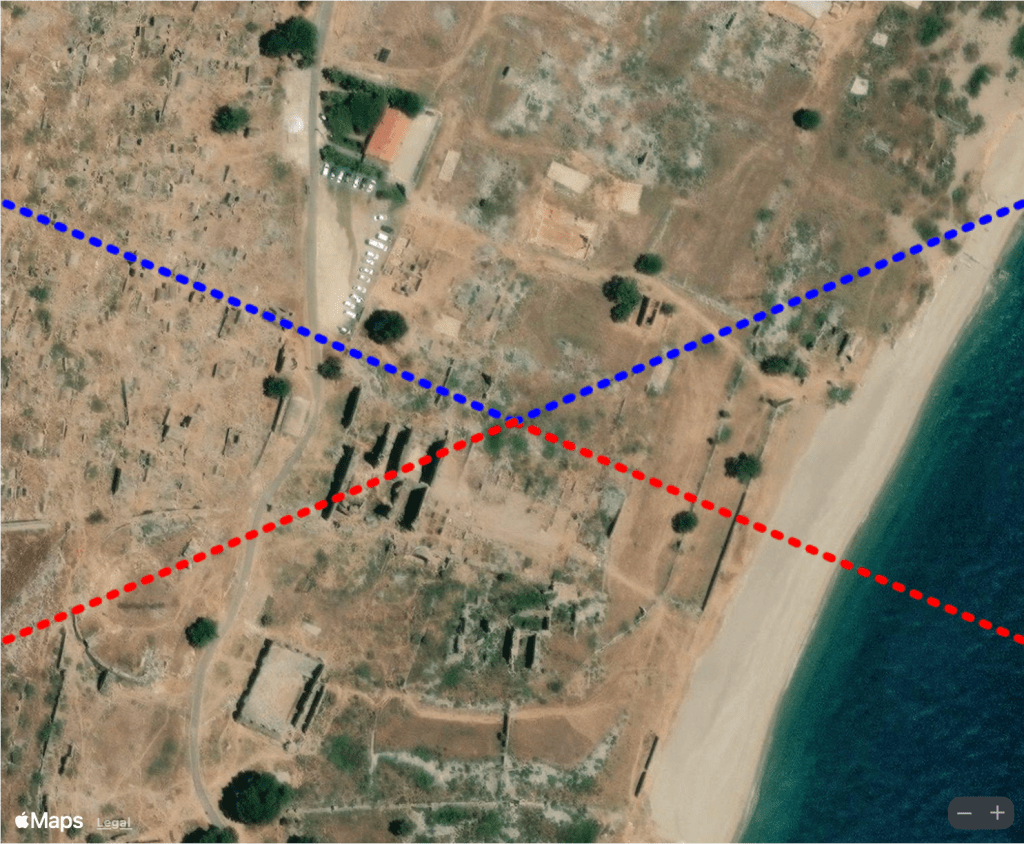
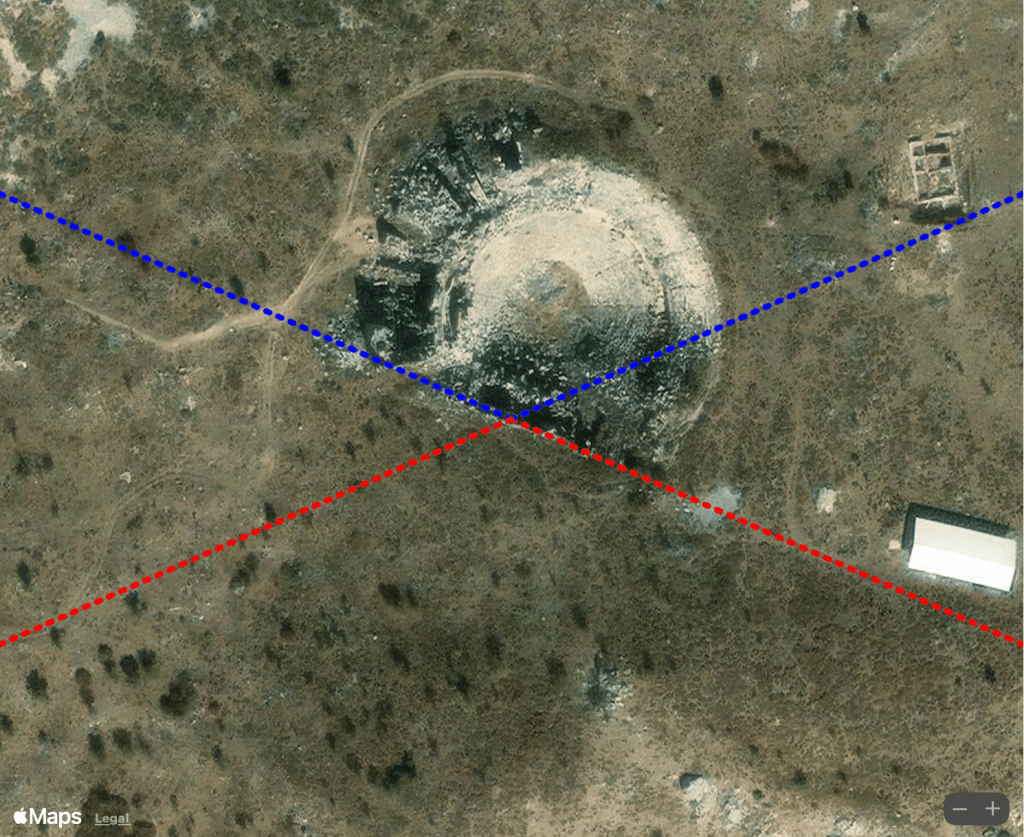
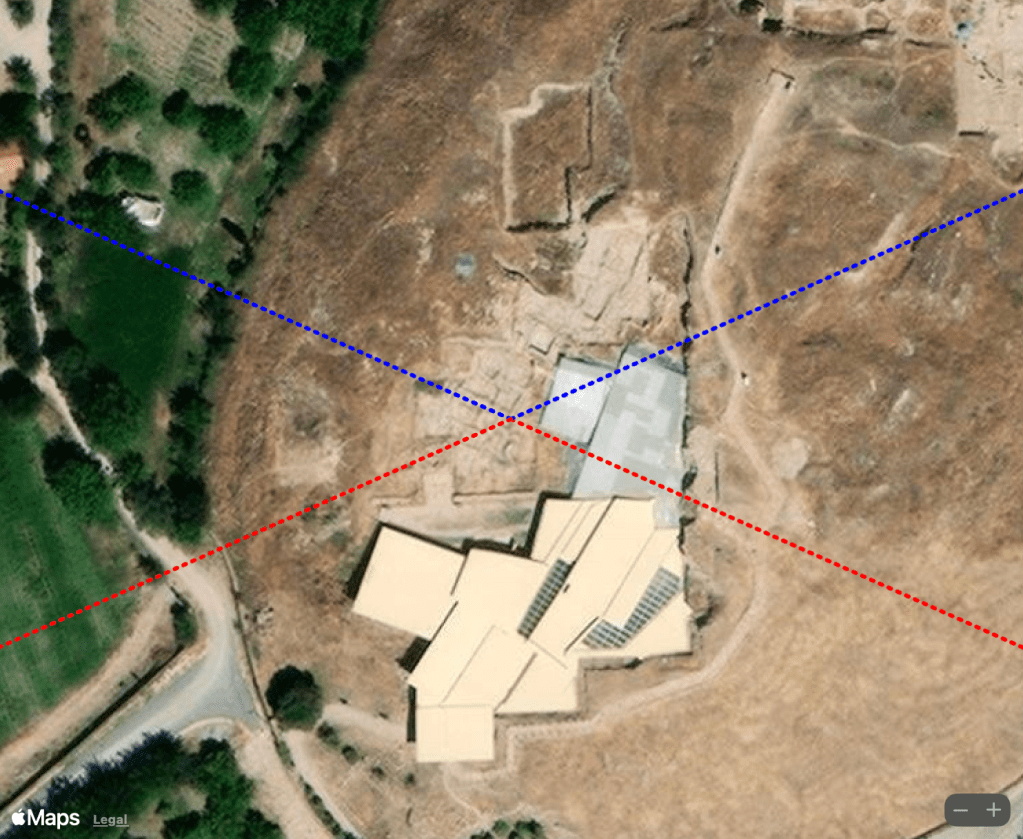
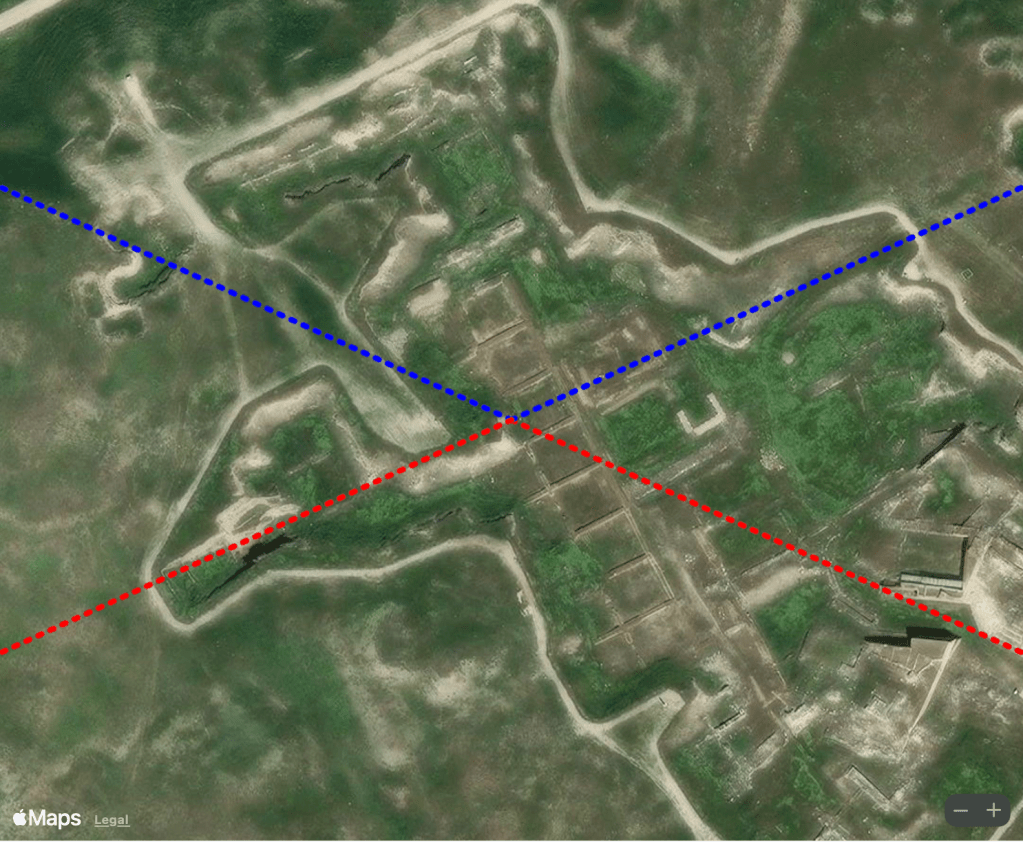
There is a long history of settlement in Anatolia from the late Neolithic to the Roman and Byzantine period. Four of the site established by these civilizations that are aligned to minor lunar standstills are shown below.

Alignments to minor lunar standstills at Anemourion (top left), Sagalassos (top right), Arslantepe (bottom left) and Gordion (bottom right). (Apple Maps)

Evidence of Lost Civilizations in Anatolia

Hundreds of sites worldwide have been found that reference four previous locations of the geographic poles over the past 120,000 years (Carlotto 2022a). We have argued that Charles Hapgoodโ€™s theory of Earth crustal displacement provides an alternative explanation for unexplained archaeological site alignments, late Pleistocene climate changes, and certain mass extinction events and have used crustal displacement as a tentative/hypothetical theory to explore the possibility of previous civilizations during the last ice age. Using this method, we examined the other 90% unexplained sites and found 14 sites containing structures oriented in luni-solar directions relative to previous locations of the North Pole. Four of these sites are examined below.

Adada

Like Sagalassos, Adada was one of the ancient cities of Pisidia mentioned by the Greek historian Strabo (Book XII, Chapter 7):

Artemidorus says that the cities of the Pisidians are Selgรช, Sagalassus, Petnelissus, Adada, Tymbriada, Cremna, Pityassus, Amblada, Anabura, Sinda, Aarassus, Tarbassus, and Termessus. Of these, some are entirely in the mountains, while others extend even as far as the foot-hills on either sideโ€ฆ

However, unlike Sagalassos, Adada does not appear to have been aligned to the Moon or in any other known astronomical direction. However, shifting the frame of reference to the Norwegian Sea pole, the main complex at Adada lines up in the direction of minor lunar standstills relative to the earlier pole as shown above. A smaller structure to the north is oriented in the direction of solstices relative to the Norwegian Sea pole.
Adada was a prosperous Roman city from the 1st century BCE through the 3rd century CE, flourishing particularly during the reigns of Emperors Trajan, Hadrian, and Antoninus Pius, as evidenced by the well-preserved temple complexes dedicated to the emperors and the city’s imperial coinage (right). The orientation of Adada in the direction of minor lunar standstills relative to the Norwegian Sea pole (left) suggests the possibility that it was built on top of pre-existing foundations that could be more than 42,000 years old. (Hasan Karabay/Google Earth and Apple Maps)

Selge

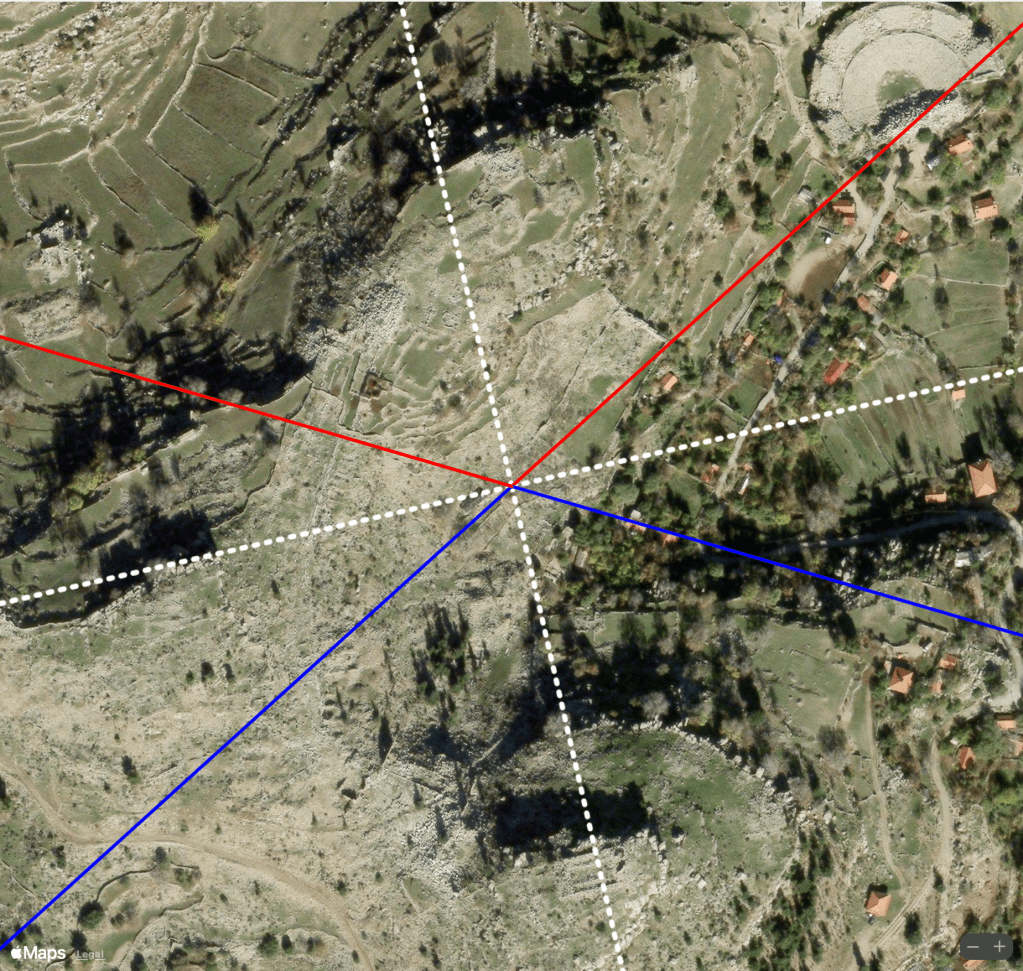
According to Strabo, Selge was founded by the Greek city-state Sparta, but alludes an even earlier founding by the mythical figure Calchas. The amphitheater, which was rebuilt by the Romans in the 3rd century CE is aligned to minor lunar standstills. The acropolis of Selge to the west of the theater known as Cesbedium is mentioned by Polybius in a battle with the Seleucid general, Achaeus. What is particularly interesting is that much of the site, which is ruins, appears to be organized differently. Those atop the acropolis appear to be aligned in the direction of solstices relative to the Greenland pole, as are several other ruined structures to the south (see above). There is also evidence of alignments to major lunar standstills relative to the Greenland pole, and to the Greenland pole itself, all of which support the possibility of an even earlier city founded in myth.

View of the acropolis at Selge from east of the amphitheater (left). Although the amphitheater, which is closely aligned to minor standstills relative to the current pole was built by the Roman, ruins to the south and west (right) appear to be aligned to the Greenland pole (white dotted line) and to solstices relative to the Greenland pole (red/blue). (Dosseman/Creative Commons and Apple Maps)

Hattusa

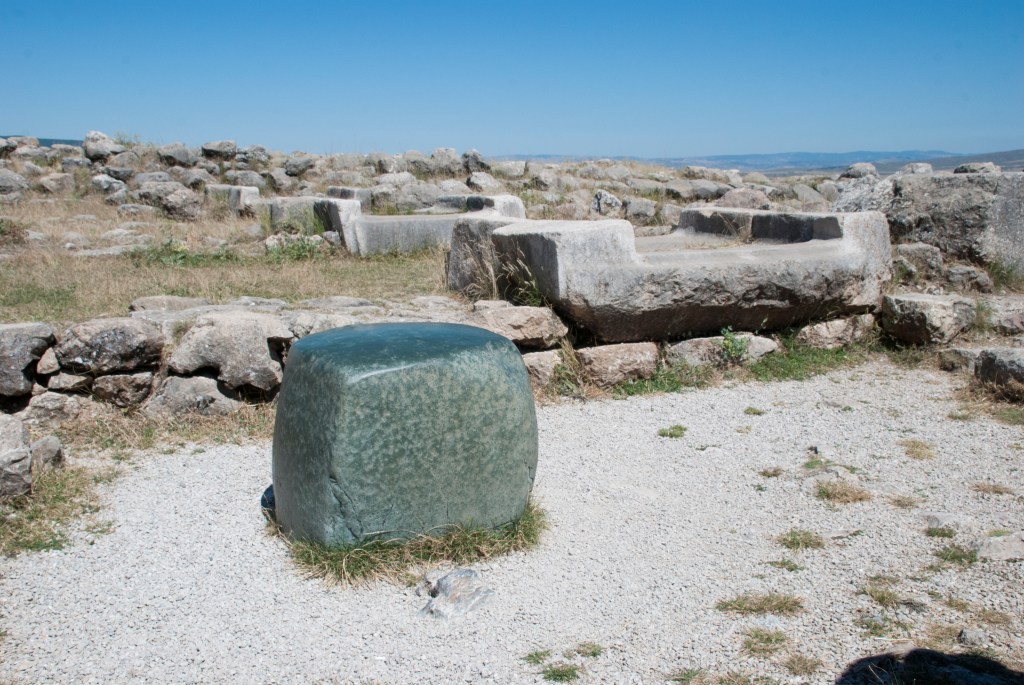
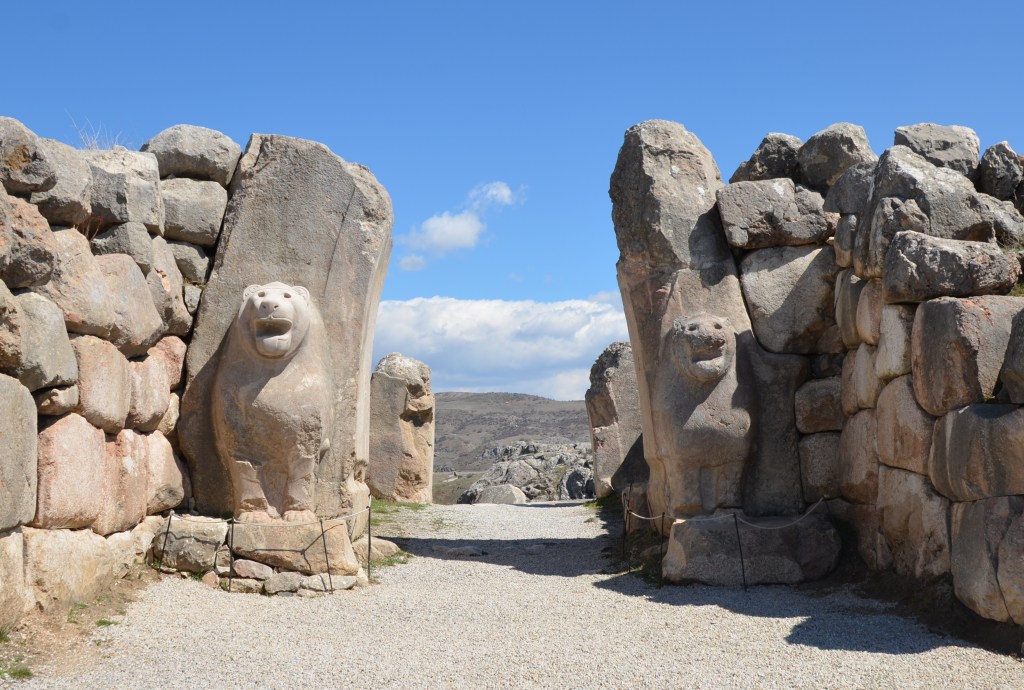
The earliest traces of Hattusa are from the sixth millennium BC during the Chalcolithic (Copper Age) period. The complex contains numerous features aligned in a variety of ways. The orientation of the Kingโ€™s Gate on the east side of the site is closely aligned to minor lunar standstills. The Lionโ€™s Gate, on the west side, is closely aligned to minor lunar standstills relative to the previous pole in Hudson Bay. Other structures within the site appear to reference both the current and previous pole. The mysterious Green Nephrite Stone within the Great Temple complex is aligned to solstices relative to the Hudson Bay pole.

Lion Gate at Hattusa (top right) is aligned in the direction of minor lunar standstills relative to the Hudson Bay pole (bottom right). Green Nephrite Stone at Hattusa and surrounding structures (top left) are aligned in the direction of the summer solstice sunrise and winter solstice sunset relative to the Hudson Bay pole (bottom left). (Acar54/Creative Commons, Carole Raddato/Creative Commons and Apple Maps

Termessos

Termessos, which is one of the best-preserved ancient cities in Turkey, is linked to the Solymi people, who are mentioned in Homer’s Iliad in relation to the legend of Bellerophon. Termessos was founded by the Solymi, a tribe likely related to the peoples of Isauria and Cilicia. The city’s name, according to Strabo, is derived from the Anatolian god Solymeus, later identified with Zeus. One of the most intriguing aspects is that Alexander the Great failed to conquer Termessos in 333 BC, despite his extensive campaigns. The city’s location on a high mountain, combined with its strong natural defenses, made it nearly impossible to breach. The city was eventually abandoned, likely due to an earthquake that destroyed its essential water supply. The specifics of the disaster and the full timeline of the city’s abandonment remain subjects of mystery. Despite its importance, the site has seen limited excavation, leaving many questions about the city’s history and daily life unanswered.

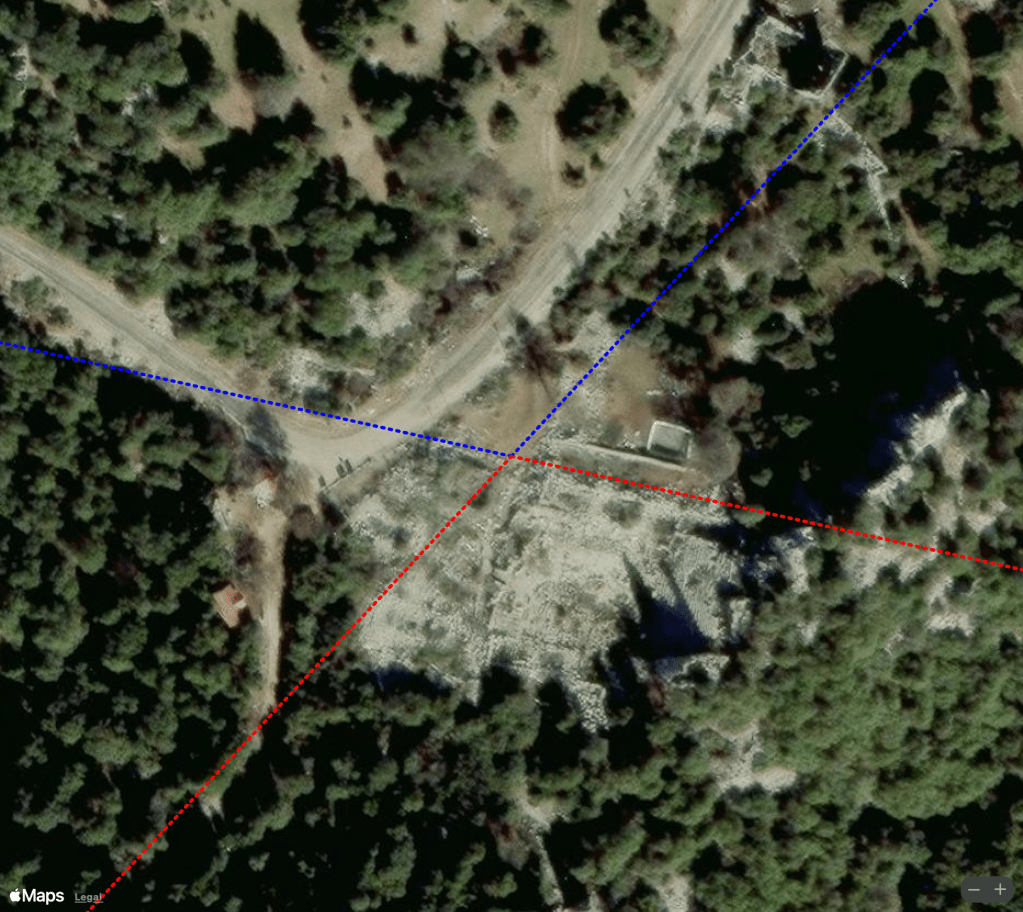
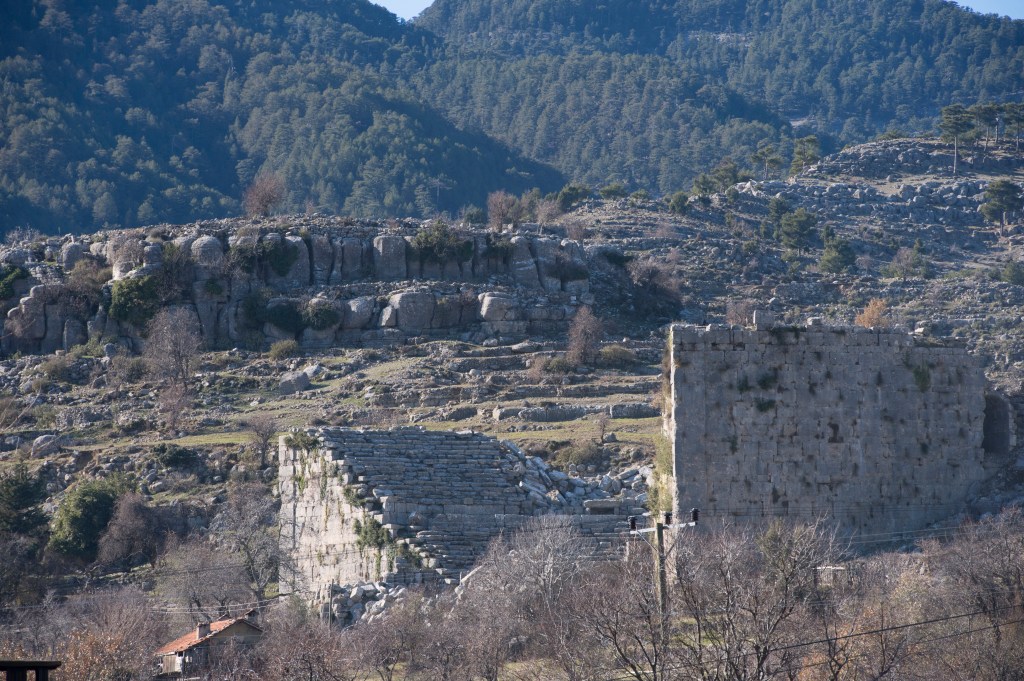
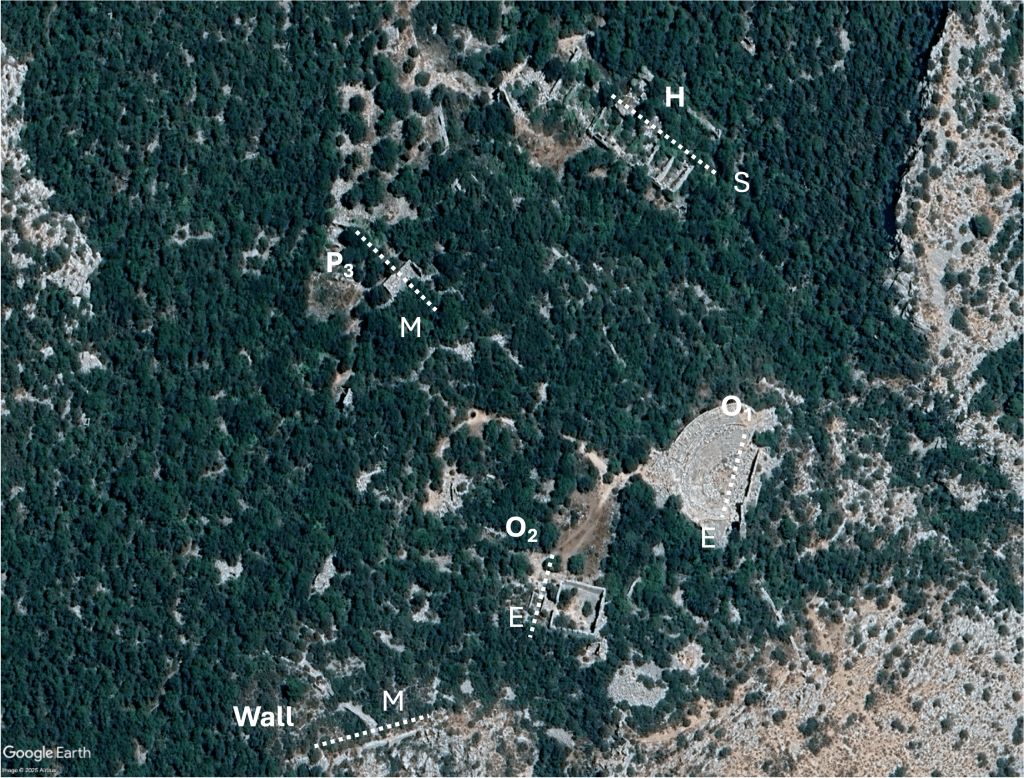
The most distinctive feature is the amphitheater built in the Hellenistic period, showcasing Greek architectural styles. Later, the theater was rebuilt by the Romans. Unlike similar structures aligned to the equinox sunrise such as the amphitheater at Cyrrhus, the one at Termessos is rotated about 14ยฐ south of east. Sites misaligned several degrees south of east can usually be explained by the Sun rising over an elevated horizon such as a mountain range. This is not the case here as the amphitheater is oriented 10 degrees south of the equinox sunrise direction, which is 4ยฐ south of east at the height of the hill to the east. Aside from this problem, we find that some of the structures are aligned in luni-solar directions including the gymnasium, buildings, and residential ruins. Changing the frame of reference to the Bering Sea pole provides a possible explanation for the unusual alignment of the amphitheater and some of the other structures in the ancient city (see below).

Alignments at Termessos relative to the Bering Sea pole. Current equinox sunrise direction which is 4 degrees south of east is shown for comparison (top left). Two kinds of stonework at Termossos at the amphitheater and bouleuterion (top center and right). Alignments of specific structures to the Bering Sea pole (bottom) include the amphitheater (O1), bouleuterion (O2), and portico (L3) cardinally aligned to the Bering Sea pole, building P3 and a wall aligned to major lunar standstills, and gymnasium (H) aligned to solstices relative to the Bering Sea pole. (Apple Maps, Sedat Boz/Google Earth and Ansgar Bovet/Creative Commons, and Turkish Museums).

Discussion

Is the long history of settlement in Anatolia from the late Neolithic to the present just the latest chapter in an even longer history of this region, extending back to the last ice age?

In contrast to the prevailing paradigm that modern human culture developed as a response to climate and ecological changes at the end of the ice age, Furter offers a different perspective:

The entire conscious, fundamentalist, common sense paradigm of archaeo astronomy is wrong. The โ€œmysteriousโ€ thing in the cultural record, is that we have a large universal repertoire of standard subconscious behaviour. That behaviour is imprinted all over the cultural record. But our conscious mind finds it hard to see what is hidden in plain sight. The consequences for our self-image are significant. We did not invent, develop, or change culture. Culture is part of the human package, at least since Gobekli at BC 8000, cave art about BC 20 000, Blombos shelter about BC 70 000, and perhaps even Border Cave about BC 100 000, with the usual ensemble of tools, clothing, cosmetics, and trade. Human behaviour is static, and thus predictable, down to the structure of artworks and building sites.

If Furter is correct โ€“ that human behavior is static down to the structure of ancient sites, perhaps human societies have always aligned buildings to the Sun and the Moon. In other words, there is nothing special about Gรถbekli Tepe โ€“ it is simply an example of how the people at that time were expressing the same patterns of behavior that have existed throughout human history.

The inability of conventional archaeoastronomy to explain the alignment of so many ancient sites across the world has led to mixed approaches that often rely on local knowledge (context). Furter asks:

Could archaeo astronomy tell the difference between a myth cycle, a calendar, a zodiac, and a star map? And could it reveal the core content of culture, or explain perception? Correspondences simply mix and match shapes and star lore. Archaeo astronomy needs better theories, and a more scientific paradigm, to rise above the level of parlour games.

If crustal displacement theory is correct, by shifting the geographic reference frame we can explain the alignment of most ancient sites across the world using the same basic alignments we find at Gรถbekli Tepe, thus supporting Furterโ€™s โ€œuniversal repertoireโ€ and offering a more scientific foundation (albeit tentative and hypothetical) for archaeoastronomy.

Click here to read a more detailed working paper.

(Feature image at the top of the article courtesy Sue Fleckney/Creative Commons)

An Inconvenient Theory: Part 3 – An Underlying Mechanism

Chapters 4-6 in An Inconvenient Theory show that crustal displacements can not only account for most unknown archaeological site alignments but could also be the “missing link” in understanding glacial cycles, ice ages, and certain mass extinctions. However, without an identified physical mechanism, the evidence, no matter how compelling, is not sufficient for it to be considered a proper scientific theory.

Tides of Change

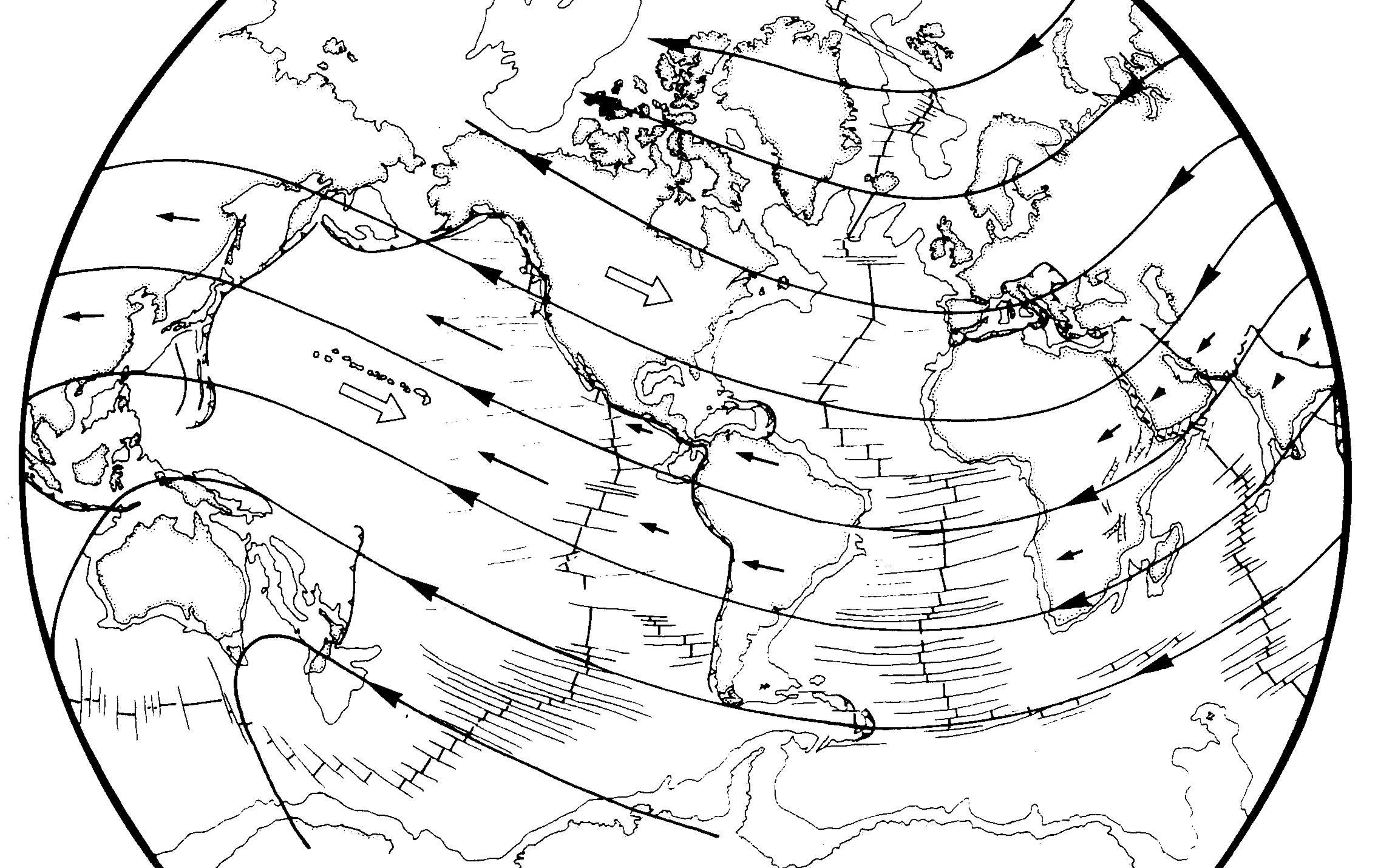
Hapgood originally believed that polar ice imbalances caused crustal shifts, but later abandoned this idea. Picking up from Hapgood left off, Chapter 7 builds on modern geoscience, proposing that Earth-Sun-Moon tidal forces through interactions in the low-viscosity zone (LVZ) beneath the lithosphere might cause the crust to periodically rotate westward relative to the mantle. Drawing from studies of lithospheric drift, the global tectonic pattern, and lunisolar influences on the theoretical rotational axis of the crust relative to the mantle, possible pole shift trajectories and timelines are determined over the last glacial cycle. It is argued that changes in the LVZ could effectively unlock the crust, allowing Earth-Sun-Moon tidal forces to shift the crustal thousands of kilometers over periods of several thousand to perhaps ten thousand years.

Map of the global tectonic pattern where the tectonic mainstream in the same direction as the lithospheric drift. (Courtesy C. Doglioni)

Cycles Within Cycles

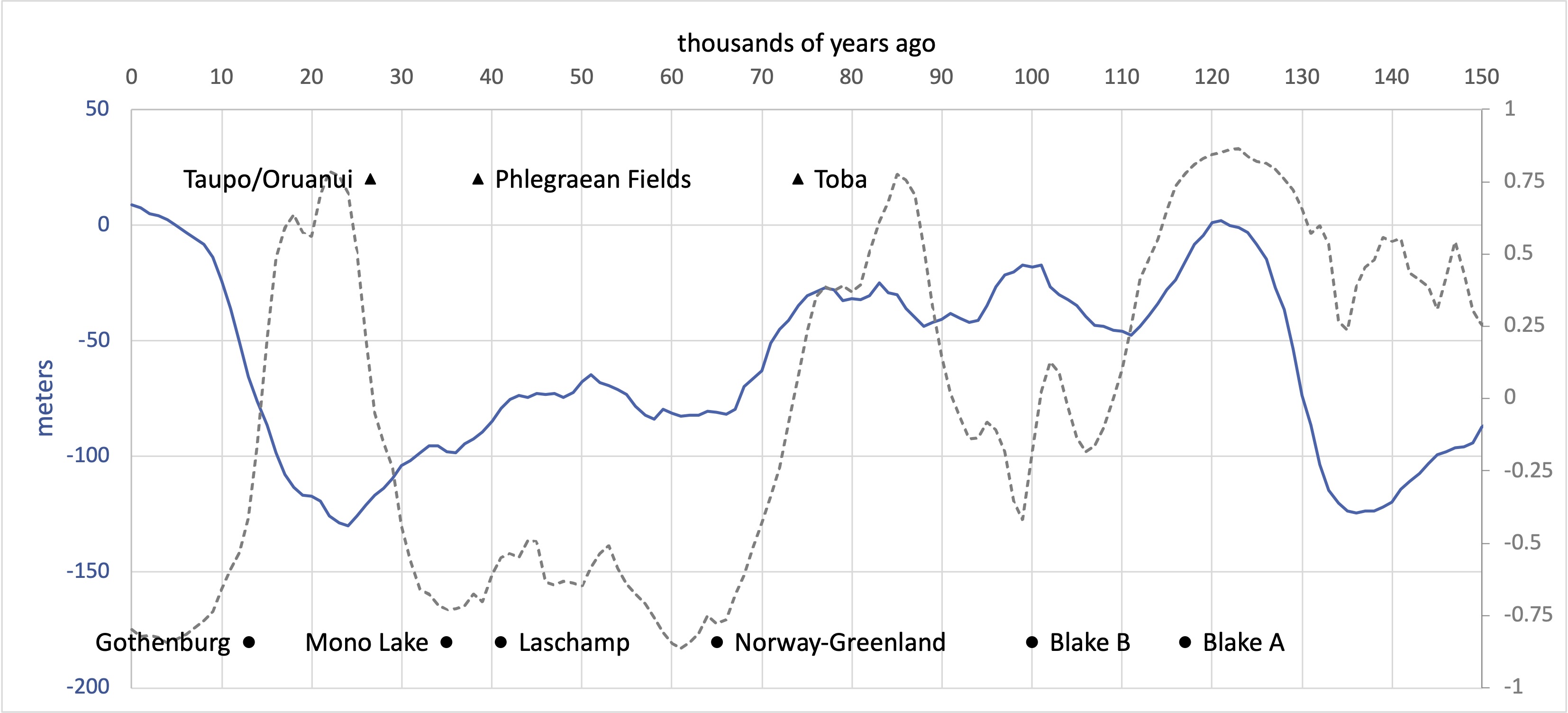
Chapter 8 explores the interconnectedness of Earthโ€™s internal dynamics, focusing on how mantle convection may drive major geological and climatic phenomena such as geomagnetic field variations, mass extinctions, true polar wander, and supervolcanic eruptions. It discusses the fractal nature of Earth processes, with self-similar patterns seen across multiple timescales in ocean temperatures and geomagnetic activity. Evidence suggests correlations between geomagnetic excursions and temperature shifts, as well as between supervolcanic eruptions and pole shifts, all possibly rooted in fluctuations in mantle convection. The chapter raises the possibility that changes in mantle convection could be linked to pole shifts, supervolcanic eruptions, and extreme climatic changesโ€”suggesting a deep, potentially cyclical mechanism underlying these and other surface-level phenomena.

Temperature-geomagnetic field correlations (dotted line) with global sea level (blue) shown for comparison.

The Next Ice Age

Chapter 9 examines the cyclical and fractal nature of Earthโ€™s temperature and geomagnetic field changes, proposing that glacial cycles are not solely driven by solar radiation (Milankovich cycles) but by deeper geophysical forces such as mantle convection. Mantle convection may reduce the viscosity of the Earthโ€™s LVZ, enabling crustal displacements that shift landmasses in and out of polar regions, thereby influencing global temperatures. The chapter argues that these forces work together, influencing the “shape” of the ice ages. It also discusses how global warming could end the current Quaternary Glaciation and forecasts a potential future pole shift that may once again trigger regional glaciation, particularly in Europe. Finally, the chapter examines the importance of the geomagnetic field in shielding Earth from cosmic radiation and speculates that ancient underground cities, such as those in Cappadocia, might have served as protection during periods of weakened magnetic shielding, like the Laschamp geomagnetic excursion 42,000 years ago.

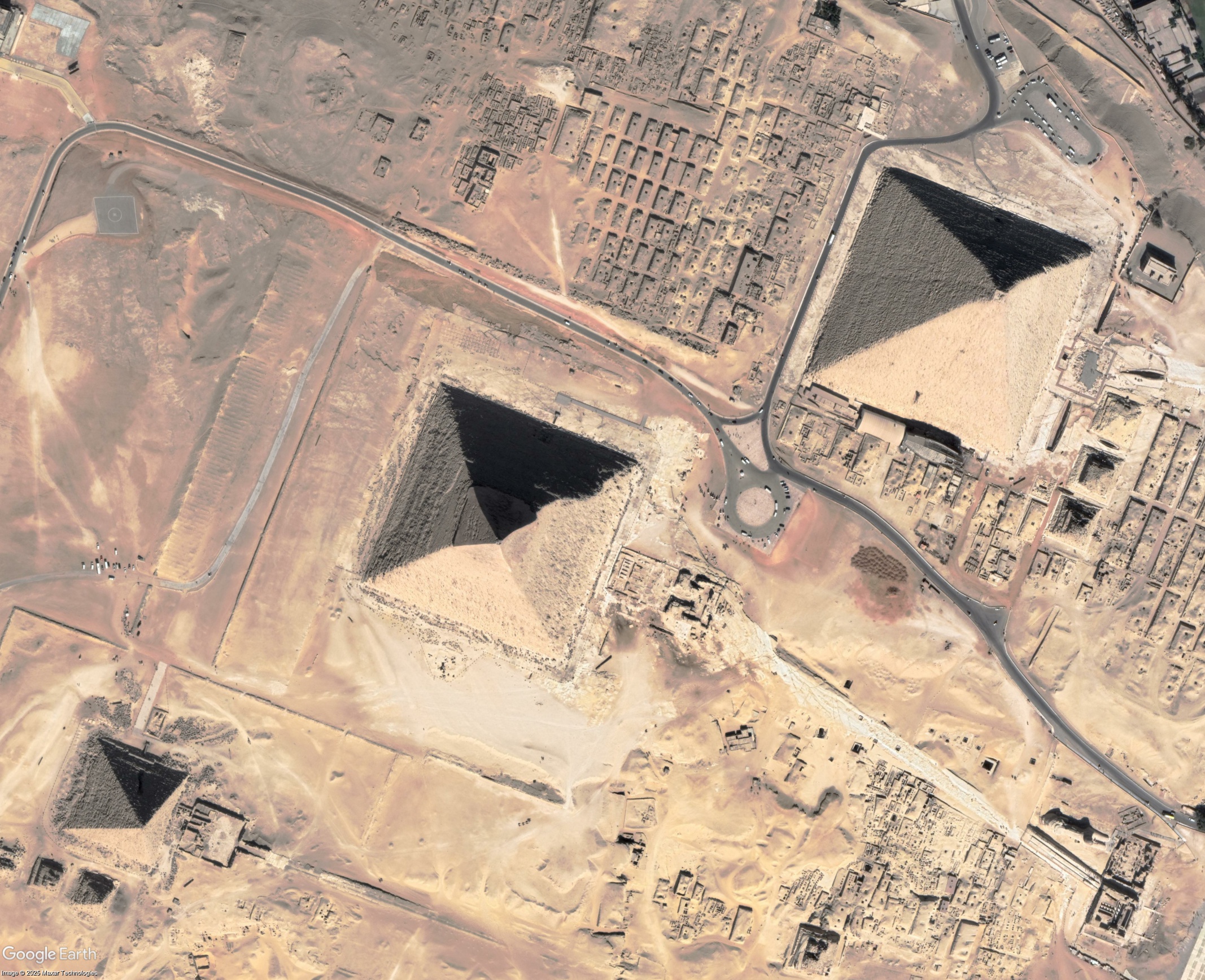
If the North Pole were to shift from the Arctic to another location (discussed in the book), the orientation of the Great Pyramid in Giza would rotate about 20ยฐ clockwise over the course of ten thousand years. (Google Earth)

A final chapter summarizes the new theory, discusses lingering issues, and suggests new directions for future research and discovery.


Feature image at the top of the article: “King tide, Oregon coast.” (Bonnie Moreland/Creative Commons)

An Inconvenient Theory: Part 2 – Toward a New Theory

The first three chapters in An Inconvenient Theory highlight key problems with current theories. Problems or anomalies are what drive the scientific process of coming up with new hypotheses, experiments, and ultimately new theories. Chapters 4-6 trace the development of a revised and expanded version of Hapgoodโ€™s theory.

Other Frames of Reference

Chapter 4 examines the hypothesis that many ancient structures around the world, currently misaligned with modern cardinal or astronomical directions, may have been originally aligned to different geographic poles due to shifts in Earth’s crustโ€”a theory proposed by Charles Hapgood. Using great circle algorithms and site orientation data, analysis of over 900 ancient sites identifies four historical pole locationsโ€”Hudson Bay, Norwegian Sea, Greenland, and the Bering Seaโ€”that explain the orientations of hundreds of previously unexplained alignments. These alignments suggest a global pattern of intentional astronomical positioning consistent with solar and lunar cycles, and statistical analysis indicates the improbability of such correlations occurring by chance. This framework challenges conventional archaeology by proposing a testable, mathematical approach that supports the theory of pole shifts and has significant implications for understanding ancient civilizations and past climate changes.

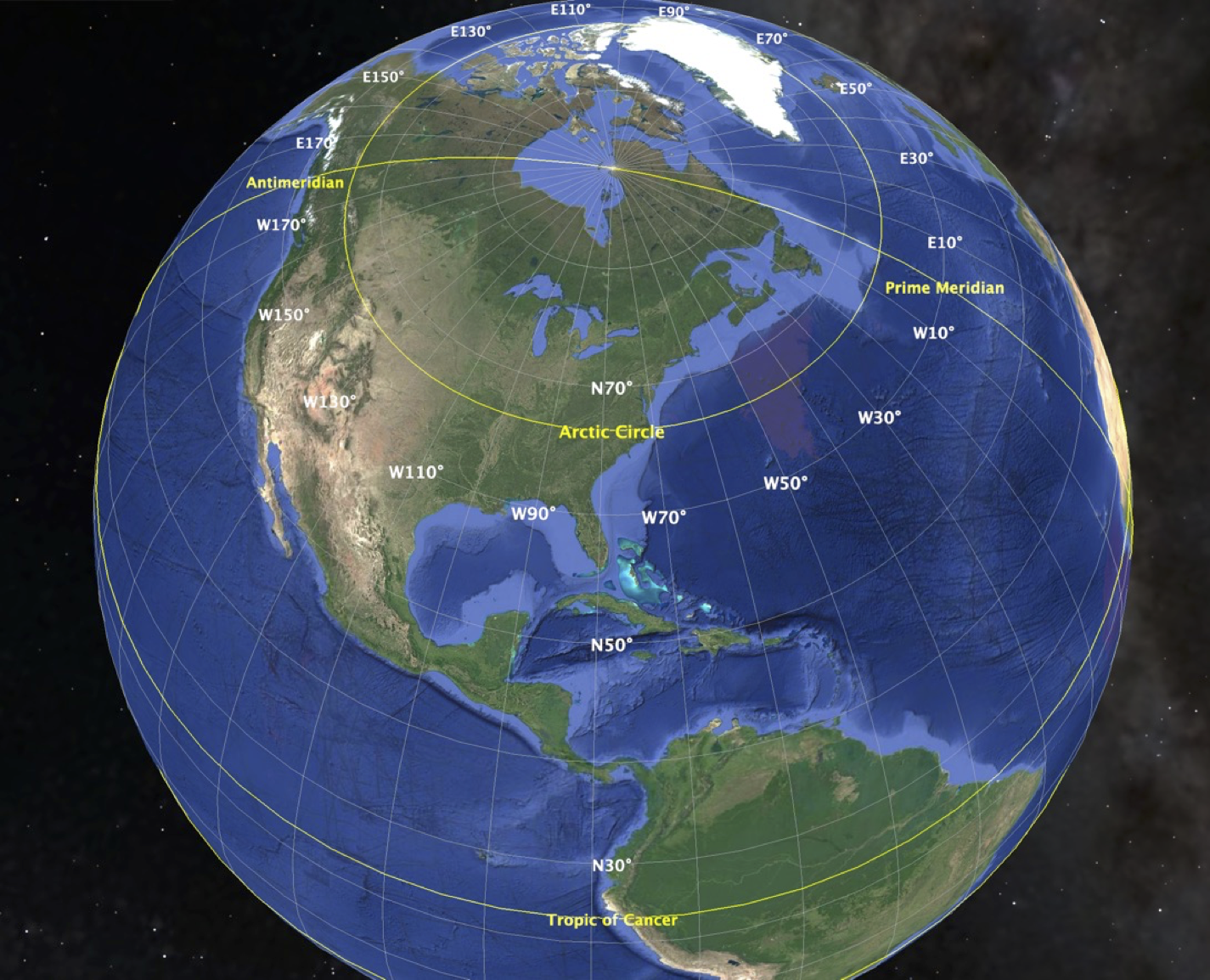
World geography redefined relative to the North Pole in Hudson Bay. (Google Earth)

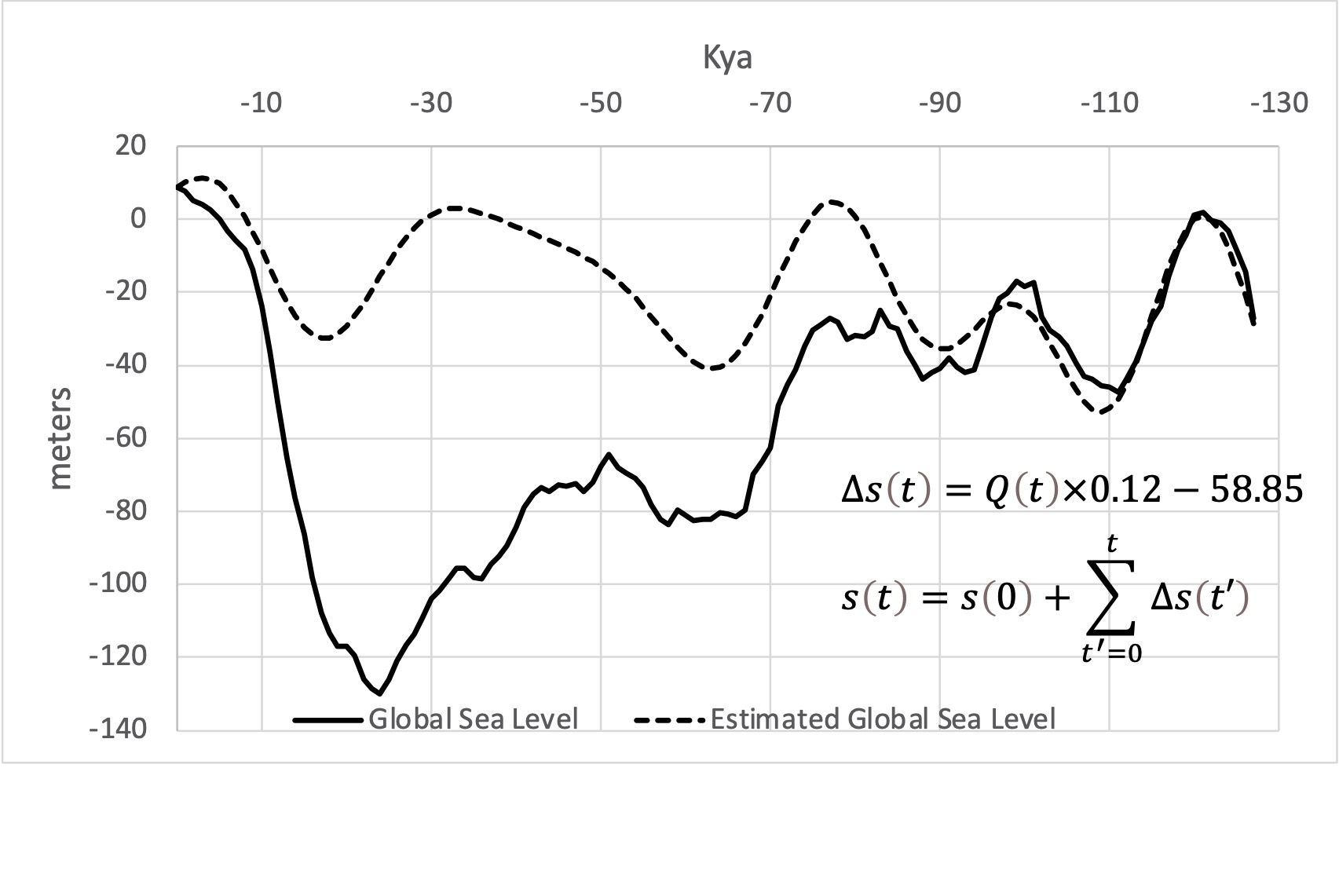
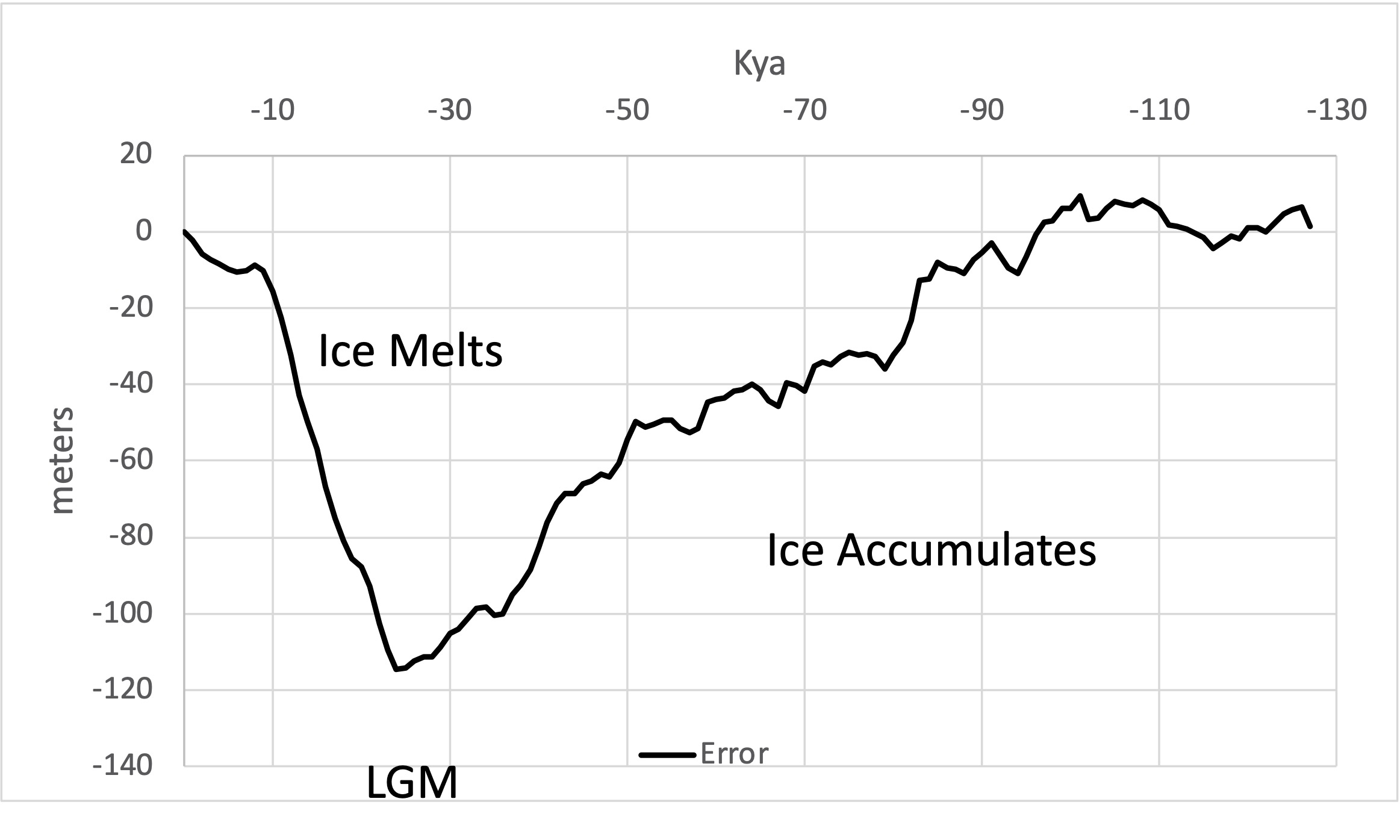
How to Melt Ice in a Cold World

Chapter 5 explores the inadequacy of traditional climate models in explaining how massive polar ice sheets melted during the coldest periods of Earthโ€™s last glacial cycle, and proposes an alternative mechanism involving crustal displacements. Drawing parallels to Copernicus’s simplification of planetary motion, the chapter critiques existing theories like Milankovich cycles and COโ‚‚ feedback for failing to fully account for sea level changes. Instead, it advances the idea, inspired by Charles Hapgood, that geographic pole shifts repositioned ice sheets to lower latitudes, where increased solar insolation caused rapid melting. This hypothesis is supported by correlations between polar land area and sea level, as well as the location of the thickest ice in Greenland and Antarctica aligning with regions that remained in polar zones over successive shifts. The chapter also examines ancient maps like the Orontius Fineaus map, suggesting they may depict an ice-free Antarctica based on observations made during past pole configurations, reinforcing the plausibility of large-scale crustal movement as a driver of climate transitions.

Ice Ages Revisited

Chapter 6 considers an alternative theory to Milankovitch cycles by proposing that dramatic shifts in Earth’s climate during the Ice Ages were caused by displacements of the lithosphere and corresponding pole shifts, not fluctuations in solar radiation. Drawing on Karl Paulyโ€™s 1952 analysis and Charles Hapgoodโ€™s theory of Earth crustal displacement, the chapter presents evidence that shifting pole positions led to changes in geographic climate zones, explaining alternating glacial and interglacial periods. Fossil and archaeological records from Britain, Mexico, the San Augustin Plains, the Arabian Peninsula, and other places are used to correlate shifts in fauna, flora, and human activity with these hypothesized pole movements. Key examples include the presence of tropical animals in Ice Age Britain, changes in mammoth habitat linked to pole shifts, and archaeological water symbolism in Teotihuacan aligning with a wetter, temperate climate during earlier pole locations. The chapter questions conventional climate models, suggesting that geographic pole shifts better account for regional climate anomalies observed in the paleoclimatic record.

Fossils of the hippopotamus and spotted hyena indicate that Britain had a humid subtropical climate 130,000 years ago. This is consistent with the North Pole being located in the Bering Sea north of the Aleutian Islands at that time. (Google Earth)

As the archaeological implications of crustal displacement theory were covered in Before Atlantis and Beyond Atlantis, the last article in this series delves into the search for an underlying mechanism.


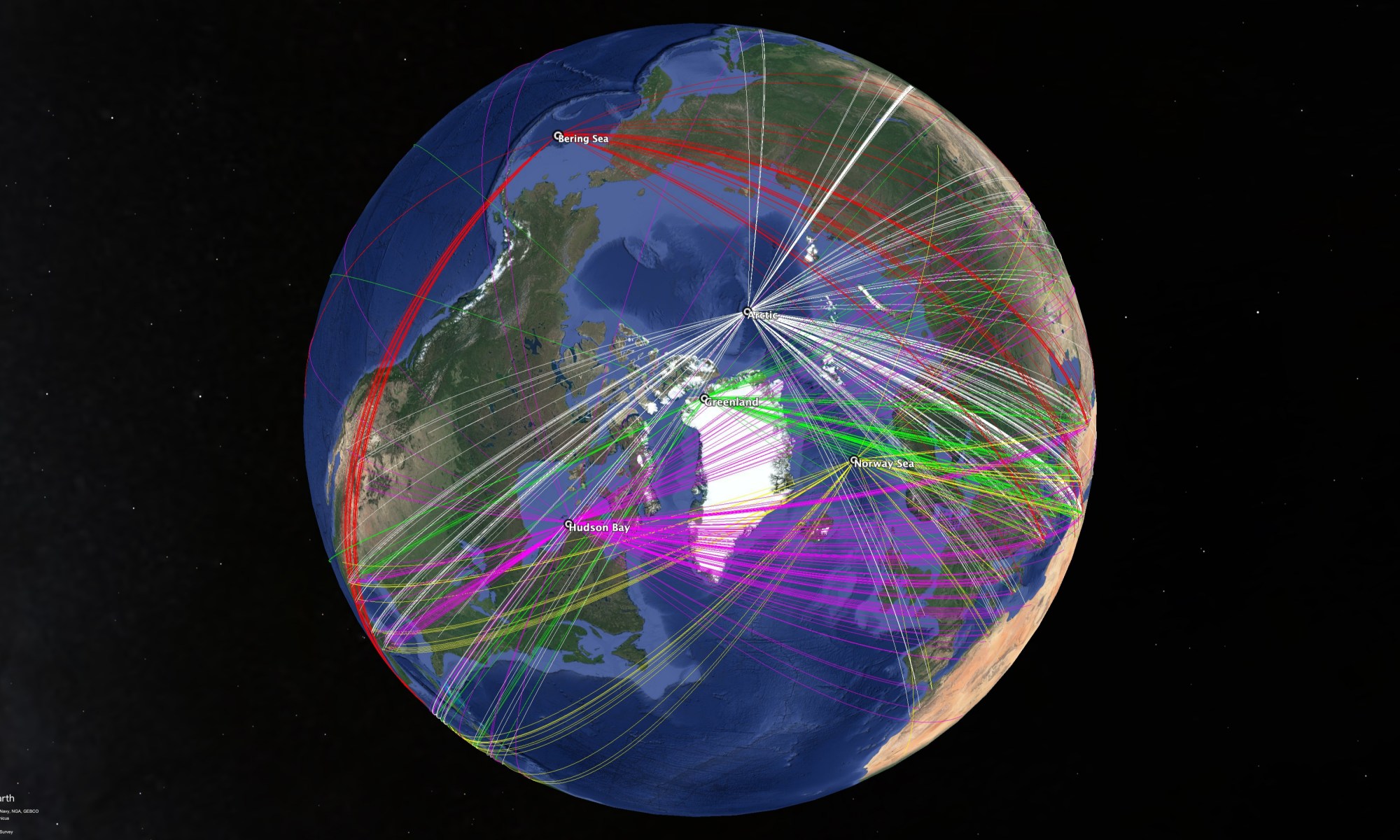
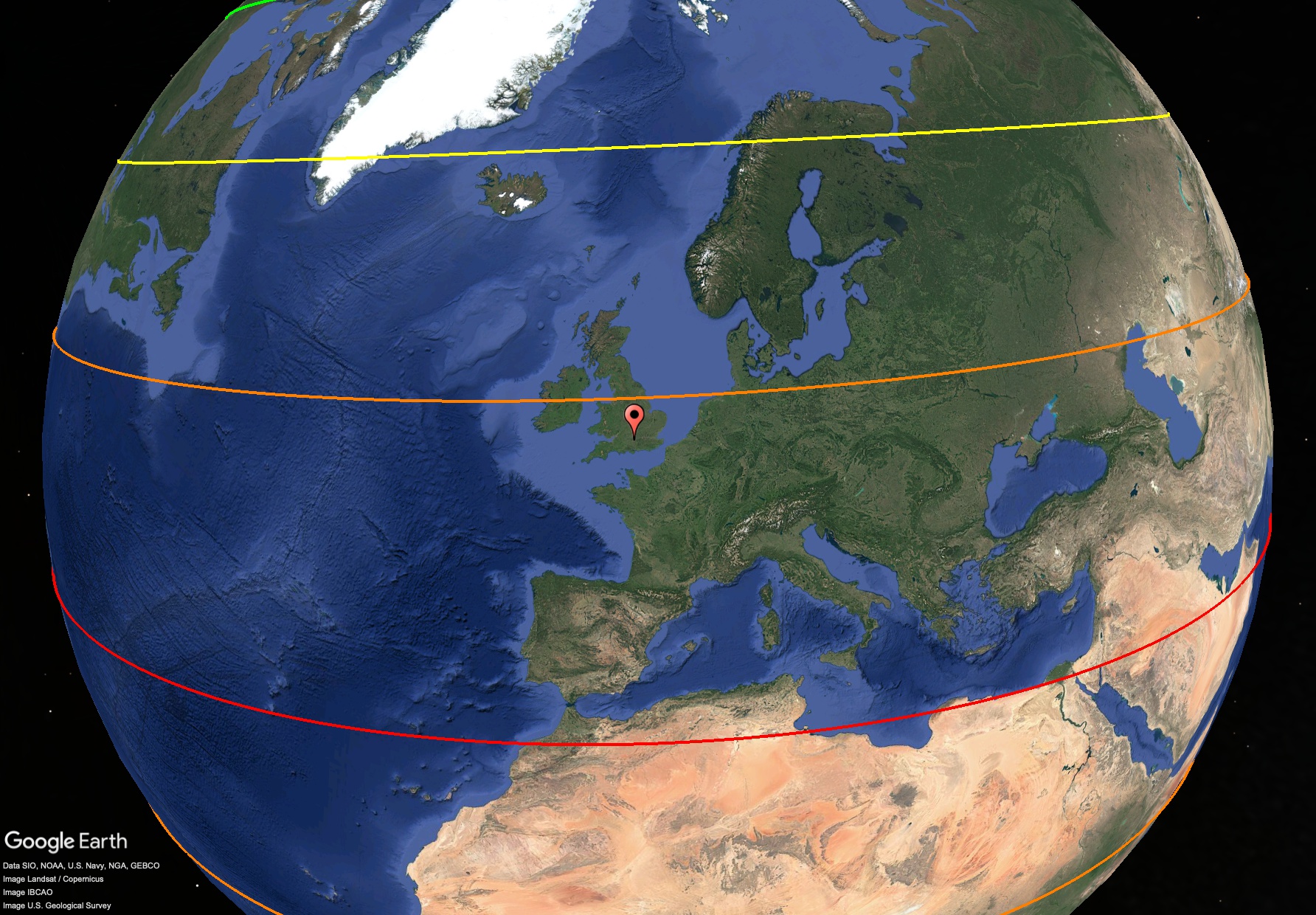
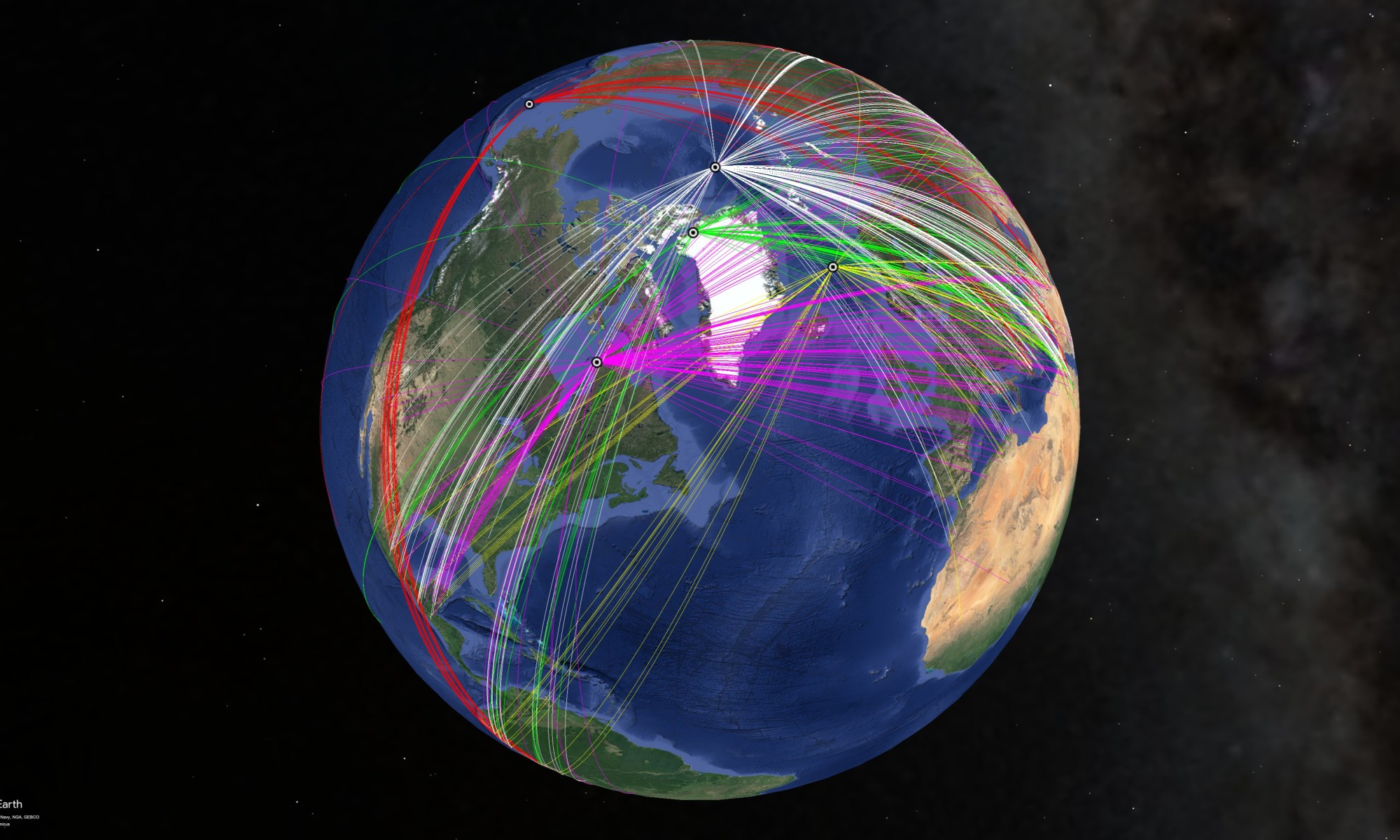
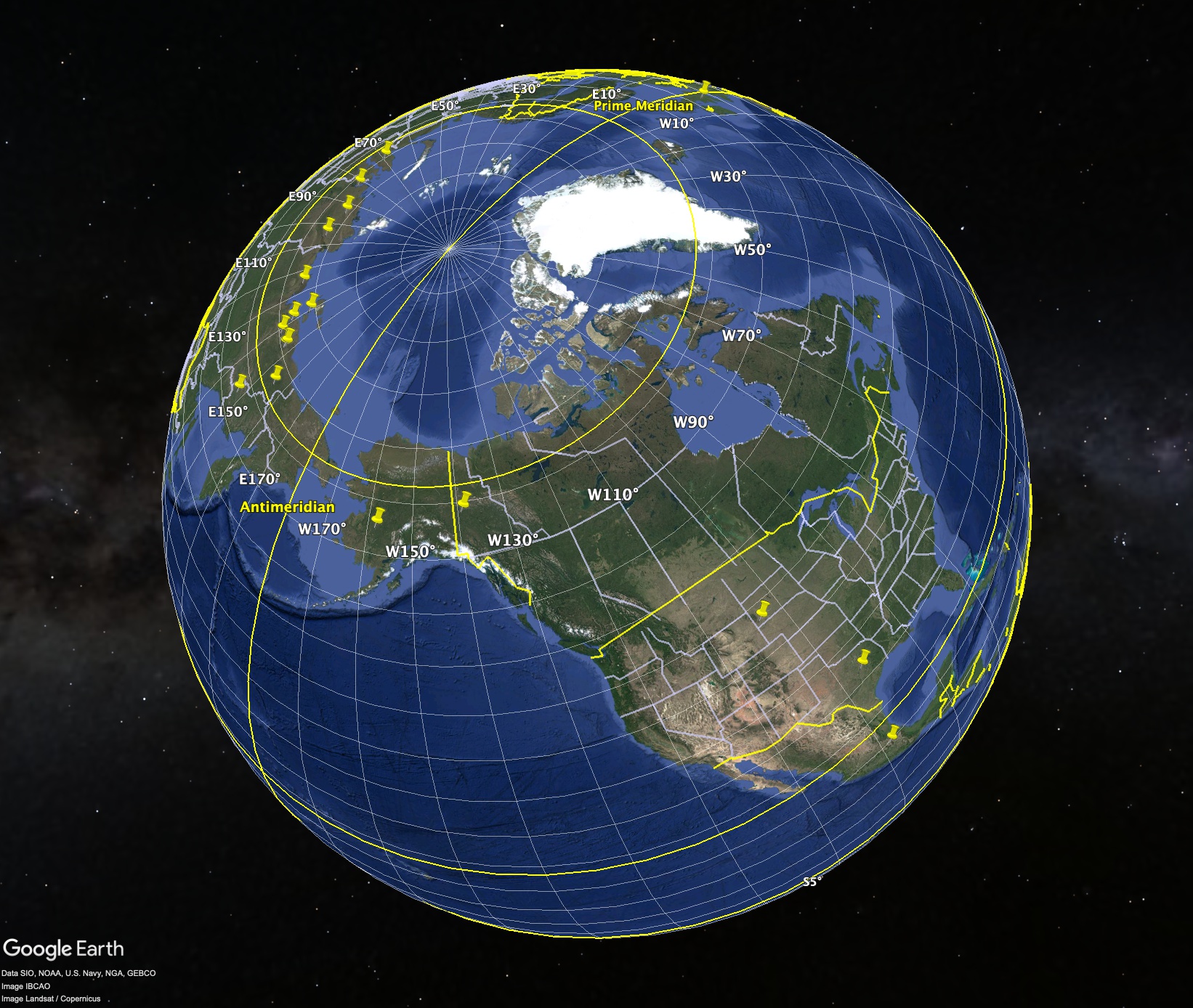
Feature image at the top of the article: Meridians to sites aligned to the current pole (white) and four previous locations of the North Pole in Hudson Bay (magenta), the Norwegian Sea (yellow), Greenland (green), and the Bering Sea (red). (Google Earth)

An Inconvenient Theory: Part 1 – The Anomalies

An Inconvenient Theory continues the search for evidence of ancient civilizations that may have existed long before the end of the last Ice Age. While many researchers have focused on deciphering the technologies behind so-called “out of place” artifacts, my first book, Before Atlantis, takes a different approachโ€”challenging mainstream views of prehistory by investigating site alignments with ancient geographic poles as potential markers of lost civilizations. Building on this foundation, my second book, Beyond Atlantis, presents compelling evidenceโ€”drawn from the alignments of over 500 ancient sites to four former pole locationsโ€”that multiple advanced civilizations may have existed across the globe over the past 130,000 years.

That so many sites seem to point to these four locations had to mean something. The odds of this happening by chance were virtually zero. At a recent conference, someone said the statistical significance of the alignments cannot be disputed, only the dating, and went on to suggest that I should change the dates to be more in line with “what we already know.โ€ The first three chapters in An Inconvenient Theory highlight key problems with current theories, with “what we already know.โ€ 

Chapter 1 – The Riddle of the Ice Ages

Earthโ€™s climate history is marked by dramatic shifts influenced by complex interactions among atmospheric composition, tectonic activity, and solar radiation. In Chapter 1, we show that ice ages, particularly during the Quaternary period, show strong correlations between temperature, COโ‚‚ levels, and sea level, though changes in these variables do not happen simultaneously. While Milankovich cyclesโ€”variations in Earthโ€™s orbit and tiltโ€”are thought to initiate glacial cycles by altering solar insolation, their weak correlation with climate proxies and the unresolved “100,000-year problem” suggest additional factors are needed to explain the timing and magnitude of ice ages. Climate feedbacks, especially from COโ‚‚ released during warming periods, appear to amplify small orbital changes and may better explain sea level shifts, yet challenges remain in explaining glaciations, indicating gaps in current climate theories.

The riddle of how to melt ice in an unusually cold world remains unsolved and is the fundamental problem with current ice age/climate theories. (Christine Zenino/Creative Commons)

Chapter 2 – Mysteries of the Pleistocene

Chapter 2 explores a wide array of fossil discoveries that challenge conventional understandings of Earthโ€™s climatic and ecological history, particularly during the late Pleistocene. The Pleistocene Epoch, spanning from approximately 2.6 million to 11,700 years ago, was characterized by significant climatic fluctuations, leading to the formation and retreat of extensive ice sheets across the globe. These dynamic environmental changes influenced the distribution and evolution of diverse megafauna, including woolly mammoths, giant ground sloths, and saber-toothed cats. Fossil discoveries in regions like the Arctic, Sahara, and Australia reveal that these areas once hosted ecosystems vastly different from today’s, indicating dramatic shifts in climate and habitat. Ultimately, the chapter underscores how puzzling fossil records from diverse locations point to episodes of extreme environmental transformation during the late Quaternary that are not fully explained by current scientific models.

Mammoth sites ranging from above the Arctic Circle to Mexico are hard to explain in terms of current climate models. (Google Earth)

Chapter 3 – As Above, So Below?

The concept of “As Above, So Below” from Hermetic philosophy suggests a fundamental unity between the cosmos and the Earth, an idea that has long inspired the alignment of ancient structures with celestial phenomena. Archaeoastronomyโ€”the study of how ancient people understood and utilized astronomical eventsโ€”has uncovered evidence that many sites across the globe were deliberately oriented to align with the Sun, Moon, stars, or cardinal directions, as seen in places like Stonehenge, Karnak, and Chichรฉn Itzรก. Pioneers such as Norman Lockyer and Alexander Thom proposed bold theories about these alignments, some controversial, laying the foundation for this multidisciplinary field. As we see in Chapter 3, despite significant progress, a large fraction of ancient site orientations remain unexplained, with places like Teotihuacan, Machu Picchu, and Baalbek defying easy categorization. These enigmatic alignments challenge modern researchers to consider not only astronomical, but also cultural, geographical, and possibly unknown factors in interpreting the intentions of ancient builders, leaving the question open as to whether deeper, perhaps lost knowledge once guided these monumental designs.

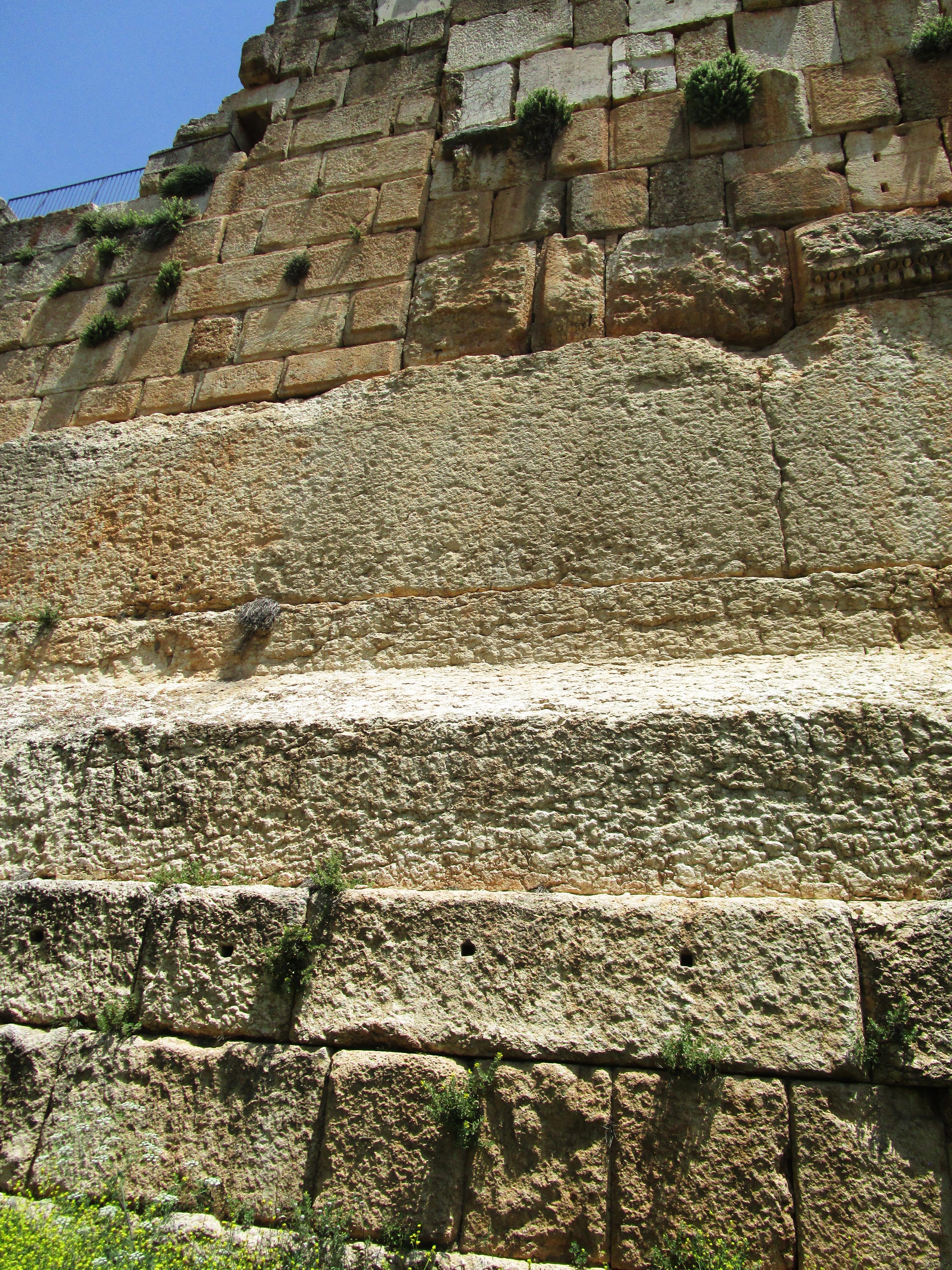
The foundation of Baalbek, which is constructed from some of the largest megaliths in the world is not aligned in any known geographical/astronomical direction. (Creative Commons/ Lodo27)

The next article describes how these unexplained problems or anomalies drive the scientific process of coming up with new hypotheses, experiments, and ultimately a new theory.ย 


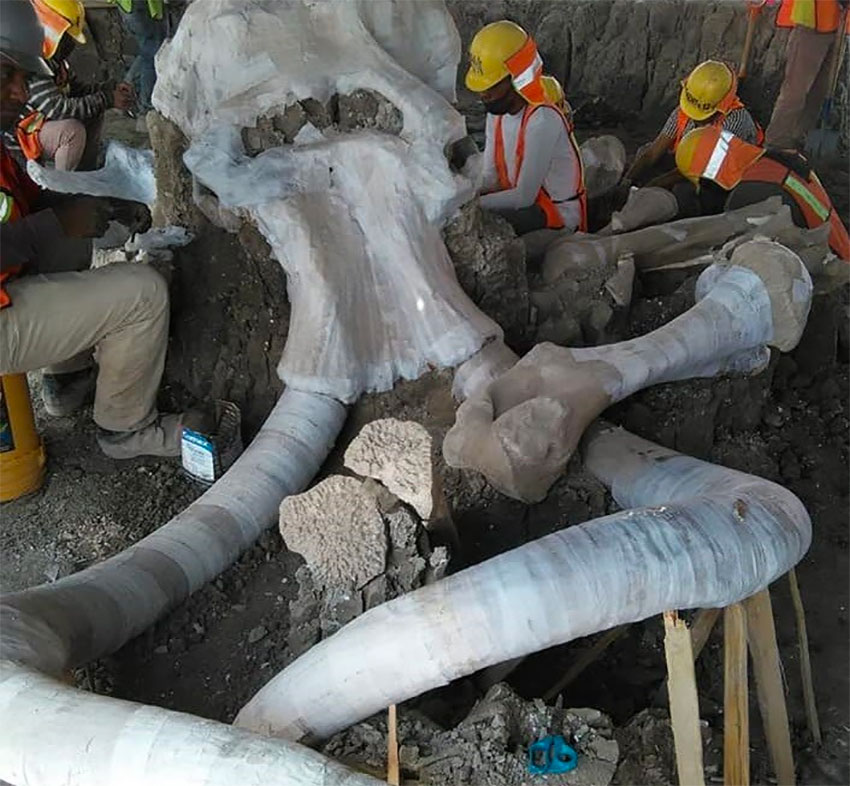
Feature image at the top of the article: Mammoth remains radiocarbon dated 10,000โ€“20,000 years before present unearthed near Mexico City in 2020. (Mexico News Daily)

An Inconvenient Theory: Of Ice Ages and Lost Civilizations

In Before Atlantis, I presented evidence that advanced civilizations existed throughout the world during the last ice age. My claim was based on over a hundred ancient sites that appeared to point to previous positions of the North Pole. That Earthโ€™s North Pole not only shifted during the last ice age but was responsible for it was a revolutionary idea proposed by Charles Hapgood in his 1958 book Earthโ€™s Shifting Crust. Its publication was somewhat ill-timed in that his theory of crustal displacement was almost immediately dismissed as the emerging theory of plate tectonics, which explained the movement of the continents โ€“ an idea first proposed by Alfred Wegener in the early 20th century, was becoming a dominant paradigm in the geosciences. There were also technical problems with his theory, in particular, Hapgoodโ€™s contention that crustal displacements were caused by a buildup of ice at the poles, an idea that was later shown to be wrong.

Historically, the geoscience community has rejected crustal displacement theory due to the lack of an identified physical process that can shift the crust thousands of miles in relatively short periods of time. The situation is not unlike Wegenerโ€™s theory of continental drift. In 1912, Alfred Wegener proposed that continents were once joined in a supercontinent called Pangaea and have since drifted apart. While he gathered compelling geological, fossil, and climatic evidence, his theory was rejected by many scientists because he could not explain how the continents moved. In the 1960s, Harry Hess proposed the idea of seafloor spreading, where new ocean crust forms at mid-ocean ridges and pushes older crust away. This process gave a mechanism that could move continents, supporting Wegener’s idea.

Long thought to be a theory lacking a plausible mechanism, my latest book, An Inconvenient Theory, explains crustal displacements within the context of existing theories in the geosciences, specifically that changes deep within the Earth can cause the crust at certain times to become “unlocked” from the mantle allowing Earth-Sun-Moon tidal forces, the same forces that move Earthโ€™s oceans, to move its crust. This newly revised and expanded theory of Earth crustal displacement goes beyond the scope of Hapgoodโ€™s original theory in that it connects past poles not only with glacial cycles/ice ages but with what could have been past ages of humanity and offers new hypotheses concerning human history.

In the next three articles, I will highlight how this new theory solves key problems in climate science, paleontology, and archaeology including:

  • Glacial cycles/ice ages – How massive amounts of ice can melt when global temperatures are coldest at the end of an ice age
  • Extreme late Pleistocene climate changes and mass extinctions – The presence of woolly mammoths from northern Mexico to above the Arctic circle, the Hippopotamus and other sub-tropical animals at one time in Britain, and Arctic fox and other animals native to polar climates at another time in Britain, and a paleolake in the middle of the Arabian desert, all within the past 130,000 years
  • Unexplained sites – Why the majority of archaeological sites, including the most enigmatic places in the world, are not aligned in any known direction.

The first article summarizes fundamental problems that current theories cannot explain. These problems or anomalies drive the scientific process of coming up with new hypotheses, experiments, and ultimately a new theory, which is discussed in the second article. The third article in the series proposes possible mechanisms behind crustal displacements.


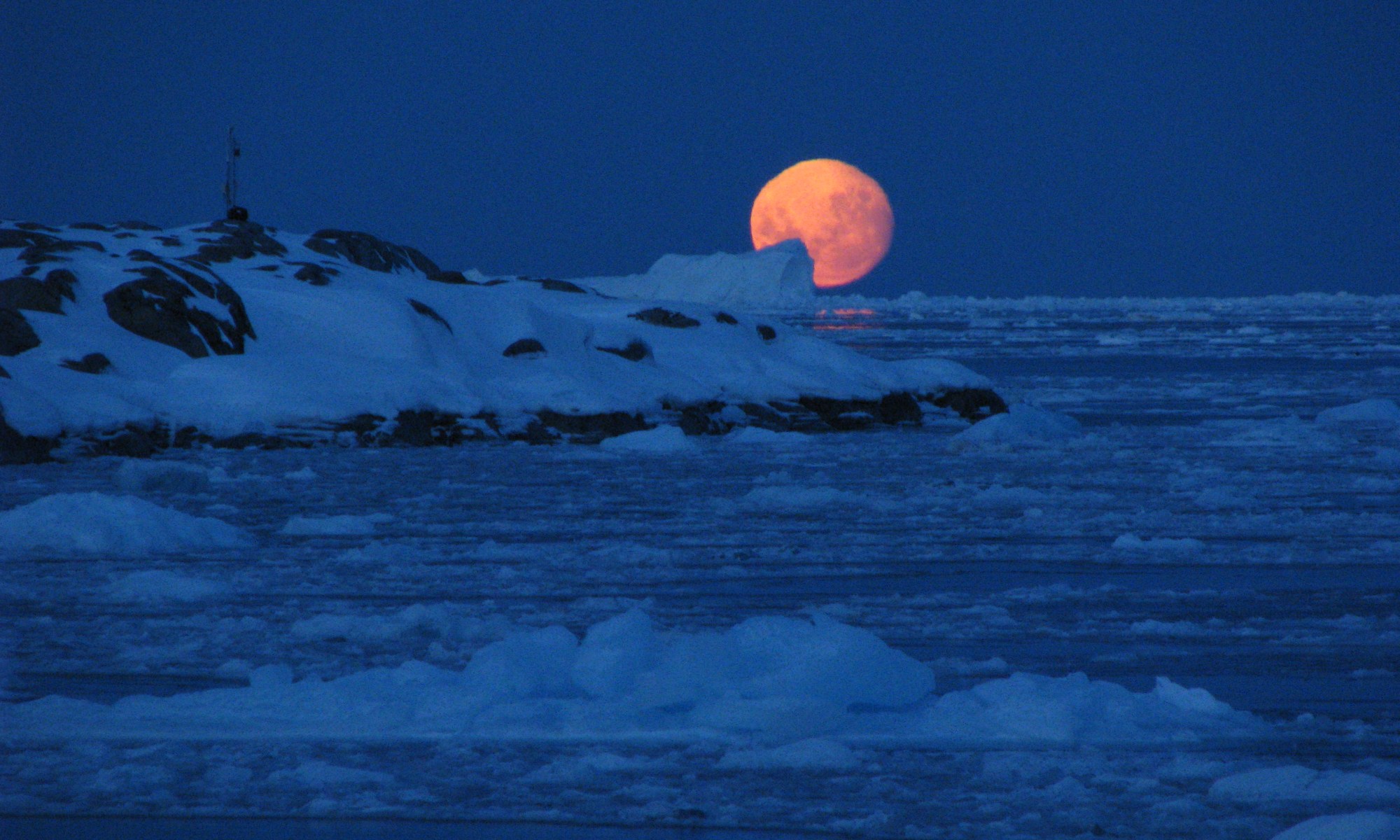
Featured image at the top of the article: “The moon sets behind Bonaparte Point, Anvers Island, across from Palmer Station, the U.S. Antarctic Programโ€™s smallest research station.โ€  September 2, 2009. Courtesy Ken Keenan/Creative Commons CC BY-NC-ND 4.0.

The Cuban Underwater Formations

During an exploration and survey mission off the west coast of Cuba in 2001, unusual stone structures were detected in sonar imagery at depths ranging from 600 to 750 meters. The discovery was announced by Pauline Zalitzki, a marine engineer, and her husband Paul Weinzweig, who led the mission under the auspices of the Cuban government. Widely reported at the time by the popular press, the discovery has since become a topic of some speculation due to what seemed to be the lack of any follow-up investigation.

More than a decade later, a scientific report was published by the expeditionโ€™s lead scientist, Manuel A. Iturralde-Vinent, in which he states:

At depths between 600 and 750 metres below sea level, EXPLORAMAR researchers found a set of unusual structures that they called MEGA. Since the discovery was revealed to the press, various opinions have been raised about its origin, which have captured the popular imagination. There has been talk of a “submerged city”, the remains of “Atlantis”, a Mayan settlement, among other similar ideas.

He goes on to describe a follow-up investigation that was never reported by the popular press or cited in the scientific literature:

Investigations in the MEGA area were conducted over several years and included the collection of underwater video images, bottom sediment samples, mosaics of side-scan sonar lines, maps of the location of the lines and structures, photos of the observed structures and objects, aerial photos, several detailed bathymetric maps, topographic maps and scientific literature on western Cuba. A group of technicians and navigators on the Cuban Navy research vessel SS Ulysses participated in this work under the direction of engineer Paulina Zelitsky. The author participated in the final phase of the investigation, studying all the collected materials and performing the geological and geomorphological evaluation and interpretation of the possible origin of MEGA.

While researching these structures, I rediscovered Iturralde-Vinent’s report, which has been translated into English. Using it as a starting point, with the help of Google Earth, we can refine the location and depth of the MEGA site, and estimate the orientation of the underwater structures in the sonar scans.

Where Are the Structures?

According to Wikipedia, the underwater formations are at 21.772547ยฐN 84.836736ยฐW southeast of the San Antonio lighthouse at the extreme western tip of Cuba. In his report, Iturralde-Vinent states they are between 21.85 degrees and 21.9 degrees in a submerged valley between the mainland and the Bajo de San Antonio. By registering his map to Google Earth we place the formations at approximately 21.991ยฐ N 84.983ยฐ W, almost 18 miles away from their previously stated location.

Location map of the megalithic structures registered to Google Earth. The shallowest area is the Bajo de San Antonio northwest of the mega structures. The submerged plain to the east is the extension of the Cuban insular platform in Guanahacabibes. (Iturralde-Vinent/Google Earth)

How Deep Are The Structures?

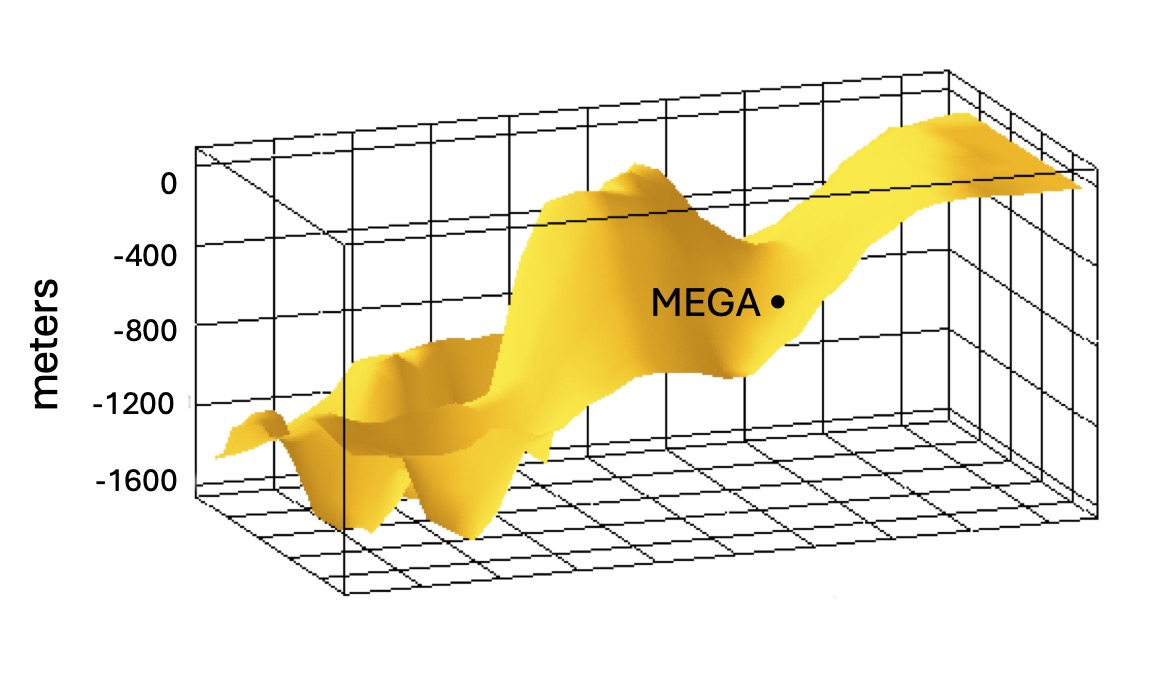
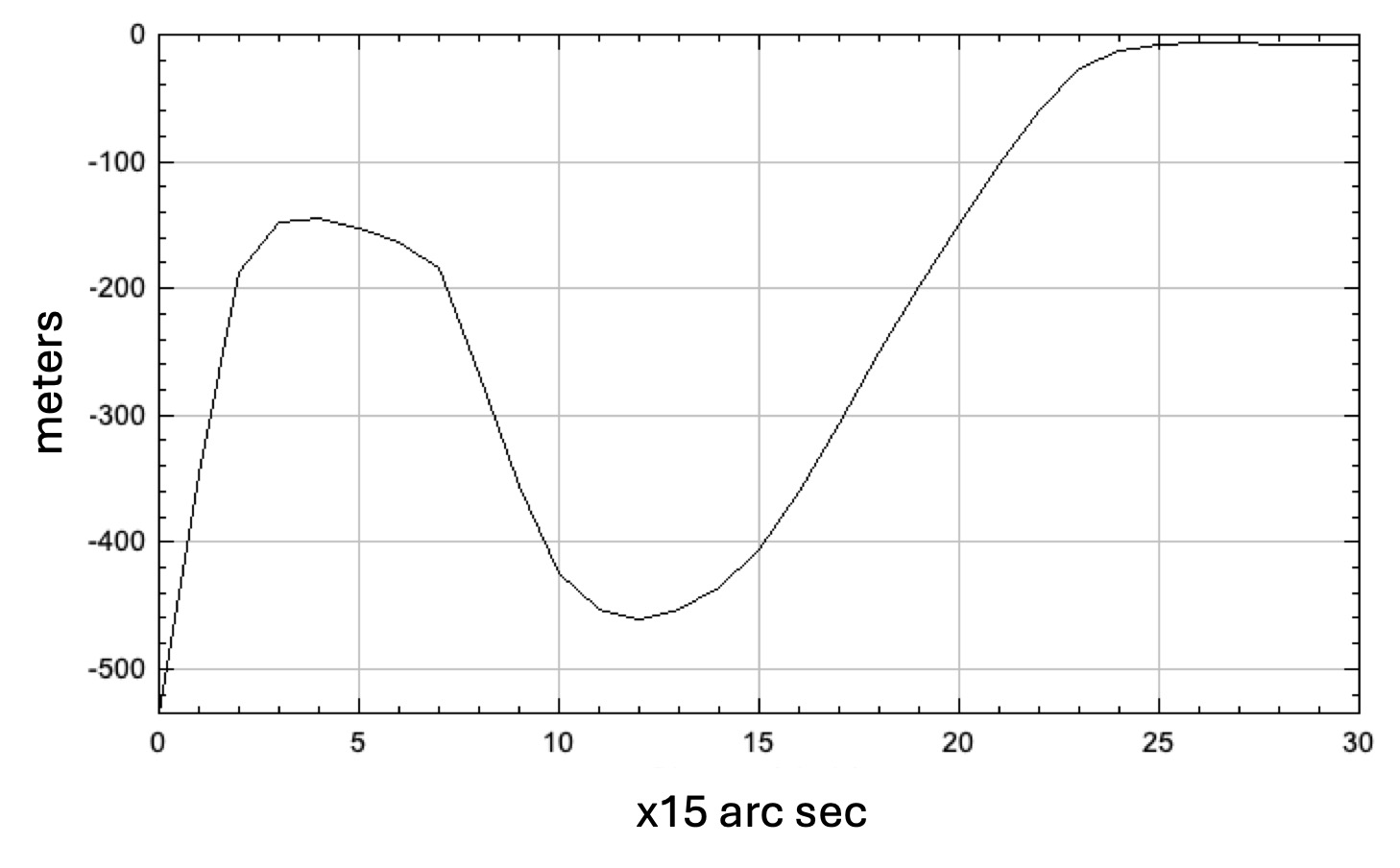
Iturralde-Vinent notes in his report that these structures are in the southeastern portion of the San Antonio Lowlands at depths between 600 and 750 meters. Registering 15 arc-second depth data over this area to Google Earth indicates a shallower range of depths from west to east at the estimated latitude of the structures. The data shows that the water becomes deeper as we move south and shallower north. Thus the structures may be further south than shown here or are in somewhat shallower water than he reported.

15 arc-second SRTM+ depth data registered to Google Earth (above), and plotted as a 3d surface (below left). Depth profile (west to east) at the estimated latitude of the structures (bottom right).

The Sonar Data

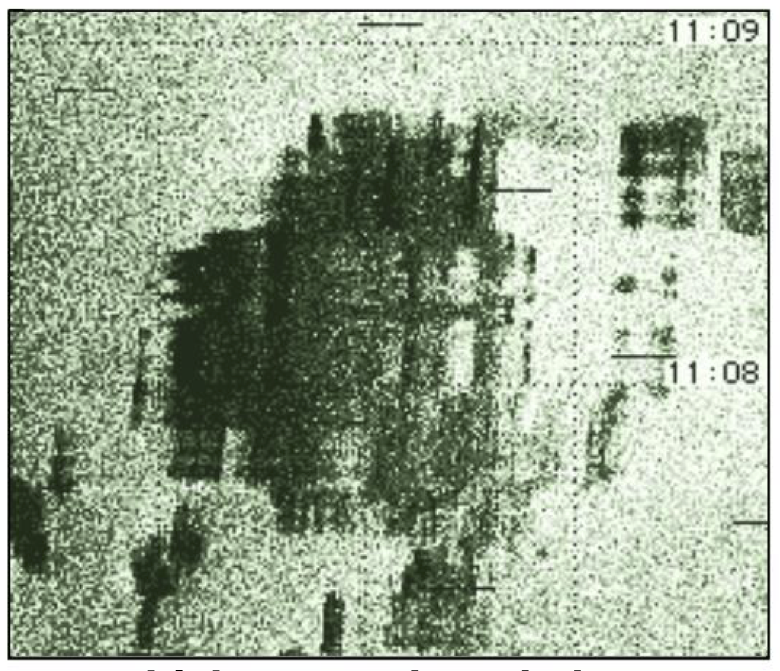
According to his analysis, side-scan sonar maps indicate two kinds of structures. The largest ones have the appearance of elongated geometric crests and depressions that resemble amphitheaters. Smaller ones are cubic, parallelepiped and pyramidal blocks, whose faces are relatively polished.

Sonar scan in the southeastern portion of the San Antonio Lowlands oriented west (left) to east (right) that shows an โ€œamphitheaterโ€ (A) and possible megalithic structures (B). (Iturralde-Vinent)

Iturralde-Vinent states โ€œthe linear nature of some structures and the presence of sectors with the appearance of elements are evidentโ€ and notes features that appear to be thick “walls” and “corridors.” Several examples are shown below. He goes on to say that the side-scan sonar image on the right โ€œexemplifies one of the most striking structures and one that is difficult to explain by natural causes.โ€

Site Alignments

Assuming the sonar scans were accurately registered to a geographic (N-S-E-W) reference frame, the underwater structures are rotated clockwise from the cardinal directions by several degrees.

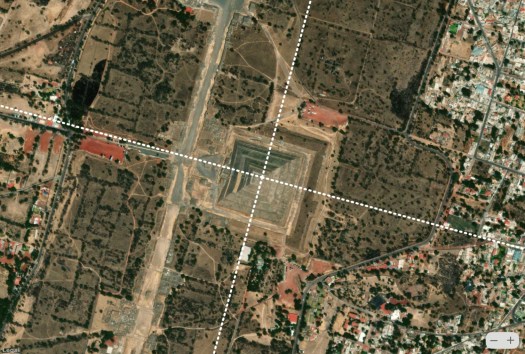
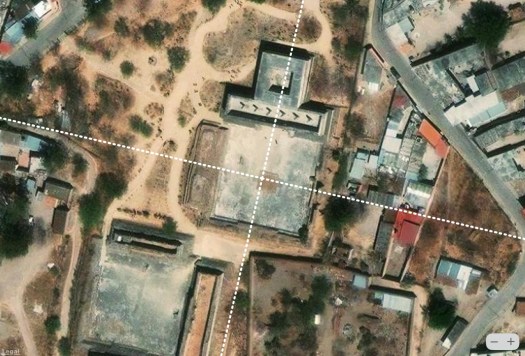
An analysis of the geographical orientation of almost two hundred archaeological sites in the Western Hemisphere (Beyond Atlantis, chapter 20) reveals that only about 1/3 are cardinally aligned N-S-E-W or in astronomically significant directions. The alignments of five of these sites, provided as context, along with one of the underwater formations, are shown below.

Notice the clockwise rotation angle of the sites decreases from west to east. In other words, Teotihuacan, north of Mexico City, which is furthest west is rotated 15.2ยฐ east of north, while the underwater formation off the western coast of Cuba, which is furthest east is rotated 5.6ยฐ. The misalignment of all of these sites can be resolved if we shift the point of reference from the current North Pole in the Arctic Sea to a previous hypothesized geographic pole location in Hudson Bay as shown below.

Alignment of the above sites to the Hudson Bay pole.

Thus, based on their alignment, if these structures are artificial, they could be 20,000 to 40,000 years old according to the pole shift timeline proposed in Before Atlantis.

Pole shifts are correlated with geomagnetic excursions (circles) and super-volcanic events (triangles). Click here for more information.

Out of Time and Out of Place

In his analysis of the MEGA site, Iturralde-Vinent notes the presence of โ€œwell-rounded pebblesโ€ and โ€œvolcanic scoriaโ€ in the area. Scoria is a pyroclastic, highly vesicular, dark-colored volcanic rock formed by ejection from a volcano as a molten blob and cooled in the air to form discrete grains called clasts. As there are no volcanoes in the area, the presence of scoria mixed in the seabed is hard to explain. Similarly, there is no mechanism to explain the presence of rounded pebbles that are typically found near rivers.

The depth of these structures would seem to rule out an artificial origin, even during the last glacial maximum (LGM) when global sea levels were at their lowest. However, if the Cuban underwater formations turn out to be artificial, something extraordinary must have happened for them to now lie hundreds of meters below the surface.

After more than two decades, isn’t it time to return to MEGA and find out?

The featured image at the top of the article depicts the Caribbean approximately 20,000 years ago during the last glacial maximum (LGM). (Google Earth/Zรผrich University of Applied Sciences)

Ice Age America

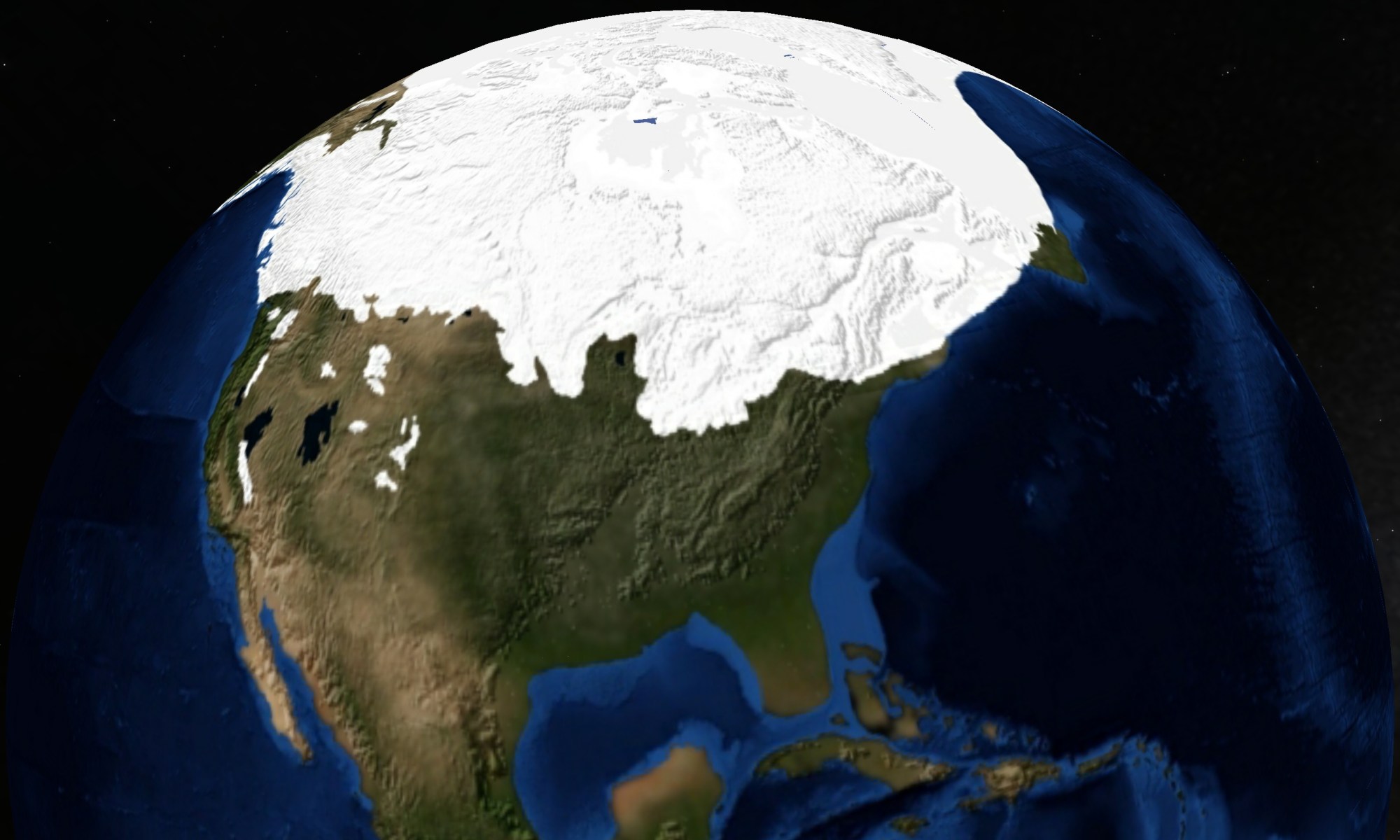
20,000 years ago, much of North America was covered by an enormous ice sheet. Geoglyphs, burial mounds, and other structures thought to have been built by the indigenous people of North America can be found throughout the US and Canada. This article explores the possibility that some of these structures could have been built by an earlier prehistoric civilization that inhabited the southern US during the last ice age.

Clovis Second (or Third)?

The prevailing theory is that the first people of North America arrived by way of a land bridge from Asia at the end of the last ice age. Genetic analysis indicates that a group of people, known as the Clovis culture, based on the distinctive stone tools they used, were the ancestors of most of the native people of North and South America. Genetic analysis also reveals links to populations in other parts of the world that challenge the โ€œClovis Firstโ€ hypothesis. One possibility is that an even earlier people known as the Solutreans migrated from southern Europe 21,000โ€“15,000 years. Regardless of how they arrived, evidence in form of human footprints shows humans were living in the American Southwest 21,000 to 23,000 years ago during the last glacial maximum (LGM).

Archaeological Sites

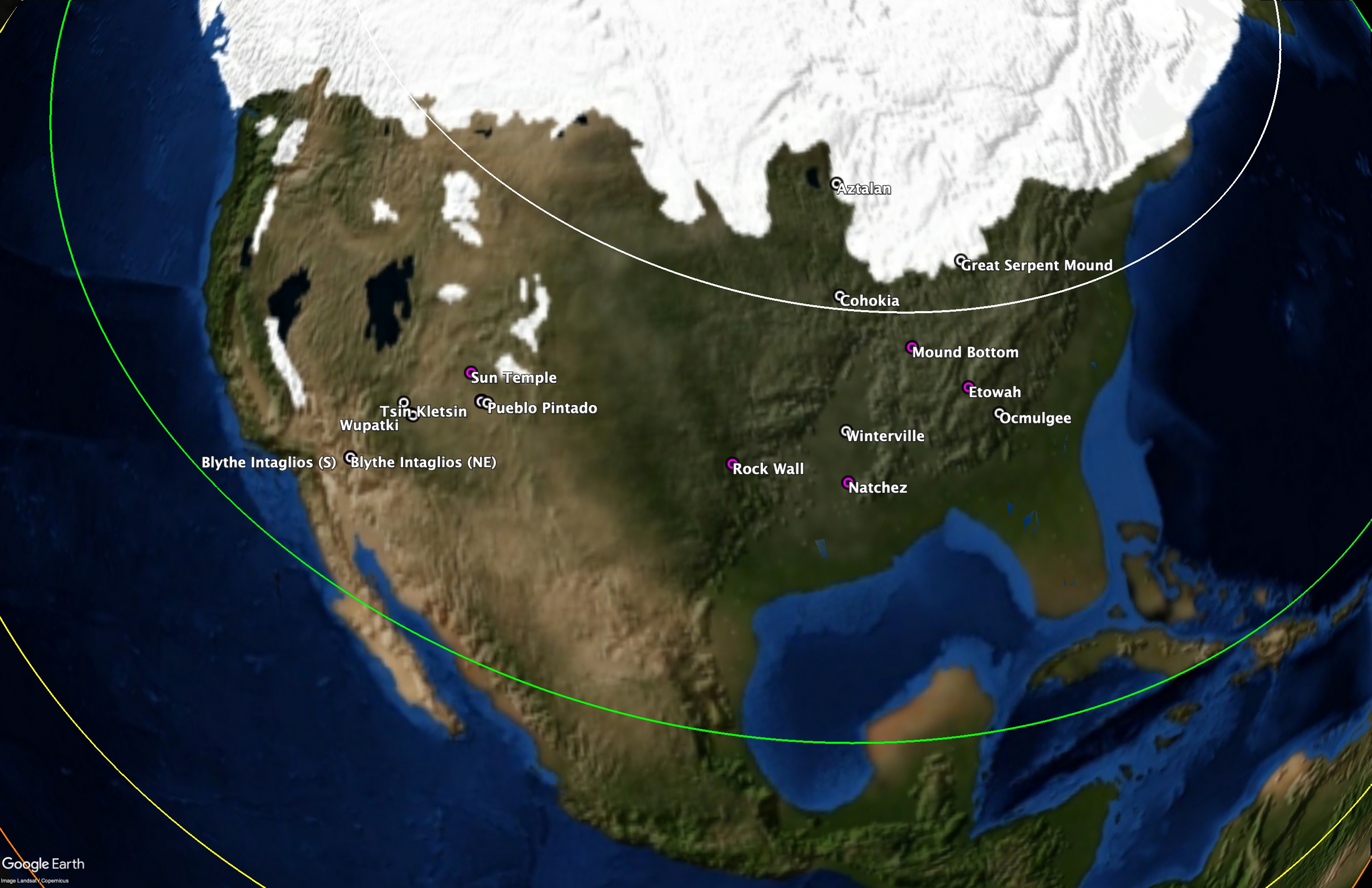
Using Ancient Locations and other sources to identify candidate sites, the geographic orientations of almost two dozen structures were analyzed with respect to the equinox (E), solstices (S), major (M), and minor (m) lunar standstills.

Site/StructureArctic PoleHudson Bay Pole
Natchez E
OcmulgeeS 
Rock Wall E
WintervilleM 
Blythe Intaglios (S) S
Blythe Intaglios (NE)E,S 
Blythe Intaglios (NW) E,S
Etowah S
WupatkiM 
NalakihuM 
Pueblo Pintadom 
TusayanM 
Tsin KletsinE 
Pueblo Bonito, Chaco CanyonE 
Chetro Ketl S,m
Pueblo del Arroyom 
Mound Bottom E
Sun Temple, Mesa Verde S
CohokiaE 
Great Serpent MoundS 
AztalanE 

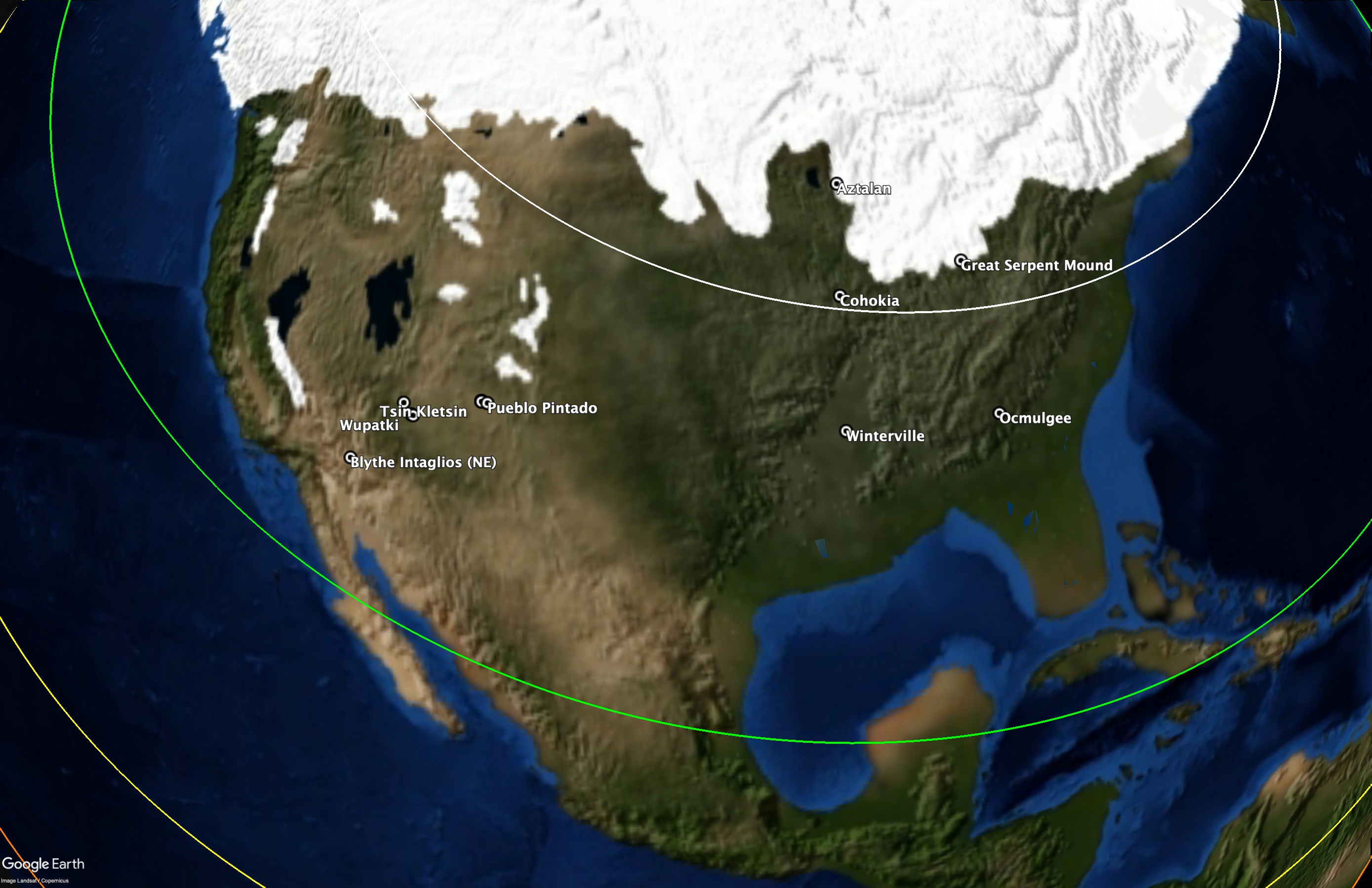
About 2/3 of the sites/structures are oriented in directions that reference the current (Arctic) pole.

The other 1/3 are not aligned in any of these directions but instead appear to reference a location near Hudson Bay that Charles Hapgood argued was the position of the geographic North Pole during the North American ice age.

South of the Ice Sheet

If the North Pole were in Hudson Bay, the southern US would have been in the northern temperate climate zone and ice-free during the LGM. Sites aligned to the current pole are found throughout the area while those aligned to the Hudson Bay pole are only found south of the Laurentide Ice Sheet, which is what one would expect if they were built during the LGM.

Although all of these sites are attributed to various Native cultures, like sites throughout the world believed to have been established within the past few thousand years, the alignment of sites to the Hudson Bay pole raises the possibility they could be much older, perhaps built over more ancient structures.

Rock Wall

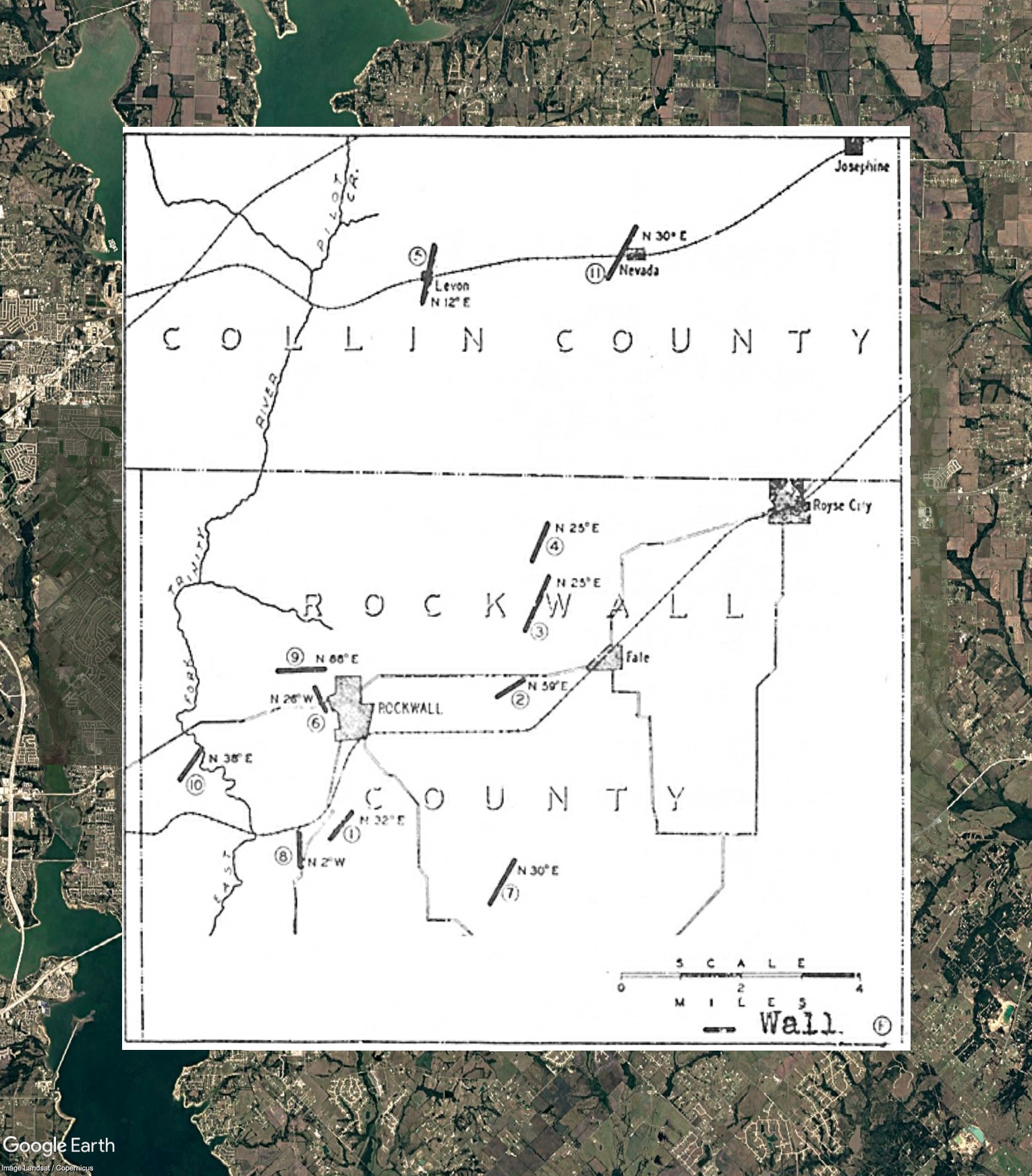
Approximately 20 miles northeast of Dallas is the town of Rockwall, Texas. Soon after the first settlers arrived in the 1840s, a rock wall was discovered on a farm owned by Terry Utley Wade. Later another rock wall to the northeast was encountered while digging a well. A square opening resembling a window was found at a depth of 35 feet. In 1933, a map prepared with the help of the county surveyor showed the location of numerous rock outcrops.

Section of rock wall excavated in 2013. (Rockwall County Historical Foundation)

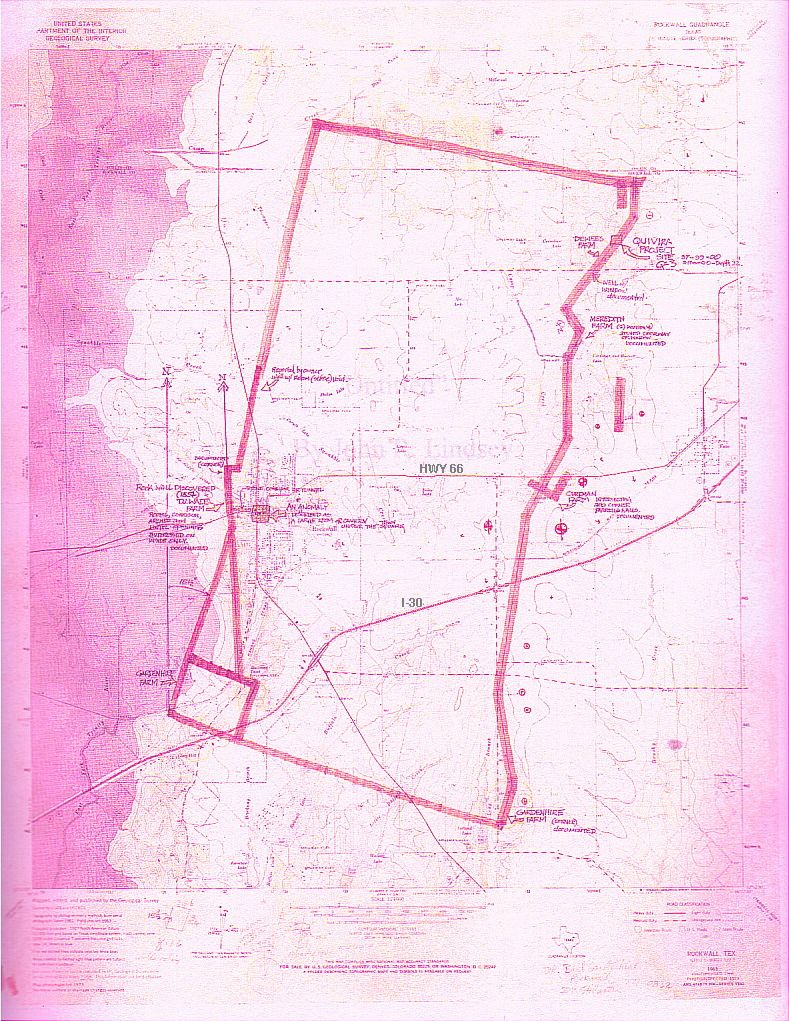
Geological investigations found the outcrops to be clastic sandstone dikes โ€“ natural structures associated with geological faults that resemble stone masonry. Comparing this map with another compiled by John Lindsey, a native Rockwall architect, who led a reinvestigation of the reported features, including an excavation in the 1990s, independent investigator Josh Reeves determined that the sections of the rock wall analyzed by geologists and found to be natural were not part of the structure mapped by Lindsey.

In an independent analysis of the geology of the rock wall motivated by Lindseyโ€™s investigation, James J. (Bud) Shelton, a petroleum geologist, found โ€œthe current geological explanation, that of a clastic sandstone dike sourced by the Upper Cretaceous Trinity Group Lower Wolf City sandstone member does not adequately explain the presence of the featureโ€ citing โ€œseemingly out of place and context stone, possible mortar and plaster-like materials related to distinguishable architectural-like featuresโ€ specifically โ€œstaggered joint stone masonry featuresโ€ and โ€œlinteled portals and archways complete with arch guiding springer stones.โ€ Also in Sheltonโ€™s report was the presence of large cavities in the rock wall complex, which corroborates descriptions of reported underground spaces mentioned by Reeves in his video.

Although none of the rock wall is currently visible from the air, it is possible to register Lindseyโ€™s map to Google Earth using roads and other cultural features. As shown in the above figure, the lower left section of the rock wall complex appears to be oriented in the direction of the Hudson Bay pole. Our discovery of other sites in the southern US that reference the Hudson Bay pole suggests the orientation of the rock wall in this same direction may not be a coincidence and that the largest antediluvian structure in North America may be beneath the suburbs just outside Dallas.


Image at the top of the article courtesy Google Earth/ Zรผrich University of Applied Sciences.

On the Alignments of Ancient Sites – A Global Survey

If we were to examine the orientation of ancient places across the world, what fraction would be aligned to the sun, moon, stars, or in other known ways? This question was first posed in a paper published by the Journal of Scientific Exploration in 2018. The key finding of a worldwide survey of ancient sites was that only about 40% of the over 200 sites examined appeared to be aligned in known astronomical or geographical directions. Over the past six years, hundreds of additional sites have been analyzed. This article, which is based on a presentation at the Altars of the Sun and Moon conference organized to coincide with the recent April 2024 total eclipse by the New England Antiquities Research Association (NEARA), updates the original survey by providing compelling statistical evidence supporting the hypothesis that hundreds of sites worldwide are probably far older than we think.

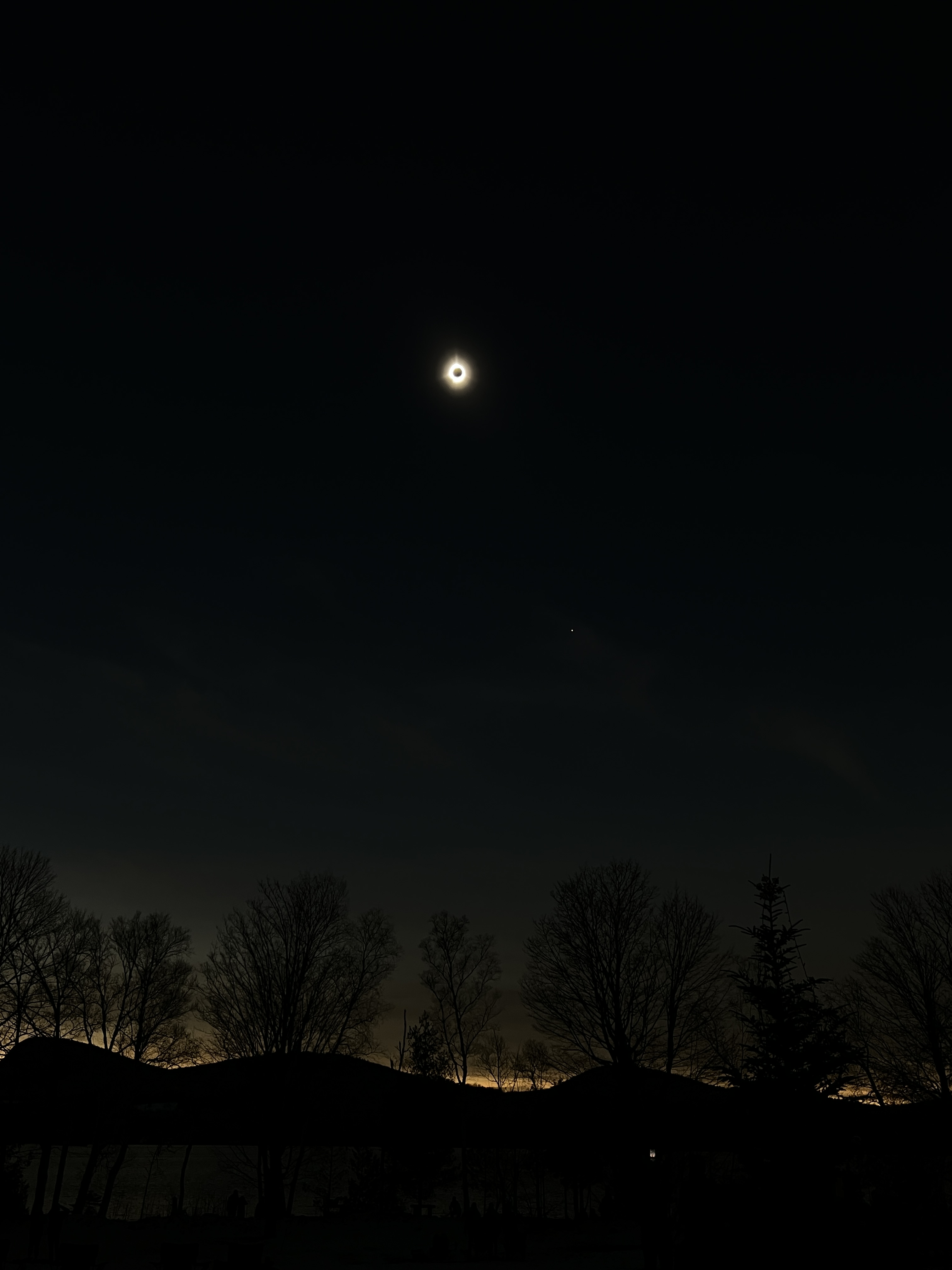
Total eclipse at Lake Willoughby in northern Vermont on April 8, 2024. (Photo by Mark Carlotto)

Determining the Alignment of a Site

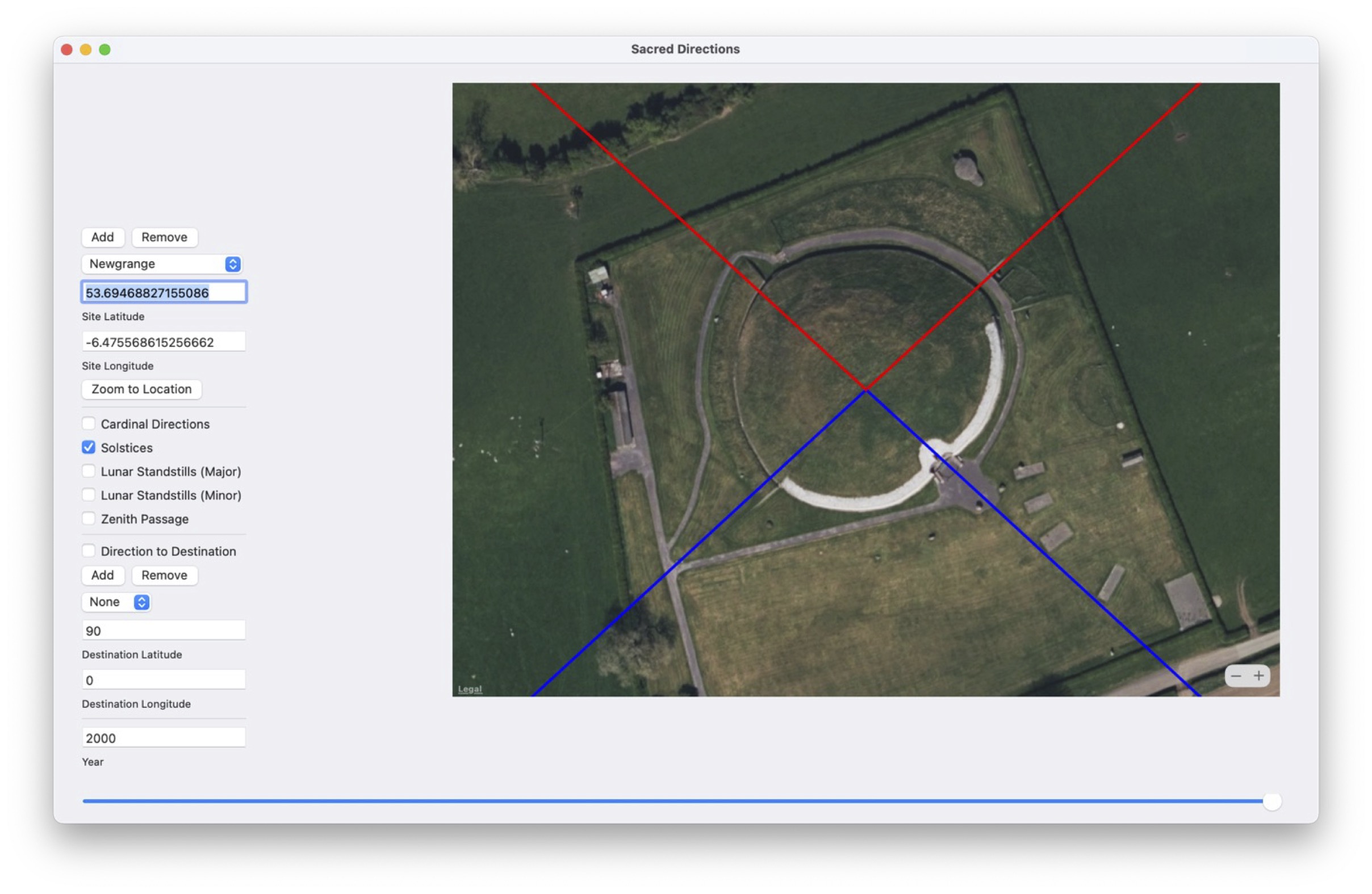
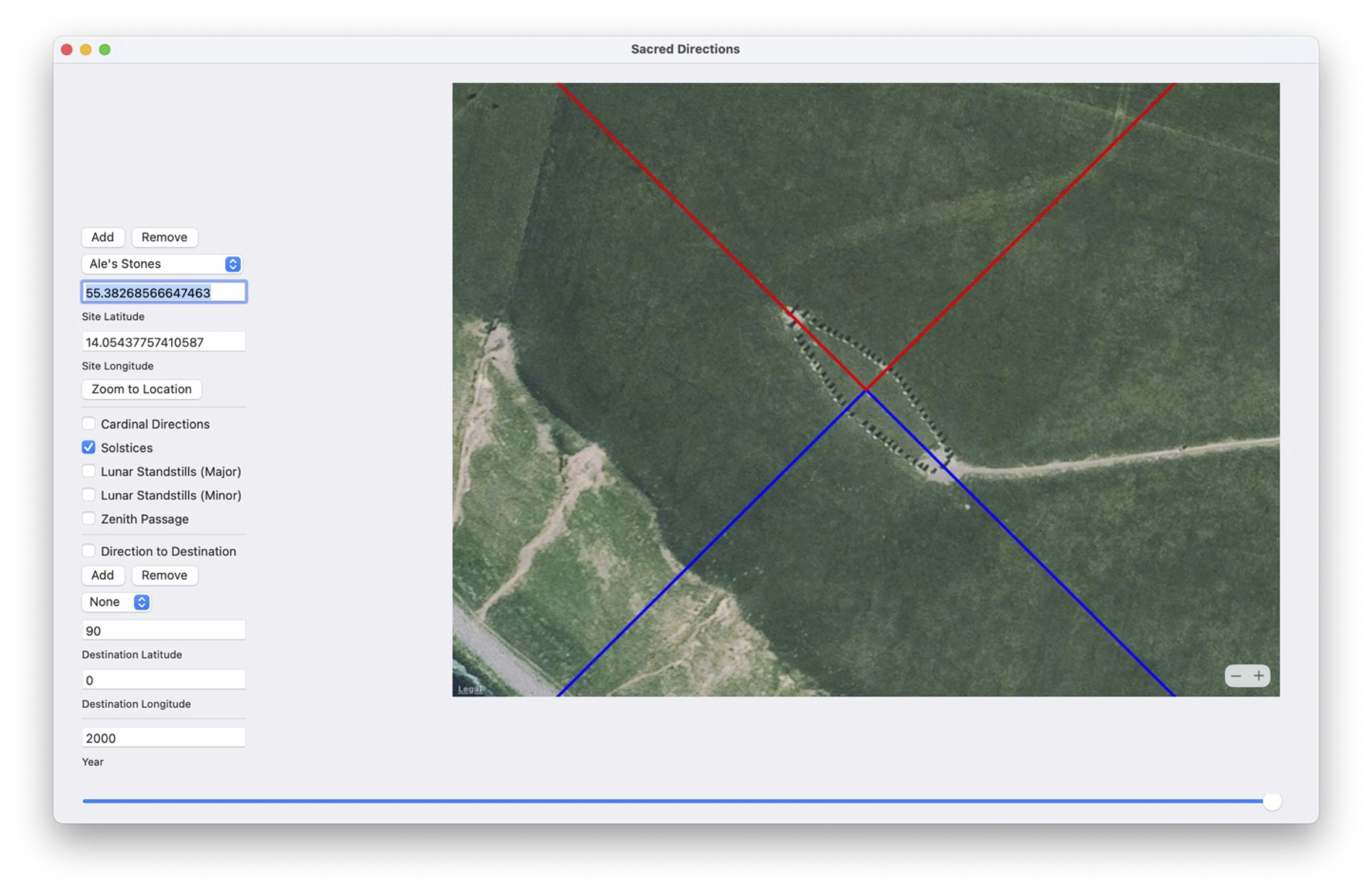
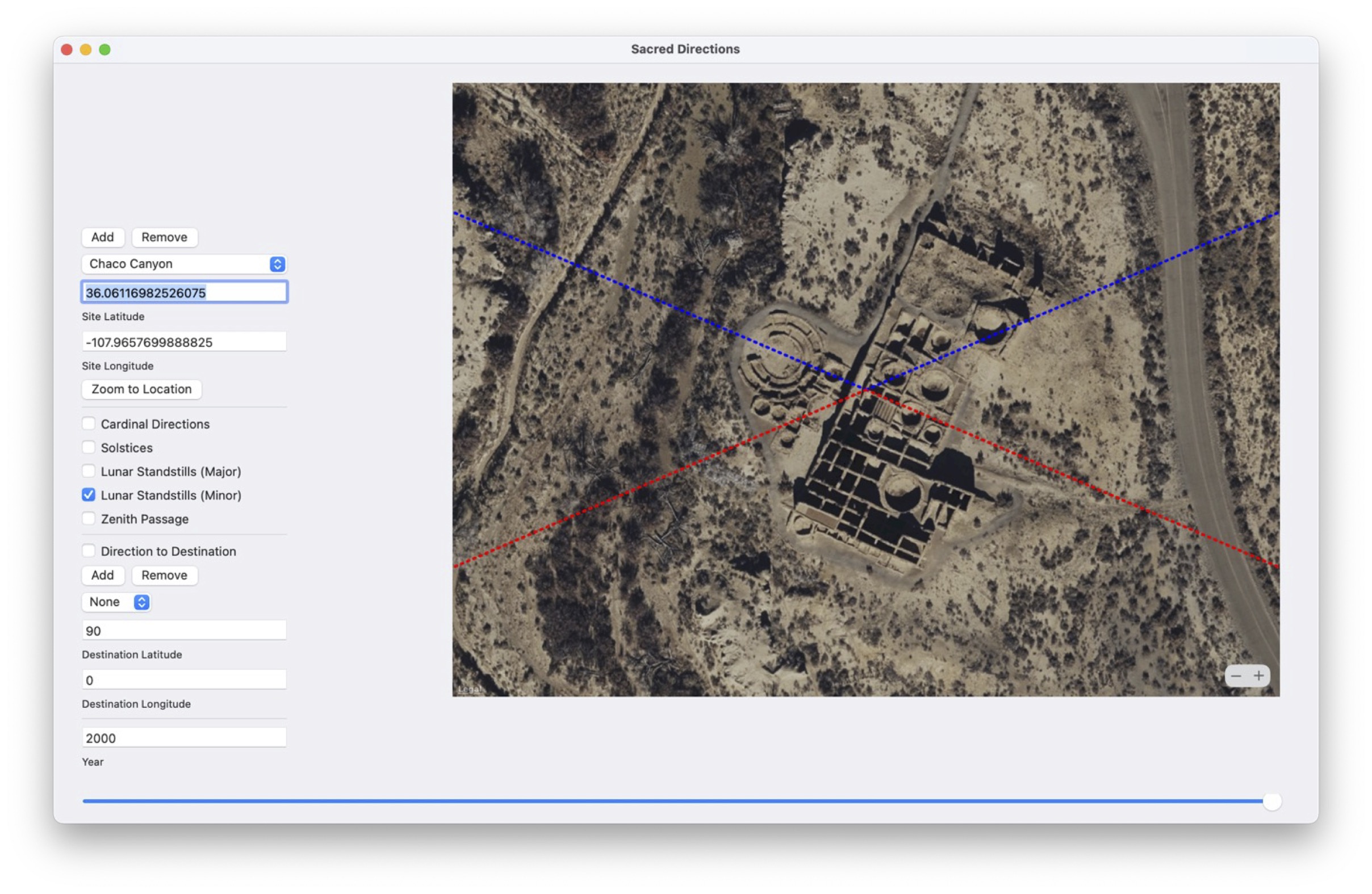
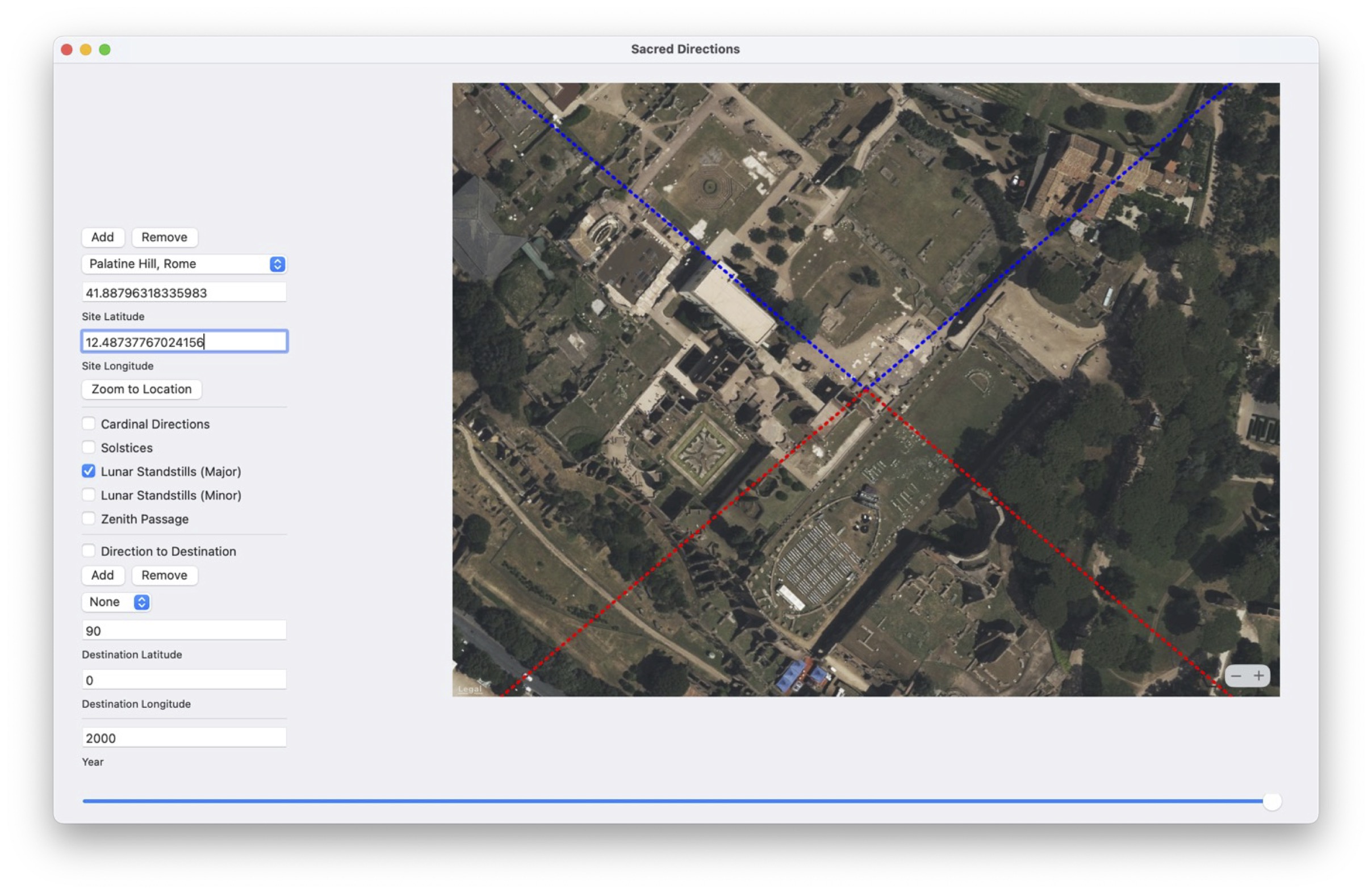
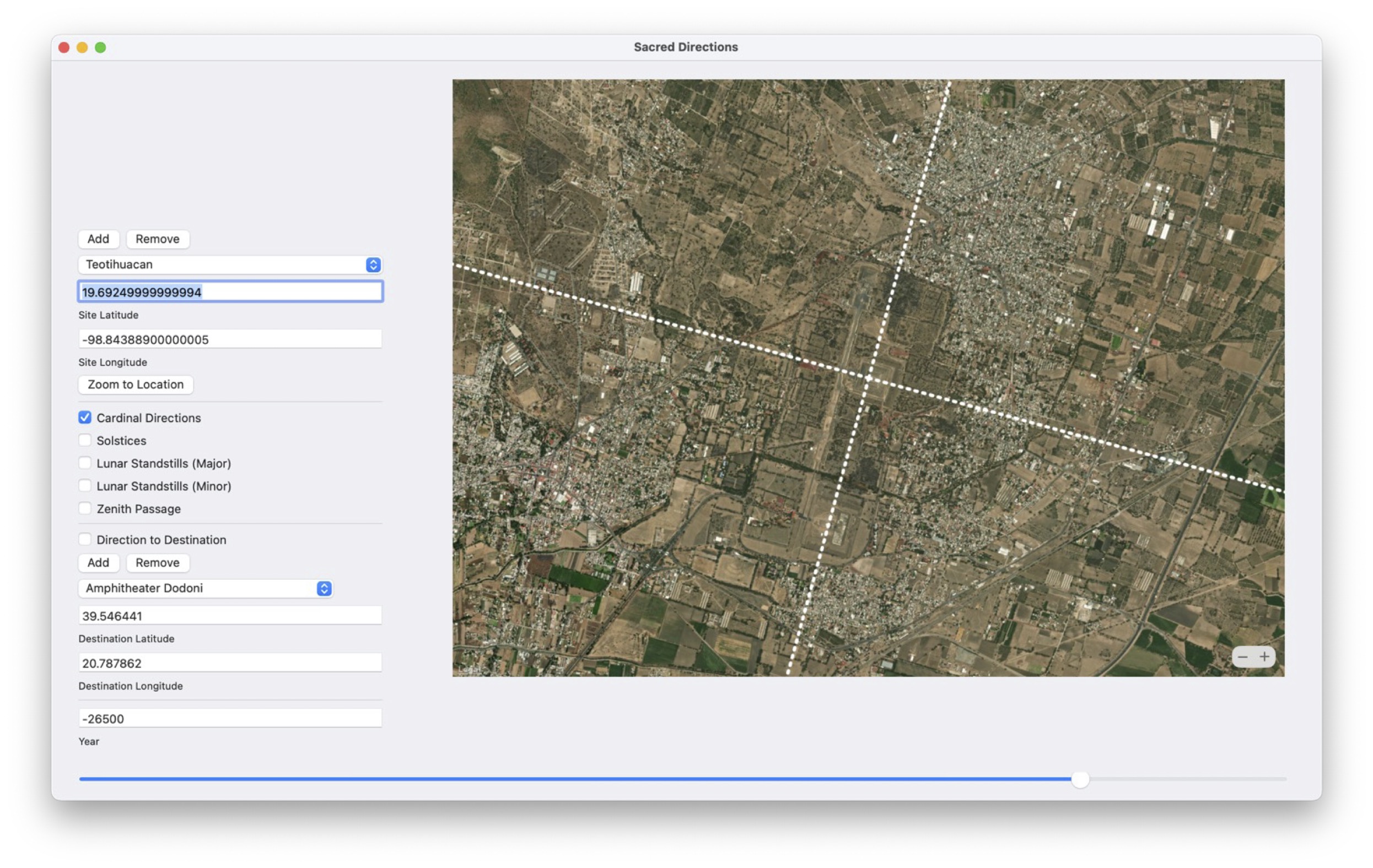
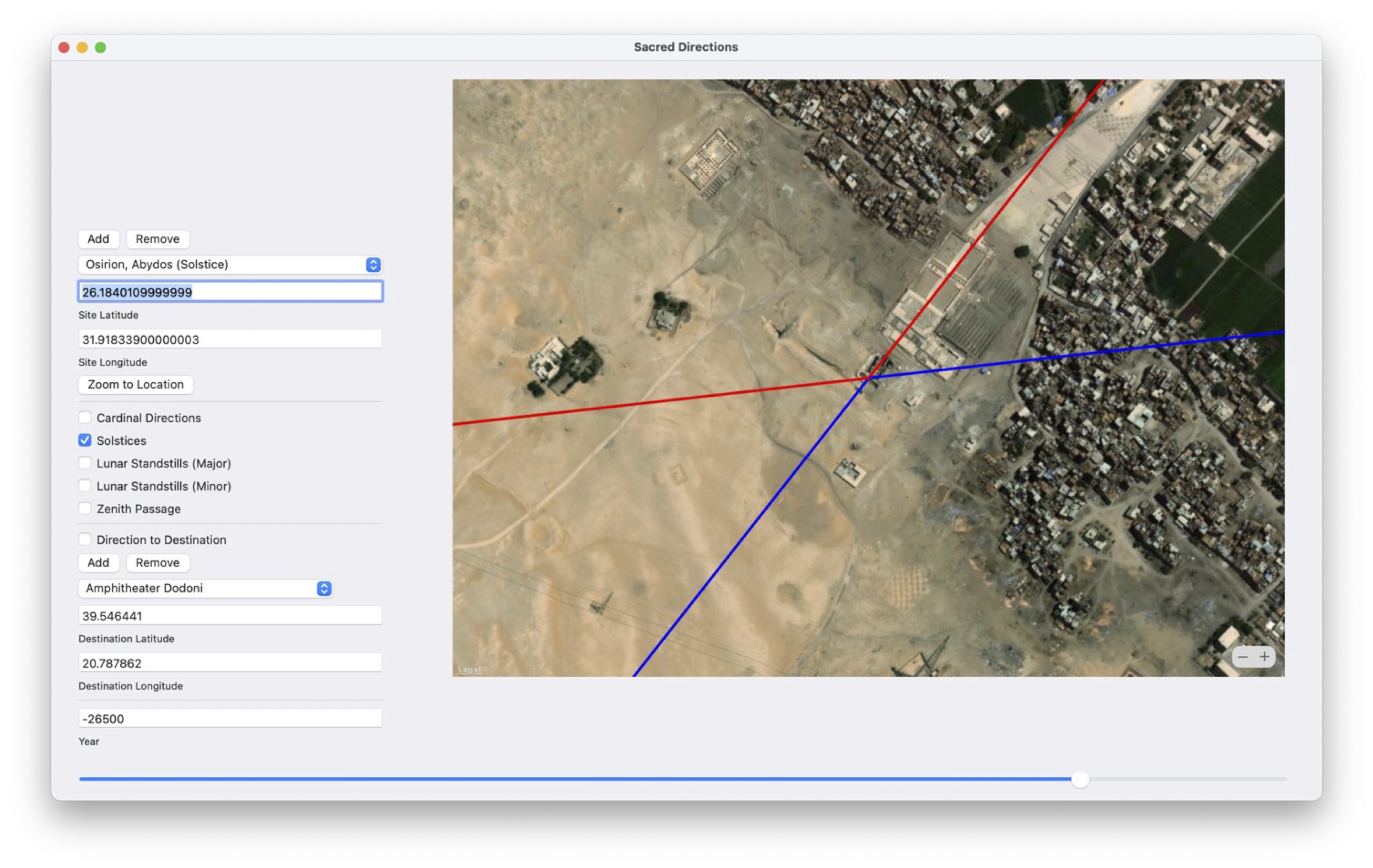
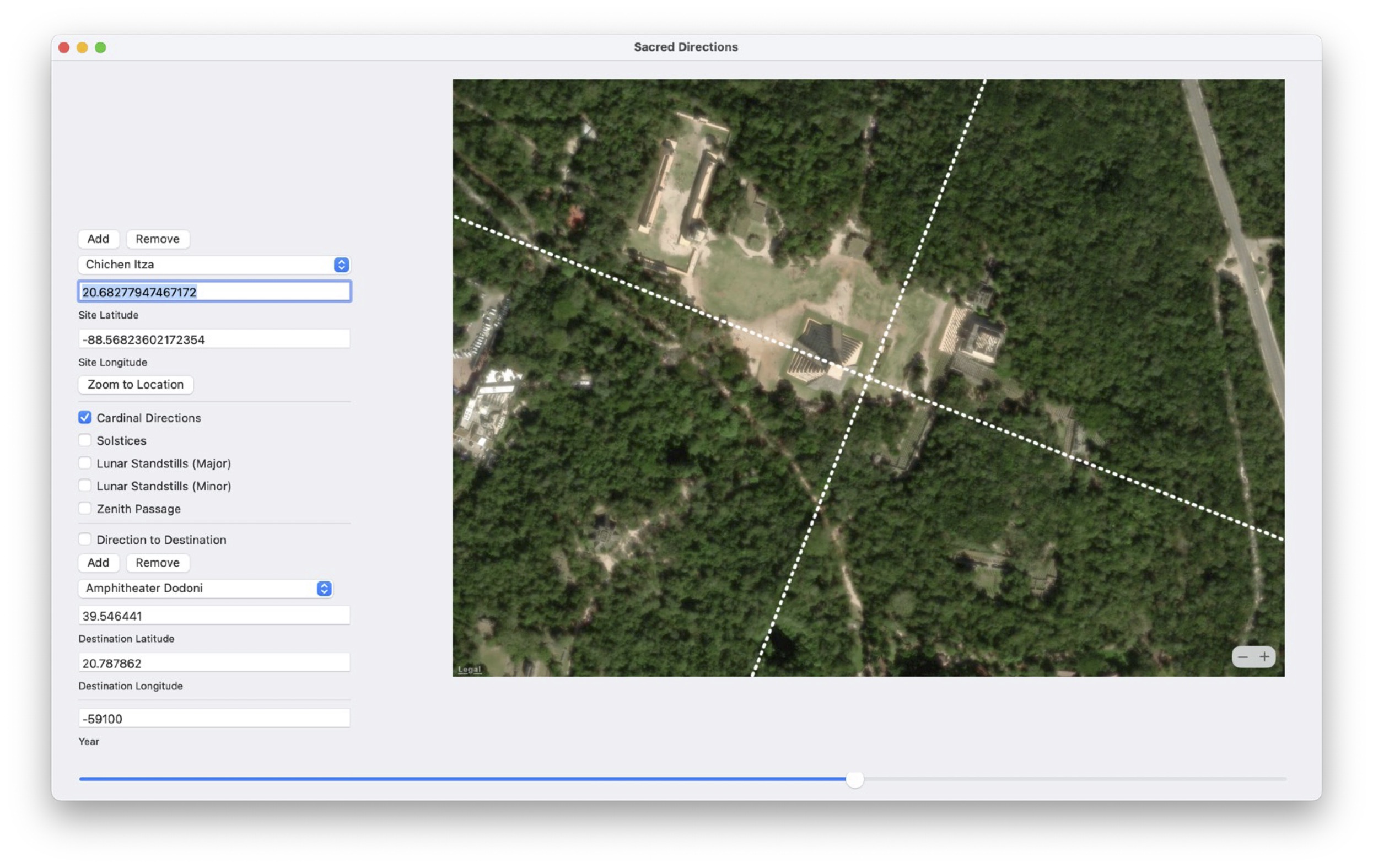
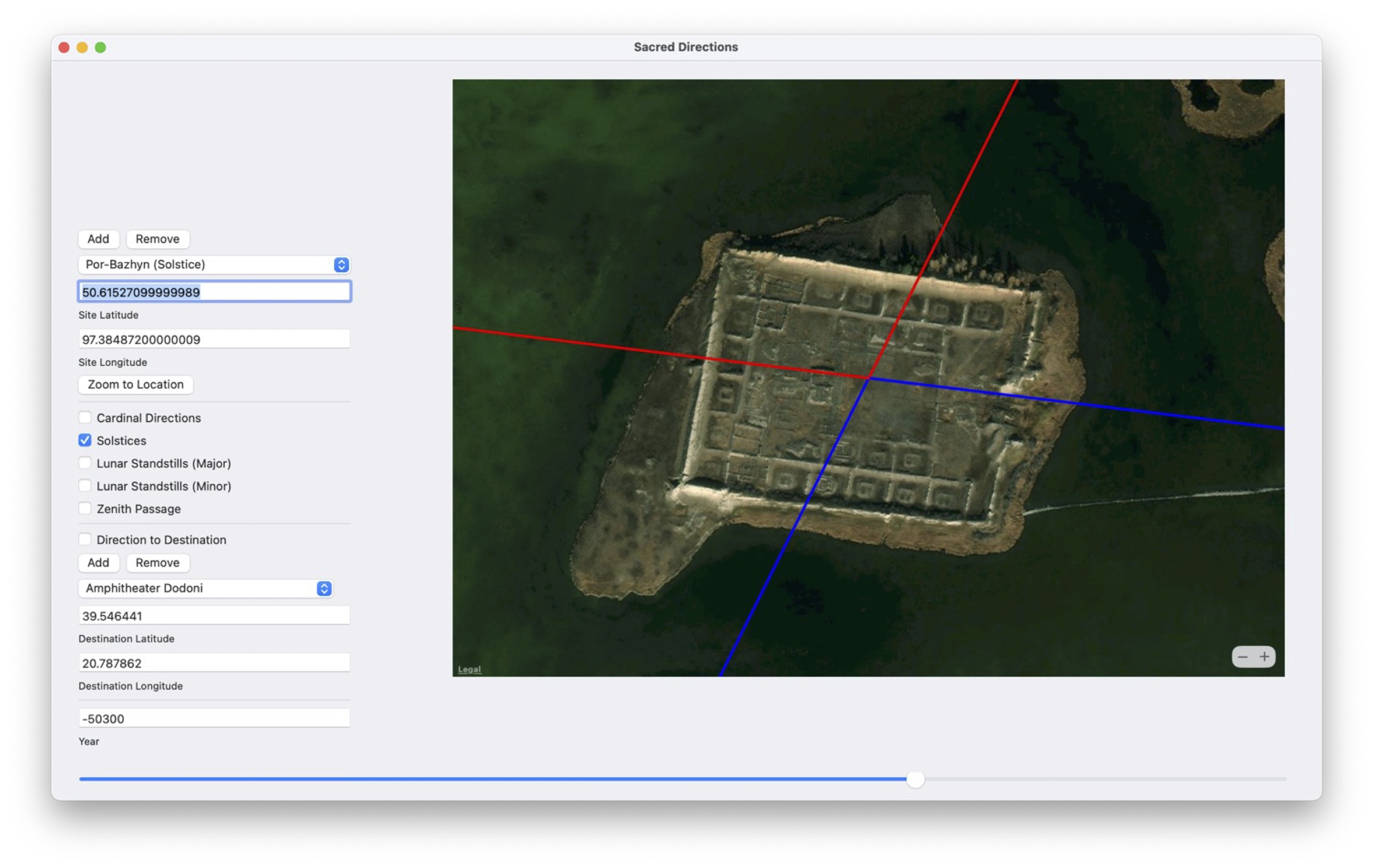
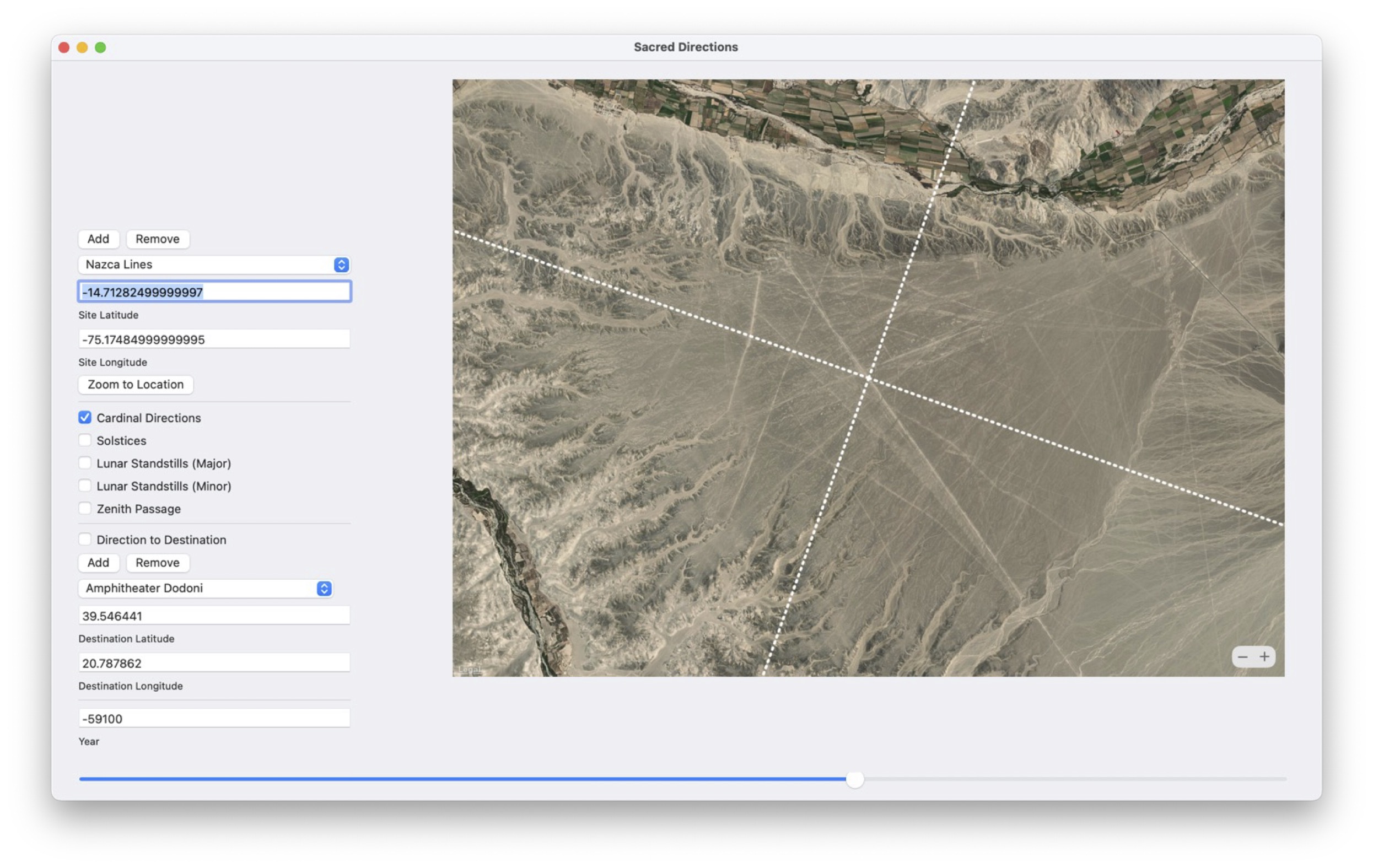
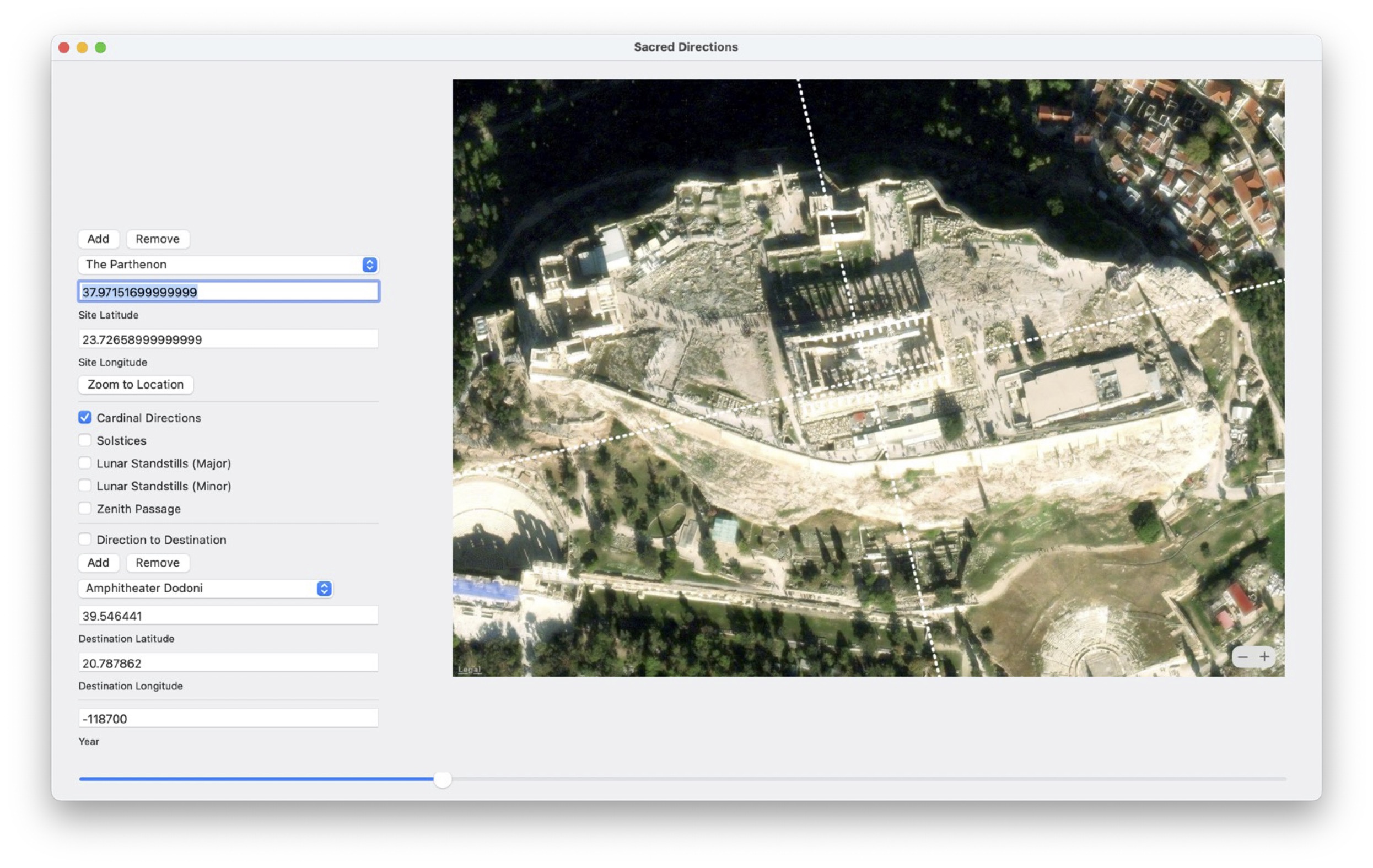
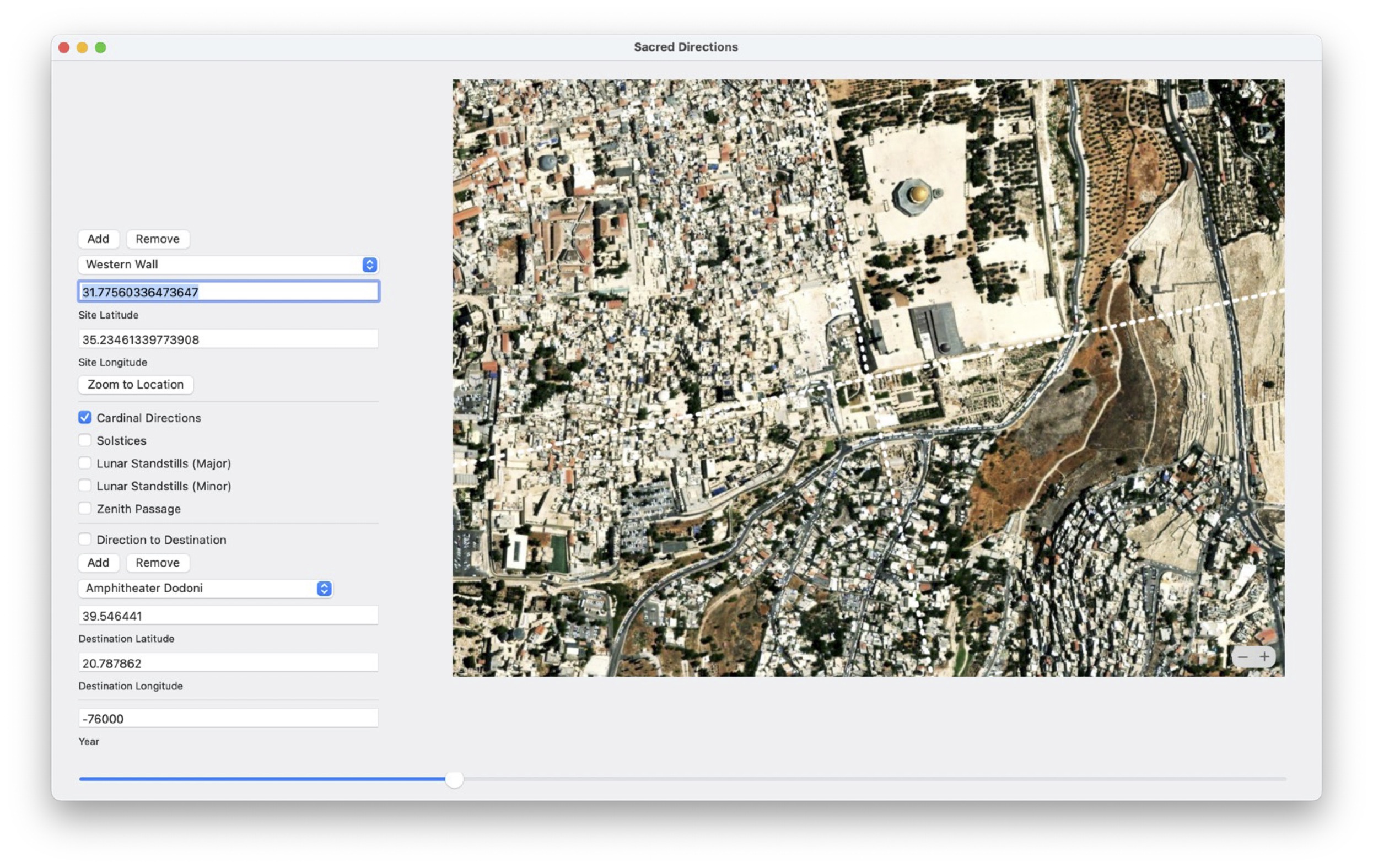
In order to determine if a site is aligned to something we must first measure its orientation with respect to true (geographic) north. One way to do this is on the ground with a compass using a declination table to correct for differences between true and geomagnetic north. A far more accurate and efficient way is with overhead (satellite) imagery (provided the site is visible from above). At first, I used the ruler tool in Google Earth to measure the heading (clockwise angle from true north) of linear features and rectilinear structures having well-defined edges. I then compared the angles with solstice sunrise/sunset and other directions to determine if the site was aligned in a particular way. Later, to automate the process so that more sites could be examined, I developed an app known as Sacred Directions. By simply entering the latitude and longitude of a site, the app plots lines in the cardinal directions, directions of solstices, lunar standstills, and zenith passages, geomagnetic alignments, and directions to other sites over high-resolution satellite imagery. With the help of Sacred Directions, I have examined thousands of sites over the past six years.

Let’s first examine some sites that are aligned to the sun and the moon. Many places are oriented to face in the cardinal directions – north, south, east, and west. A previous article discussed the precise alignment of 3rd and 4th Dynasty Egyptian pyramids to the cardinal directions and how it is likely the ancient Egyptians aligned these structures on the equinox when the sun rises and sets due east-west.

Solstice alignments mark the longest and shortest days of the year. The alignment to the summer solstice sunrise at Stonehenge in England is well known. A passage tomb at Newgrange in Ireland, the Temple of Karnak in Upper Egypt, and the Ales Stones in Sweden are places that are oriented in the direction of the winter solstice sunrise.

Where solstice alignments mark the most northern and southern risings and settings of the sun over the course of a year (longest and shortest days in the northern hemisphere), lunar standstills do the same for the moon over its 18.6-year cycle. Examples of sites aligned to the moon include structures at Chaco Canyon in New Mexico, Palatine Hill in Rome, and the Ziggurat of Ur in Iraq.

Some ancient sites within the zone of the tropics are aligned in the direction of zenith passage sunrises/sunsets – days in which the sun passes directly overhead. A temple at Koh Ker in Cambodia is one such place.

Besides marking the motion of the sun and moon, a study of ancient sites reveals other reasons for their alignment. For example, numerous earthen pyramids in China appear to have been aligned in the direction of the geomagnetic pole at the time they were constructed. Certain sites are thought to have been oriented in the direction of specific stars such as the Temple of Hathor at Dendera in Egypt to Alkaid in Ursa Major. There are also sites that face in directions of importance such as Islamic qibla, Greek oracles, and Quechua ceque. We even found over a dozen sites in northwestern Europe that appear to face in the direction of Paris.

What We Discovered

The initial 2018 survey found 19% of the sites were aligned to the cardinal directions, 9% to solstices, 15% to lunar standstill, 5% to the geomagnetic pole at the time of construction, 5% to other sites, 4% to zenith passages, and 1% to stars, leaving 42% unexplained. In expanding the study to almost 900 sites, 19% of the sites were cardinally aligned, 7% oriented in solstice directions, 11% to lunar standstills, and 6% (mostly in China) to geomagnetic north. To our surprise, more sites appear to be aligned to lunar standstills than to solstices. In fact, broken out by geographical region, alignments to the moon occurred more frequently than those to the sun in 6 of the 15 regions considered (see table below). The most surprising result was that the orientation of about 70% of the sites could not be explained in terms of any of the alignments discussed above.

RegionEquinoxSolsticeLunar StandstillSunMoonUnexplained
Arabia013 X5
Central Asia232X 26
China026 X16
Egypt851015X 70
Greece6212 X51
India820X 20
Italy024 X14
Levant6110 X47
Mesoamerica9711X 63
Mesopotamia2254X 47
N. Africa024 X32
N. America415  11
S. America064X 58
Torgai130X 4
N. Europe031X 10

Evidence of Civilizations Before Our Own?

That so many sites could not be explained by current models was an unexpected finding – an anomaly. According Thomas Kuhn in The Structure of Scientific Revolutions, the discovery of “anomalies” during revolutions in science leads to new paradigms. New paradigms then ask new questions of old data, move beyond the mere “puzzle-solving” of the previous paradigm, change the rules of the game and the “map” directing new research. In analyzing the orientations of unexplained sites, we found that most appear to reference four locations within about 30 degrees of the current geographic pole. If these were previous locations of the North Pole, Hapgood’s theory of earth crustal displacement offers a simple explanation and an interesting alternative to current theories regarding the age of these sites.

According to our revised and expanded version of Hapgood’s theory, sites aligned to a North Pole in Hudson Bay could be 20-50 thousand years old – places like Teotihuacan, north of Mexico City, which is cardinally aligned to the pole, the Osirion in Upper Egypt aligned to the summer solstice sunrise, and the Pantheon in Rome aligned to major lunar standstills relative to the Hudson Bay pole.

According to Hapgood’s theory, before Hudson Bay, the geographic pole is hypothesized to have been located in the Norwegian Sea 50-75 thousand years ago. Three sites that reference a North Pole in the Norwegian Sea include Chichen Itza in Mexico, Por-Bazhyn in Siberia, and one of the more prominent Nazca lines in Peru.

Between 75 and 130 thousand years ago, climate data suggest the North Pole was in northern Greenland, not far from where it is today. The Parthenon atop the Acropolis in Athens, Baalbek in Lebanon, and the western and southern walls surrounding the Temple Mount in Jerusalem are all cardinally aligned with respect to the Greenland pole.

The oldest pole is thought to have been located in the Bering Sea more than 130 thousand years ago. The most prominent of the Nazca lines points to the Bering Sea pole as do a number of ancient sites in Peru’s Sacred Valley including the Temple of the Sun at Ollantaytambo. Lion’s Rock and the surrounding complex at Sigiriya are aligned to the winter solstice sunrise relative to the Bering Sea pole.

These are just a few of the previously unexplained sites whose orientations can be explained by changing the frame of reference. Perhaps the best evidence in support of Hapgood’s theory is the sheer number of sites we have found that can be explained in this way.

RegionArHBNSGrBSXESM
Greece2617812146321321
N. Europe7100000677
Mesoamerica3337141022621116
Egypt11120834801073238
Pacific040000130
Mesopotamia3320410130412013
Torgai421100530
Central Asia713373015153
India111414102282
Arabia430110325
Levant191481870351021
China5010141426410
Italy61220003712
N. Africa1024620091422
N. America111100001088
S. America12111112240162319
Easter Is.000470335
TOTALS344222671198150376183202
Site alignments by pole: Arctic (Ar), Hudson Bay (HB), Norwegian Sea (NS), Greenland (Gr), and Bering Sea (BS). Alignments are geomagnetic (X), equinox (E), solstice (S), and lunar standstills (M).

The last chapter in Beyond Atlantis examines the statistical significance of these numbers and several interesting patterns discovered in the data. As shown in the table below, the probability that a group of sites randomly faces a particular location decreases exponentially as the number of sites increases. The alignment of 344 sites to the Arctic pole is clearly not a coincidence. The probability that this could have occurred by chance is zero. Similarly, the probability of 222 sites randomly lining up to the Hudson Bay pole is practically zero. Statistically, this too cannot be a coincidence. Although the other probabilities appear at first to be less significant, it is plausible that there are fewer sites aligned to older poles because older sites had less of a chance of surviving the ravages of time and were more likely to have been destroyed or buried.

PoleNumber of SitesProbability of Random Alignment
Arctic3440
Hudson Bay2221.87 x 10-42
Norwegian Sea670.0077
Greenland1190.00002
Bering Sea810.045

Critics insist there is no need of a new theory as unexplained sites might not have have been purposefully aligned or were aligned in other unknown ways. That “unexplained” sites are found in all parts of the world implies the anomaly is both global in scope and systematic in nature and not due to a lack of knowledge regarding local factors, cultural context, etc. The idea that unexplained sites were not purposefully aligned to anything is not consistent with our finding similarly aligned structures in most regions.

Although it may be difficult to prove Hapgood’s theory of earth crustal displacement, the power of a good theory is in its ability to explain a lot and to do so in a simple way. Hapgood’s theory provides a simple way to explain the climate changes associated with ice ages as well as the alignment of hundreds of ancient sites that cannot otherwise be explained.

In the words of Arthur Conan Doyle, โ€œWhen you have eliminated all which is impossible, then whatever remains, however improbable, must be the truth.โ€

Archaeoastronomical Dating of the Cyclopean Ruins at Tarragona, Spain

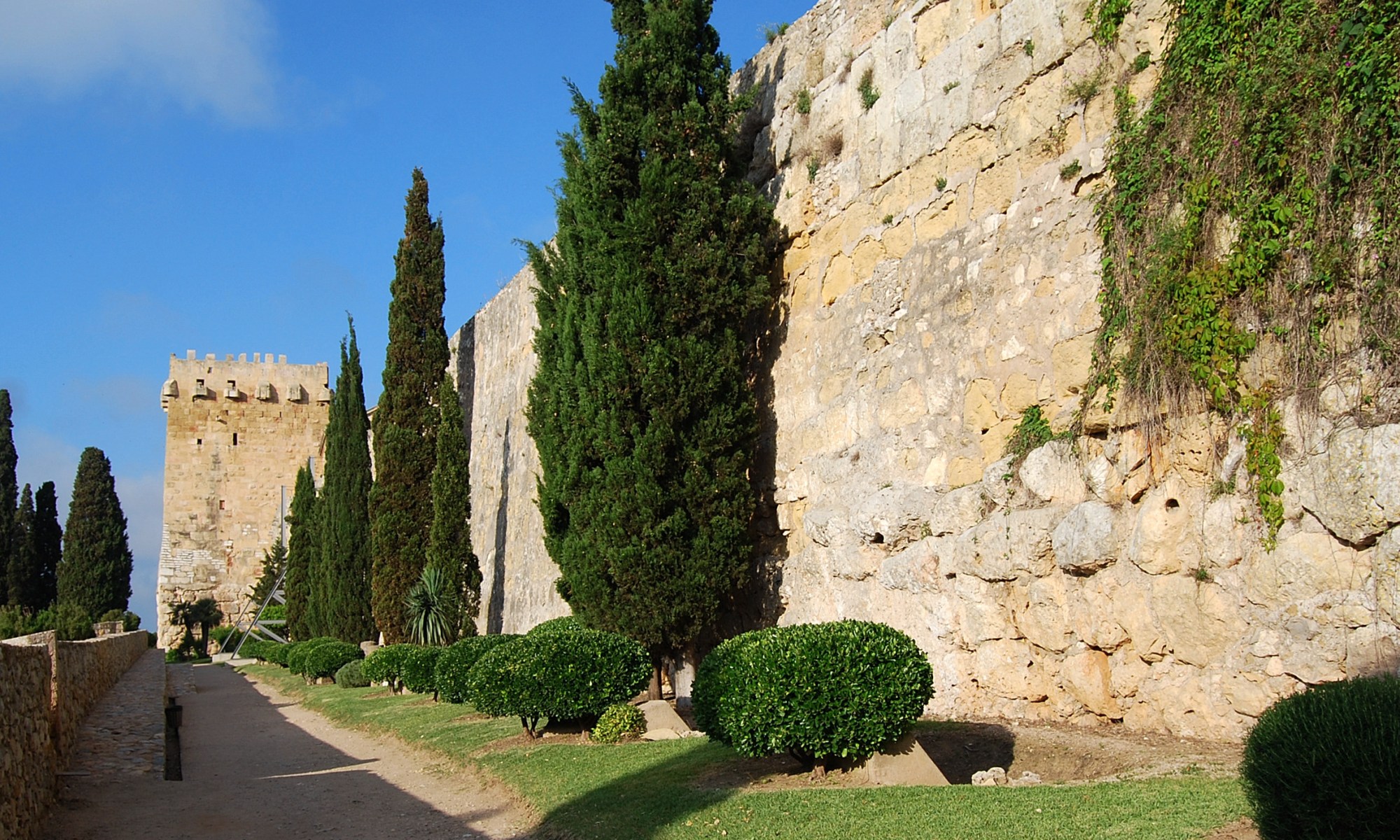
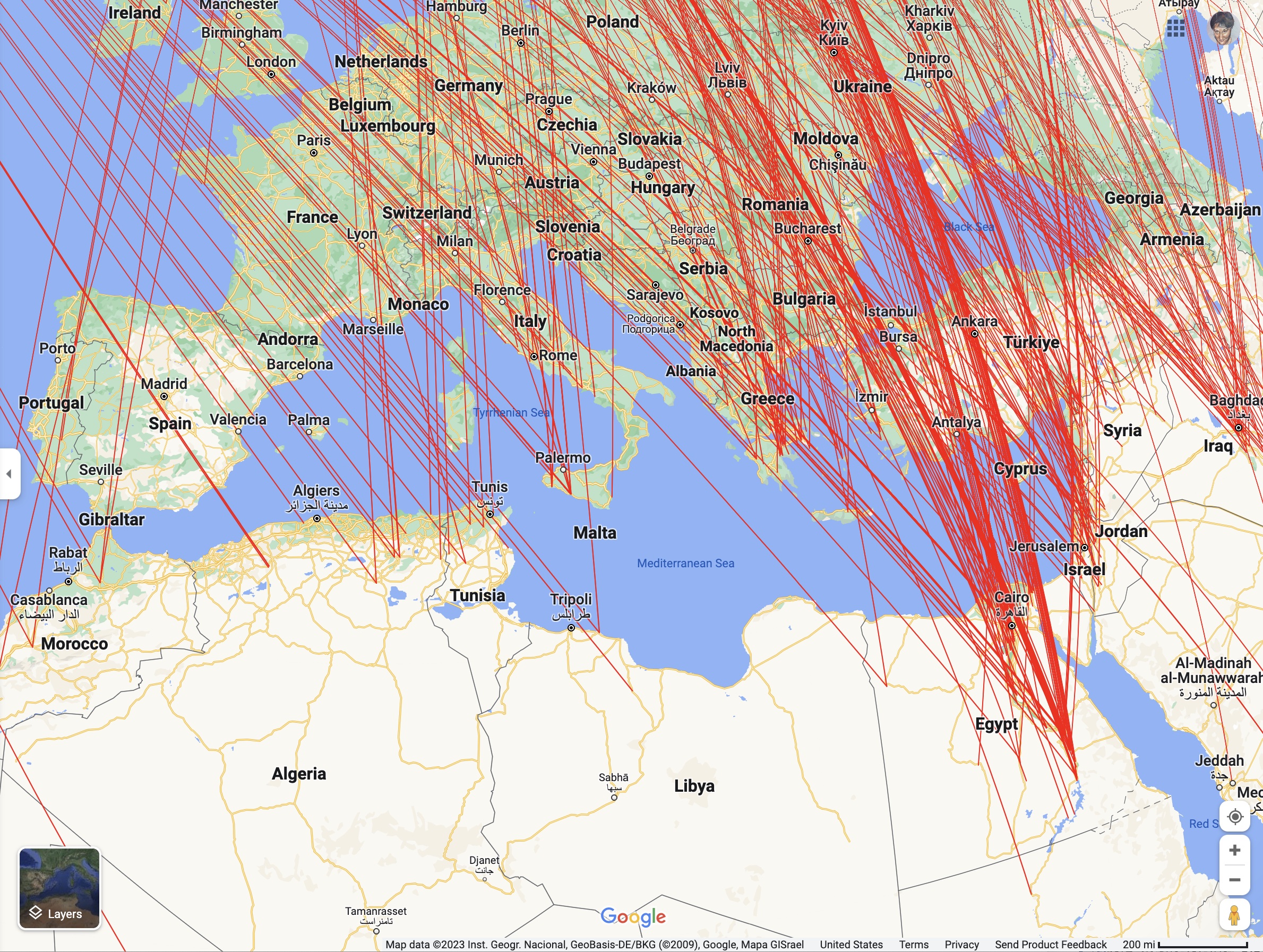
Richard Cassaro first brought the amazing cyclopean walls in Spain to my attention several years ago. Many sites in the Mediterranean are either cardinally aligned N-S-E-W or in directions of solstices and lunar standstills. But almost as many are in directions that are not explainable in conventional terms. As I was expanding my search for other sites that supported the Before Atlantis hypothesis, I discovered numerous sites that appeared to reference previous pole locations. 

Archaeological sites in the Mediterranean aligned to previous pole locations.

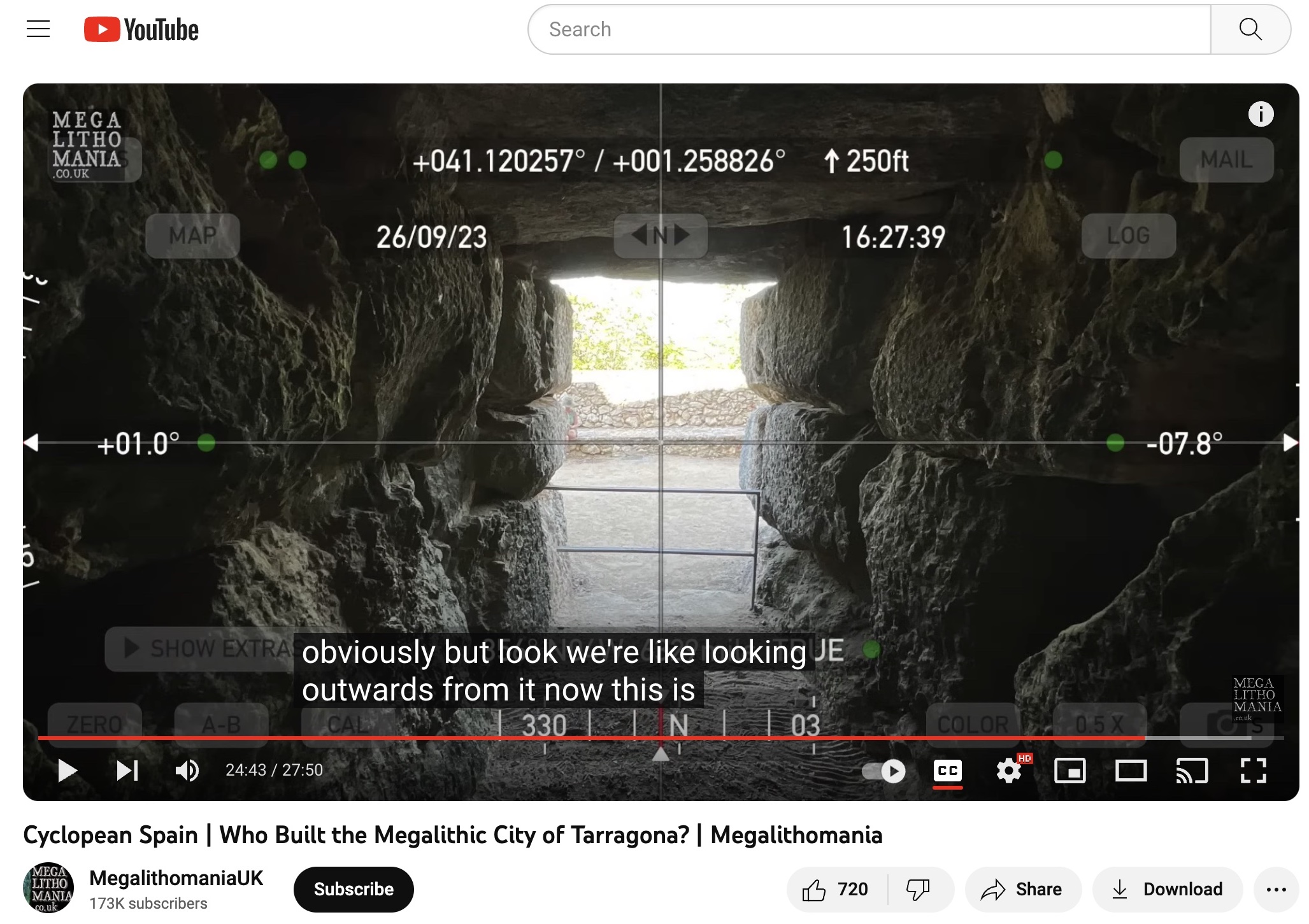
A recent video by Hugh Newman had a very interesting shot from out of one of the gates leading into the old walls of Tarragona, a city on the east coast of Spain. It showed a compass reading that was a few degrees west of due north. 

Video shot of north alignment at Tarragona. (Courtesy Megalithomania/YouTube)

The largest structures on earth tend to be the most precisely aligned. For example, the Giza pyramids, as well as the oldest (and deepest) foundations at Teotihuacan, Chichen Itza, Baalbek, and Machu Picchu, were all precisely aligned to the cardinal direction at the time of construction, according to the Before Atlantis hypothesis. The Giza pyramids being the most recent were aligned to the current pole, Teotihuacan to the previous pole estimated to have been located in Hudson Bay 20,000 to 50,000 years ago, Chichen Itza to the Norwegian Sea pole 50,000 to 75,000 years ago, Baalbek to the Greenland pole 75,000 to 130,000 years ago, and Machu Picchu to the Bering Sea pole, at least 130,000 years ago.

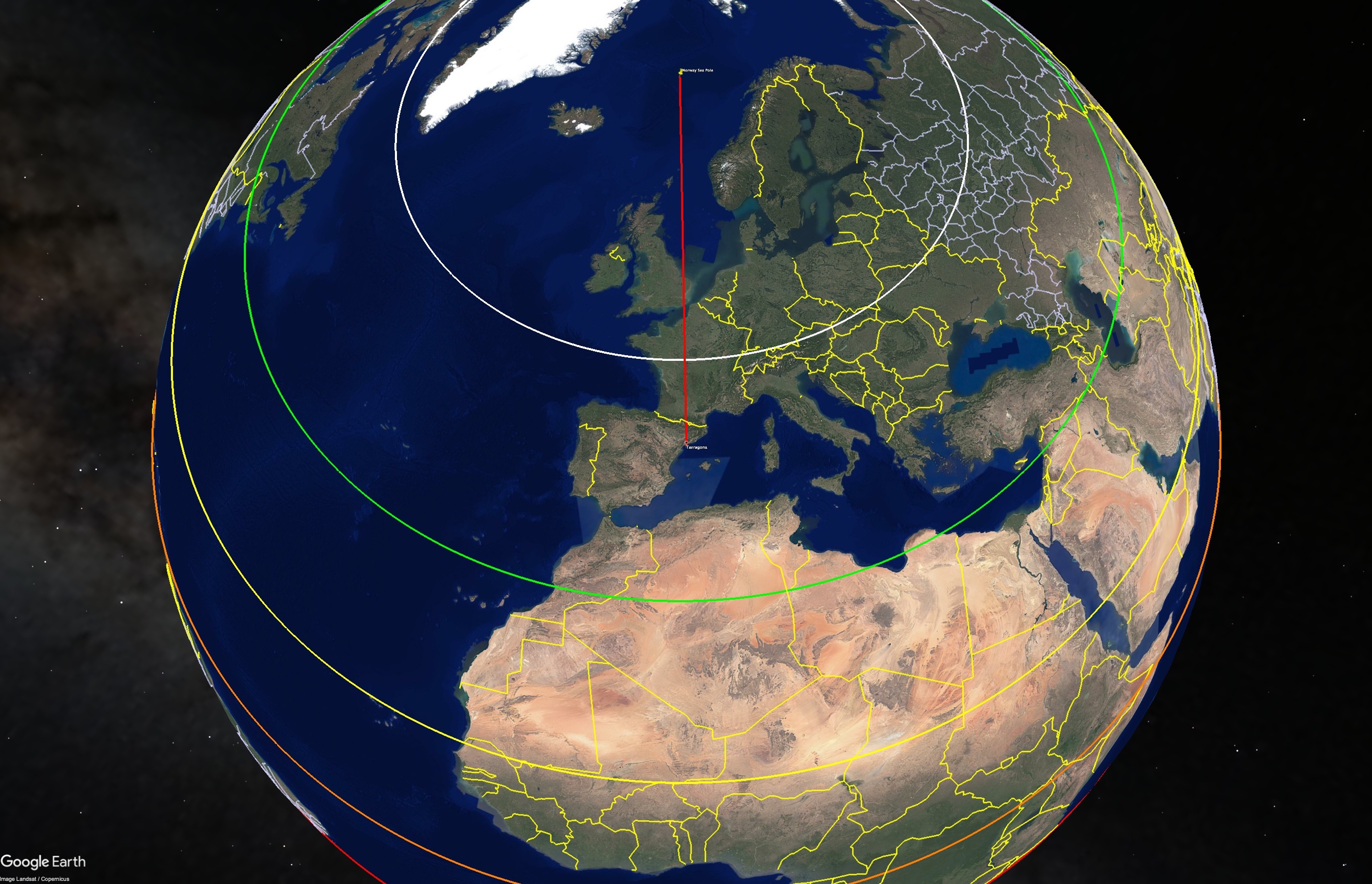
So why would Tarragona be a few degrees off from due north? It turns out that if the North Pole were in the Norwegian Sea, the pole would be several degrees west of its current location and the view from that gate at Tarragona would have faced exactly due north. Coincidence? 

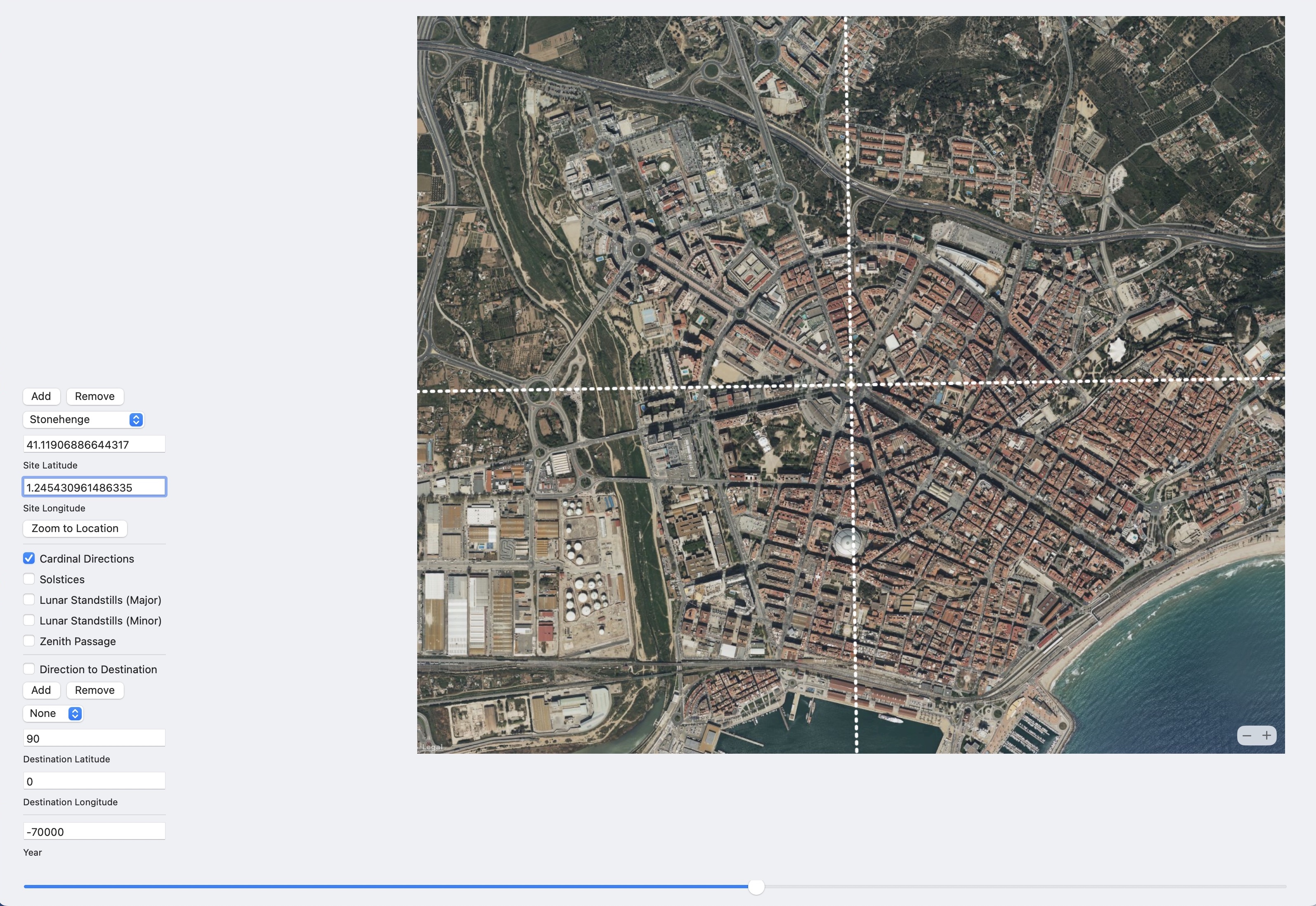
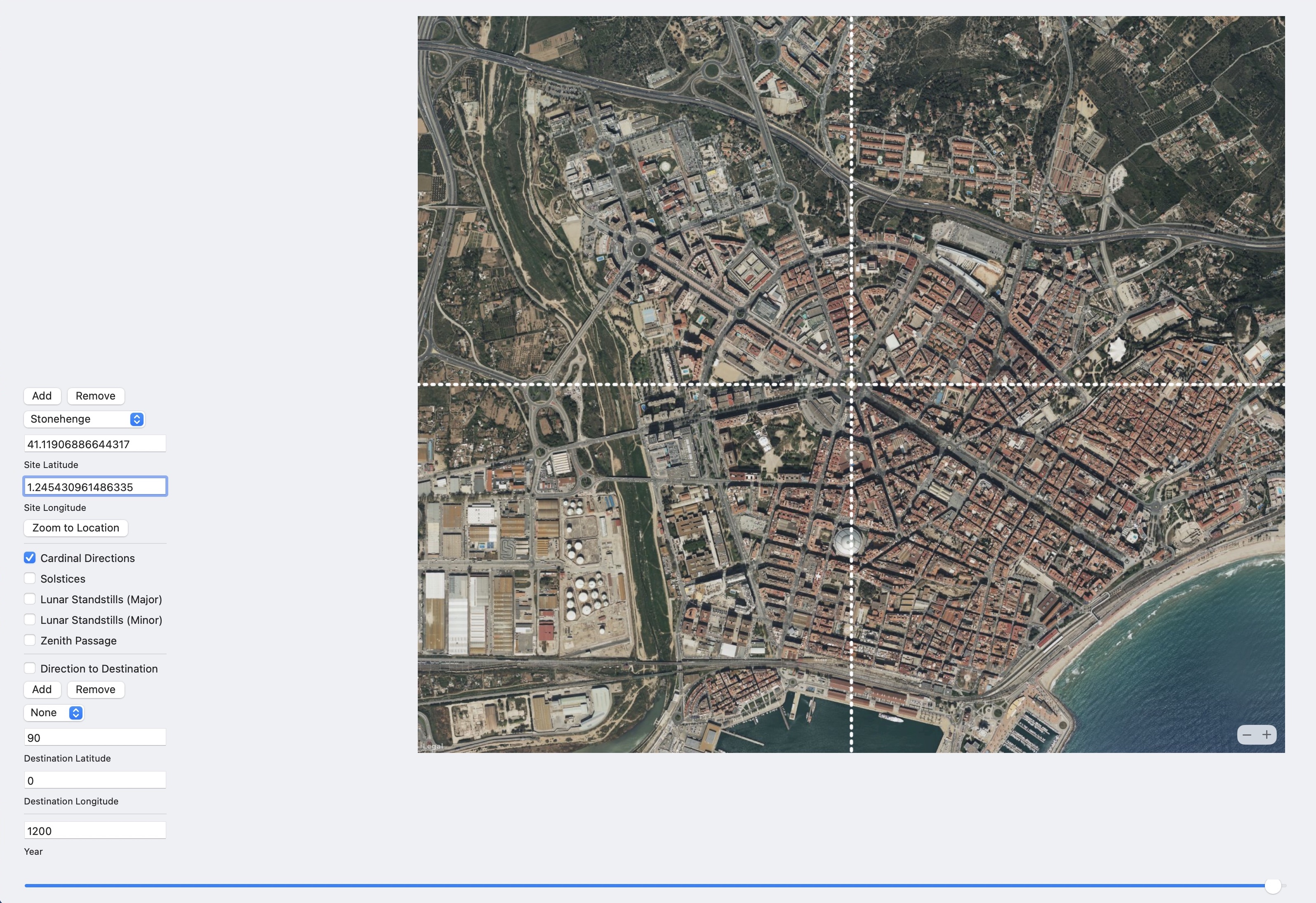
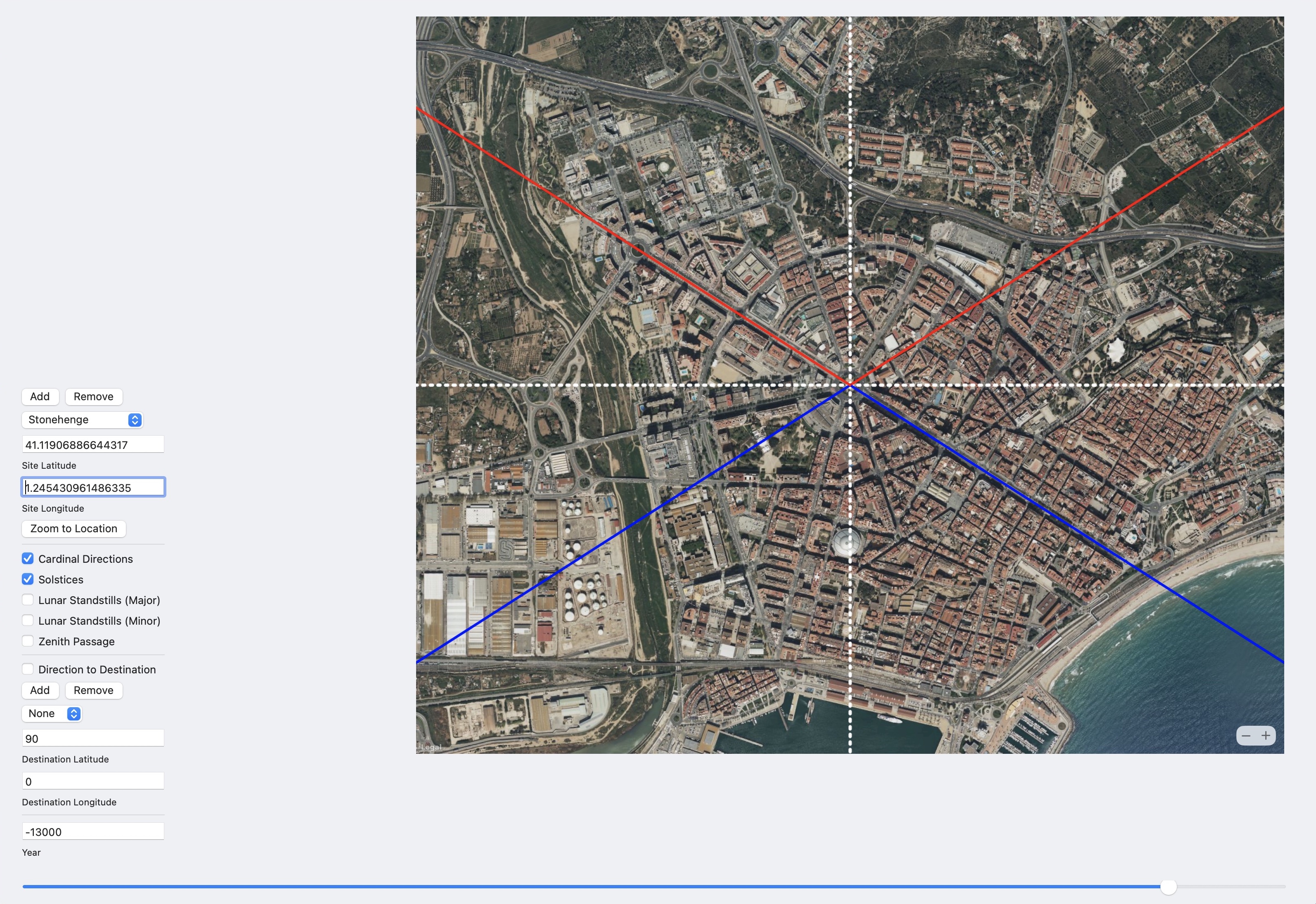
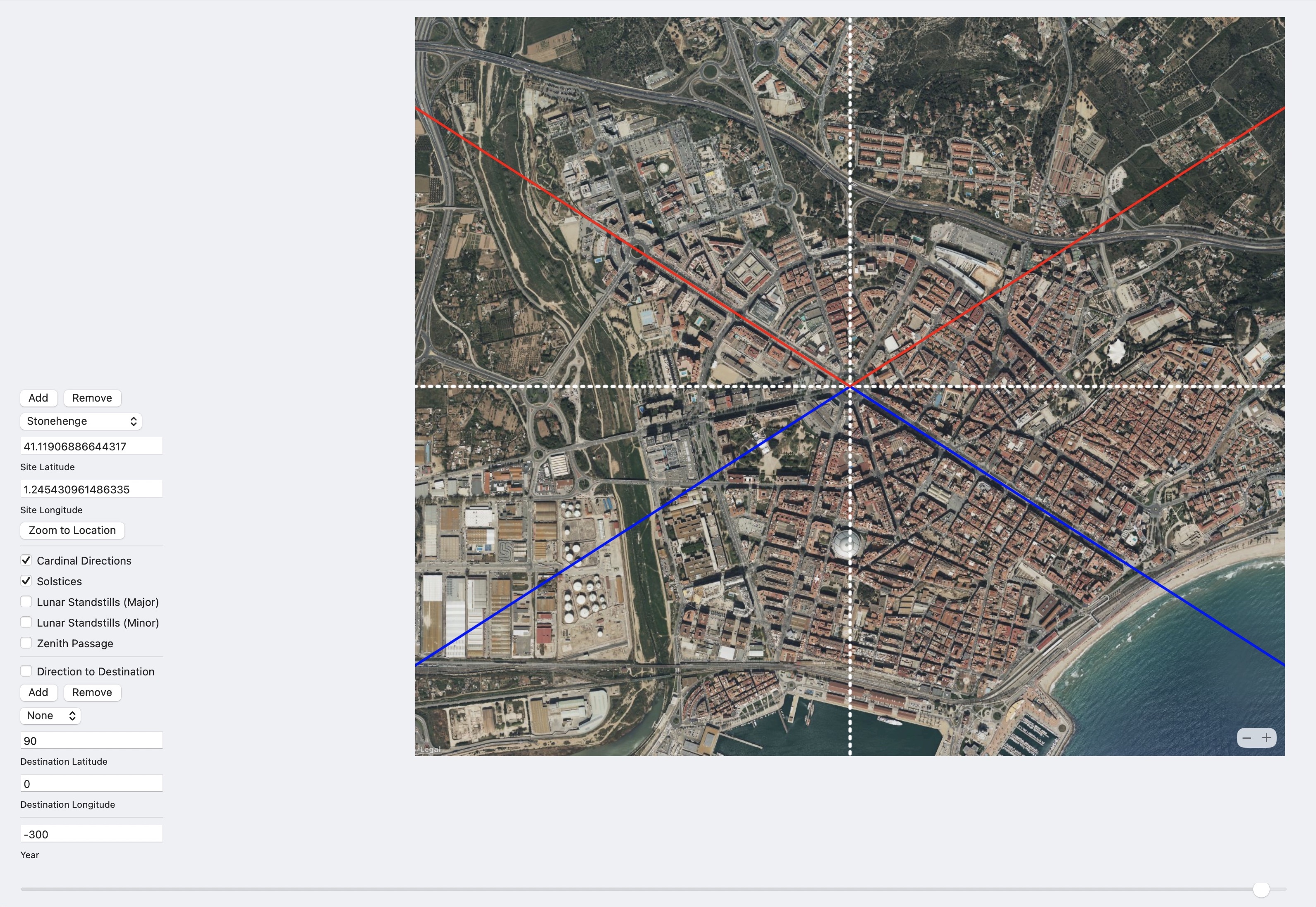
The main thoroughfare, Rambla Nova, is oriented in a direction that is closely aligned to the winter solstice sunrise and summer solstice sunset. The alignment would have been exact around 300 BCE. Changes in the earthโ€™s axial tilt causes the direction of the solstices to change over a 41,000-year cycle. Based on the timing of the cycle another exact alignment also existed in 13,000 BCE.

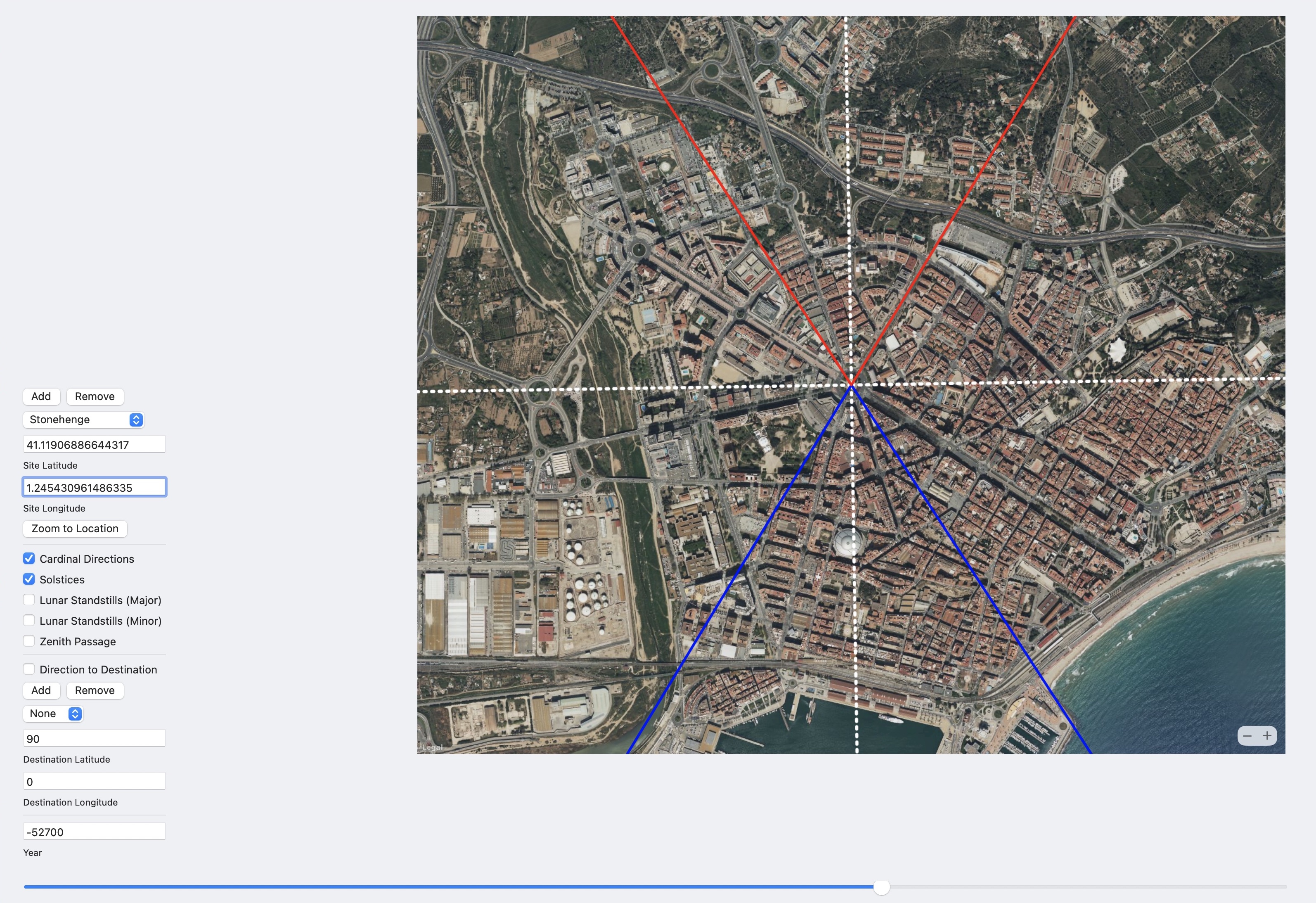
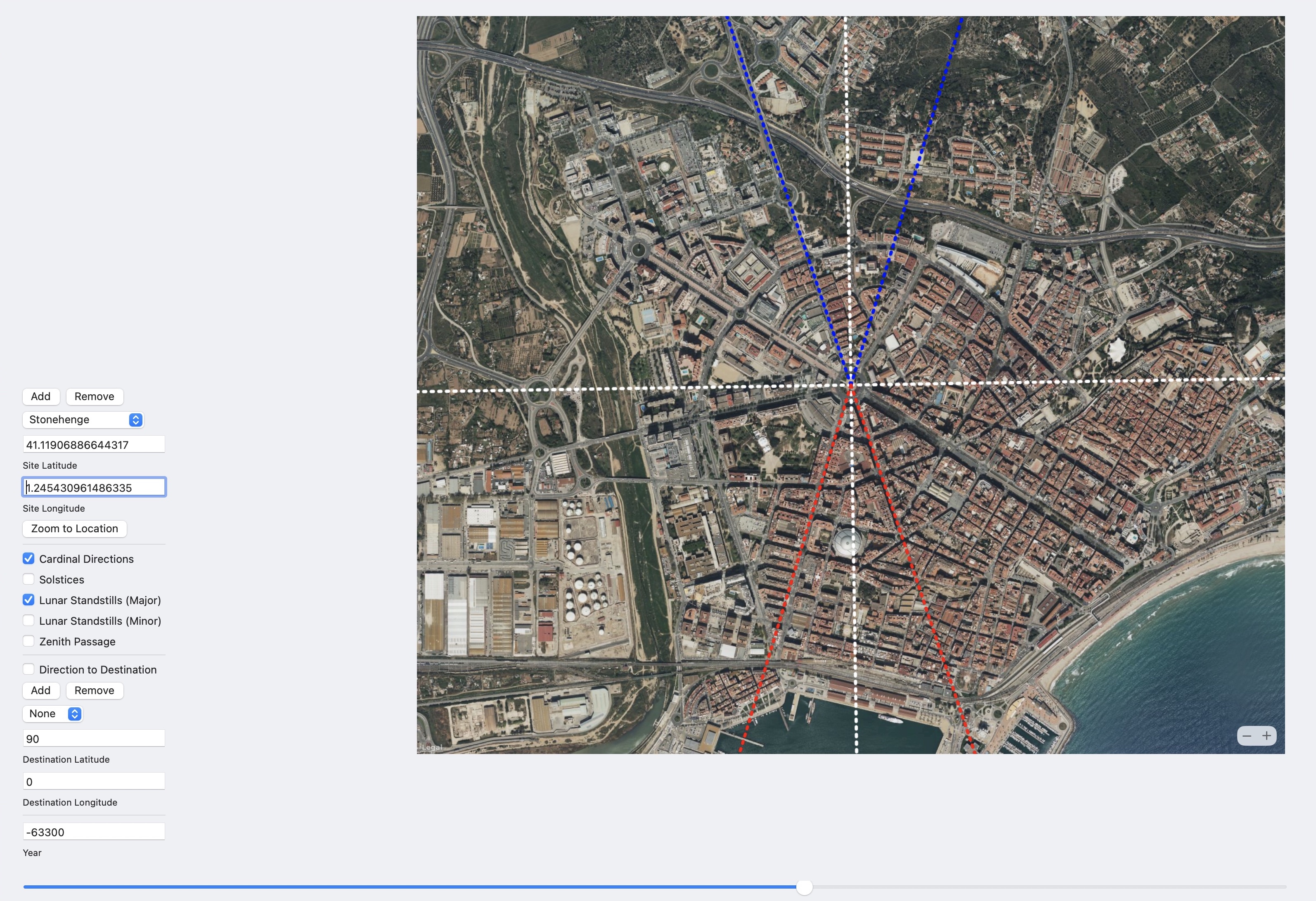
Three other streets emanate like the spokes of a wheel radially from Font del Centenari at the center of the city. All three appear to be oriented in solar and lunar directions relative to the Norwegian Sea pole – C. de Pete Martell and Av. de Prat de la Riba to major lunar standstills circa 63,000 BCE and Av. Marques de Montoliu to the summer solstice sunrise and winter solstice sunset 52,700 BCE.

Is it possible that the oldest foundations at Tarragona were built when the North Pole was only 2,000 miles away in the Norwegian Sea? At that distance, Tarragona would have been in the northern temperate zone at roughly the latitude as Anchorage, Alaska. It is interesting that there do not appear to be similar constructions in northern Europe, only in the Mediterranean region. Why?

Hapgood’s pole shift hypothesis provides a plausible explanation. At the northern extreme of the temperate zone, places further north would be in the polar zone and not suitable for human habitation. That the earth’s poles have shifted several times over the past 100,000 years provides not only a simple and compelling explanation for ice ages and glacial cycles but also explains the alignment of hundreds of archaeological sites across the world that otherwise have no conventional explanation. Although it has and continues to be dismissed by the geological community, that so much climate and archaeological evidence appears to support his hypothesis makes it hard to ignore.

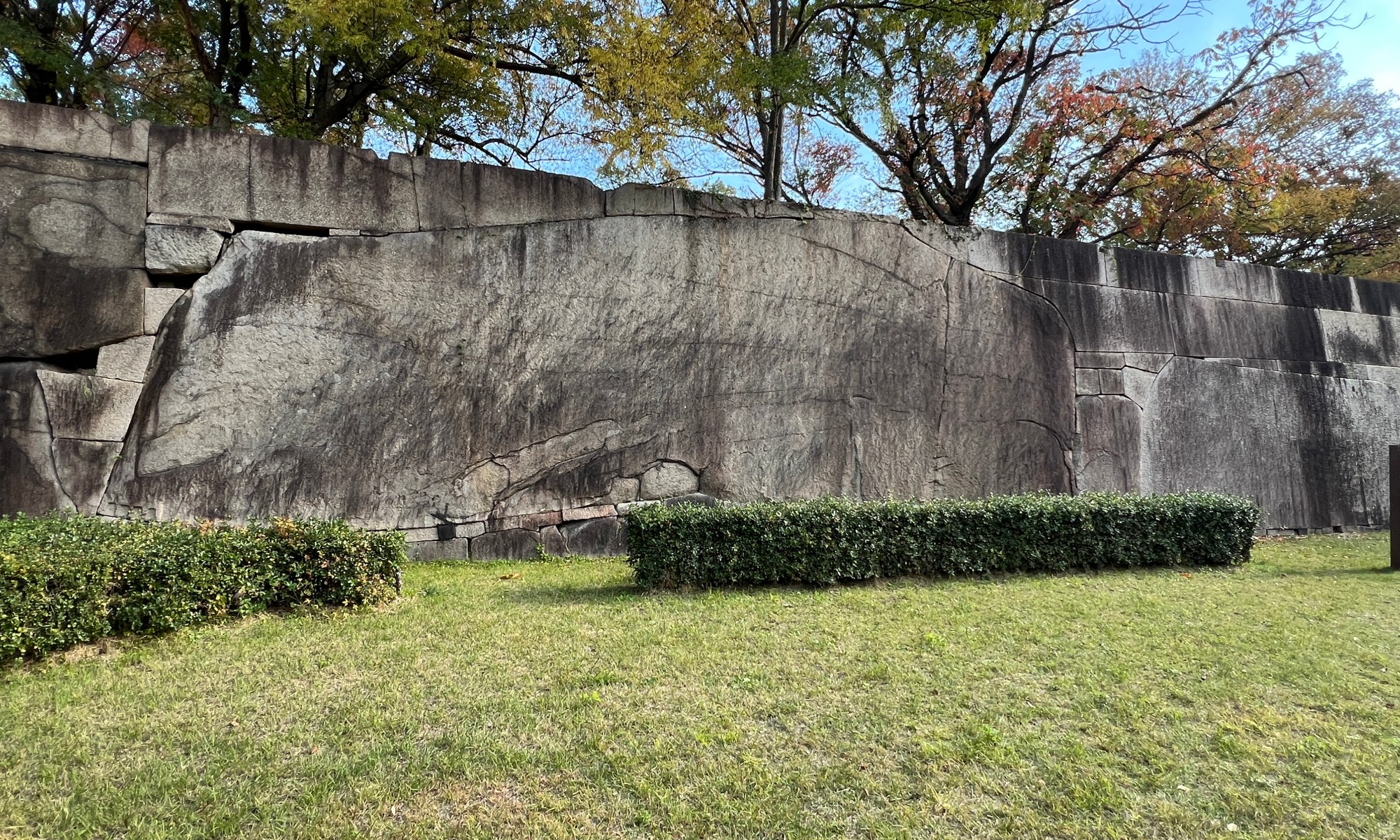
Feature image at the top of the article courtesy Tomร s./Flickr/Creative Commons